
'%3e%3cpath%20d='M12.0979%2019.9987C10.6974%2019.9987%209.29703%2019.4657%208.2309%2018.3995L1.60176%2011.7704C0.568828%2010.7375%200%209.36414%200%207.9034C0%206.44262%200.568828%205.06934%201.6018%204.03641C2.51562%203.12254%204.00258%203.12262%204.91633%204.03637L7.12605%206.2461C8.03988%207.15992%208.03988%208.6468%207.12605%209.56067C6.97848%209.70821%206.89723%209.90442%206.89723%2010.1131C6.89723%2010.3218%206.97848%2010.5179%207.12602%2010.6655L9.33574%2012.8752C9.48328%2013.0228%209.67949%2013.1041%209.88816%2013.1041C10.0969%2013.1041%2010.293%2013.0228%2010.4406%2012.8753C11.3545%2011.9614%2012.8414%2011.9614%2013.7552%2012.8753L15.9649%2015.085C16.8787%2015.9988%2016.8787%2017.4857%2015.9649%2018.3995C14.8987%2019.4657%2013.4983%2019.9987%2012.0979%2019.9987ZM3.25906%204.91281C3.05898%204.91281%202.85895%204.98895%202.7066%205.14129C1.96883%205.87906%201.5625%206.86%201.5625%207.9034C1.5625%208.9468%201.96883%209.92774%202.7066%2010.6655L9.33574%2017.2947C10.8587%2018.8177%2013.337%2018.8177%2014.86%2017.2947C15.1646%2016.99%2015.1646%2016.4944%2014.86%2016.1898L12.6503%2013.9801C12.5028%2013.8325%2012.3066%2013.7513%2012.0979%2013.7513C11.8892%2013.7513%2011.693%2013.8325%2011.5455%2013.98C10.6316%2014.8939%209.14473%2014.8939%208.23086%2013.98L6.02117%2011.7703C5.57852%2011.3277%205.33473%2010.7391%205.33473%2010.113C5.33473%209.48703%205.57852%208.89844%206.02117%208.45578C6.16875%208.30824%206.25%208.11203%206.25%207.90336C6.25%207.69469%206.16875%207.49852%206.02117%207.35094L3.81148%205.14121C3.65918%204.98899%203.4591%204.91281%203.25906%204.91281Z'%20fill='black'/%3e%3cpath%20d='M9.5448%209.3168C9.25285%209.1959%209.0625%208.91102%209.0625%208.59504V0.782539C9.0625%200.351055%209.41227%200.00128937%209.84375%200.00128937H19.2188C19.6502%200.00128937%2020%200.351055%2020%200.782539V7.03254C20%207.46402%2019.6502%207.81379%2019.2188%207.81379H11.7298L10.3962%209.14746C10.1728%209.3709%209.83676%209.43773%209.5448%209.3168ZM10.625%201.56379V6.70895L10.8538%206.48012C11.0003%206.33359%2011.199%206.25129%2011.4062%206.25129H18.4375V1.56379H10.625Z'%20fill='black'/%3e%3cpath%20d='M12.9688%204.68879C13.4002%204.68879%2013.75%204.33901%2013.75%203.90754C13.75%203.47607%2013.4002%203.12629%2012.9688%203.12629C12.5373%203.12629%2012.1875%203.47607%2012.1875%203.90754C12.1875%204.33901%2012.5373%204.68879%2012.9688%204.68879Z'%20fill='black'/%3e%3cpath%20d='M16.0938%204.68879C16.5252%204.68879%2016.875%204.33901%2016.875%203.90754C16.875%203.47607%2016.5252%203.12629%2016.0938%203.12629C15.6623%203.12629%2015.3125%203.47607%2015.3125%203.90754C15.3125%204.33901%2015.6623%204.68879%2016.0938%204.68879Z'%20fill='black'/%3e%3c/g%3e%3cdefs%3e%3cclipPath%20id='clip0_6353_9'%3e%3crect%20width='20'%20height='20'%20fill='white'/%3e%3c/clipPath%3e%3c/defs%3e%3c/svg%3e)
'%3e%3cpath%20d='M10%2020C13.8389%2020%2017.0312%2018.3836%2017.0312%2016.0938C17.0312%2015.4405%2016.7592%2014.8022%2016.2444%2014.2478C15.9508%2013.9316%2015.4565%2013.9132%2015.1403%2014.2068C14.8241%2014.5004%2014.8058%2014.9947%2015.0994%2015.3109C15.3444%2015.5749%2015.4687%2015.8383%2015.4687%2016.0938C15.4687%2017.2001%2013.13%2018.4375%209.99996%2018.4375C6.86996%2018.4375%204.53121%2017.2001%204.53121%2016.0938C4.53121%2015.8382%204.65547%2015.5749%204.90055%2015.3109C5.19414%2014.9947%205.17582%2014.5004%204.85965%2014.2068C4.54348%2013.9133%204.04914%2013.9316%203.75555%2014.2477C3.24082%2014.8021%202.96875%2015.4405%202.96875%2016.0938C2.96875%2018.3803%206.15578%2020%2010%2020Z'%20fill='black'/%3e%3cpath%20d='M8.13172%2015.9465C8.57285%2016.5282%209.27023%2016.875%2010%2016.875C10.7298%2016.875%2011.4271%2016.5282%2011.8683%2015.9466L15.6293%2011.2402C16.5465%2010.0163%2017.0312%208.5609%2017.0312%207.03125C17.0312%203.15422%2013.877%200%2010%200C6.12297%200%202.96875%203.15422%202.96875%207.03125C2.96875%208.56094%203.45352%2010.0164%204.37063%2011.2402L8.13172%2015.9465ZM10%201.5625C13.0155%201.5625%2015.4688%204.01578%2015.4688%207.03125C15.4688%208.21648%2015.0944%209.34434%2014.386%2010.2938C14.386%2010.2938%2010.6309%2014.9924%2010.626%2014.9989C10.4766%2015.1982%2010.2484%2015.3125%2010%2015.3125C9.75156%2015.3125%209.5234%2015.1982%209.37402%2014.9989C9.36914%2014.9923%209.36418%2014.9859%209.3591%2014.9796L5.61395%2010.2937C4.90559%209.34434%204.53125%208.21652%204.53125%207.03125C4.53125%204.01578%206.98453%201.5625%2010%201.5625Z'%20fill='black'/%3e%3cpath%20d='M10%2010.9375C12.1539%2010.9375%2013.9062%209.18516%2013.9062%207.03125C13.9062%204.87734%2012.1539%203.125%2010%203.125C7.84609%203.125%206.09375%204.87734%206.09375%207.03125C6.09375%209.18516%207.84609%2010.9375%2010%2010.9375ZM10%204.6875C11.2923%204.6875%2012.3438%205.73891%2012.3438%207.03125C12.3438%208.32359%2011.2923%209.375%2010%209.375C8.70766%209.375%207.65625%208.32359%207.65625%207.03125C7.65625%205.73891%208.70766%204.6875%2010%204.6875Z'%20fill='black'/%3e%3c/g%3e%3cdefs%3e%3cclipPath%20id='clip0_6353_60'%3e%3crect%20width='20'%20height='20'%20fill='white'/%3e%3c/clipPath%3e%3c/defs%3e%3c/svg%3e)

'%3e%3ccircle%20cx='321'%20cy='321'%20r='276'%20transform='matrix(-1%200%200%201%20481%200)'%20stroke='%23E5DFD3'%20stroke-width='90'/%3e%3c/g%3e%3cdefs%3e%3cclipPath%20id='clip0_6046_3421'%3e%3crect%20width='481'%20height='413'%20fill='white'%20transform='matrix(-1%200%200%201%20481%200)'/%3e%3c/clipPath%3e%3c/defs%3e%3c/svg%3e)
Does Zepbound Make You Pee More?
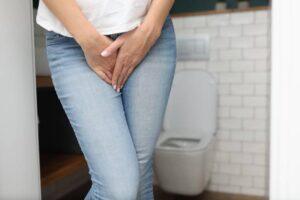
Does Zepbound make you pee more? Some patients notice increased urination, especially during the first few weeks of treatment. At TrimBody M.D., this is usually linked to changes in hydration, appetite, and metabolism during weight loss, not a direct urinary effect. These patterns often stabilize as the body adapts over time. Book a free consultation to review fluid-related effects with our medical team.
Key Takeaways:
- People often urinate more as an indirect result, not from the drug’s main effect.
- Losing fluids and eating less can contribute to this change.
- Digestion issues might also affect your body’s water balance.
- These effects even out after the first few weeks.
- Ongoing problems need to be checked by a doctor.
Does Zepbound Affect Urination?
Zepbound does not work as a diuretic and does not cause the kidneys to make more urine. Data from clinical trials and follow-up reports do not suggest any process that would raise urination frequency as a main effect.
Indirect changes often occur at the beginning of therapy. When people lose weight, it lowers insulin resistance. This can help the body better manage glucose and fluids. As blood sugar control gets better, the kidneys might process glucose more effectively. This can decrease excess water retention common in metabolic issues and may change how often someone urinates.
Drinking habits also play a role here. Some people drink water throughout the day to avoid feeling sick. Others might switch from sugary drinks to healthier options. These simple adjustments can lead to more frequent bathroom trips without meaning there’s a medical concern.
Study says urinary changes are minor and are more often connected to hydration or stomach-related effects instead of kidney problems. This information can help ease concerns and ensure proper care.
If urination feels painful, becomes urgent, or keeps you awake at night, you should check with a doctor. These signs point to issues like infection or other bladder problems rather than needing a change in medication.
Let our team know how we can help with your goals!
Reasons Urination May Change with Zepbound Treatment
Zepbound influences GLP-1 and GIP receptors, which play roles in appetite, digestion, and body metabolism. These processes do not affect how your kidneys or bladder work. However, it is common for people to notice changes in urination patterns during the initial weeks of using the medication.
The main reason ties to fluid balance:
- When people eat fewer calories, they often consume less sodium.
- This can cause the body to release extra water it was holding.
- As that fluid leaves, urination may temporarily increase, similar to early diet or weight loss changes.
Another reason has to do with eating less food overall:
- Solid foods contain water, so reducing food intake changes how the body absorbs fluids.
- Some people also drink more water to manage nausea or hunger, which increases bathroom trips.
- These changes usually settle once eating habits become more consistent.
Some patients notice digestive issues like loose stools:
- Fluid loss through digestion can increase thirst.
- Drinking more water in response can lead to more frequent urination.
- This pattern does not mean there is a urinary problem.
You can read more about related digestive effects in this guide explaining why diarrhea happens during treatment.
How Metabolism and Losing Weight Affect Body Water
When people lose weight, their body changes how it store and lets go of water. Fat tissue keeps water so as fat is lost, some of that water exits through urine. This process is part of how metabolism works and does not mean dehydration happens as long as you’re drinking enough.
Hormones play a part too. GLP-1 reduces the desire to eat salty foods. Eating less salt means the body holds onto less water causing you to pee more at first. This effect settles down once eating habits level out.
Another factor involves better metabolic efficiency. When insulin sensitivity gets better, kidneys stop getting rid of extra glucose. This change can lower osmotic diuresis seen in managed metabolic conditions. Over time, this can even lead some people to have steadier urination patterns, not more frequent ones.
According to studies, medications that affect appetite and blood sugar often shift fluid balance. Zepbound follows this trend but isn’t considered a drug that forces more urination.
To discuss our services, contact us today!
When to Seek Medical Advice About Frequent Urination
Most of the time, changes in urination with Zepbound are minor and go away. However, some issues need attention from a doctor. These include getting up several times at night to pee feeling pain or burning while urinating needing to go , or showing dehydration symptoms like dark-colored urine or feeling dizzy.
Fluid and electrolyte problems are rare but can happen if you are not drinking enough to balance any fluid loss with stomach issues or a reduced appetite. Keeping an eye on your hydration, urine’s color, and how energetic you feel can help spot problems on.
People with kidney disease, diabetes, or blood pressure issues should get checked more often. These conditions can change how kidneys handle fluids and electrolytes. In these cases, doctors might need to make medication changes.
To manage cholesterol changes while also losing weight, check out this cholesterol levels FAQ. It breaks down how treatment can involve overlapping metabolic changes.
Need help deciding? Fill out a contact form,and we’ll ensure you’re informed!
Simple Tips To Stay Hydrated on Zepbound
The body stays hydrated better when you drink water and with purpose. Sipping small amounts is easier on your system than chugging it all at once. Adding electrolytes from natural foods can help maintain balance in the early stages of weight loss.
Cutting back on caffeine later in the day can prevent frequent bathroom trips at night. Checking the color of your urine gives an easy way to track hydration. Pale yellow means you’re drinking enough.
Patients beginning treatment with a structured plan, like one offered by a medical weight loss clinic, can benefit from regular guidance and oversight. Ongoing clinical supervision makes it easier to tell between typical adjustments and signs that need medical care.
How Trim Body M.D. Ensures Safe Zepbound Use for Patients
Trim Body M.D. offers medication-supported weight loss with consistent clinical monitoring and educational support. Our team operating in various locations has helped over 30,000+ patients prioritize safety, sustainable results, and lasting metabolic health.
We assist patients by:
- Check hydration levels and changes in urination during follow-ups.
- Modify dosing plans based on how patients feel and respond.
- Keep an eye on lab results related to kidney health and metabolism.
- Teach patients the difference between normal and concerning symptoms.
- Work together to manage any pre-existing health issues.
What Patients Should Know About Using Zepbound
Some people might notice they pee more often when starting treatment. Many ask, does Zepbound make you pee more? This increase is linked to normal changes in fluid levels and eating habits as weight starts to drop.
It is not an issue with the medication itself. Being aware of these early shifts can help patients feel at ease and concentrate on their long-term goals.
If changes continue or begin to disrupt everyday life, a doctor visit can help explain what is typical and what might require care. Schedule a free consultation today to speak with a provider who can look at your symptoms and offer safe treatment advice.
Disclaimer: This article is for informational and educational purposes. Treatment decisions are made during an individual medical evaluation with a licensed provider. We provide compounded tirzepatide and are not affiliated with or endorsed by the manufacturers of Zepbound® or Mounjaro®.
FAQs about Zepbound and Urination
Can Increased Urination Mean Dehydration On Zepbound?
Not always, but it can if fluid intake does not match losses. Signs like dark urine, dizziness, or fatigue suggest that hydration should be reviewed with a clinician.
Does Urinating More Mean The Dose Is Too High?
No. Frequency changes alone do not indicate an excessive dose and often appear during early adjustment. Dose decisions depend on tolerance, side effects, and overall response.
Should I Drink More Water If I Pee More On Zepbound?
Yes, steady fluid intake helps maintain balance and reduce discomfort. Small, consistent sips throughout the day work better than large amounts at once.
Can Zepbound Affect Nighttime Urination?
Some patients notice more nighttime bathroom trips early in treatment. Reducing evening fluids and caffeine often helps once the body adapts.
When Should Urination Changes Be Checked By A Provider?
If symptoms persist beyond several weeks, disrupt sleep, or include pain or urgency, evaluation is recommended. These signs may point to causes unrelated to medication.
Call and talk to a specialist today! (702) 489-3300
Let our team know how we can help with your goals!

Get In Touch With Us
Schedule Your Free Consultation — Take Your First Step Today
 Henderson
Let our team of Medical Professionals help you achieve your body goals. Contact us Today!