
'%3e%3cpath%20d='M12.0979%2019.9987C10.6974%2019.9987%209.29703%2019.4657%208.2309%2018.3995L1.60176%2011.7704C0.568828%2010.7375%200%209.36414%200%207.9034C0%206.44262%200.568828%205.06934%201.6018%204.03641C2.51562%203.12254%204.00258%203.12262%204.91633%204.03637L7.12605%206.2461C8.03988%207.15992%208.03988%208.6468%207.12605%209.56067C6.97848%209.70821%206.89723%209.90442%206.89723%2010.1131C6.89723%2010.3218%206.97848%2010.5179%207.12602%2010.6655L9.33574%2012.8752C9.48328%2013.0228%209.67949%2013.1041%209.88816%2013.1041C10.0969%2013.1041%2010.293%2013.0228%2010.4406%2012.8753C11.3545%2011.9614%2012.8414%2011.9614%2013.7552%2012.8753L15.9649%2015.085C16.8787%2015.9988%2016.8787%2017.4857%2015.9649%2018.3995C14.8987%2019.4657%2013.4983%2019.9987%2012.0979%2019.9987ZM3.25906%204.91281C3.05898%204.91281%202.85895%204.98895%202.7066%205.14129C1.96883%205.87906%201.5625%206.86%201.5625%207.9034C1.5625%208.9468%201.96883%209.92774%202.7066%2010.6655L9.33574%2017.2947C10.8587%2018.8177%2013.337%2018.8177%2014.86%2017.2947C15.1646%2016.99%2015.1646%2016.4944%2014.86%2016.1898L12.6503%2013.9801C12.5028%2013.8325%2012.3066%2013.7513%2012.0979%2013.7513C11.8892%2013.7513%2011.693%2013.8325%2011.5455%2013.98C10.6316%2014.8939%209.14473%2014.8939%208.23086%2013.98L6.02117%2011.7703C5.57852%2011.3277%205.33473%2010.7391%205.33473%2010.113C5.33473%209.48703%205.57852%208.89844%206.02117%208.45578C6.16875%208.30824%206.25%208.11203%206.25%207.90336C6.25%207.69469%206.16875%207.49852%206.02117%207.35094L3.81148%205.14121C3.65918%204.98899%203.4591%204.91281%203.25906%204.91281Z'%20fill='black'/%3e%3cpath%20d='M9.5448%209.3168C9.25285%209.1959%209.0625%208.91102%209.0625%208.59504V0.782539C9.0625%200.351055%209.41227%200.00128937%209.84375%200.00128937H19.2188C19.6502%200.00128937%2020%200.351055%2020%200.782539V7.03254C20%207.46402%2019.6502%207.81379%2019.2188%207.81379H11.7298L10.3962%209.14746C10.1728%209.3709%209.83676%209.43773%209.5448%209.3168ZM10.625%201.56379V6.70895L10.8538%206.48012C11.0003%206.33359%2011.199%206.25129%2011.4062%206.25129H18.4375V1.56379H10.625Z'%20fill='black'/%3e%3cpath%20d='M12.9688%204.68879C13.4002%204.68879%2013.75%204.33901%2013.75%203.90754C13.75%203.47607%2013.4002%203.12629%2012.9688%203.12629C12.5373%203.12629%2012.1875%203.47607%2012.1875%203.90754C12.1875%204.33901%2012.5373%204.68879%2012.9688%204.68879Z'%20fill='black'/%3e%3cpath%20d='M16.0938%204.68879C16.5252%204.68879%2016.875%204.33901%2016.875%203.90754C16.875%203.47607%2016.5252%203.12629%2016.0938%203.12629C15.6623%203.12629%2015.3125%203.47607%2015.3125%203.90754C15.3125%204.33901%2015.6623%204.68879%2016.0938%204.68879Z'%20fill='black'/%3e%3c/g%3e%3cdefs%3e%3cclipPath%20id='clip0_6353_9'%3e%3crect%20width='20'%20height='20'%20fill='white'/%3e%3c/clipPath%3e%3c/defs%3e%3c/svg%3e)
'%3e%3cpath%20d='M10%2020C13.8389%2020%2017.0312%2018.3836%2017.0312%2016.0938C17.0312%2015.4405%2016.7592%2014.8022%2016.2444%2014.2478C15.9508%2013.9316%2015.4565%2013.9132%2015.1403%2014.2068C14.8241%2014.5004%2014.8058%2014.9947%2015.0994%2015.3109C15.3444%2015.5749%2015.4687%2015.8383%2015.4687%2016.0938C15.4687%2017.2001%2013.13%2018.4375%209.99996%2018.4375C6.86996%2018.4375%204.53121%2017.2001%204.53121%2016.0938C4.53121%2015.8382%204.65547%2015.5749%204.90055%2015.3109C5.19414%2014.9947%205.17582%2014.5004%204.85965%2014.2068C4.54348%2013.9133%204.04914%2013.9316%203.75555%2014.2477C3.24082%2014.8021%202.96875%2015.4405%202.96875%2016.0938C2.96875%2018.3803%206.15578%2020%2010%2020Z'%20fill='black'/%3e%3cpath%20d='M8.13172%2015.9465C8.57285%2016.5282%209.27023%2016.875%2010%2016.875C10.7298%2016.875%2011.4271%2016.5282%2011.8683%2015.9466L15.6293%2011.2402C16.5465%2010.0163%2017.0312%208.5609%2017.0312%207.03125C17.0312%203.15422%2013.877%200%2010%200C6.12297%200%202.96875%203.15422%202.96875%207.03125C2.96875%208.56094%203.45352%2010.0164%204.37063%2011.2402L8.13172%2015.9465ZM10%201.5625C13.0155%201.5625%2015.4688%204.01578%2015.4688%207.03125C15.4688%208.21648%2015.0944%209.34434%2014.386%2010.2938C14.386%2010.2938%2010.6309%2014.9924%2010.626%2014.9989C10.4766%2015.1982%2010.2484%2015.3125%2010%2015.3125C9.75156%2015.3125%209.5234%2015.1982%209.37402%2014.9989C9.36914%2014.9923%209.36418%2014.9859%209.3591%2014.9796L5.61395%2010.2937C4.90559%209.34434%204.53125%208.21652%204.53125%207.03125C4.53125%204.01578%206.98453%201.5625%2010%201.5625Z'%20fill='black'/%3e%3cpath%20d='M10%2010.9375C12.1539%2010.9375%2013.9062%209.18516%2013.9062%207.03125C13.9062%204.87734%2012.1539%203.125%2010%203.125C7.84609%203.125%206.09375%204.87734%206.09375%207.03125C6.09375%209.18516%207.84609%2010.9375%2010%2010.9375ZM10%204.6875C11.2923%204.6875%2012.3438%205.73891%2012.3438%207.03125C12.3438%208.32359%2011.2923%209.375%2010%209.375C8.70766%209.375%207.65625%208.32359%207.65625%207.03125C7.65625%205.73891%208.70766%204.6875%2010%204.6875Z'%20fill='black'/%3e%3c/g%3e%3cdefs%3e%3cclipPath%20id='clip0_6353_60'%3e%3crect%20width='20'%20height='20'%20fill='white'/%3e%3c/clipPath%3e%3c/defs%3e%3c/svg%3e)

'%3e%3ccircle%20cx='321'%20cy='321'%20r='276'%20transform='matrix(-1%200%200%201%20481%200)'%20stroke='%23E5DFD3'%20stroke-width='90'/%3e%3c/g%3e%3cdefs%3e%3cclipPath%20id='clip0_6046_3421'%3e%3crect%20width='481'%20height='413'%20fill='white'%20transform='matrix(-1%200%200%201%20481%200)'/%3e%3c/clipPath%3e%3c/defs%3e%3c/svg%3e)
Does Zepbound Help With Insulin Resistance?
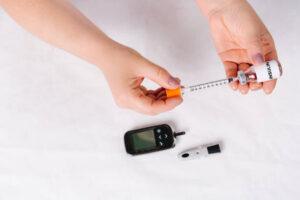
Does Zepbound help with insulin resistance? Yes, evidence shows Zepbound improves insulin sensitivity by reducing insulin resistance at multiple metabolic levels. Through GLP-1 and GIP receptor activity, Zepbound lowers circulating insulin demand, improves glucose uptake, and reduces metabolic strain.
At Trim Body M.D., clinicians use these mechanisms to support patients with insulin resistance, prediabetes, and related metabolic conditions. Book a free consultation to review metabolic benefits.
Key Takeaways
- Zepbound improves insulin sensitivity, not just weight
- Dual GLP-1 and GIP action targets core metabolic dysfunction
- Lower insulin demand reduces long-term metabolic stress
- Benefits extend beyond appetite suppression
- Clinical oversight improves safety and durability
How Insulin Resistance Starts in the Body
Cells stop properly reacting to insulin, which makes the pancreas increase insulin production in an effort to keep blood sugar in check. This leads to a cycle that causes higher insulin levels, fat storage, inflammation, and a greater risk for heart and metabolic issues over time.
Extra fat around the organs has a big part in this. Fat releases signals that cause inflammation and disrupt how insulin works in muscles and the liver. As insulin resistance gets worse, blood sugar levels might stay normal at first, but insulin levels rise without clear signs.
This ongoing strain on the body shows patients that just losing weight won’t fix the problem. Getting the body to use insulin matters too. Medications like Zepbound stand out because they help with insulin response, not just appetite control.
Let our team know how we can help with your goals!
How Zepbound Boosts Insulin Sensitivity
Zepbound uses tirzepatide, which acts as both a GLP-1 and GIP receptor agonist. Its dual approach sets it apart from older treatments that work in just one way. GLP-1 helps slow down how the stomach empties and aids in managing blood sugar after meals. GIP works to make insulin function better within cells.
Zepbound improves how the body uses insulin, meaning less is needed to manage blood sugar levels. This lightens the load on the pancreas and helps break the cycle where too much insulin leads to fat gain and metabolic issues.
Studies indicate better fasting insulin levels, HOMA-IR scores, and post-meal glucose reactions even before people shed a lot of weight. This shows that improving insulin sensitivity is not tied to eating fewer calories.
When exploring treatment options, patients often compare how Zepbound stands out from other medications. Clinical side-by-side reviews, like Zepbound vs Mounjaro, explain these differences.
Can Zepbound Reverse Insulin Resistance?
Zepbound cannot “cure” insulin resistance. However, it can lessen its severity as long as patients use the treatment. The extent of progress varies based on initial metabolic condition, the length of time a person has dealt with insulin resistance, and how they follow the therapy.
Patients with prediabetes or early signs of insulin resistance often show improved insulin sensitivity markers. In later stages, people need less insulin, blood sugar becomes steadier, and inflammation reduces.
Although weight loss boosts these improvements, it is not the only factor. Zepbound works by improving liver insulin sensitivity. It lowers glucose production by the liver, which plays a significant role in causing insulin resistance.
Clinical benefits match findings from a published study in a metabolic analysis of insulin pathways. The research explains how incretin-based therapies enhance insulin signaling without needing calorie reduction.
To discuss our services, contact us today!
Blood Sugar Control and Insulin Resistance Are Connected but Not the Same
Lowering blood sugar alone does not fix insulin resistance. Many people keep their blood sugar in a normal range for years, but their insulin levels stay high. This hidden stage still adds to metabolic and heart-related risks.
Zepbound works on both parts of the problem. It reduces blood sugar and helps cells respond better to insulin. This combined effect often leads to better blood sugar test results and lower insulin markers.
Addressing insulin resistance can stop it from turning into type 2 diabetes instead of waiting for blood sugar to go up.
Need help deciding? Fill out a contact form,and we’ll ensure you’re informed!
Why Two-Hormone Action Helps Metabolic Health
Activating the GIP receptor has a special effect on how the body processes fat and uses insulin. Older GLP-1 treatments did not use this pathway, so their ability to address severe insulin resistance was limited.
Zepbound works by targeting both receptors. It helps muscles absorb more glucose, lowers sugar creation in the liver, and boosts communication in fat cells. This process lowers overall inflammation, which often blocks insulin from working.
People experience fewer cravings, a more consistent energy level, and less tiredness after meals as their insulin sensitivity gets better. These visible changes point to a greater improvement in metabolism and not just simple hunger control.
Who Gains the Most From Using Zepbound to Improve Insulin Resistance?
Zepbound works well for people dealing with obesity-related insulin resistance, metabolic syndrome, or prediabetes. It can also help those who have a family history of type 2 diabetes and need early care.
Even patients facing insulin resistance for a long time can notice positive results, but their progress may take longer. Staying consistent and working with a doctor are key to keeping the benefits.
Care at clinics like our Los Angeles location focuses on tracking lab results, adjusting doses, and improving overall metabolic health instead of just focusing on weight.
Lifestyle Choices To Improve Insulin Sensitivity When Using Zepbound
Zepbound delivers the best results when combined with proper protein intake, regular strength training, and steady sleep habits. These key actions increase how muscles absorb glucose and decrease the need for insulin.
Staying hydrated and keeping micronutrients in check are also important. Missing electrolytes or lacking nutrients can lower the positive effects on metabolism, even if you take the medication.
Extreme calorie cutting is not necessary and may work against you. The focus lies on normalizing metabolism, not depriving the body.
How We Help Patients Use Zepbound to Treat Insulin Resistance
At Trim Body M.D., our team treats insulin resistance as a primary medical issue, not just something connected to weight.
- Initial and follow-up insulin level checks
- Glucose monitoring and metabolic lab tests
- Adjusting doses to enhance insulin response
- Nutrition advice to improve sensitivity
- Planning to lower long-term health risks
Understanding Insulin Resistance Treatment Better
Zepbound improves how the body responds to insulin by boosting insulin signaling, decreasing the need for insulin, and lowering metabolic stress caused by inflammation. It is not a complete cure, but it can provide noticeable improvements during ongoing treatment when paired with medical guidance and healthy lifestyle choices. Book a free consultation with us today.
Disclaimer: This article is for informational and educational purposes. Treatment decisions are made during an individual medical evaluation with a licensed provider. We provide compounded tirzepatide and are not affiliated with or endorsed by the manufacturers of Zepbound® or Mounjaro®.
FAQs about Zepbound and Insulin Resistance
Does Zepbound Improve Insulin Resistance Directly?
Yes. Zepbound improves how cells respond to insulin, lowering insulin demand and metabolic strain beyond appetite control.
Is Zepbound Helpful For Prediabetes?
Yes. Many patients with prediabetes see improved insulin sensitivity and steadier glucose patterns during treatment.
How Fast Does Insulin Sensitivity Improve on Zepbound?
Improvements can begin within weeks. Lab markers often improve before significant weight loss occurs.
Does Weight Loss Matter For Insulin Resistance Results?
Weight loss helps, but Zepbound also improves insulin signaling independently of calorie reduction.
Who Is a Good Candidate For Zepbound And Insulin Resistance?
Patients with obesity, metabolic syndrome, or early insulin resistance often benefit most with medical oversight.
Call and talk to a specialist today! (702) 489-3300
Let our team know how we can help with your goals!

Get In Touch With Us
Schedule Your Free Consultation — Take Your First Step Today
 Henderson
Let our team of Medical Professionals help you achieve your body goals. Contact us Today!