
'%3e%3cpath%20d='M12.0979%2019.9987C10.6974%2019.9987%209.29703%2019.4657%208.2309%2018.3995L1.60176%2011.7704C0.568828%2010.7375%200%209.36414%200%207.9034C0%206.44262%200.568828%205.06934%201.6018%204.03641C2.51562%203.12254%204.00258%203.12262%204.91633%204.03637L7.12605%206.2461C8.03988%207.15992%208.03988%208.6468%207.12605%209.56067C6.97848%209.70821%206.89723%209.90442%206.89723%2010.1131C6.89723%2010.3218%206.97848%2010.5179%207.12602%2010.6655L9.33574%2012.8752C9.48328%2013.0228%209.67949%2013.1041%209.88816%2013.1041C10.0969%2013.1041%2010.293%2013.0228%2010.4406%2012.8753C11.3545%2011.9614%2012.8414%2011.9614%2013.7552%2012.8753L15.9649%2015.085C16.8787%2015.9988%2016.8787%2017.4857%2015.9649%2018.3995C14.8987%2019.4657%2013.4983%2019.9987%2012.0979%2019.9987ZM3.25906%204.91281C3.05898%204.91281%202.85895%204.98895%202.7066%205.14129C1.96883%205.87906%201.5625%206.86%201.5625%207.9034C1.5625%208.9468%201.96883%209.92774%202.7066%2010.6655L9.33574%2017.2947C10.8587%2018.8177%2013.337%2018.8177%2014.86%2017.2947C15.1646%2016.99%2015.1646%2016.4944%2014.86%2016.1898L12.6503%2013.9801C12.5028%2013.8325%2012.3066%2013.7513%2012.0979%2013.7513C11.8892%2013.7513%2011.693%2013.8325%2011.5455%2013.98C10.6316%2014.8939%209.14473%2014.8939%208.23086%2013.98L6.02117%2011.7703C5.57852%2011.3277%205.33473%2010.7391%205.33473%2010.113C5.33473%209.48703%205.57852%208.89844%206.02117%208.45578C6.16875%208.30824%206.25%208.11203%206.25%207.90336C6.25%207.69469%206.16875%207.49852%206.02117%207.35094L3.81148%205.14121C3.65918%204.98899%203.4591%204.91281%203.25906%204.91281Z'%20fill='black'/%3e%3cpath%20d='M9.5448%209.3168C9.25285%209.1959%209.0625%208.91102%209.0625%208.59504V0.782539C9.0625%200.351055%209.41227%200.00128937%209.84375%200.00128937H19.2188C19.6502%200.00128937%2020%200.351055%2020%200.782539V7.03254C20%207.46402%2019.6502%207.81379%2019.2188%207.81379H11.7298L10.3962%209.14746C10.1728%209.3709%209.83676%209.43773%209.5448%209.3168ZM10.625%201.56379V6.70895L10.8538%206.48012C11.0003%206.33359%2011.199%206.25129%2011.4062%206.25129H18.4375V1.56379H10.625Z'%20fill='black'/%3e%3cpath%20d='M12.9688%204.68879C13.4002%204.68879%2013.75%204.33901%2013.75%203.90754C13.75%203.47607%2013.4002%203.12629%2012.9688%203.12629C12.5373%203.12629%2012.1875%203.47607%2012.1875%203.90754C12.1875%204.33901%2012.5373%204.68879%2012.9688%204.68879Z'%20fill='black'/%3e%3cpath%20d='M16.0938%204.68879C16.5252%204.68879%2016.875%204.33901%2016.875%203.90754C16.875%203.47607%2016.5252%203.12629%2016.0938%203.12629C15.6623%203.12629%2015.3125%203.47607%2015.3125%203.90754C15.3125%204.33901%2015.6623%204.68879%2016.0938%204.68879Z'%20fill='black'/%3e%3c/g%3e%3cdefs%3e%3cclipPath%20id='clip0_6353_9'%3e%3crect%20width='20'%20height='20'%20fill='white'/%3e%3c/clipPath%3e%3c/defs%3e%3c/svg%3e)
'%3e%3cpath%20d='M10%2020C13.8389%2020%2017.0312%2018.3836%2017.0312%2016.0938C17.0312%2015.4405%2016.7592%2014.8022%2016.2444%2014.2478C15.9508%2013.9316%2015.4565%2013.9132%2015.1403%2014.2068C14.8241%2014.5004%2014.8058%2014.9947%2015.0994%2015.3109C15.3444%2015.5749%2015.4687%2015.8383%2015.4687%2016.0938C15.4687%2017.2001%2013.13%2018.4375%209.99996%2018.4375C6.86996%2018.4375%204.53121%2017.2001%204.53121%2016.0938C4.53121%2015.8382%204.65547%2015.5749%204.90055%2015.3109C5.19414%2014.9947%205.17582%2014.5004%204.85965%2014.2068C4.54348%2013.9133%204.04914%2013.9316%203.75555%2014.2477C3.24082%2014.8021%202.96875%2015.4405%202.96875%2016.0938C2.96875%2018.3803%206.15578%2020%2010%2020Z'%20fill='black'/%3e%3cpath%20d='M8.13172%2015.9465C8.57285%2016.5282%209.27023%2016.875%2010%2016.875C10.7298%2016.875%2011.4271%2016.5282%2011.8683%2015.9466L15.6293%2011.2402C16.5465%2010.0163%2017.0312%208.5609%2017.0312%207.03125C17.0312%203.15422%2013.877%200%2010%200C6.12297%200%202.96875%203.15422%202.96875%207.03125C2.96875%208.56094%203.45352%2010.0164%204.37063%2011.2402L8.13172%2015.9465ZM10%201.5625C13.0155%201.5625%2015.4688%204.01578%2015.4688%207.03125C15.4688%208.21648%2015.0944%209.34434%2014.386%2010.2938C14.386%2010.2938%2010.6309%2014.9924%2010.626%2014.9989C10.4766%2015.1982%2010.2484%2015.3125%2010%2015.3125C9.75156%2015.3125%209.5234%2015.1982%209.37402%2014.9989C9.36914%2014.9923%209.36418%2014.9859%209.3591%2014.9796L5.61395%2010.2937C4.90559%209.34434%204.53125%208.21652%204.53125%207.03125C4.53125%204.01578%206.98453%201.5625%2010%201.5625Z'%20fill='black'/%3e%3cpath%20d='M10%2010.9375C12.1539%2010.9375%2013.9062%209.18516%2013.9062%207.03125C13.9062%204.87734%2012.1539%203.125%2010%203.125C7.84609%203.125%206.09375%204.87734%206.09375%207.03125C6.09375%209.18516%207.84609%2010.9375%2010%2010.9375ZM10%204.6875C11.2923%204.6875%2012.3438%205.73891%2012.3438%207.03125C12.3438%208.32359%2011.2923%209.375%2010%209.375C8.70766%209.375%207.65625%208.32359%207.65625%207.03125C7.65625%205.73891%208.70766%204.6875%2010%204.6875Z'%20fill='black'/%3e%3c/g%3e%3cdefs%3e%3cclipPath%20id='clip0_6353_60'%3e%3crect%20width='20'%20height='20'%20fill='white'/%3e%3c/clipPath%3e%3c/defs%3e%3c/svg%3e)

'%3e%3ccircle%20cx='321'%20cy='321'%20r='276'%20transform='matrix(-1%200%200%201%20481%200)'%20stroke='%23E5DFD3'%20stroke-width='90'/%3e%3c/g%3e%3cdefs%3e%3cclipPath%20id='clip0_6046_3421'%3e%3crect%20width='481'%20height='413'%20fill='white'%20transform='matrix(-1%200%200%201%20481%200)'/%3e%3c/clipPath%3e%3c/defs%3e%3c/svg%3e)
Zepbound and Breastfeeding: Is It Safe?
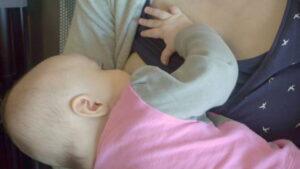
Zepbound and breastfeeding are not currently recommended due to limited safety data on tirzepatide transfer into breast milk and potential effects on infants. At Trim Body M.D., clinical guidance prioritizes infant safety, maternal recovery, and evidence-based timing for weight-loss therapy after breastfeeding ends. Book a free consultation to discuss breastfeeding safety.
Key Takeaways
- Zepbound safety during breastfeeding has not been established
- Transfer into breast milk has not been adequately studied
- Infant metabolic exposure remains an unresolved risk
- Weight-loss medications are typically deferred while nursing
- Medical supervision helps plan safe postpartum timing
What We Know About Zepbound and Breastfeeding Safety
Zepbound, which contains tirzepatide, helps by triggering GLP-1 and GIP receptors. These receptors have an influence on hunger, how the body handles insulin, and digestion. These effects can help with losing weight, but they bring up important concerns when breastfeeding.
The biggest worry is whether the drug moves into breast milk. Medications made of large peptides, like tirzepatide, are believed to have low chances of being absorbed by a baby’s stomach since they might break down during digestion. But this belief cannot replace proper safety studies in humans.
No clinical trials have studied Zepbound use in breastfeeding individuals yet. Because of this lack of data, doctors take a cautious approach. Many advise waiting to use Zepbound until after breastfeeding is over.
Safety advice for pregnancy often carries over into breastfeeding, as both involve the baby’s exposure.
Let our team know how we can help with your goals!
Why Breastfeeding and Metabolic Medications Need Careful Attention
Breastfeeding depends on hormonal changes. Hormones like prolactin, oxytocin, insulin, and thyroid hormones work together to make milk and help the mother recover. Medications that change appetite or glucose levels might disrupt this delicate process.
Eating enough calories is important. Breastfeeding increases the body’s energy needs. Using Zepbound, which can reduce appetite, might make it challenging to eat enough. This could lower milk supply or leave the mother with low energy.
Another issue is infant metabolism. Even small amounts of exposure might affect a baby’s glucose levels or digestive health as they grow. Since there is no solid evidence that it is safe, experts still advise against using it during this time.
Doctors also look into all the medications a patient is taking. This helps them avoid overlapping drug risks during the postpartum period.
What Experts Know About Tirzepatide and Breastfeeding
Research on animals using GLP-1–based drugs found the medicine in milk, but outcomes differed depending on species and how much was given. These studies cannot be applied to humans, though they help guide safety warnings.
A working paper that reviews early research on tirzepatide during breastfeeding says there is not enough proof to know if it is risky for infants or what levels might be considered safe.
Other trusted sources highlight that just because there is no available data does not mean it is safe. Their advice suggests delaying the use of such drugs while breastfeeding unless the potential advantages clearly outweigh the risks, which is the case when the purpose is weight loss.
Until researchers conduct studies on breastfeeding humans, the safest option is to stick with cautious advice.
To discuss our services, contact us today!
When Can You Restart Zepbound After Breastfeeding?
Most patients wonder about the timing. Doctors say Zepbound can be restarted after breastfeeding stops. This includes weaning off from any pumping, occasional nursing, or night feeds.
Medical advice often emphasizes waiting until lactation has ended, along with stopping milk production. This helps lower the chances of small amounts of the drug passing through breast milk.
Restarting also depends on postpartum recovery. Hormones need to be balanced, sleep should be somewhat regular, and nutritional stability must be in place before going back to this type of therapy.
To adjust, many patients follow a customized plan that focuses on postpartum changes and long-term weight management goals.
Need help deciding? Fill out a contact form,and we’ll ensure you’re informed!
Managing Weight While Breastfeeding
Zepbound use is not advised during breastfeeding. However, there are other ways to support health after giving birth. These include planning meals, light exercise, better sleep habits, and checking metabolism through lab tests.
Slower methods work better than quick weight-loss plans because they help maintain milk supply and keep moms healthier.
Once breastfeeding stops, people can restart medical weight-loss treatments with careful monitoring and doses. At our Torrance clinic, many patients take this step-by-step plan to stay safe and see results.
How Our Clinic Helps with Postpartum Weight Goals
At Trim Body M.D., your breastfeeding status plays a key role in creating personalized treatment plans.
- Customized weight plans for postpartum recovery
- Diet plans are safe to follow while breastfeeding
- Straightforward advice on proper use of medications
- Evaluation of current supplements and medications
- Steps to prepare for life after breastfeeding
This careful approach helps you avoid risks and still work towards achieving weight management goals.
Putting Zepbound and Breastfeeding Into Perspective
Zepbound and breastfeeding are not considered compatible due to limited safety data and potential infant exposure. Many doctors suggest waiting to start this treatment until breastfeeding is finished. Once the postpartum period is over, with proper guidance, weight-loss treatments can be started safely. Discuss your choices with our healthcare provider today.
Disclaimer: This article is for informational and educational purposes. Treatment decisions are made during an individual medical evaluation with a licensed provider. We provide compounded tirzepatide and are not affiliated with or endorsed by the manufacturers of Zepbound® or Mounjaro®.
FAQs about Zepbound and Breastfeeding
Can You Take Zepbound While Breastfeeding?
No. Zepbound is not recommended during breastfeeding because safety data on infant exposure through breast milk is limited. Most clinicians advise waiting until nursing has fully ended.
Does Tirzepatide Pass Into Breast Milk?
It is unknown. Human studies have not confirmed whether tirzepatide enters breast milk or affects infants, which is why medical guidance takes a precautionary approach.
What Are The Risks To Infants If Used While Nursing?
Potential risks include unintended effects on infant metabolism, feeding patterns, or growth. These risks are theoretical but unresolved, so avoidance is recommended until more data is available.
Can Breastfeeding Affect Weight Loss Without Medication?
Yes. Breastfeeding increases calorie expenditure and can support gradual weight loss naturally. Many clinicians recommend focusing on nutrition and recovery instead of appetite-suppressing medications during this period.
When Is It Safe To Start Zepbound After Breastfeeding?
Zepbound is typically started after breastfeeding has fully stopped and hormones have stabilized. A clinician can help determine appropriate timing based on recovery, goals, and future pregnancy plans.
Call and talk to a specialist today! (702) 489-3300
Let our team know how we can help with your goals!

Get In Touch With Us
Schedule Your Free Consultation — Take Your First Step Today
 Henderson
Let our team of Medical Professionals help you achieve your body goals. Contact us Today!