
'%3e%3cpath%20d='M12.0979%2019.9987C10.6974%2019.9987%209.29703%2019.4657%208.2309%2018.3995L1.60176%2011.7704C0.568828%2010.7375%200%209.36414%200%207.9034C0%206.44262%200.568828%205.06934%201.6018%204.03641C2.51562%203.12254%204.00258%203.12262%204.91633%204.03637L7.12605%206.2461C8.03988%207.15992%208.03988%208.6468%207.12605%209.56067C6.97848%209.70821%206.89723%209.90442%206.89723%2010.1131C6.89723%2010.3218%206.97848%2010.5179%207.12602%2010.6655L9.33574%2012.8752C9.48328%2013.0228%209.67949%2013.1041%209.88816%2013.1041C10.0969%2013.1041%2010.293%2013.0228%2010.4406%2012.8753C11.3545%2011.9614%2012.8414%2011.9614%2013.7552%2012.8753L15.9649%2015.085C16.8787%2015.9988%2016.8787%2017.4857%2015.9649%2018.3995C14.8987%2019.4657%2013.4983%2019.9987%2012.0979%2019.9987ZM3.25906%204.91281C3.05898%204.91281%202.85895%204.98895%202.7066%205.14129C1.96883%205.87906%201.5625%206.86%201.5625%207.9034C1.5625%208.9468%201.96883%209.92774%202.7066%2010.6655L9.33574%2017.2947C10.8587%2018.8177%2013.337%2018.8177%2014.86%2017.2947C15.1646%2016.99%2015.1646%2016.4944%2014.86%2016.1898L12.6503%2013.9801C12.5028%2013.8325%2012.3066%2013.7513%2012.0979%2013.7513C11.8892%2013.7513%2011.693%2013.8325%2011.5455%2013.98C10.6316%2014.8939%209.14473%2014.8939%208.23086%2013.98L6.02117%2011.7703C5.57852%2011.3277%205.33473%2010.7391%205.33473%2010.113C5.33473%209.48703%205.57852%208.89844%206.02117%208.45578C6.16875%208.30824%206.25%208.11203%206.25%207.90336C6.25%207.69469%206.16875%207.49852%206.02117%207.35094L3.81148%205.14121C3.65918%204.98899%203.4591%204.91281%203.25906%204.91281Z'%20fill='black'/%3e%3cpath%20d='M9.5448%209.3168C9.25285%209.1959%209.0625%208.91102%209.0625%208.59504V0.782539C9.0625%200.351055%209.41227%200.00128937%209.84375%200.00128937H19.2188C19.6502%200.00128937%2020%200.351055%2020%200.782539V7.03254C20%207.46402%2019.6502%207.81379%2019.2188%207.81379H11.7298L10.3962%209.14746C10.1728%209.3709%209.83676%209.43773%209.5448%209.3168ZM10.625%201.56379V6.70895L10.8538%206.48012C11.0003%206.33359%2011.199%206.25129%2011.4062%206.25129H18.4375V1.56379H10.625Z'%20fill='black'/%3e%3cpath%20d='M12.9688%204.68879C13.4002%204.68879%2013.75%204.33901%2013.75%203.90754C13.75%203.47607%2013.4002%203.12629%2012.9688%203.12629C12.5373%203.12629%2012.1875%203.47607%2012.1875%203.90754C12.1875%204.33901%2012.5373%204.68879%2012.9688%204.68879Z'%20fill='black'/%3e%3cpath%20d='M16.0938%204.68879C16.5252%204.68879%2016.875%204.33901%2016.875%203.90754C16.875%203.47607%2016.5252%203.12629%2016.0938%203.12629C15.6623%203.12629%2015.3125%203.47607%2015.3125%203.90754C15.3125%204.33901%2015.6623%204.68879%2016.0938%204.68879Z'%20fill='black'/%3e%3c/g%3e%3cdefs%3e%3cclipPath%20id='clip0_6353_9'%3e%3crect%20width='20'%20height='20'%20fill='white'/%3e%3c/clipPath%3e%3c/defs%3e%3c/svg%3e)
'%3e%3cpath%20d='M10%2020C13.8389%2020%2017.0312%2018.3836%2017.0312%2016.0938C17.0312%2015.4405%2016.7592%2014.8022%2016.2444%2014.2478C15.9508%2013.9316%2015.4565%2013.9132%2015.1403%2014.2068C14.8241%2014.5004%2014.8058%2014.9947%2015.0994%2015.3109C15.3444%2015.5749%2015.4687%2015.8383%2015.4687%2016.0938C15.4687%2017.2001%2013.13%2018.4375%209.99996%2018.4375C6.86996%2018.4375%204.53121%2017.2001%204.53121%2016.0938C4.53121%2015.8382%204.65547%2015.5749%204.90055%2015.3109C5.19414%2014.9947%205.17582%2014.5004%204.85965%2014.2068C4.54348%2013.9133%204.04914%2013.9316%203.75555%2014.2477C3.24082%2014.8021%202.96875%2015.4405%202.96875%2016.0938C2.96875%2018.3803%206.15578%2020%2010%2020Z'%20fill='black'/%3e%3cpath%20d='M8.13172%2015.9465C8.57285%2016.5282%209.27023%2016.875%2010%2016.875C10.7298%2016.875%2011.4271%2016.5282%2011.8683%2015.9466L15.6293%2011.2402C16.5465%2010.0163%2017.0312%208.5609%2017.0312%207.03125C17.0312%203.15422%2013.877%200%2010%200C6.12297%200%202.96875%203.15422%202.96875%207.03125C2.96875%208.56094%203.45352%2010.0164%204.37063%2011.2402L8.13172%2015.9465ZM10%201.5625C13.0155%201.5625%2015.4688%204.01578%2015.4688%207.03125C15.4688%208.21648%2015.0944%209.34434%2014.386%2010.2938C14.386%2010.2938%2010.6309%2014.9924%2010.626%2014.9989C10.4766%2015.1982%2010.2484%2015.3125%2010%2015.3125C9.75156%2015.3125%209.5234%2015.1982%209.37402%2014.9989C9.36914%2014.9923%209.36418%2014.9859%209.3591%2014.9796L5.61395%2010.2937C4.90559%209.34434%204.53125%208.21652%204.53125%207.03125C4.53125%204.01578%206.98453%201.5625%2010%201.5625Z'%20fill='black'/%3e%3cpath%20d='M10%2010.9375C12.1539%2010.9375%2013.9062%209.18516%2013.9062%207.03125C13.9062%204.87734%2012.1539%203.125%2010%203.125C7.84609%203.125%206.09375%204.87734%206.09375%207.03125C6.09375%209.18516%207.84609%2010.9375%2010%2010.9375ZM10%204.6875C11.2923%204.6875%2012.3438%205.73891%2012.3438%207.03125C12.3438%208.32359%2011.2923%209.375%2010%209.375C8.70766%209.375%207.65625%208.32359%207.65625%207.03125C7.65625%205.73891%208.70766%204.6875%2010%204.6875Z'%20fill='black'/%3e%3c/g%3e%3cdefs%3e%3cclipPath%20id='clip0_6353_60'%3e%3crect%20width='20'%20height='20'%20fill='white'/%3e%3c/clipPath%3e%3c/defs%3e%3c/svg%3e)

'%3e%3ccircle%20cx='321'%20cy='321'%20r='276'%20transform='matrix(-1%200%200%201%20481%200)'%20stroke='%23E5DFD3'%20stroke-width='90'/%3e%3c/g%3e%3cdefs%3e%3cclipPath%20id='clip0_6046_3421'%3e%3crect%20width='481'%20height='413'%20fill='white'%20transform='matrix(-1%200%200%201%20481%200)'/%3e%3c/clipPath%3e%3c/defs%3e%3c/svg%3e)
Zepbound Heart Palpitations: Causes and What to Do
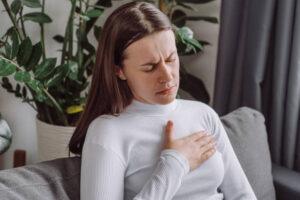
Zepbound heart palpitations are not listed as a primary side effect, but some patients report awareness of heartbeat changes during treatment. These sensations are usually indirect and related to metabolic shifts, hydration status, or nervous system responses rather than direct cardiac injury. Our clinicians evaluate palpitations carefully to distinguish benign adjustments from symptoms that require medical review. Book a free consultation to discuss heart-related symptoms.
Key Takeaways
- Zepbound does not directly damage the heart
- Palpitations are usually indirect and temporary
- Electrolytes and hydration play a major role
- Anxiety and rapid weight loss can amplify symptoms
- Medical monitoring helps rule out true heart issues
Does Zepbound Give You Heart Palpitations?
Zepbound does not work on the heart muscles or on how electrical signals control heartbeats. It works through GLP-1 and GIP receptors, which help manage appetite, digestion, and insulin levels. Since these systems do not focus on the heart, palpitations are not seen as a direct result of the medication.
When people notice palpitations, they describe fluttering, pounding, or becoming more aware of their heartbeat, though not irregular rhythms. These feelings often happen during early dose adjustments or when food intake is lower. The timing points more to the body adjusting rather than any heart problem.
Symptoms like lightheadedness or weakness can show up with other effects of treatment. For example, zepbound dizziness might make someone more aware of their heartbeat even if the rhythm stays steady.
Unusual symptoms such as ongoing chest pain, fainting, or long-lasting palpitations are not part of normal adjustments. These signs always need a proper medical check-up.
Let our team know how we can help with your goals!
How Metabolic Shifts Can Lead to Palpitations
Weight loss medications can change metabolism. They suppress appetite, which may lead people to drink less water or get fewer electrolytes without realizing it. Even slight dehydration might raise heart rate and make normal heartbeats feel stronger.
Electrolytes are very important. Sodium, potassium, and magnesium help control how nerves and muscles communicate. Stomach issues like loose stools can upset this balance even more. People dealing with frequent bowel changes tied to zepbound diarrhea might feel more heart palpitations if they do not drink enough fluids to replace what is lost.
The autonomic nervous system adjusts too when weight drops. Better insulin sensitivity and reduced body mass can change resting heart rate and blood vessel tightness. These shifts might feel strange, but they are not dangerous.
Anxiety plays a role, too. New treatments, fast body changes, and worries about side effects can increase how much people notice their heartbeat by activating stress.
Sensitivity of the Nervous System and Feeling Heartbeats
GLP-1 therapies have an impact on gut-brain signals, which tie to the autonomic nervous system. This system manages heart rate, digestion, and blood pressure. At the start of treatment, changes in these signals might make people more aware of their heartbeats.
This experience is different from arrhythmia. Real rhythm problems come with issues like chest pain, trouble breathing, or fainting. Most Zepbound-related heartbeat sensations do not include these problems and tend to get better with drinking fluids and waiting a bit.
Clinical evidence shows a clear distinction here. A cardiovascular safety review shared in a published analysis of cardiac outcomes indicates GLP-1 therapies do not seem to have an impact on the risk of arrhythmia in most people.
To discuss our services, contact us today!
Lifestyle Habits That May Worsen Palpitations
Some everyday choices may make palpitations feel worse during treatment. Drinking caffeine while on a lower-calorie diet can affect the body more than expected. Common culprits include coffee, energy drinks, and pre-workout powders.
Getting poor sleep also plays a role. When people lack sleep, their sympathetic nervous system becomes more active, which speeds up their heart rate and amplifies body sensations. Restful sleep helps keep the heart steady while losing weight.
Sudden bursts of activity can play a part. When weight drops, things like moving around become easier, so patients may start doing more than their body is used to without building up to it. This extra effort might put some pressure on the nervous system for a little while.
Eating right makes a difference. Drinking enough water, getting proper protein, and eating on a schedule can lower stress reactions that might lead to heart flutters.
Need help deciding? Fill out a contact form,and we’ll ensure you’re informed!
When to See a Doctor for Palpitations
Most heart flutters during Zepbound treatment don’t last long and aren’t serious. But some signs should never be brushed off. These include pain in the chest, passing out, a fast heartbeat, or flutters happening while resting without reason.
People who have thyroid problems, anxiety, or past heart rhythm troubles might be more prone to these changes. They may need extra watchfulness instead of stopping treatment right away.
Heart experts stress the need to assess each person. Keck Medicine’s insights on heart effects point out that the overall context of symptoms is more important than just looking at one sensation alone.
How We Keep Track of Heart Symptoms During Treatment
At Trim Body M.D., we handle any heart-related symptoms as part of total metabolic care instead of seeing them as separate concerns. Having worked with over 30,000+ patients, our team focuses on staying safe while helping you keep making progress.
- Check when symptoms happen and what might cause them
- Monitor heart rate and blood pressure
- Help with hydration and controlling electrolytes
- Make changes to doses if needed
- Recommend heart tests when necessary
Patients undergoing tirzepatide treatment at our San Marcos clinic get regular check-ups to catch and manage symptoms.
Understanding Zepbound Heart Palpitations
Zepbound-related heart palpitations are often tied to changes in hydration, electrolyte levels, the nervous system, or a quick metabolic shift. These are temporary and not linked to direct heart damage. With proper medical supervision, most people notice symptoms getting better as their body adjusts. Book a consultation if symptoms don’t ease.
Disclaimer: This article is for informational and educational purposes. Treatment decisions are made during an individual medical evaluation with a licensed provider. We provide compounded tirzepatide and are not affiliated with or endorsed by the manufacturers of Zepbound® or Mounjaro®.
FAQs about Zepbound and Heart Palpitations
Is Zepbound Good For Your Heart?
Yes, Zepbound can indirectly support heart health by improving insulin resistance and reducing metabolic strain through weight loss.
Why Do Palpitations Happen Early In Treatment?
Early appetite changes can reduce fluid and electrolyte intake. This can increase heart rate awareness until hydration and intake stabilize.
Can Dehydration Make Palpitations Worse?
Yes, dehydration and low electrolytes can amplify normal heartbeats. Drinking fluids consistently often reduces symptoms quickly.
Should I Stop Zepbound If I Feel Palpitations?
Do not stop medication without guidance. A clinician can assess symptoms and adjust dosing or hydration strategies safely.
Call and talk to a specialist today! (702) 489-3300
Let our team know how we can help with your goals!

Get In Touch With Us
Schedule Your Free Consultation — Take Your First Step Today
 Henderson
Let our team of Medical Professionals help you achieve your body goals. Contact us Today!