
'%3e%3cpath%20d='M12.0979%2019.9987C10.6974%2019.9987%209.29703%2019.4657%208.2309%2018.3995L1.60176%2011.7704C0.568828%2010.7375%200%209.36414%200%207.9034C0%206.44262%200.568828%205.06934%201.6018%204.03641C2.51562%203.12254%204.00258%203.12262%204.91633%204.03637L7.12605%206.2461C8.03988%207.15992%208.03988%208.6468%207.12605%209.56067C6.97848%209.70821%206.89723%209.90442%206.89723%2010.1131C6.89723%2010.3218%206.97848%2010.5179%207.12602%2010.6655L9.33574%2012.8752C9.48328%2013.0228%209.67949%2013.1041%209.88816%2013.1041C10.0969%2013.1041%2010.293%2013.0228%2010.4406%2012.8753C11.3545%2011.9614%2012.8414%2011.9614%2013.7552%2012.8753L15.9649%2015.085C16.8787%2015.9988%2016.8787%2017.4857%2015.9649%2018.3995C14.8987%2019.4657%2013.4983%2019.9987%2012.0979%2019.9987ZM3.25906%204.91281C3.05898%204.91281%202.85895%204.98895%202.7066%205.14129C1.96883%205.87906%201.5625%206.86%201.5625%207.9034C1.5625%208.9468%201.96883%209.92774%202.7066%2010.6655L9.33574%2017.2947C10.8587%2018.8177%2013.337%2018.8177%2014.86%2017.2947C15.1646%2016.99%2015.1646%2016.4944%2014.86%2016.1898L12.6503%2013.9801C12.5028%2013.8325%2012.3066%2013.7513%2012.0979%2013.7513C11.8892%2013.7513%2011.693%2013.8325%2011.5455%2013.98C10.6316%2014.8939%209.14473%2014.8939%208.23086%2013.98L6.02117%2011.7703C5.57852%2011.3277%205.33473%2010.7391%205.33473%2010.113C5.33473%209.48703%205.57852%208.89844%206.02117%208.45578C6.16875%208.30824%206.25%208.11203%206.25%207.90336C6.25%207.69469%206.16875%207.49852%206.02117%207.35094L3.81148%205.14121C3.65918%204.98899%203.4591%204.91281%203.25906%204.91281Z'%20fill='black'/%3e%3cpath%20d='M9.5448%209.3168C9.25285%209.1959%209.0625%208.91102%209.0625%208.59504V0.782539C9.0625%200.351055%209.41227%200.00128937%209.84375%200.00128937H19.2188C19.6502%200.00128937%2020%200.351055%2020%200.782539V7.03254C20%207.46402%2019.6502%207.81379%2019.2188%207.81379H11.7298L10.3962%209.14746C10.1728%209.3709%209.83676%209.43773%209.5448%209.3168ZM10.625%201.56379V6.70895L10.8538%206.48012C11.0003%206.33359%2011.199%206.25129%2011.4062%206.25129H18.4375V1.56379H10.625Z'%20fill='black'/%3e%3cpath%20d='M12.9688%204.68879C13.4002%204.68879%2013.75%204.33901%2013.75%203.90754C13.75%203.47607%2013.4002%203.12629%2012.9688%203.12629C12.5373%203.12629%2012.1875%203.47607%2012.1875%203.90754C12.1875%204.33901%2012.5373%204.68879%2012.9688%204.68879Z'%20fill='black'/%3e%3cpath%20d='M16.0938%204.68879C16.5252%204.68879%2016.875%204.33901%2016.875%203.90754C16.875%203.47607%2016.5252%203.12629%2016.0938%203.12629C15.6623%203.12629%2015.3125%203.47607%2015.3125%203.90754C15.3125%204.33901%2015.6623%204.68879%2016.0938%204.68879Z'%20fill='black'/%3e%3c/g%3e%3cdefs%3e%3cclipPath%20id='clip0_6353_9'%3e%3crect%20width='20'%20height='20'%20fill='white'/%3e%3c/clipPath%3e%3c/defs%3e%3c/svg%3e)
'%3e%3cpath%20d='M10%2020C13.8389%2020%2017.0312%2018.3836%2017.0312%2016.0938C17.0312%2015.4405%2016.7592%2014.8022%2016.2444%2014.2478C15.9508%2013.9316%2015.4565%2013.9132%2015.1403%2014.2068C14.8241%2014.5004%2014.8058%2014.9947%2015.0994%2015.3109C15.3444%2015.5749%2015.4687%2015.8383%2015.4687%2016.0938C15.4687%2017.2001%2013.13%2018.4375%209.99996%2018.4375C6.86996%2018.4375%204.53121%2017.2001%204.53121%2016.0938C4.53121%2015.8382%204.65547%2015.5749%204.90055%2015.3109C5.19414%2014.9947%205.17582%2014.5004%204.85965%2014.2068C4.54348%2013.9133%204.04914%2013.9316%203.75555%2014.2477C3.24082%2014.8021%202.96875%2015.4405%202.96875%2016.0938C2.96875%2018.3803%206.15578%2020%2010%2020Z'%20fill='black'/%3e%3cpath%20d='M8.13172%2015.9465C8.57285%2016.5282%209.27023%2016.875%2010%2016.875C10.7298%2016.875%2011.4271%2016.5282%2011.8683%2015.9466L15.6293%2011.2402C16.5465%2010.0163%2017.0312%208.5609%2017.0312%207.03125C17.0312%203.15422%2013.877%200%2010%200C6.12297%200%202.96875%203.15422%202.96875%207.03125C2.96875%208.56094%203.45352%2010.0164%204.37063%2011.2402L8.13172%2015.9465ZM10%201.5625C13.0155%201.5625%2015.4688%204.01578%2015.4688%207.03125C15.4688%208.21648%2015.0944%209.34434%2014.386%2010.2938C14.386%2010.2938%2010.6309%2014.9924%2010.626%2014.9989C10.4766%2015.1982%2010.2484%2015.3125%2010%2015.3125C9.75156%2015.3125%209.5234%2015.1982%209.37402%2014.9989C9.36914%2014.9923%209.36418%2014.9859%209.3591%2014.9796L5.61395%2010.2937C4.90559%209.34434%204.53125%208.21652%204.53125%207.03125C4.53125%204.01578%206.98453%201.5625%2010%201.5625Z'%20fill='black'/%3e%3cpath%20d='M10%2010.9375C12.1539%2010.9375%2013.9062%209.18516%2013.9062%207.03125C13.9062%204.87734%2012.1539%203.125%2010%203.125C7.84609%203.125%206.09375%204.87734%206.09375%207.03125C6.09375%209.18516%207.84609%2010.9375%2010%2010.9375ZM10%204.6875C11.2923%204.6875%2012.3438%205.73891%2012.3438%207.03125C12.3438%208.32359%2011.2923%209.375%2010%209.375C8.70766%209.375%207.65625%208.32359%207.65625%207.03125C7.65625%205.73891%208.70766%204.6875%2010%204.6875Z'%20fill='black'/%3e%3c/g%3e%3cdefs%3e%3cclipPath%20id='clip0_6353_60'%3e%3crect%20width='20'%20height='20'%20fill='white'/%3e%3c/clipPath%3e%3c/defs%3e%3c/svg%3e)

'%3e%3ccircle%20cx='321'%20cy='321'%20r='276'%20transform='matrix(-1%200%200%201%20481%200)'%20stroke='%23E5DFD3'%20stroke-width='90'/%3e%3c/g%3e%3cdefs%3e%3cclipPath%20id='clip0_6046_3421'%3e%3crect%20width='481'%20height='413'%20fill='white'%20transform='matrix(-1%200%200%201%20481%200)'/%3e%3c/clipPath%3e%3c/defs%3e%3c/svg%3e)
Can Zepbound Cause High Cholesterol?
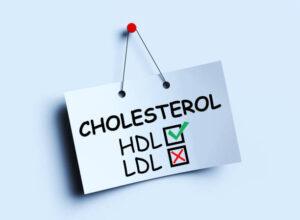
Can Zepbound cause high cholesterol? This is an important question for those keeping track of heart health or dealing with risks related to metabolism. The concern is valid and needs a clear answer based on facts.
TrimBody M.D manages medical weight loss through lab testing, clinical guidance, and individualized care plans. Because Zepbound influences multiple metabolic processes, its relationship with cholesterol is more nuanced than a simple yes or no. Get expert medical guidance today.
Key Takeaways:
- Zepbound does not increase cholesterol
- Cholesterol levels in labs may change during short-term weight loss
- Losing fat changes how cholesterol behaves in the body
- A lot of patients notice their cholesterol getting better.
- Regular lab tests make it easier to understand changes.
Does Zepbound Lead to High Cholesterol While Losing Weight?
Zepbound does not cause the liver to produce more cholesterol. Instead, when someone loses weight, their fat cells shrink and release stored fats, which can raise cholesterol levels in the blood. This trend happens in many weight loss methods, like changing diets or getting bariatric treatment.
Research shows that GLP-1–based treatments have a positive or neutral effect on blood fats over time. They tend to lower triglycerides and LDL cholesterol once weight evens out. Clinical trial results suggest these changes help protect the heart and do not raise the risk of heart problems.
For this reason, short-term changes in lab results must be understood along with weight changes, insulin levels, and overall health.
Let our team know how we can help with your goals!
What Zepbound Does in the Body
Zepbound is a medicine that acts on GLP-1 and GIP receptors. It supports weight loss by affecting how appetite, insulin response, and energy levels are managed. While it does not change how cholesterol is made, it does play a role in processes linked to lipid metabolism.
When people lose weight, their bodies start releasing stored fat into the bloodstream. Cholesterol travels within this fat through LDL particles. During this process, some patients may see temporary changes in their cholesterol results. This does not mean Zepbound is harmful. It shows the body breaking down fat reserves.
Clinical studies and real-world cases suggest that as weight becomes steady, cholesterol levels return to normal or even improve. This is why the timing of lab tests plays a role in evaluating results during treatment.
Does Zepbound Help Reduce Cholesterol Long-Term?
Sustained weight loss can lead to better insulin response, less body-wide inflammation, and reduced fat in the liver. These changes all play a part in managing cholesterol levels. Because of this, LDL cholesterol and triglycerides often drop after the body moves past the rapid weight-loss phase.
Medical News Today shares that GLP-1-based drugs like Zepbound show positive effects on heart and metabolic health markers in studies. These benefits show up after the body adjusts to the weight loss, not right at the start.
A delayed benefit shows why using early lab results alone does not give a full picture of long-term cardiovascular effects.
To discuss our services, contact us today!
Who Might Need to Watch Cholesterol Levels on Zepbound
Some people may need to keep a closer eye on their cholesterol during this treatment:
- Those who already have high cholesterol
- People with a family history of heart problems
- Anyone using statins or other cholesterol-lowering medications
- Patients losing weight in the treatment
Keeping track of cholesterol doesn’t mean Zepbound is risky. It just shows a careful approach to care where health decisions rely on patterns, symptoms, and overall goals, not on unnecessary fears.
Need help deciding? Fill out a contact form,and we’ll ensure you’re informed!
What Most Patients Go Through
Most people taking Zepbound don’t see long-term cholesterol spikes. A few typical trends are:
- LDL might go up at the start of fat loss.
- Cholesterol tends to get better as weight evens out.
- Over time, triglycerides tend to drop.
- Insulin and other metabolic health markers improve, too.
For a lot of individuals, losing weight helps reduce overall strain on the heart and makes managing cholesterol less challenging.
How TrimBody M.D. Can Help With Cholesterol and Metabolism
At TrimBody M.D, doctors guide medical weight loss with detailed checks, regular lab tests, and clear explanations for patients. With over 30,000 patients served across different clinics, the staff knows how medicines like Zepbound can change cholesterol in real-world metabolic conditions.
Patients gain from:
- Starting and follow-up lipid testing
- Understanding lab result changes
- Adjusting medications when necessary
- Nutrition advice during fat-loss periods
- Planning for long-term metabolic health
This method keeps patients focused on meaningful goals, not just lab numbers. Many patients also ask about things like weight loss progress and how fast Zepbound shows results, which doctors cover along with cholesterol checks to give a full medical overview.
Reminder for Patients Checking Their Cholesterol
It makes sense to ask, can Zepbound cause high cholesterol if you are focused on heart health. Zepbound does not directly cause an increase in cholesterol. Some temporary lab results can change because of how your body adjusts to losing fat, not because of a higher risk to your heart.
Over time, as weight levels out and overall health improves many patients notice better cholesterol numbers. Knowing when and how to understand these results with guidance from your doctor is crucial.
Want to review your lab tests and treatment options with your healthcare provider? Schedule a free consultation today!
Disclaimer: This article is for informational and educational purposes. Treatment decisions are made during an individual medical evaluation with a licensed provider. We provide compounded tirzepatide and are not affiliated with or endorsed by the manufacturers of Zepbound® or Mounjaro®.
FAQs About Can Zepbound Cause High Cholesterol
Should I Stop Zepbound If My Cholesterol Increases On Labs?
No. A short-term rise can reflect active fat loss, not medication harm. Your clinician usually reviews trends over time before making any treatment changes.
When Is The Best Time To Check Cholesterol While On Zepbound?
Cholesterol is best checked after weight stabilizes, not during rapid loss. Early testing can misrepresent long-term metabolic changes.
Can Zepbound Affect LDL And Triglycerides Differently?
Yes. Triglycerides often improve sooner, while LDL may shift temporarily. These patterns are common during metabolic adaptation and usually balance out.
Do I Need A Statin If Cholesterol Changes On Zepbound?
Not automatically. Decisions depend on cardiovascular risk, family history, and repeat labs rather than a single result.
Does Diet Still Matter For Cholesterol While Using Zepbound?
Absolutely. Food choices influence lipid levels alongside medication effects. Balanced nutrition supports healthier cholesterol responses during treatment.
Call and talk to a specialist today! (702) 489-3300
Let our team know how we can help with your goals!

Get In Touch With Us
Schedule Your Free Consultation — Take Your First Step Today
 Henderson
Let our team of Medical Professionals help you achieve your body goals. Contact us Today!