
'%3e%3cpath%20d='M12.0979%2019.9987C10.6974%2019.9987%209.29703%2019.4657%208.2309%2018.3995L1.60176%2011.7704C0.568828%2010.7375%200%209.36414%200%207.9034C0%206.44262%200.568828%205.06934%201.6018%204.03641C2.51562%203.12254%204.00258%203.12262%204.91633%204.03637L7.12605%206.2461C8.03988%207.15992%208.03988%208.6468%207.12605%209.56067C6.97848%209.70821%206.89723%209.90442%206.89723%2010.1131C6.89723%2010.3218%206.97848%2010.5179%207.12602%2010.6655L9.33574%2012.8752C9.48328%2013.0228%209.67949%2013.1041%209.88816%2013.1041C10.0969%2013.1041%2010.293%2013.0228%2010.4406%2012.8753C11.3545%2011.9614%2012.8414%2011.9614%2013.7552%2012.8753L15.9649%2015.085C16.8787%2015.9988%2016.8787%2017.4857%2015.9649%2018.3995C14.8987%2019.4657%2013.4983%2019.9987%2012.0979%2019.9987ZM3.25906%204.91281C3.05898%204.91281%202.85895%204.98895%202.7066%205.14129C1.96883%205.87906%201.5625%206.86%201.5625%207.9034C1.5625%208.9468%201.96883%209.92774%202.7066%2010.6655L9.33574%2017.2947C10.8587%2018.8177%2013.337%2018.8177%2014.86%2017.2947C15.1646%2016.99%2015.1646%2016.4944%2014.86%2016.1898L12.6503%2013.9801C12.5028%2013.8325%2012.3066%2013.7513%2012.0979%2013.7513C11.8892%2013.7513%2011.693%2013.8325%2011.5455%2013.98C10.6316%2014.8939%209.14473%2014.8939%208.23086%2013.98L6.02117%2011.7703C5.57852%2011.3277%205.33473%2010.7391%205.33473%2010.113C5.33473%209.48703%205.57852%208.89844%206.02117%208.45578C6.16875%208.30824%206.25%208.11203%206.25%207.90336C6.25%207.69469%206.16875%207.49852%206.02117%207.35094L3.81148%205.14121C3.65918%204.98899%203.4591%204.91281%203.25906%204.91281Z'%20fill='black'/%3e%3cpath%20d='M9.5448%209.3168C9.25285%209.1959%209.0625%208.91102%209.0625%208.59504V0.782539C9.0625%200.351055%209.41227%200.00128937%209.84375%200.00128937H19.2188C19.6502%200.00128937%2020%200.351055%2020%200.782539V7.03254C20%207.46402%2019.6502%207.81379%2019.2188%207.81379H11.7298L10.3962%209.14746C10.1728%209.3709%209.83676%209.43773%209.5448%209.3168ZM10.625%201.56379V6.70895L10.8538%206.48012C11.0003%206.33359%2011.199%206.25129%2011.4062%206.25129H18.4375V1.56379H10.625Z'%20fill='black'/%3e%3cpath%20d='M12.9688%204.68879C13.4002%204.68879%2013.75%204.33901%2013.75%203.90754C13.75%203.47607%2013.4002%203.12629%2012.9688%203.12629C12.5373%203.12629%2012.1875%203.47607%2012.1875%203.90754C12.1875%204.33901%2012.5373%204.68879%2012.9688%204.68879Z'%20fill='black'/%3e%3cpath%20d='M16.0938%204.68879C16.5252%204.68879%2016.875%204.33901%2016.875%203.90754C16.875%203.47607%2016.5252%203.12629%2016.0938%203.12629C15.6623%203.12629%2015.3125%203.47607%2015.3125%203.90754C15.3125%204.33901%2015.6623%204.68879%2016.0938%204.68879Z'%20fill='black'/%3e%3c/g%3e%3cdefs%3e%3cclipPath%20id='clip0_6353_9'%3e%3crect%20width='20'%20height='20'%20fill='white'/%3e%3c/clipPath%3e%3c/defs%3e%3c/svg%3e)
'%3e%3cpath%20d='M10%2020C13.8389%2020%2017.0312%2018.3836%2017.0312%2016.0938C17.0312%2015.4405%2016.7592%2014.8022%2016.2444%2014.2478C15.9508%2013.9316%2015.4565%2013.9132%2015.1403%2014.2068C14.8241%2014.5004%2014.8058%2014.9947%2015.0994%2015.3109C15.3444%2015.5749%2015.4687%2015.8383%2015.4687%2016.0938C15.4687%2017.2001%2013.13%2018.4375%209.99996%2018.4375C6.86996%2018.4375%204.53121%2017.2001%204.53121%2016.0938C4.53121%2015.8382%204.65547%2015.5749%204.90055%2015.3109C5.19414%2014.9947%205.17582%2014.5004%204.85965%2014.2068C4.54348%2013.9133%204.04914%2013.9316%203.75555%2014.2477C3.24082%2014.8021%202.96875%2015.4405%202.96875%2016.0938C2.96875%2018.3803%206.15578%2020%2010%2020Z'%20fill='black'/%3e%3cpath%20d='M8.13172%2015.9465C8.57285%2016.5282%209.27023%2016.875%2010%2016.875C10.7298%2016.875%2011.4271%2016.5282%2011.8683%2015.9466L15.6293%2011.2402C16.5465%2010.0163%2017.0312%208.5609%2017.0312%207.03125C17.0312%203.15422%2013.877%200%2010%200C6.12297%200%202.96875%203.15422%202.96875%207.03125C2.96875%208.56094%203.45352%2010.0164%204.37063%2011.2402L8.13172%2015.9465ZM10%201.5625C13.0155%201.5625%2015.4688%204.01578%2015.4688%207.03125C15.4688%208.21648%2015.0944%209.34434%2014.386%2010.2938C14.386%2010.2938%2010.6309%2014.9924%2010.626%2014.9989C10.4766%2015.1982%2010.2484%2015.3125%2010%2015.3125C9.75156%2015.3125%209.5234%2015.1982%209.37402%2014.9989C9.36914%2014.9923%209.36418%2014.9859%209.3591%2014.9796L5.61395%2010.2937C4.90559%209.34434%204.53125%208.21652%204.53125%207.03125C4.53125%204.01578%206.98453%201.5625%2010%201.5625Z'%20fill='black'/%3e%3cpath%20d='M10%2010.9375C12.1539%2010.9375%2013.9062%209.18516%2013.9062%207.03125C13.9062%204.87734%2012.1539%203.125%2010%203.125C7.84609%203.125%206.09375%204.87734%206.09375%207.03125C6.09375%209.18516%207.84609%2010.9375%2010%2010.9375ZM10%204.6875C11.2923%204.6875%2012.3438%205.73891%2012.3438%207.03125C12.3438%208.32359%2011.2923%209.375%2010%209.375C8.70766%209.375%207.65625%208.32359%207.65625%207.03125C7.65625%205.73891%208.70766%204.6875%2010%204.6875Z'%20fill='black'/%3e%3c/g%3e%3cdefs%3e%3cclipPath%20id='clip0_6353_60'%3e%3crect%20width='20'%20height='20'%20fill='white'/%3e%3c/clipPath%3e%3c/defs%3e%3c/svg%3e)

'%3e%3ccircle%20cx='321'%20cy='321'%20r='276'%20transform='matrix(-1%200%200%201%20481%200)'%20stroke='%23E5DFD3'%20stroke-width='90'/%3e%3c/g%3e%3cdefs%3e%3cclipPath%20id='clip0_6046_3421'%3e%3crect%20width='481'%20height='413'%20fill='white'%20transform='matrix(-1%200%200%201%20481%200)'/%3e%3c/clipPath%3e%3c/defs%3e%3c/svg%3e)
Zepbound Half Life: How Long Does It Last?
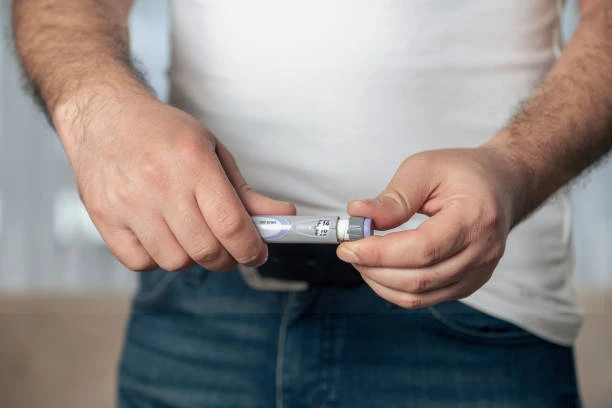
Zepbound half life refers to how long the medication remains active in the body before half of the drug is eliminated. Zepbound, the brand name for tirzepatide used in medical weight loss, has an elimination half-life of about five to six days.
At Trim Body M.D., clinicians explain that this long half life allows the medication to work with a once-weekly injection schedule while maintaining steady metabolic support. Schedule a Zepbound consultation at TrimBody M.D. to review how tirzepatide works in your body and plan your weekly dosing safely.
Key Takeaways:
- Zepbound’s half-life averages five to six days
- Medication may stay in the body for around thirty days
- Blood levels typically peak within eight to seventy two hours
- Weekly dosing maintains stable therapeutic levels
- Medical supervision improves safety and treatment outcomes
Learning About Zepbound Half-Life and Its Importance
Tirzepatide has a half-life of around five or six days. This means nearly half of the medication stays in the blood for close to a week after you take it. Since half is removed each time this cycle repeats, smaller traces stick around in your system for weeks.
This slow way the body removes it is why doctors suggest taking Zepbound just once a week instead of every day. A longer half-life helps the drug do its job between doses.
Clinical pharmacology data says that blood levels of the drug reach their highest point between eight and seventy-two hours after an injection. Once it peaks, the level starts dropping as the body breaks down and clears the drug from the system.
This slight decrease keeps the drug’s effects steady and avoids sharp rises or drops in its levels.
How Long Zepbound Lasts in the Body
The zepbound half-life helps explain how long the medication stays in the system after an injection. About half of the drug is removed in roughly five to six days, while the remaining amount continues declining through several additional half-life cycles.
Most medications require about five to six half-lives to leave the body. For Zepbound, this means the drug may still be detectable for close to thirty days after the final dose.
Each half-life significantly reduces the amount of medication in circulation.
- After one half-life, about 50% remains
- After two half-lives, about 25% remains
- After three half-lives, about 12% remains
- After four half-lives, about 6% remains
- After five half-lives, only trace amounts remain
This gradual decline helps the medication maintain metabolic activity between weekly injections. Even as levels slowly decrease, the body continues responding to the drug.
Medical News Today explains that tirzepatide stays in the system for weeks because it has a long half-life and clears out of the body.
Why Zepbound Is Effective With Weekly Use
Tirzepatide’s design focuses on weekly dosing. Its long half-life helps stabilize drug levels and reduces the need for frequent injections.
When patients stick to their weekly injection schedule, the medication builds up in their bloodstream until it reaches a steady level. This level is called steady state.
For Zepbound, it takes about four weeks of regular doses to reach steady state. By this time, each weekly shot replenishes what the body has cleared out. This balance keeps the body working predictably.
Once steady state is achieved, patients often find improvements in controlling appetite, regulating glucose, and losing weight more.
To learn how changing doses influences these results, the guide on Zepbound dose increase explains how doctors adjust doses to keep the treatment effective.
Adjusting doses minimizes side effects and helps the body get used to stronger treatment levels.
What Happens If You Miss a Dose
Zepbound stays in your system for a few days, which gives a bit of extra time if you forget a dose.
You have up to four days or ninety-six hours to take the missed shot after your regular day. If more time passes, doctors often suggest skipping it and just sticking to your usual weekly plan.m
This leeway is possible because the drug stays in your body for several days after every injection. But if you keep delaying doses, the levels of the drug in your body might keep changing, which can make the treatment work less.
If you’re unsure about when to take your doses, you can check the dosing guide on weekly Zepbound dosing, which shows how taking it on time helps keep consistent results. Taking regular injections helps keep the concentration levels of the medication stable throughout treatment.
What Affects How Long Zepbound Works
Although the usual half-life of Zepbound is well-known certain factors can affect how the body breaks down medications.
Different physical and health factors can change how long Zepbound stays effective in the system.
Some of these factors are:
- How fast the body’s metabolism works and how liver enzymes function
- The amount of body fat and overall body makeup
- How well the kidneys and liver work
- Changes due to age or hormones
- General health and interactions with other medicines
For example, someone with a slower metabolism or more body fat might find the medication stays in their body a bit longer. On the other hand, quicker metabolism could lead to faster removal of the drug.
Doctors consider these factors during appointments to create a safe dosage schedule.
Patients who take tirzepatide injections in medical clinics often see benefits from personalized treatment changes that depend on individual factors.
Doctors track patients’ progress to get better results while keeping treatments safe.
Safety Details About Zepbound Timing
Zepbound stays active for several weeks in the body. Doctors think about this when deciding how to adjust treatments. One key area this affects is pregnancy planning.
Experts advise patients to stop tirzepatide at least two months before trying to get pregnant. This gap ensures the medicine clears the body before pregnancy begins.
The long time it takes for the drug to leave the system also affects how doctors switch a patient to other treatments.
Instead of starting a new therapy right after stopping tirzepatide, doctors often wait until most of the drug has left the body. This method lowers the chances of drug conflicts or overlapping side effects.
People should talk to a doctor or medical expert before making any medication changes instead of trying to adjust their treatments on their own.
Why Patients Benefit from Knowing Medication Half Life
Understanding the medication half-life helps people know more about how their medicine works in the body.
Rather than just thinking about the weekly injection, the idea of half-life shows how the medicine keeps working all week long.
Knowing this can help patients:
- See why taking medicine weekly works well
- Understand the importance of sticking to a regular schedule
- Avoid getting confused over delayed effects
- Handle missed doses in a safer way
- Follow medical advice with more trust and ease
Weight loss medicines work with different body systems, like controlling hunger, improving how the body uses insulin, and signaling in digestion. The body gets used to these changes, letting systems adjust piece by piece instead of all at once.
When patients know how long the medicine takes to work, they often feel more assured during the process.
Supporting Zepbound Treatment at Our Medical Clinics
Our doctors help patients at every step of Zepbound treatment using supervised methods. Over 30,000+ patients have trusted us while following structured weight loss plans led by experienced doctors.
Patients gain from having medical supervision that checks medication timing, how the body reacts, and overall safety during treatment.
Here is what we include in our method:
- Conduct complete medical checkups before starting treatments.
- Teach weekly dosing and provide step-by-step injection instructions.
- Create tailored strategies to adjust doses as needed.
- Monitor metabolism and track progress over time.
- Plan for managing weight goals in the long run.
This organized method helps people learn how medications like tirzepatide work while promoting lasting improvements.
Zepbound Half Life and Long-Term Use
Zepbound half life is important in supporting weekly doses and extended metabolic effects. Its elimination half-life is around five to six days, meaning the medication stays effective in the body for several weeks after each shot.
This slow process keeps therapeutic levels consistent, helping the medication control appetite and metabolic signals without needing daily doses.
Knowing this timeline allows patients to stick to their treatment plans, handle skipped doses, and see why regular medical checkups matter while undergoing therapy.
Disclaimer: This article is for informational and educational purposes. Treatment decisions are made during an individual medical evaluation with a licensed provider. We provide compounded tirzepatide and are not affiliated with or endorsed by the manufacturers of Zepbound® or Mounjaro®.
FAQs about Zepbound Half-Life
How Does Zepbound Half-Life Affect Weekly Injection Timing?
The zepbound half-life allows the medication to remain active for several days after each injection. This extended duration supports once-weekly dosing and helps maintain steady metabolic effects between scheduled treatments.
Can Zepbound Stay In The Body After You Stop Taking It?
Yes, zepbound can remain in the body for several weeks after the final injection. The medication gradually clears through multiple half-life cycles before leaving the system completely.
Does Zepbound Half Life Change With Different Dosages?
The zepbound half-life generally stays consistent across different dose strengths. Higher doses increase drug concentration in the body but do not significantly change the medication’s elimination timeline.
Why Do Doctors Care About Zepbound Half-Life Before Adjusting Doses?
Clinicians consider zepbound half-life to avoid adjusting doses too quickly. Waiting allows the body to reach stable medication levels so providers can evaluate effectiveness and tolerance accurately.
How Does Zepbound Half Life Influence Weight Loss Results?
The zepbound half-life supports steady appetite regulation and metabolic activity between injections. Consistent drug levels help maintain therapeutic effects that contribute to gradual and sustained weight loss.
Let our team know how we can help with your goals!

Get In Touch With Us
Schedule Your Free Consultation — Take Your First Step Today
 Henderson
Let our team of Medical Professionals help you achieve your body goals. Contact us Today!