
'%3e%3cpath%20d='M12.0979%2019.9987C10.6974%2019.9987%209.29703%2019.4657%208.2309%2018.3995L1.60176%2011.7704C0.568828%2010.7375%200%209.36414%200%207.9034C0%206.44262%200.568828%205.06934%201.6018%204.03641C2.51562%203.12254%204.00258%203.12262%204.91633%204.03637L7.12605%206.2461C8.03988%207.15992%208.03988%208.6468%207.12605%209.56067C6.97848%209.70821%206.89723%209.90442%206.89723%2010.1131C6.89723%2010.3218%206.97848%2010.5179%207.12602%2010.6655L9.33574%2012.8752C9.48328%2013.0228%209.67949%2013.1041%209.88816%2013.1041C10.0969%2013.1041%2010.293%2013.0228%2010.4406%2012.8753C11.3545%2011.9614%2012.8414%2011.9614%2013.7552%2012.8753L15.9649%2015.085C16.8787%2015.9988%2016.8787%2017.4857%2015.9649%2018.3995C14.8987%2019.4657%2013.4983%2019.9987%2012.0979%2019.9987ZM3.25906%204.91281C3.05898%204.91281%202.85895%204.98895%202.7066%205.14129C1.96883%205.87906%201.5625%206.86%201.5625%207.9034C1.5625%208.9468%201.96883%209.92774%202.7066%2010.6655L9.33574%2017.2947C10.8587%2018.8177%2013.337%2018.8177%2014.86%2017.2947C15.1646%2016.99%2015.1646%2016.4944%2014.86%2016.1898L12.6503%2013.9801C12.5028%2013.8325%2012.3066%2013.7513%2012.0979%2013.7513C11.8892%2013.7513%2011.693%2013.8325%2011.5455%2013.98C10.6316%2014.8939%209.14473%2014.8939%208.23086%2013.98L6.02117%2011.7703C5.57852%2011.3277%205.33473%2010.7391%205.33473%2010.113C5.33473%209.48703%205.57852%208.89844%206.02117%208.45578C6.16875%208.30824%206.25%208.11203%206.25%207.90336C6.25%207.69469%206.16875%207.49852%206.02117%207.35094L3.81148%205.14121C3.65918%204.98899%203.4591%204.91281%203.25906%204.91281Z'%20fill='black'/%3e%3cpath%20d='M9.5448%209.3168C9.25285%209.1959%209.0625%208.91102%209.0625%208.59504V0.782539C9.0625%200.351055%209.41227%200.00128937%209.84375%200.00128937H19.2188C19.6502%200.00128937%2020%200.351055%2020%200.782539V7.03254C20%207.46402%2019.6502%207.81379%2019.2188%207.81379H11.7298L10.3962%209.14746C10.1728%209.3709%209.83676%209.43773%209.5448%209.3168ZM10.625%201.56379V6.70895L10.8538%206.48012C11.0003%206.33359%2011.199%206.25129%2011.4062%206.25129H18.4375V1.56379H10.625Z'%20fill='black'/%3e%3cpath%20d='M12.9688%204.68879C13.4002%204.68879%2013.75%204.33901%2013.75%203.90754C13.75%203.47607%2013.4002%203.12629%2012.9688%203.12629C12.5373%203.12629%2012.1875%203.47607%2012.1875%203.90754C12.1875%204.33901%2012.5373%204.68879%2012.9688%204.68879Z'%20fill='black'/%3e%3cpath%20d='M16.0938%204.68879C16.5252%204.68879%2016.875%204.33901%2016.875%203.90754C16.875%203.47607%2016.5252%203.12629%2016.0938%203.12629C15.6623%203.12629%2015.3125%203.47607%2015.3125%203.90754C15.3125%204.33901%2015.6623%204.68879%2016.0938%204.68879Z'%20fill='black'/%3e%3c/g%3e%3cdefs%3e%3cclipPath%20id='clip0_6353_9'%3e%3crect%20width='20'%20height='20'%20fill='white'/%3e%3c/clipPath%3e%3c/defs%3e%3c/svg%3e)
'%3e%3cpath%20d='M10%2020C13.8389%2020%2017.0312%2018.3836%2017.0312%2016.0938C17.0312%2015.4405%2016.7592%2014.8022%2016.2444%2014.2478C15.9508%2013.9316%2015.4565%2013.9132%2015.1403%2014.2068C14.8241%2014.5004%2014.8058%2014.9947%2015.0994%2015.3109C15.3444%2015.5749%2015.4687%2015.8383%2015.4687%2016.0938C15.4687%2017.2001%2013.13%2018.4375%209.99996%2018.4375C6.86996%2018.4375%204.53121%2017.2001%204.53121%2016.0938C4.53121%2015.8382%204.65547%2015.5749%204.90055%2015.3109C5.19414%2014.9947%205.17582%2014.5004%204.85965%2014.2068C4.54348%2013.9133%204.04914%2013.9316%203.75555%2014.2477C3.24082%2014.8021%202.96875%2015.4405%202.96875%2016.0938C2.96875%2018.3803%206.15578%2020%2010%2020Z'%20fill='black'/%3e%3cpath%20d='M8.13172%2015.9465C8.57285%2016.5282%209.27023%2016.875%2010%2016.875C10.7298%2016.875%2011.4271%2016.5282%2011.8683%2015.9466L15.6293%2011.2402C16.5465%2010.0163%2017.0312%208.5609%2017.0312%207.03125C17.0312%203.15422%2013.877%200%2010%200C6.12297%200%202.96875%203.15422%202.96875%207.03125C2.96875%208.56094%203.45352%2010.0164%204.37063%2011.2402L8.13172%2015.9465ZM10%201.5625C13.0155%201.5625%2015.4688%204.01578%2015.4688%207.03125C15.4688%208.21648%2015.0944%209.34434%2014.386%2010.2938C14.386%2010.2938%2010.6309%2014.9924%2010.626%2014.9989C10.4766%2015.1982%2010.2484%2015.3125%2010%2015.3125C9.75156%2015.3125%209.5234%2015.1982%209.37402%2014.9989C9.36914%2014.9923%209.36418%2014.9859%209.3591%2014.9796L5.61395%2010.2937C4.90559%209.34434%204.53125%208.21652%204.53125%207.03125C4.53125%204.01578%206.98453%201.5625%2010%201.5625Z'%20fill='black'/%3e%3cpath%20d='M10%2010.9375C12.1539%2010.9375%2013.9062%209.18516%2013.9062%207.03125C13.9062%204.87734%2012.1539%203.125%2010%203.125C7.84609%203.125%206.09375%204.87734%206.09375%207.03125C6.09375%209.18516%207.84609%2010.9375%2010%2010.9375ZM10%204.6875C11.2923%204.6875%2012.3438%205.73891%2012.3438%207.03125C12.3438%208.32359%2011.2923%209.375%2010%209.375C8.70766%209.375%207.65625%208.32359%207.65625%207.03125C7.65625%205.73891%208.70766%204.6875%2010%204.6875Z'%20fill='black'/%3e%3c/g%3e%3cdefs%3e%3cclipPath%20id='clip0_6353_60'%3e%3crect%20width='20'%20height='20'%20fill='white'/%3e%3c/clipPath%3e%3c/defs%3e%3c/svg%3e)

'%3e%3ccircle%20cx='321'%20cy='321'%20r='276'%20transform='matrix(-1%200%200%201%20481%200)'%20stroke='%23E5DFD3'%20stroke-width='90'/%3e%3c/g%3e%3cdefs%3e%3cclipPath%20id='clip0_6046_3421'%3e%3crect%20width='481'%20height='413'%20fill='white'%20transform='matrix(-1%200%200%201%20481%200)'/%3e%3c/clipPath%3e%3c/defs%3e%3c/svg%3e)
Zepbound Bloating: Why It Happens and Relief Tips
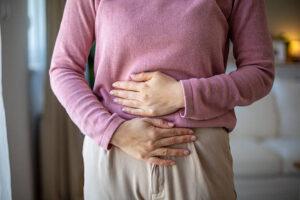
Zepbound bloating is a common digestive side effect that occurs as the medication slows stomach emptying and alters gut hormone signaling, and Trim Body M.D. monitors this closely during treatment. In most patients, bloating is mild, temporary, and improves as the digestive system adapts. Book a free consultation to manage bloating symptoms.
Key Takeaways
- Bloating is linked to slower digestion
- Symptoms are most common early in treatment
- Meal size and timing affect bloating severity
- Severe bloating is uncommon
- Medical guidance reduces discomfort
Why Zepbound Might Make You Feel Bloated
Zepbound activates GLP-1 and GIP receptors. These receptors slow the movement of food from your stomach into your intestines. This process helps lower appetite and manage blood sugar, but it can also make you feel fuller and cause pressure in your stomach to feel tight.
Keeping food in your stomach longer can lead to more gas and extra fluid, which might make you feel bloated after eating. This bloating tends to be more obvious when you are adjusting to a higher dose, and your body is getting used to the changes.
Bloating can show up with other stomach issues, like feeling sick or having different bowel habits. To understand how early treatment affects appetite and slows digestion, check out the causes.
Research on GI effects confirms that using GLP-1 therapies often leads to bloating and a sense of fullness. These effects get better over time.
Let our team know how we can help with your goals!
Does Zepbound Cause Severe Bloating?
Severe bloating from Zepbound is rare. Most people notice mild to moderate fullness instead of strong swelling or pain in the stomach. If severe bloating happens, it is due to other causes along with the medication.
Big meals, greasy foods, or fizzy drinks can make bloating worse by boosting gas and adding to stomach size. Eating fast might also lead to air getting stuck in the digestive system.
If you experience severe bloating along with ongoing pain, throwing up, or a sore stomach, it needs to be looked into.
These signs could indicate constipation, low body fluids, or other gut problems instead of just regular medication side effects.
Changes in digestion, like loose stools, also play a role in how bloating happens. Looking into diarrhea causes can help explain why some people deal with both bloating and runny stools as their body adjusts.
What Makes Bloating Worse During Treatment?
Many things can affect how people experience bloating while taking Zepbound. Stronger bloating often occurs during the early stages of treatment or when doctors increase the dose because the gut adjusts to slower digestion.
- What you eat matters. Eating processed or high-fat meals can make bloating worse since these foods stay in the stomach longer and create more gas. Drinking carbonated beverages adds extra gas to the stomach.
- Drinking water is important. When people don’t drink enough water, it slows down digestion and can make the pressure in the stomach worse. Staying hydrated helps the digestive system work better and reduces bloating.
- Eating too fast makes bloating worse. Swallowing air happens more when eating, and this air increases bloating. Eating meals often helps symptoms go away in a few days.
To discuss our services, contact us today!
Simple Tips to Ease Bloating from Zepbound
Making small changes in habits can help reduce bloating during treatment.
Eat Smaller Portions
Smaller servings lower the amount of food in your stomach and the pressure it causes. This can stop that tight, stretched feeling that leads to bloating when digestion slows down.
Take Your Time Eating
Slowing down while you eat reduces how much air you swallow and makes digestion easier. It also allows your body to recognize when you’re full, so you don’t end up eating too much without thinking.
Cut Down on Fizzy Drinks
Drinks with bubbles add extra gas to your stomach, making it more bloated. Even sugar-free sodas can worsen the issue if your stomach takes longer to empty.
Keep Fat in Check
Eating a moderate amount of fat helps your digestion work better without slowing it too much. Overeating fatty foods can make the stomach take longer to empty, causing bloating to feel worse in treatment.
Keep Yourself Hydrated
Drinking enough fluids helps the intestines work and eases strain. Not getting enough water slows digestion and can make bloating feel worse or more uncomfortable.
When Bloating Needs Medical Attention
It’s normal for bloating to get better with time. But if it worsens, becomes painful, or starts interrupting your routine, it’s time to see a doctor.
Signs to watch out for include sharp stomach pain, ongoing vomiting, trouble passing gas, or a swollen belly that stays the same regardless of eating. These signs are unusual and not just normal body changes.
Checking with a doctor helps identify if bloating is due to medicine, constipation, gallbladder troubles, or other stomach problems. Catching these early avoids pain and prevents treatment delays.
Patients using tirzepatide injections benefit from planned check-ups that handle digestion issues.
Need help deciding? Fill out a contact form,and we’ll ensure you’re informed!
How the Trim Body M.D. Team Handles Bloating Problems
At Trim Body M.D., the team takes bloating and sees it as a key part of how the digestive system reacts to Zepbound. They do not treat it as a small issue. With care provided to over 30,000+ patients, the medical staff adjusts treatments by looking at symptoms and how patients handle them.
- Spacing out doses to avoid overwhelming digestion
- Sharing nutrition tips to improve digestion
- Suggesting hydration techniques to ease bloating
- Checking for any other digestive discomforts
- Providing consistent help during dose adjustments
How This Can Help You Stay Comfortable
Zepbound Bloating doesn’t last and improves as the body adjusts to the treatment. Most patients keep up with their doses without serious digestive problems by focusing on proper eating habits, staying hydrated, and listening to their healthcare team. Talk to our doctor today.
Disclaimer: This article is for informational and educational purposes. Treatment decisions are made during an individual medical evaluation with a licensed provider. We provide compounded tirzepatide and are not affiliated with or endorsed by the manufacturers of Zepbound® or Mounjaro®.
FAQs about Zepbound and Bloating
Does Zepbound Cause Bloating?
Yes. Zepbound can cause bloating by slowing stomach emptying, which increases fullness and gas after meals, especially early in treatment.
How Long Does Zepbound Bloating Last?
Bloating is usually temporary. Most patients notice improvement within a few weeks as the digestive system adapts.
What Makes Bloating Worse On Zepbound?
Large meals, high-fat foods, carbonated drinks, and eating too quickly can increase bloating by raising stomach pressure and gas.
Is Severe Bloating From Zepbound Normal?
No. Severe or painful bloating is uncommon and should be evaluated to rule out constipation, dehydration, or other digestive issues.
How Can I Reduce Bloating While On Zepbound?
Eating smaller meals, slowing down, limiting carbonation, and staying hydrated often reduce bloating without changing medication.
Call and talk to a specialist today! (702) 489-3300
Let our team know how we can help with your goals!

Get In Touch With Us
Schedule Your Free Consultation — Take Your First Step Today
 Henderson
Let our team of Medical Professionals help you achieve your body goals. Contact us Today!