
'%3e%3cpath%20d='M12.0979%2019.9987C10.6974%2019.9987%209.29703%2019.4657%208.2309%2018.3995L1.60176%2011.7704C0.568828%2010.7375%200%209.36414%200%207.9034C0%206.44262%200.568828%205.06934%201.6018%204.03641C2.51562%203.12254%204.00258%203.12262%204.91633%204.03637L7.12605%206.2461C8.03988%207.15992%208.03988%208.6468%207.12605%209.56067C6.97848%209.70821%206.89723%209.90442%206.89723%2010.1131C6.89723%2010.3218%206.97848%2010.5179%207.12602%2010.6655L9.33574%2012.8752C9.48328%2013.0228%209.67949%2013.1041%209.88816%2013.1041C10.0969%2013.1041%2010.293%2013.0228%2010.4406%2012.8753C11.3545%2011.9614%2012.8414%2011.9614%2013.7552%2012.8753L15.9649%2015.085C16.8787%2015.9988%2016.8787%2017.4857%2015.9649%2018.3995C14.8987%2019.4657%2013.4983%2019.9987%2012.0979%2019.9987ZM3.25906%204.91281C3.05898%204.91281%202.85895%204.98895%202.7066%205.14129C1.96883%205.87906%201.5625%206.86%201.5625%207.9034C1.5625%208.9468%201.96883%209.92774%202.7066%2010.6655L9.33574%2017.2947C10.8587%2018.8177%2013.337%2018.8177%2014.86%2017.2947C15.1646%2016.99%2015.1646%2016.4944%2014.86%2016.1898L12.6503%2013.9801C12.5028%2013.8325%2012.3066%2013.7513%2012.0979%2013.7513C11.8892%2013.7513%2011.693%2013.8325%2011.5455%2013.98C10.6316%2014.8939%209.14473%2014.8939%208.23086%2013.98L6.02117%2011.7703C5.57852%2011.3277%205.33473%2010.7391%205.33473%2010.113C5.33473%209.48703%205.57852%208.89844%206.02117%208.45578C6.16875%208.30824%206.25%208.11203%206.25%207.90336C6.25%207.69469%206.16875%207.49852%206.02117%207.35094L3.81148%205.14121C3.65918%204.98899%203.4591%204.91281%203.25906%204.91281Z'%20fill='black'/%3e%3cpath%20d='M9.5448%209.3168C9.25285%209.1959%209.0625%208.91102%209.0625%208.59504V0.782539C9.0625%200.351055%209.41227%200.00128937%209.84375%200.00128937H19.2188C19.6502%200.00128937%2020%200.351055%2020%200.782539V7.03254C20%207.46402%2019.6502%207.81379%2019.2188%207.81379H11.7298L10.3962%209.14746C10.1728%209.3709%209.83676%209.43773%209.5448%209.3168ZM10.625%201.56379V6.70895L10.8538%206.48012C11.0003%206.33359%2011.199%206.25129%2011.4062%206.25129H18.4375V1.56379H10.625Z'%20fill='black'/%3e%3cpath%20d='M12.9688%204.68879C13.4002%204.68879%2013.75%204.33901%2013.75%203.90754C13.75%203.47607%2013.4002%203.12629%2012.9688%203.12629C12.5373%203.12629%2012.1875%203.47607%2012.1875%203.90754C12.1875%204.33901%2012.5373%204.68879%2012.9688%204.68879Z'%20fill='black'/%3e%3cpath%20d='M16.0938%204.68879C16.5252%204.68879%2016.875%204.33901%2016.875%203.90754C16.875%203.47607%2016.5252%203.12629%2016.0938%203.12629C15.6623%203.12629%2015.3125%203.47607%2015.3125%203.90754C15.3125%204.33901%2015.6623%204.68879%2016.0938%204.68879Z'%20fill='black'/%3e%3c/g%3e%3cdefs%3e%3cclipPath%20id='clip0_6353_9'%3e%3crect%20width='20'%20height='20'%20fill='white'/%3e%3c/clipPath%3e%3c/defs%3e%3c/svg%3e)
'%3e%3cpath%20d='M10%2020C13.8389%2020%2017.0312%2018.3836%2017.0312%2016.0938C17.0312%2015.4405%2016.7592%2014.8022%2016.2444%2014.2478C15.9508%2013.9316%2015.4565%2013.9132%2015.1403%2014.2068C14.8241%2014.5004%2014.8058%2014.9947%2015.0994%2015.3109C15.3444%2015.5749%2015.4687%2015.8383%2015.4687%2016.0938C15.4687%2017.2001%2013.13%2018.4375%209.99996%2018.4375C6.86996%2018.4375%204.53121%2017.2001%204.53121%2016.0938C4.53121%2015.8382%204.65547%2015.5749%204.90055%2015.3109C5.19414%2014.9947%205.17582%2014.5004%204.85965%2014.2068C4.54348%2013.9133%204.04914%2013.9316%203.75555%2014.2477C3.24082%2014.8021%202.96875%2015.4405%202.96875%2016.0938C2.96875%2018.3803%206.15578%2020%2010%2020Z'%20fill='black'/%3e%3cpath%20d='M8.13172%2015.9465C8.57285%2016.5282%209.27023%2016.875%2010%2016.875C10.7298%2016.875%2011.4271%2016.5282%2011.8683%2015.9466L15.6293%2011.2402C16.5465%2010.0163%2017.0312%208.5609%2017.0312%207.03125C17.0312%203.15422%2013.877%200%2010%200C6.12297%200%202.96875%203.15422%202.96875%207.03125C2.96875%208.56094%203.45352%2010.0164%204.37063%2011.2402L8.13172%2015.9465ZM10%201.5625C13.0155%201.5625%2015.4688%204.01578%2015.4688%207.03125C15.4688%208.21648%2015.0944%209.34434%2014.386%2010.2938C14.386%2010.2938%2010.6309%2014.9924%2010.626%2014.9989C10.4766%2015.1982%2010.2484%2015.3125%2010%2015.3125C9.75156%2015.3125%209.5234%2015.1982%209.37402%2014.9989C9.36914%2014.9923%209.36418%2014.9859%209.3591%2014.9796L5.61395%2010.2937C4.90559%209.34434%204.53125%208.21652%204.53125%207.03125C4.53125%204.01578%206.98453%201.5625%2010%201.5625Z'%20fill='black'/%3e%3cpath%20d='M10%2010.9375C12.1539%2010.9375%2013.9062%209.18516%2013.9062%207.03125C13.9062%204.87734%2012.1539%203.125%2010%203.125C7.84609%203.125%206.09375%204.87734%206.09375%207.03125C6.09375%209.18516%207.84609%2010.9375%2010%2010.9375ZM10%204.6875C11.2923%204.6875%2012.3438%205.73891%2012.3438%207.03125C12.3438%208.32359%2011.2923%209.375%2010%209.375C8.70766%209.375%207.65625%208.32359%207.65625%207.03125C7.65625%205.73891%208.70766%204.6875%2010%204.6875Z'%20fill='black'/%3e%3c/g%3e%3cdefs%3e%3cclipPath%20id='clip0_6353_60'%3e%3crect%20width='20'%20height='20'%20fill='white'/%3e%3c/clipPath%3e%3c/defs%3e%3c/svg%3e)

'%3e%3ccircle%20cx='321'%20cy='321'%20r='276'%20transform='matrix(-1%200%200%201%20481%200)'%20stroke='%23E5DFD3'%20stroke-width='90'/%3e%3c/g%3e%3cdefs%3e%3cclipPath%20id='clip0_6046_3421'%3e%3crect%20width='481'%20height='413'%20fill='white'%20transform='matrix(-1%200%200%201%20481%200)'/%3e%3c/clipPath%3e%3c/defs%3e%3c/svg%3e)
Zepbound Back Pain: Causes and When to Worry
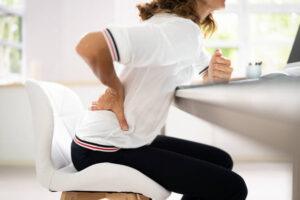
Zepbound back pain is not a direct drug injury but a symptom some patients notice as weight, posture, hydration, and muscle balance shift during treatment, and Trim Body M.D. evaluates these patterns clinically. In most cases, discomfort is temporary and improves with proper dosing pace, nutrition, and movement. Schedule a free consultation to discuss back discomfort.
Key Takeaways
- Zepbound does not directly damage the spine
- Rapid weight change can strain back muscles
- Dehydration may worsen muscle tightness
- Posture shifts affect spinal load
- Medical review helps rule out other causes
Does Zepbound Cause Back Pain?
Zepbound does not lead to structural injuries in the back. It does not impact bones, discs, or spinal nerves. Instead, back pain might show up because the body adjusts to the metabolic and physical shifts caused by the treatment.
Losing weight can change how weight and pressure are spread along the spine. As body fat reduces, posture can shift, core muscle use might change, and long-followed movement habits could need adjusting. These changes might put temporary strain on the muscles in the lower and mid-back.
Some people also feel muscle soreness or tightness since suppressing appetite might lower overall calorie intake. If protein levels or hydration drop too much, muscles can tire more. This tiredness might manifest as discomfort in the back even though the spine stays unaffected.
Doctors usually check reported symptoms against typical patterns of muscle pain to figure out if the pain comes from muscles instead of bones.
Let our team know how we can help with your goals!
Why Losing Weight Might Cause Back Pain
Back pain during weight loss doesn’t happen with Zepbound; it happens with many other effective weight-loss strategies, like changing eating habits or having surgery.
When someone loses weight, their center of gravity moves. Muscles that are used to handle the extra weight must adjust to the changes. This can lead to soreness in core muscles, hip flexors, and the lower back while the body adapts.
Losing fat can take away passive support for the spine. While this might lead to better body mechanics in the long run, it can feel uncomfortable during the adjustment phase. This is even more noticeable in people who used to be inactive but start moving more as they lose weight.
Dropping weight can make these changes feel harder to handle. A slow and steady weight loss gives muscles and tissues more time to get used to changes and can help in avoiding too much discomfort.
Staying Hydrated, Balancing Electrolytes, and Muscle Stiffness
Staying hydrated is important to keep your muscles working well. Zepbound lowers appetite, and some people drink less water when they eat less.
Not drinking enough water can make muscles tighter and reduce blood flow to important tissues. The lower back feels this more because it works all day to keep you upright.
Having the right balance of electrolytes is important. Sodium, potassium, and magnesium play a role in helping muscles contract and relax. A lack of these can lead to cramps or tightness, which might show up as back pain.
When discomfort spreads through the body instead of staying in one spot, doctors might compare it to common patterns of body aches instead of assuming it is a specific spine problem.
To discuss our services, contact us today!
Changes in Posture When Losing Weight
Losing weight can help improve posture over time, but it might feel awkward at first.
When belly fat reduces, the angle of the pelvis can shift. Core muscles that have not been used much before need to work harder during this adjustment. Until these muscles get stronger and better at working together, the lower back might feel stressed.
People who stay seated for too long might feel back pain sooner. Less cushioning and no changes in posture put more stress on spinal muscles. Simple changes like standing more often or light core exercises help ease the pain in a few weeks.
Need help deciding? Fill out a contact form,and we’ll ensure you’re informed!
Could Back Pain Indicate Something More Serious?
Most back pain linked to Zepbound is mild and caused by muscle strain. But it’s important to address ongoing or worsening pain.
Pain with fever, weakness, numbness, or bowel and bladder issues should be checked. These symptoms don’t relate to taking the medication.
Sometimes, problems like gallbladder trouble, kidney pain, or severe dehydration can cause back pain. A doctor can figure out if it’s just normal adjustment pain or something that needs different care.
Based on verified clinical evidence about GLP-1 treatments, muscle or joint pain does not last long. Supportive care often helps address it, so patients need to stop their medication.
The Role of Dosing Speed in Back Pain
The rate of increasing doses can play a big role. Ramping up too fast might suppress appetite more than the body can handle before proper eating and drinking routines are in place.
When calorie consumption drops, muscles might not get enough energy to recover well. This can lead to more soreness in areas like the back that support the body.
Following a dose schedule managed by a healthcare professional gives the body time to adjust step by step. Patients sticking to guided plans often report fewer body aches.
That’s why supervised approaches highlight the importance of pacing instead of prioritizing quick progress.
Adjusting Movement to Ease Pain
You don’t need tough workouts to keep your back safe during treatment.
Simple resistance exercises can strengthen your spine muscles and boost blood flow. Walking, light stretches, and basic core exercises help muscles adjust to the stress they experience.
As body weight drops, moving around can feel easier. This makes people more active, which can build stronger muscles over time.
Patients beginning care with tirzepatide get advice that combines movement, rest, and eating right.
What Studies Show About Zepbound’s Safety
Researchers have studied Zepbound, showing it doesn’t cause harm to muscles or bones. The official FDA approval notice confirms that most side effects are related to digestion or metabolism, not physical structure or injury.
Muscle and joint pain that shows up during treatment happens because of changes in weight, hydration, or activity levels. These symptoms suggest sticking with treatment while managing discomfort instead of stopping it.
How Our Clinic Guides Patients Through Back Pain While Using Zepbound
Trim Body M.D. looks at back pain as part of the bigger picture instead of ignoring it or overreacting.
- Examine when symptoms started and how they have changed
- Space out doses to avoid quick metabolic changes
- Provide meal plans to aid muscle healing
- Focus on drinking enough water to ease stiffness
- Regular check-ins during transition periods
What This Means To You During Treatment
Zepbound back pain is a sign of your body adjusting, not harm. Most people notice improvement in their symptoms as their body gets used to treatment with steady weight loss, staying hydrated, eating balanced meals, and following professional advice. Talk to our healthcare expert now.
Disclaimer: This article is for informational and educational purposes. Treatment decisions are made during an individual medical evaluation with a licensed provider. We provide compounded tirzepatide and are not affiliated with or endorsed by the manufacturers of Zepbound® or Mounjaro®.
FAQs about Zepbound and Back Pain
Can Zepbound Directly Cause Back Pain?
No. Zepbound does not directly injure the spine, nerves, or joints. Reported back discomfort is usually related to weight loss adaptation, muscle fatigue, posture changes, or hydration shifts during treatment.
Is Back Pain A Sign Of A Serious Problem?
Back pain is rarely serious during Zepbound use. Worsening pain, neurologic symptoms, fever, or pain lasting several weeks should be evaluated to rule out unrelated spinal or medical conditions.
Why Does Back Pain Appear During Weight Loss?
As weight decreases, posture, gait, and load distribution change. Muscles that support higher body weight may tighten or fatigue temporarily, especially in the lower back.
Can Hydration Or Nutrition Reduce Back Discomfort?
Yes. Adequate hydration supports muscle elasticity, and sufficient protein intake helps prevent muscle fatigue. Poor intake can worsen stiffness and soreness during metabolic changes.
Should I Stop Zepbound If Back Pain Occurs?
Usually no. Mild back discomfort often improves with time, hydration, and activity adjustments. Persistent or severe pain should be reviewed before making medication changes.
Call and talk to a specialist today! (702) 489-3300
Let our team know how we can help with your goals!

Get In Touch With Us
Schedule Your Free Consultation — Take Your First Step Today
 Henderson
Let our team of Medical Professionals help you achieve your body goals. Contact us Today!