
'%3e%3cpath%20d='M12.0979%2019.9987C10.6974%2019.9987%209.29703%2019.4657%208.2309%2018.3995L1.60176%2011.7704C0.568828%2010.7375%200%209.36414%200%207.9034C0%206.44262%200.568828%205.06934%201.6018%204.03641C2.51562%203.12254%204.00258%203.12262%204.91633%204.03637L7.12605%206.2461C8.03988%207.15992%208.03988%208.6468%207.12605%209.56067C6.97848%209.70821%206.89723%209.90442%206.89723%2010.1131C6.89723%2010.3218%206.97848%2010.5179%207.12602%2010.6655L9.33574%2012.8752C9.48328%2013.0228%209.67949%2013.1041%209.88816%2013.1041C10.0969%2013.1041%2010.293%2013.0228%2010.4406%2012.8753C11.3545%2011.9614%2012.8414%2011.9614%2013.7552%2012.8753L15.9649%2015.085C16.8787%2015.9988%2016.8787%2017.4857%2015.9649%2018.3995C14.8987%2019.4657%2013.4983%2019.9987%2012.0979%2019.9987ZM3.25906%204.91281C3.05898%204.91281%202.85895%204.98895%202.7066%205.14129C1.96883%205.87906%201.5625%206.86%201.5625%207.9034C1.5625%208.9468%201.96883%209.92774%202.7066%2010.6655L9.33574%2017.2947C10.8587%2018.8177%2013.337%2018.8177%2014.86%2017.2947C15.1646%2016.99%2015.1646%2016.4944%2014.86%2016.1898L12.6503%2013.9801C12.5028%2013.8325%2012.3066%2013.7513%2012.0979%2013.7513C11.8892%2013.7513%2011.693%2013.8325%2011.5455%2013.98C10.6316%2014.8939%209.14473%2014.8939%208.23086%2013.98L6.02117%2011.7703C5.57852%2011.3277%205.33473%2010.7391%205.33473%2010.113C5.33473%209.48703%205.57852%208.89844%206.02117%208.45578C6.16875%208.30824%206.25%208.11203%206.25%207.90336C6.25%207.69469%206.16875%207.49852%206.02117%207.35094L3.81148%205.14121C3.65918%204.98899%203.4591%204.91281%203.25906%204.91281Z'%20fill='black'/%3e%3cpath%20d='M9.5448%209.3168C9.25285%209.1959%209.0625%208.91102%209.0625%208.59504V0.782539C9.0625%200.351055%209.41227%200.00128937%209.84375%200.00128937H19.2188C19.6502%200.00128937%2020%200.351055%2020%200.782539V7.03254C20%207.46402%2019.6502%207.81379%2019.2188%207.81379H11.7298L10.3962%209.14746C10.1728%209.3709%209.83676%209.43773%209.5448%209.3168ZM10.625%201.56379V6.70895L10.8538%206.48012C11.0003%206.33359%2011.199%206.25129%2011.4062%206.25129H18.4375V1.56379H10.625Z'%20fill='black'/%3e%3cpath%20d='M12.9688%204.68879C13.4002%204.68879%2013.75%204.33901%2013.75%203.90754C13.75%203.47607%2013.4002%203.12629%2012.9688%203.12629C12.5373%203.12629%2012.1875%203.47607%2012.1875%203.90754C12.1875%204.33901%2012.5373%204.68879%2012.9688%204.68879Z'%20fill='black'/%3e%3cpath%20d='M16.0938%204.68879C16.5252%204.68879%2016.875%204.33901%2016.875%203.90754C16.875%203.47607%2016.5252%203.12629%2016.0938%203.12629C15.6623%203.12629%2015.3125%203.47607%2015.3125%203.90754C15.3125%204.33901%2015.6623%204.68879%2016.0938%204.68879Z'%20fill='black'/%3e%3c/g%3e%3cdefs%3e%3cclipPath%20id='clip0_6353_9'%3e%3crect%20width='20'%20height='20'%20fill='white'/%3e%3c/clipPath%3e%3c/defs%3e%3c/svg%3e)
'%3e%3cpath%20d='M10%2020C13.8389%2020%2017.0312%2018.3836%2017.0312%2016.0938C17.0312%2015.4405%2016.7592%2014.8022%2016.2444%2014.2478C15.9508%2013.9316%2015.4565%2013.9132%2015.1403%2014.2068C14.8241%2014.5004%2014.8058%2014.9947%2015.0994%2015.3109C15.3444%2015.5749%2015.4687%2015.8383%2015.4687%2016.0938C15.4687%2017.2001%2013.13%2018.4375%209.99996%2018.4375C6.86996%2018.4375%204.53121%2017.2001%204.53121%2016.0938C4.53121%2015.8382%204.65547%2015.5749%204.90055%2015.3109C5.19414%2014.9947%205.17582%2014.5004%204.85965%2014.2068C4.54348%2013.9133%204.04914%2013.9316%203.75555%2014.2477C3.24082%2014.8021%202.96875%2015.4405%202.96875%2016.0938C2.96875%2018.3803%206.15578%2020%2010%2020Z'%20fill='black'/%3e%3cpath%20d='M8.13172%2015.9465C8.57285%2016.5282%209.27023%2016.875%2010%2016.875C10.7298%2016.875%2011.4271%2016.5282%2011.8683%2015.9466L15.6293%2011.2402C16.5465%2010.0163%2017.0312%208.5609%2017.0312%207.03125C17.0312%203.15422%2013.877%200%2010%200C6.12297%200%202.96875%203.15422%202.96875%207.03125C2.96875%208.56094%203.45352%2010.0164%204.37063%2011.2402L8.13172%2015.9465ZM10%201.5625C13.0155%201.5625%2015.4688%204.01578%2015.4688%207.03125C15.4688%208.21648%2015.0944%209.34434%2014.386%2010.2938C14.386%2010.2938%2010.6309%2014.9924%2010.626%2014.9989C10.4766%2015.1982%2010.2484%2015.3125%2010%2015.3125C9.75156%2015.3125%209.5234%2015.1982%209.37402%2014.9989C9.36914%2014.9923%209.36418%2014.9859%209.3591%2014.9796L5.61395%2010.2937C4.90559%209.34434%204.53125%208.21652%204.53125%207.03125C4.53125%204.01578%206.98453%201.5625%2010%201.5625Z'%20fill='black'/%3e%3cpath%20d='M10%2010.9375C12.1539%2010.9375%2013.9062%209.18516%2013.9062%207.03125C13.9062%204.87734%2012.1539%203.125%2010%203.125C7.84609%203.125%206.09375%204.87734%206.09375%207.03125C6.09375%209.18516%207.84609%2010.9375%2010%2010.9375ZM10%204.6875C11.2923%204.6875%2012.3438%205.73891%2012.3438%207.03125C12.3438%208.32359%2011.2923%209.375%2010%209.375C8.70766%209.375%207.65625%208.32359%207.65625%207.03125C7.65625%205.73891%208.70766%204.6875%2010%204.6875Z'%20fill='black'/%3e%3c/g%3e%3cdefs%3e%3cclipPath%20id='clip0_6353_60'%3e%3crect%20width='20'%20height='20'%20fill='white'/%3e%3c/clipPath%3e%3c/defs%3e%3c/svg%3e)

'%3e%3ccircle%20cx='321'%20cy='321'%20r='276'%20transform='matrix(-1%200%200%201%20481%200)'%20stroke='%23E5DFD3'%20stroke-width='90'/%3e%3c/g%3e%3cdefs%3e%3cclipPath%20id='clip0_6046_3421'%3e%3crect%20width='481'%20height='413'%20fill='white'%20transform='matrix(-1%200%200%201%20481%200)'/%3e%3c/clipPath%3e%3c/defs%3e%3c/svg%3e)
Zepbound and Gallbladder Pain: Should You Worry?
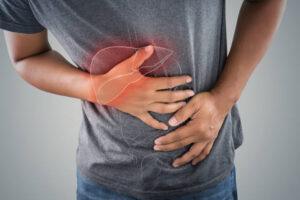
Zepbound and gallbladder concerns are important to understand because Zepbound may increase gallbladder risk indirectly through rapid weight loss rather than direct gallbladder injury, and Trim Body M.D. monitors this closely during care. Most gallbladder issues relate to how quickly weight changes occur and can often be reduced with proper medical supervision. Schedule a free consultation to discuss gallbladder-related risks.
Key Takeaways
- Gallbladder risk is linked to rapid weight loss
- Zepbound does not directly damage the gallbladder
- Slower weight loss lowers complication risk
- Nausea can mimic gallbladder symptoms
- Clinical monitoring improves safety
How the Gallbladder Functions During Weight Loss
The gallbladder holds bile, a digestive fluid that is released when fat reaches the intestine. Bile’s job is to help the body absorb fat by breaking it down. If eating habits change or fat intake decreases, bile may stay in the gallbladder longer instead of being released.
This balance shifts during quick weight loss. Eating fewer calories and consuming less fat can make bile more concentrated, raising the chances of gallstones forming.
This is a common occurrence in various weight loss methods, like surgeries, very low-calorie diets, or medication-based approaches.
Zepbound helps people lose weight by making them feel less hungry and by slowing down how their stomach empties. These effects can help burn fat faster in the early stages of its use. The medicine itself does not harm the gallbladder, but the quick pace of weight loss might raise the chance of gallstones.
Studies summarized in gallstone risk show that losing fat too fast can lead to more gallstones, no matter which method is used. This puts Zepbound in the same group as other successful weight loss options, meaning it is not an exception to this risk.
Let our team know how we can help with your goals!
Can Zepbound Cause Gallbladder Problems?
Zepbound has a connection to gallbladder issues in some people, but this happens. The medicine itself does not cause gallbladder inflammation or block bile flow. Instead, these problems might develop if someone loses weight too.
People with gallbladder problems often experience pain in the upper right part of their abdomen, feel nauseous after eating greasy foods, have pain in their shoulder, or deal with bloating.
Since these signs can also happen as side effects of Zepbound, it’s important to check and figure out the cause.
In the early stages of treatment, nausea is a frequent issue, but it does not always mean there’s a problem with the gallbladder. Looking into the causes of nausea can help understand whether it is from the medication or related to gallbladder trouble.
People who lose weight instead of face a lower chance of gallstone problems. Knowing the expected weight loss rate helps people set a healthy pace that benefits their gallbladder.
Who Is More Likely to Have Gallbladder Problems
Here are the groups more likely to experience gallbladder problems, especially during periods of weight loss.
- History of gallstones or prior gallbladder inflammation
- Strong family history of gallbladder disease
- Rapid or aggressive weight loss
- Skipping meals or very low-calorie diets
- Low dietary fat intake that limits gallbladder emptying
- Women with obesity
- People with insulin resistance or metabolic syndrome
Guidelines provided by Lilly medical information state that patients who have gallbladder disease or have had their gallbladder removed can still take tirzepatide if monitored by a doctor. This highlights how crucial it is to focus on personalized treatment.
To discuss our services, contact us today!
Symptoms Needing a Doctor’s Attention
Most stomach issues while taking Zepbound are mild and go away. Symptoms linked to gallbladder issues, however, often follow a different pattern and should be taken.
Pain in the upper right abdomen that gets worse after meals, spreads to the back or shoulder, or lasts for hours, should be checked. Symptoms like fever, throwing up, or yellowish skin or eyes mean urgent medical attention is needed.
Early testing helps doctors figure out if symptoms come from medications or gallbladder issues. Lab tests and imaging provide direction without delaying treatment.
People treated in a supervised medical clinic get quicker evaluations and better care coordination when symptoms show up.
Need help deciding? Fill out a contact form,and we’ll ensure you’re informed!
How the Speed of Weight Loss Affects Gallbladder Health
Losing weight at a steady, slow pace supports proper gallbladder function and keeps bile levels balanced. This method reduces the risk of forming gallstones while still providing solid health benefits.
Doctors use medical dosing schedules and nutrition tips to manage the pace of weight loss. Eating balanced meals with healthy fats helps the body produce bile and aids in digestion.
Skipping meals or using very low-calorie diets might raise the chances of gallbladder issues during weight loss treatment. Experts put more emphasis on building habits that stick rather than harsh restrictions.
How Trim Body M.D.’s Medical Team Keeps Gallbladders Safe
At Trim Body M.D., we make gallbladder health a key part of weight loss support.
- Increasing doses to manage weight loss speed
- Nutrition tips to improve bile flow
- Keeping an eye on signs of gallbladder issues
- Using early imaging if symptoms show up
- Team-driven care to avoid health problems
Why This Matters for Safe Long-Term Treatment
Zepbound itself does not damage the gallbladder. However, losing weight too quickly can raise the risk of gallstones if not handled. With gradual weight loss, being alert to symptoms, and regular doctor check-ins, most people finish their treatment without gallbladder issues. Schedule a free consultation with us today.
Disclaimer: This article is for informational and educational purposes. Treatment decisions are made during an individual medical evaluation with a licensed provider. We provide compounded tirzepatide and are not affiliated with or endorsed by the manufacturers of Zepbound® or Mounjaro®.
FAQs about Zepbound and Gallbladder Health
Can Zepbound Cause Gallstones?
Zepbound itself does not cause gallstones. Risk increases when weight loss happens rapidly, which can concentrate bile and promote stone formation.
Who Is Most At Risk For Gallbladder Issues On Zepbound?
People with prior gallstones, rapid weight loss, insulin resistance, or a family history of gallbladder disease have higher short-term risk during treatment.
How Can I Lower Gallbladder Risk While Taking Zepbound?
Steady weight loss, regular meals, and including healthy fats help the gallbladder empty properly. Medical pacing reduces bile concentration and stone risk.
What Gallbladder Symptoms Should I Watch For?
Upper-right abdominal pain after meals, shoulder pain, nausea with fatty foods, or pain lasting hours should be evaluated promptly.
Can I Take Zepbound If I’ve Had Gallbladder Problems Before?
Often yes, but only with supervision. Dose pacing and symptom monitoring help determine whether treatment remains safe.
Call and talk to a specialist today! (702) 489-3300
Let our team know how we can help with your goals!

Get In Touch With Us
Schedule Your Free Consultation — Take Your First Step Today
 Henderson
Let our team of Medical Professionals help you achieve your body goals. Contact us Today!