
'%3e%3cpath%20d='M12.0979%2019.9987C10.6974%2019.9987%209.29703%2019.4657%208.2309%2018.3995L1.60176%2011.7704C0.568828%2010.7375%200%209.36414%200%207.9034C0%206.44262%200.568828%205.06934%201.6018%204.03641C2.51562%203.12254%204.00258%203.12262%204.91633%204.03637L7.12605%206.2461C8.03988%207.15992%208.03988%208.6468%207.12605%209.56067C6.97848%209.70821%206.89723%209.90442%206.89723%2010.1131C6.89723%2010.3218%206.97848%2010.5179%207.12602%2010.6655L9.33574%2012.8752C9.48328%2013.0228%209.67949%2013.1041%209.88816%2013.1041C10.0969%2013.1041%2010.293%2013.0228%2010.4406%2012.8753C11.3545%2011.9614%2012.8414%2011.9614%2013.7552%2012.8753L15.9649%2015.085C16.8787%2015.9988%2016.8787%2017.4857%2015.9649%2018.3995C14.8987%2019.4657%2013.4983%2019.9987%2012.0979%2019.9987ZM3.25906%204.91281C3.05898%204.91281%202.85895%204.98895%202.7066%205.14129C1.96883%205.87906%201.5625%206.86%201.5625%207.9034C1.5625%208.9468%201.96883%209.92774%202.7066%2010.6655L9.33574%2017.2947C10.8587%2018.8177%2013.337%2018.8177%2014.86%2017.2947C15.1646%2016.99%2015.1646%2016.4944%2014.86%2016.1898L12.6503%2013.9801C12.5028%2013.8325%2012.3066%2013.7513%2012.0979%2013.7513C11.8892%2013.7513%2011.693%2013.8325%2011.5455%2013.98C10.6316%2014.8939%209.14473%2014.8939%208.23086%2013.98L6.02117%2011.7703C5.57852%2011.3277%205.33473%2010.7391%205.33473%2010.113C5.33473%209.48703%205.57852%208.89844%206.02117%208.45578C6.16875%208.30824%206.25%208.11203%206.25%207.90336C6.25%207.69469%206.16875%207.49852%206.02117%207.35094L3.81148%205.14121C3.65918%204.98899%203.4591%204.91281%203.25906%204.91281Z'%20fill='black'/%3e%3cpath%20d='M9.5448%209.3168C9.25285%209.1959%209.0625%208.91102%209.0625%208.59504V0.782539C9.0625%200.351055%209.41227%200.00128937%209.84375%200.00128937H19.2188C19.6502%200.00128937%2020%200.351055%2020%200.782539V7.03254C20%207.46402%2019.6502%207.81379%2019.2188%207.81379H11.7298L10.3962%209.14746C10.1728%209.3709%209.83676%209.43773%209.5448%209.3168ZM10.625%201.56379V6.70895L10.8538%206.48012C11.0003%206.33359%2011.199%206.25129%2011.4062%206.25129H18.4375V1.56379H10.625Z'%20fill='black'/%3e%3cpath%20d='M12.9688%204.68879C13.4002%204.68879%2013.75%204.33901%2013.75%203.90754C13.75%203.47607%2013.4002%203.12629%2012.9688%203.12629C12.5373%203.12629%2012.1875%203.47607%2012.1875%203.90754C12.1875%204.33901%2012.5373%204.68879%2012.9688%204.68879Z'%20fill='black'/%3e%3cpath%20d='M16.0938%204.68879C16.5252%204.68879%2016.875%204.33901%2016.875%203.90754C16.875%203.47607%2016.5252%203.12629%2016.0938%203.12629C15.6623%203.12629%2015.3125%203.47607%2015.3125%203.90754C15.3125%204.33901%2015.6623%204.68879%2016.0938%204.68879Z'%20fill='black'/%3e%3c/g%3e%3cdefs%3e%3cclipPath%20id='clip0_6353_9'%3e%3crect%20width='20'%20height='20'%20fill='white'/%3e%3c/clipPath%3e%3c/defs%3e%3c/svg%3e)
'%3e%3cpath%20d='M10%2020C13.8389%2020%2017.0312%2018.3836%2017.0312%2016.0938C17.0312%2015.4405%2016.7592%2014.8022%2016.2444%2014.2478C15.9508%2013.9316%2015.4565%2013.9132%2015.1403%2014.2068C14.8241%2014.5004%2014.8058%2014.9947%2015.0994%2015.3109C15.3444%2015.5749%2015.4687%2015.8383%2015.4687%2016.0938C15.4687%2017.2001%2013.13%2018.4375%209.99996%2018.4375C6.86996%2018.4375%204.53121%2017.2001%204.53121%2016.0938C4.53121%2015.8382%204.65547%2015.5749%204.90055%2015.3109C5.19414%2014.9947%205.17582%2014.5004%204.85965%2014.2068C4.54348%2013.9133%204.04914%2013.9316%203.75555%2014.2477C3.24082%2014.8021%202.96875%2015.4405%202.96875%2016.0938C2.96875%2018.3803%206.15578%2020%2010%2020Z'%20fill='black'/%3e%3cpath%20d='M8.13172%2015.9465C8.57285%2016.5282%209.27023%2016.875%2010%2016.875C10.7298%2016.875%2011.4271%2016.5282%2011.8683%2015.9466L15.6293%2011.2402C16.5465%2010.0163%2017.0312%208.5609%2017.0312%207.03125C17.0312%203.15422%2013.877%200%2010%200C6.12297%200%202.96875%203.15422%202.96875%207.03125C2.96875%208.56094%203.45352%2010.0164%204.37063%2011.2402L8.13172%2015.9465ZM10%201.5625C13.0155%201.5625%2015.4688%204.01578%2015.4688%207.03125C15.4688%208.21648%2015.0944%209.34434%2014.386%2010.2938C14.386%2010.2938%2010.6309%2014.9924%2010.626%2014.9989C10.4766%2015.1982%2010.2484%2015.3125%2010%2015.3125C9.75156%2015.3125%209.5234%2015.1982%209.37402%2014.9989C9.36914%2014.9923%209.36418%2014.9859%209.3591%2014.9796L5.61395%2010.2937C4.90559%209.34434%204.53125%208.21652%204.53125%207.03125C4.53125%204.01578%206.98453%201.5625%2010%201.5625Z'%20fill='black'/%3e%3cpath%20d='M10%2010.9375C12.1539%2010.9375%2013.9062%209.18516%2013.9062%207.03125C13.9062%204.87734%2012.1539%203.125%2010%203.125C7.84609%203.125%206.09375%204.87734%206.09375%207.03125C6.09375%209.18516%207.84609%2010.9375%2010%2010.9375ZM10%204.6875C11.2923%204.6875%2012.3438%205.73891%2012.3438%207.03125C12.3438%208.32359%2011.2923%209.375%2010%209.375C8.70766%209.375%207.65625%208.32359%207.65625%207.03125C7.65625%205.73891%208.70766%204.6875%2010%204.6875Z'%20fill='black'/%3e%3c/g%3e%3cdefs%3e%3cclipPath%20id='clip0_6353_60'%3e%3crect%20width='20'%20height='20'%20fill='white'/%3e%3c/clipPath%3e%3c/defs%3e%3c/svg%3e)

'%3e%3ccircle%20cx='321'%20cy='321'%20r='276'%20transform='matrix(-1%200%200%201%20481%200)'%20stroke='%23E5DFD3'%20stroke-width='90'/%3e%3c/g%3e%3cdefs%3e%3cclipPath%20id='clip0_6046_3421'%3e%3crect%20width='481'%20height='413'%20fill='white'%20transform='matrix(-1%200%200%201%20481%200)'/%3e%3c/clipPath%3e%3c/defs%3e%3c/svg%3e)
Why Am I Still Hungry on Tirzepatide?
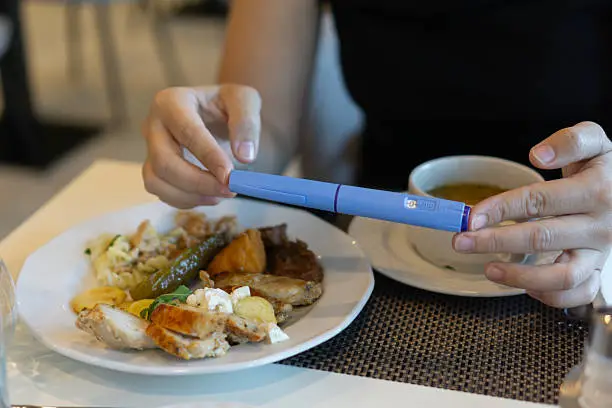
Why am I still hungry on Tirzepatide? This question can be frustrating and confusing since the medication is designed to help curb appetite. At TrimBody M.D., over 30,000+ patients have gone through medical weight loss programs, and this concern comes up more than many might think.
Feeling hungry does not always mean Tirzepatide is not doing its job. Factors like your metabolism when you eat, the balance of nutrients in your diet, and what dosage phase you are on all affect how your hunger changes.
Key Takeaways:
- Hunger can continue during the starting dose stages.
- Low-protein diets might interfere with how your appetite is managed.
- Emotional, stress-related, or even habitual cravings might still occur.
- Weight loss speeds up metabolism, which might make your body need more calories.
- Medical guidance is important to figure out the actual reason for your hunger.
Now, Why Am I Still Hungry on Tirzepatide?
Feeling hungry while using Tirzepatide often happens because of the way your body reacts during the early weeks of treatment. Appetite control relies on getting to a dose that produces the expected effect in your body. Hunger might still happen if you are taking a smaller dosage since the medication hasn’t yet created its desired hormonal effects.
How Early Dose Adjustments Affect Hunger Signals
Experts researching GLP-1 and GIP receptor activity say that initial doses help your body adapt instead of fully suppressing your appetite. A study from ScienceDirect shows that medications working as dual agonists might need slow dose increases so patients start experiencing less hunger.
How Your Food Choices Influence Hunger
What you eat matters. Loading up on carbs without enough protein or fiber can make you feel hungry again pretty quickly. Tirzepatide helps slow down how fast your stomach empties, but this effect changes based on your diet. If you eat a meal packed with protein, it might keep you satisfied for hours. On the other hand, a snack with little protein might leave you feeling hungry soon after.
How Habits and Emotions Affect Hunger Signals
Emotional eating or habits also play a big part. Many people eat out of boredom, for comfort, or just to distract themselves. While Tirzepatide helps with physical hunger, it does not address hunger caused by these behaviors. That is why some people feel cravings even when their stomachs are not actually empty.
How Stress Disrupts Appetite Control
Stress plays a big role in this. It has an impact on how your body handles hunger. Cortisol, a stress hormone, might make you feel hungrier, mess with the sense of being full, and interfere with the hormonal balance that Tirzepatide is supposed to create. The early stages of starting Tirzepatide can be a big change, so stress-related effects might stand out more during this time.
If appetite changes leave you confused, you might want to look into why progress on Tirzepatide feels slow.
Why Isn’t My Appetite Reduced on Tirzepatide?
Controlling appetite relies on various things like dose amount, timing, metabolism, gut hormone response, and your body’s nutritional demands. Many overlook how much it varies from person to person. Some feel appetite control fast, but others take longer to find a dose that has a steady effect on hunger.
Early Treatment Can Cause Short-Lived Appetite Control
News-Medical shares that Tirzepatide might help lessen cravings for a short time, though this can change based on things like hormone cycles, sleep quality, or stress levels. Their research on brain recordings related to appetite control shows that Tirzepatide’s effect on reducing cravings often doesn’t last long at the beginning of treatment.
Low Doses Often Don’t Reduce Hunger Yet
If you start with a low dose, your body might still give off strong hunger signals. This happens because the GLP-1 and GIP receptors aren’t active yet. Early doses are meant to keep things safe and comfortable, not to focus on controlling appetite. As the dose gets raised by your provider, managing hunger becomes less difficult.
Metabolism Shifts Can Increase Hunger Signals
Another thing to think about is metabolism. Losing weight can make your body use calories more. Some people feel hungrier when their metabolism picks up speed due to more active fat burning. This doesn’t mean the medication isn’t working; it just shows your body adjusting to weight loss.
Irregular Meal Timing Can Weaken Appetite Control
The timing of meals plays a role in how Tirzepatide functions. Eating large meals late, skipping breakfast, or leaving long gaps between meals might lead to rebound hunger. Keeping meal times regular and including balanced nutrients helps keep hormones working more efficiently.
Appetite Suppression Takes Time To Develop
To understand how appetite changes often occur, TrimBody M.D. shares information about the usual timeline for appetite suppression.
Low Hydration Can Be Mistaken for Hunger
Some people may also feel hungry if they are not staying hydrated. Tirzepatide sometimes decreases thirst signals, which can cause dehydration to feel like hunger. Drinking water often might help fix this confusion.
Medical Programs Help Identify Why Hunger Persists
When you join a supervised program like the medically monitored Tirzepatide injections in Summerlin, the team focuses on identifying patterns in appetite, hydration, and nutrient levels.
Why You Might Still Feel Hungry During Tirzepatide Treatment
Even if the dosage is correct, hunger might still linger because of regular everyday reasons. This does not mean the medication is not working; it indicates that your body needs more time to adjust. Some usual reasons include:
- Losing weight fast makes your body feel hungrier to balance things out.
- Low protein fiber, or healthy fats in your meals, leaves you less satisfied.
- Stress or bad sleep leads to cravings and a bigger appetite.
- Burning fat makes your metabolism adjust, which can affect hunger.
- Eating too few calories can backfire and make you feel hungrier.
When fat drops too, the body sees it as a problem and pushes you to eat more to balance things out. Tirzepatide helps manage this, but your dose, diet, and stress levels still play a big role.
If you often feel hungry even after eating on a regular schedule, your doctor can check how many calories you consume and how your meals are planned. Most people require a bit more protein or fiber than they realize. Eating balanced meals can help you feel fuller.
How Our Patients Improve Appetite Control With Expert Medical Help
We have already helped over 30,000+ patients achieve weight loss with medical supervision. Hunger patterns have always been one of the key areas our team monitors throughout the treatment. We assist you by offering:
- Setting medication timing to prevent sharp hunger changes
- Advice on meals to keep you feeling full
- Strategies to drink water and curb cravings
- Stress control to steady your eating habits
- Regular follow-ups to see how things shift with your hunger
Building Trust in Your Appetite Journey
Experiencing hunger while on Tirzepatide can feel discouraging, but it does not mean the treatment is not working. Hunger often comes from factors like dose schedules, unbalanced meals, stress levels, metabolic changes, or adapting to the medication in its early stages.
Over time, as your body adjusts to proper guidance, regular meals, and stable habits, your appetite evens out. To get support from experts during your Tirzepatide experience, reach out to our clinical team today.
Disclaimer: This article is for informational and educational purposes. Treatment decisions are made during an individual medical evaluation with a licensed provider. We provide compounded tirzepatide and are not affiliated with or endorsed by the manufacturers of Zepbound® or Mounjaro®.
Frequently Asked Questions
Can Hunger Fluctuate During Tirzepatide Treatment?
Yes, hunger can vary from week to week as your metabolism shifts and your body adjusts. Fluctuations are normal and often settle once your dose and meal patterns stabilize.
Why Do I Feel Hungry Even After Eating On Tirzepatide?
This often happens when meals lack protein or fiber, which support fullness. Improving nutrient density usually strengthens satiety signals.
Is Persistent Hunger A Sign My Dose Is Too Low?
Sometimes a lower dose may not activate appetite pathways strongly enough. Your provider can evaluate your progress and decide whether gradual adjustments are appropriate.
Can Poor Sleep Make Tirzepatide Hunger Worse?
Yes, sleep deprivation increases hormones that stimulate appetite and cravings. Restoring consistent sleep often improves hunger control.
Should I Eat More If I’m Still Hungry On Tirzepatide?
If hunger is genuine and frequent, your body may need additional nutrients during weight loss. Balanced meals with steady protein can support energy without slowing results.
Let our team know how we can help with your goals!

Get In Touch With Us
Schedule Your Free Consultation — Take Your First Step Today
 Henderson
Let our team of Medical Professionals help you achieve your body goals. Contact us Today!