
'%3e%3cpath%20d='M12.0979%2019.9987C10.6974%2019.9987%209.29703%2019.4657%208.2309%2018.3995L1.60176%2011.7704C0.568828%2010.7375%200%209.36414%200%207.9034C0%206.44262%200.568828%205.06934%201.6018%204.03641C2.51562%203.12254%204.00258%203.12262%204.91633%204.03637L7.12605%206.2461C8.03988%207.15992%208.03988%208.6468%207.12605%209.56067C6.97848%209.70821%206.89723%209.90442%206.89723%2010.1131C6.89723%2010.3218%206.97848%2010.5179%207.12602%2010.6655L9.33574%2012.8752C9.48328%2013.0228%209.67949%2013.1041%209.88816%2013.1041C10.0969%2013.1041%2010.293%2013.0228%2010.4406%2012.8753C11.3545%2011.9614%2012.8414%2011.9614%2013.7552%2012.8753L15.9649%2015.085C16.8787%2015.9988%2016.8787%2017.4857%2015.9649%2018.3995C14.8987%2019.4657%2013.4983%2019.9987%2012.0979%2019.9987ZM3.25906%204.91281C3.05898%204.91281%202.85895%204.98895%202.7066%205.14129C1.96883%205.87906%201.5625%206.86%201.5625%207.9034C1.5625%208.9468%201.96883%209.92774%202.7066%2010.6655L9.33574%2017.2947C10.8587%2018.8177%2013.337%2018.8177%2014.86%2017.2947C15.1646%2016.99%2015.1646%2016.4944%2014.86%2016.1898L12.6503%2013.9801C12.5028%2013.8325%2012.3066%2013.7513%2012.0979%2013.7513C11.8892%2013.7513%2011.693%2013.8325%2011.5455%2013.98C10.6316%2014.8939%209.14473%2014.8939%208.23086%2013.98L6.02117%2011.7703C5.57852%2011.3277%205.33473%2010.7391%205.33473%2010.113C5.33473%209.48703%205.57852%208.89844%206.02117%208.45578C6.16875%208.30824%206.25%208.11203%206.25%207.90336C6.25%207.69469%206.16875%207.49852%206.02117%207.35094L3.81148%205.14121C3.65918%204.98899%203.4591%204.91281%203.25906%204.91281Z'%20fill='black'/%3e%3cpath%20d='M9.5448%209.3168C9.25285%209.1959%209.0625%208.91102%209.0625%208.59504V0.782539C9.0625%200.351055%209.41227%200.00128937%209.84375%200.00128937H19.2188C19.6502%200.00128937%2020%200.351055%2020%200.782539V7.03254C20%207.46402%2019.6502%207.81379%2019.2188%207.81379H11.7298L10.3962%209.14746C10.1728%209.3709%209.83676%209.43773%209.5448%209.3168ZM10.625%201.56379V6.70895L10.8538%206.48012C11.0003%206.33359%2011.199%206.25129%2011.4062%206.25129H18.4375V1.56379H10.625Z'%20fill='black'/%3e%3cpath%20d='M12.9688%204.68879C13.4002%204.68879%2013.75%204.33901%2013.75%203.90754C13.75%203.47607%2013.4002%203.12629%2012.9688%203.12629C12.5373%203.12629%2012.1875%203.47607%2012.1875%203.90754C12.1875%204.33901%2012.5373%204.68879%2012.9688%204.68879Z'%20fill='black'/%3e%3cpath%20d='M16.0938%204.68879C16.5252%204.68879%2016.875%204.33901%2016.875%203.90754C16.875%203.47607%2016.5252%203.12629%2016.0938%203.12629C15.6623%203.12629%2015.3125%203.47607%2015.3125%203.90754C15.3125%204.33901%2015.6623%204.68879%2016.0938%204.68879Z'%20fill='black'/%3e%3c/g%3e%3cdefs%3e%3cclipPath%20id='clip0_6353_9'%3e%3crect%20width='20'%20height='20'%20fill='white'/%3e%3c/clipPath%3e%3c/defs%3e%3c/svg%3e)
'%3e%3cpath%20d='M10%2020C13.8389%2020%2017.0312%2018.3836%2017.0312%2016.0938C17.0312%2015.4405%2016.7592%2014.8022%2016.2444%2014.2478C15.9508%2013.9316%2015.4565%2013.9132%2015.1403%2014.2068C14.8241%2014.5004%2014.8058%2014.9947%2015.0994%2015.3109C15.3444%2015.5749%2015.4687%2015.8383%2015.4687%2016.0938C15.4687%2017.2001%2013.13%2018.4375%209.99996%2018.4375C6.86996%2018.4375%204.53121%2017.2001%204.53121%2016.0938C4.53121%2015.8382%204.65547%2015.5749%204.90055%2015.3109C5.19414%2014.9947%205.17582%2014.5004%204.85965%2014.2068C4.54348%2013.9133%204.04914%2013.9316%203.75555%2014.2477C3.24082%2014.8021%202.96875%2015.4405%202.96875%2016.0938C2.96875%2018.3803%206.15578%2020%2010%2020Z'%20fill='black'/%3e%3cpath%20d='M8.13172%2015.9465C8.57285%2016.5282%209.27023%2016.875%2010%2016.875C10.7298%2016.875%2011.4271%2016.5282%2011.8683%2015.9466L15.6293%2011.2402C16.5465%2010.0163%2017.0312%208.5609%2017.0312%207.03125C17.0312%203.15422%2013.877%200%2010%200C6.12297%200%202.96875%203.15422%202.96875%207.03125C2.96875%208.56094%203.45352%2010.0164%204.37063%2011.2402L8.13172%2015.9465ZM10%201.5625C13.0155%201.5625%2015.4688%204.01578%2015.4688%207.03125C15.4688%208.21648%2015.0944%209.34434%2014.386%2010.2938C14.386%2010.2938%2010.6309%2014.9924%2010.626%2014.9989C10.4766%2015.1982%2010.2484%2015.3125%2010%2015.3125C9.75156%2015.3125%209.5234%2015.1982%209.37402%2014.9989C9.36914%2014.9923%209.36418%2014.9859%209.3591%2014.9796L5.61395%2010.2937C4.90559%209.34434%204.53125%208.21652%204.53125%207.03125C4.53125%204.01578%206.98453%201.5625%2010%201.5625Z'%20fill='black'/%3e%3cpath%20d='M10%2010.9375C12.1539%2010.9375%2013.9062%209.18516%2013.9062%207.03125C13.9062%204.87734%2012.1539%203.125%2010%203.125C7.84609%203.125%206.09375%204.87734%206.09375%207.03125C6.09375%209.18516%207.84609%2010.9375%2010%2010.9375ZM10%204.6875C11.2923%204.6875%2012.3438%205.73891%2012.3438%207.03125C12.3438%208.32359%2011.2923%209.375%2010%209.375C8.70766%209.375%207.65625%208.32359%207.65625%207.03125C7.65625%205.73891%208.70766%204.6875%2010%204.6875Z'%20fill='black'/%3e%3c/g%3e%3cdefs%3e%3cclipPath%20id='clip0_6353_60'%3e%3crect%20width='20'%20height='20'%20fill='white'/%3e%3c/clipPath%3e%3c/defs%3e%3c/svg%3e)

'%3e%3ccircle%20cx='321'%20cy='321'%20r='276'%20transform='matrix(-1%200%200%201%20481%200)'%20stroke='%23E5DFD3'%20stroke-width='90'/%3e%3c/g%3e%3cdefs%3e%3cclipPath%20id='clip0_6046_3421'%3e%3crect%20width='481'%20height='413'%20fill='white'%20transform='matrix(-1%200%200%201%20481%200)'/%3e%3c/clipPath%3e%3c/defs%3e%3c/svg%3e)
When To Increase Tirzepatide Dose?
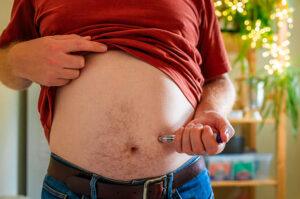
Many patients ask an important question during their treatment: when to increase tirzepatide dose. The timing of a dose change plays a key role in managing appetite, ensuring comfort, and maintaining steady metabolic improvements. Knowing the right time to adjust can help patients avoid side effects and stay on track with their progress.
Tirzepatide dosing isn’t based on a rigid timeline. Instead, it follows a step-by-step clinical process that gives the body time to adjust to each level before making changes. Clear advice from a doctor helps avoid hurried choices and builds trust in the treatment plan. Review your tirzepatide dose with our clinic today.
Key Takeaways
- Increasing the dose depends on how the patient responds, not on rushing the process.
- Controlling appetite is more important than fast changes on the scale.
- Temporary plateaus happen often and are normal.
- Decisions about pacing rely on how the body handles any side effects.
- Medical guidance plays a key role in ensuring long-term success.
How Tirzepatide Dosage Progresses Over Time
Understanding how dose adjustments are made in clinical care shows why patience is key to better outcomes.
Starting Dosages Prioritize How Well the Body Adapts
Doctors begin Tirzepatide treatment with a small dose, allowing the body to adjust at a steady pace. During this time, the focus is on how the digestive system adapts and on balancing hormones, not immediate weight loss. Appetite suppression tends to take time to develop in this phase.
Every Dose Level Needs Proper Time to Work
Each dose needs enough time to show its full results. Watching hunger levels, portion sizes, and how often food cravings occur tells you more than watching the scale every day. Raising the dose too soon might make side effects worse without giving better results.
Focus on How Hunger Changes, Not Just Speed
When appetite starts to stabilize, it might mean you’ve reached the ideal dose. A short pause in progress or slower weeks don’t always mean you need to raise the dose. It’s smarter to look at patterns over a few weeks to decide.
Side Effects Indicate When to Wait
Ongoing nausea or feeling tired signals that your body might need more time to adjust. It’s better to delay increasing the dose until these issues ease off. Ignoring these signs often makes it harder to stick with the treatment long term.
Everyone’s Metabolism Works
Body makeup, how the body resists insulin, and past medications can all affect how much dose someone needs. Some people do well with smaller amounts of a drug even over a long time. It is important to adjust doses to fit each person.
Let our team know how we can help with your goals!
Signs That It Might Be Time to Increase the Dose
Certain patterns can suggest that a dose adjustment may be appropriate rather than causing unnecessary side effects.
- Appetite returns despite no change in eating habits
- Hunger persists for several weeks at the same dose
- Cravings or frequent snacking increase again
- Weight remains stable for an extended period despite consistency
- Fullness after meals feels reduced compared to earlier weeks
Body weight trends can offer context, but should not be viewed alone. Short pauses can happen due to fluid shifts, hormonal changes, or muscle retention. Patterns that persist over time tend to be more meaningful.
People curious about how tirzepatide supports weight loss can review clinical details on tirzepatide and weight loss.
Why Plateaus Don’t Always Mean Dose Adjustments Are Needed
When progress slows, it often means the body is adjusting its metabolism, not that the medication isn’t working.
Losing weight during metabolic treatment is not always a steady process. As food intake decreases, the body adapts by lowering energy usage, which might make visible results appear to stall for a while. Raising the dose too soon, though, might bring more side effects without speeding things up.
Lifestyle choices play a big role in hitting plateaus. Things like sleep, stress, staying hydrated, and eating enough protein all have an impact on results. Fixing these factors can often break through plateaus without needing to increase the dose. If a patient faces a long stall, they might learn more about why weight loss may slow on tirzepatide.
To discuss our services, contact us today!
How Long To Stay On Each Dose
Deciding how long to stick to a dose involves balancing patience and responding to clinical signs. Most patients stay on each dose level for several weeks. This time helps their appetite settle and any side effects level out. Changing doses too makes it harder for the body to adjust and increases the chance of side effects.
But waiting too long might slow improvement. The key is finding the point when hunger comes back after the first positive effects. Doctors play a key role in getting this timing right.
Need help deciding? Fill out a contact form,and we’ll ensure you’re informed!
Research Backing Slow Dose Increases
Big studies show the value of increasing doses step by step. A major randomized trial showed that higher doses, when adjusted, had stronger effects on metabolism. People who increased their doses slowly handled it better and saw longer-lasting results.
Other pharmacologic studies describe how appetite and glucose systems change step by step. To learn more, you can check out the metabolic mechanism overview on the National Center for Biotechnology Information platform.
Things That Might Affect How a Dose Feels
Different external factors can change the way a dose seems to work. Certain medications or supplements can change appetite or blood sugar stability. These changes might hide or overstate how well something is working. Checking everything a person takes helps avoid mistakes in figuring out what works.
Daily routines play a role, too. Skipping meals, not drinking enough water, or eating too little can drain energy and mess with appetite. Fixing these small habits often brings back balance without needing to change doses.
Regular Check-Ins And Tailored Support
Keeping track of progress makes it easier to adjust doses based on what the patient needs. People getting medical weight loss care in Costa Mesa discuss how their appetite has been during their planned visits. These check-ins help make timely changes and lower risks. Being consistent helps make outcomes safer and more effective.
How We Help with Safe Dose Changes
Trim Body M.D. bases dose changes on eating habits, side effects over time, and how the body’s metabolism reacts. Our team checks progress to decide if increasing the dose will improve results while ensuring you feel comfortable.
This method is built on experience from working with many unique treatment plans. Here’s how we focus on your needs:
- Checking your appetite patterns
- Understanding your weight changes
- Watching for unwanted reactions
- Adjusting treatment pace for you
- Using insights from 30,000+ patients
Important Things to Keep in Mind as You Move Forward
Deciding when to increase tirzepatide dose relies on regular hunger returning, improvement of side effects, and sticking to the treatment. It is better to evaluate progress over a few weeks instead of just days. Doctors can help ensure proper dose increases while keeping it tolerable over time. Book a medical consultation today.
Disclaimer: This article is for informational and educational purposes. Treatment decisions are made during an individual medical evaluation with a licensed provider. We provide compounded tirzepatide and are not affiliated with or endorsed by the manufacturers of Zepbound® or Mounjaro®.
FAQs About When to Increase Your Tirzepatide Dose
How To Know When To Increase Tirzepatide Dose
You may need an increase when appetite control weakens for multiple weeks despite consistent routines. A clinician should confirm patterns using weight trends, hunger timing, and side effect status.
What Signs Mean My Current Dose Has Stopped Working
Recurring cravings, larger portions, and increased snacking can signal reduced response. Track these changes weekly and review them with your prescribing provider.
Can I Increase If I Feel Hungry Before My Next Injection
Sometimes. If end-of-week hunger becomes consistent and affects intake control, dosing may need adjustment. Confirm it is not caused by low protein intake or missed meals.
Should I Wait If I Still Have Nausea Or Fatigue
Yes. Persistent side effects usually mean your body needs more time at the current dose. Increasing active symptoms raises intolerance risk.
What Tracking Helps Decide If A Dose Change Is Needed
Record hunger intensity, meal size, cravings, and weekly weight trend. This data helps clinicians separate normal plateaus from true dose limitation.
Call and talk to a specialist today! (702) 489-3300
Let our team know how we can help with your goals!

Get In Touch With Us
Schedule Your Free Consultation — Take Your First Step Today
 Henderson
Let our team of Medical Professionals help you achieve your body goals. Contact us Today!