
'%3e%3cpath%20d='M12.0979%2019.9987C10.6974%2019.9987%209.29703%2019.4657%208.2309%2018.3995L1.60176%2011.7704C0.568828%2010.7375%200%209.36414%200%207.9034C0%206.44262%200.568828%205.06934%201.6018%204.03641C2.51562%203.12254%204.00258%203.12262%204.91633%204.03637L7.12605%206.2461C8.03988%207.15992%208.03988%208.6468%207.12605%209.56067C6.97848%209.70821%206.89723%209.90442%206.89723%2010.1131C6.89723%2010.3218%206.97848%2010.5179%207.12602%2010.6655L9.33574%2012.8752C9.48328%2013.0228%209.67949%2013.1041%209.88816%2013.1041C10.0969%2013.1041%2010.293%2013.0228%2010.4406%2012.8753C11.3545%2011.9614%2012.8414%2011.9614%2013.7552%2012.8753L15.9649%2015.085C16.8787%2015.9988%2016.8787%2017.4857%2015.9649%2018.3995C14.8987%2019.4657%2013.4983%2019.9987%2012.0979%2019.9987ZM3.25906%204.91281C3.05898%204.91281%202.85895%204.98895%202.7066%205.14129C1.96883%205.87906%201.5625%206.86%201.5625%207.9034C1.5625%208.9468%201.96883%209.92774%202.7066%2010.6655L9.33574%2017.2947C10.8587%2018.8177%2013.337%2018.8177%2014.86%2017.2947C15.1646%2016.99%2015.1646%2016.4944%2014.86%2016.1898L12.6503%2013.9801C12.5028%2013.8325%2012.3066%2013.7513%2012.0979%2013.7513C11.8892%2013.7513%2011.693%2013.8325%2011.5455%2013.98C10.6316%2014.8939%209.14473%2014.8939%208.23086%2013.98L6.02117%2011.7703C5.57852%2011.3277%205.33473%2010.7391%205.33473%2010.113C5.33473%209.48703%205.57852%208.89844%206.02117%208.45578C6.16875%208.30824%206.25%208.11203%206.25%207.90336C6.25%207.69469%206.16875%207.49852%206.02117%207.35094L3.81148%205.14121C3.65918%204.98899%203.4591%204.91281%203.25906%204.91281Z'%20fill='black'/%3e%3cpath%20d='M9.5448%209.3168C9.25285%209.1959%209.0625%208.91102%209.0625%208.59504V0.782539C9.0625%200.351055%209.41227%200.00128937%209.84375%200.00128937H19.2188C19.6502%200.00128937%2020%200.351055%2020%200.782539V7.03254C20%207.46402%2019.6502%207.81379%2019.2188%207.81379H11.7298L10.3962%209.14746C10.1728%209.3709%209.83676%209.43773%209.5448%209.3168ZM10.625%201.56379V6.70895L10.8538%206.48012C11.0003%206.33359%2011.199%206.25129%2011.4062%206.25129H18.4375V1.56379H10.625Z'%20fill='black'/%3e%3cpath%20d='M12.9688%204.68879C13.4002%204.68879%2013.75%204.33901%2013.75%203.90754C13.75%203.47607%2013.4002%203.12629%2012.9688%203.12629C12.5373%203.12629%2012.1875%203.47607%2012.1875%203.90754C12.1875%204.33901%2012.5373%204.68879%2012.9688%204.68879Z'%20fill='black'/%3e%3cpath%20d='M16.0938%204.68879C16.5252%204.68879%2016.875%204.33901%2016.875%203.90754C16.875%203.47607%2016.5252%203.12629%2016.0938%203.12629C15.6623%203.12629%2015.3125%203.47607%2015.3125%203.90754C15.3125%204.33901%2015.6623%204.68879%2016.0938%204.68879Z'%20fill='black'/%3e%3c/g%3e%3cdefs%3e%3cclipPath%20id='clip0_6353_9'%3e%3crect%20width='20'%20height='20'%20fill='white'/%3e%3c/clipPath%3e%3c/defs%3e%3c/svg%3e)
'%3e%3cpath%20d='M10%2020C13.8389%2020%2017.0312%2018.3836%2017.0312%2016.0938C17.0312%2015.4405%2016.7592%2014.8022%2016.2444%2014.2478C15.9508%2013.9316%2015.4565%2013.9132%2015.1403%2014.2068C14.8241%2014.5004%2014.8058%2014.9947%2015.0994%2015.3109C15.3444%2015.5749%2015.4687%2015.8383%2015.4687%2016.0938C15.4687%2017.2001%2013.13%2018.4375%209.99996%2018.4375C6.86996%2018.4375%204.53121%2017.2001%204.53121%2016.0938C4.53121%2015.8382%204.65547%2015.5749%204.90055%2015.3109C5.19414%2014.9947%205.17582%2014.5004%204.85965%2014.2068C4.54348%2013.9133%204.04914%2013.9316%203.75555%2014.2477C3.24082%2014.8021%202.96875%2015.4405%202.96875%2016.0938C2.96875%2018.3803%206.15578%2020%2010%2020Z'%20fill='black'/%3e%3cpath%20d='M8.13172%2015.9465C8.57285%2016.5282%209.27023%2016.875%2010%2016.875C10.7298%2016.875%2011.4271%2016.5282%2011.8683%2015.9466L15.6293%2011.2402C16.5465%2010.0163%2017.0312%208.5609%2017.0312%207.03125C17.0312%203.15422%2013.877%200%2010%200C6.12297%200%202.96875%203.15422%202.96875%207.03125C2.96875%208.56094%203.45352%2010.0164%204.37063%2011.2402L8.13172%2015.9465ZM10%201.5625C13.0155%201.5625%2015.4688%204.01578%2015.4688%207.03125C15.4688%208.21648%2015.0944%209.34434%2014.386%2010.2938C14.386%2010.2938%2010.6309%2014.9924%2010.626%2014.9989C10.4766%2015.1982%2010.2484%2015.3125%2010%2015.3125C9.75156%2015.3125%209.5234%2015.1982%209.37402%2014.9989C9.36914%2014.9923%209.36418%2014.9859%209.3591%2014.9796L5.61395%2010.2937C4.90559%209.34434%204.53125%208.21652%204.53125%207.03125C4.53125%204.01578%206.98453%201.5625%2010%201.5625Z'%20fill='black'/%3e%3cpath%20d='M10%2010.9375C12.1539%2010.9375%2013.9062%209.18516%2013.9062%207.03125C13.9062%204.87734%2012.1539%203.125%2010%203.125C7.84609%203.125%206.09375%204.87734%206.09375%207.03125C6.09375%209.18516%207.84609%2010.9375%2010%2010.9375ZM10%204.6875C11.2923%204.6875%2012.3438%205.73891%2012.3438%207.03125C12.3438%208.32359%2011.2923%209.375%2010%209.375C8.70766%209.375%207.65625%208.32359%207.65625%207.03125C7.65625%205.73891%208.70766%204.6875%2010%204.6875Z'%20fill='black'/%3e%3c/g%3e%3cdefs%3e%3cclipPath%20id='clip0_6353_60'%3e%3crect%20width='20'%20height='20'%20fill='white'/%3e%3c/clipPath%3e%3c/defs%3e%3c/svg%3e)

'%3e%3ccircle%20cx='321'%20cy='321'%20r='276'%20transform='matrix(-1%200%200%201%20481%200)'%20stroke='%23E5DFD3'%20stroke-width='90'/%3e%3c/g%3e%3cdefs%3e%3cclipPath%20id='clip0_6046_3421'%3e%3crect%20width='481'%20height='413'%20fill='white'%20transform='matrix(-1%200%200%201%20481%200)'/%3e%3c/clipPath%3e%3c/defs%3e%3c/svg%3e)
How To Keep Tirzepatide Cold While Traveling?
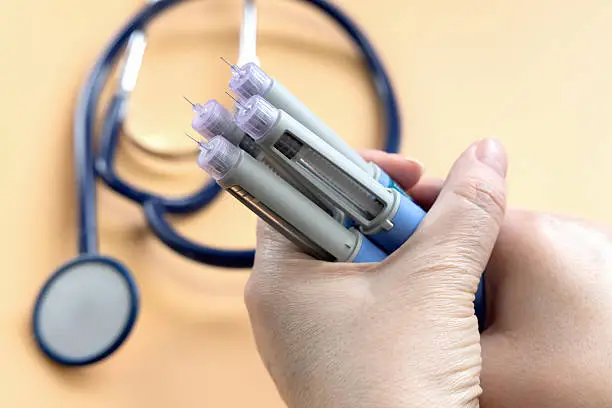
Are you traveling? And thinking about how to keep tirzepatide cold while traveling? This medicine needs to stay at the right temperature to work well. Keeping Tirzepatide at the correct temperature is key to avoiding it losing its strength or getting contaminated.
If you plan ahead and have the right supplies, you can travel without stressing over how to store them. Knowing how long the medicine stays fine in the fridge, how much time it can spend out of it, and the best ways to keep it cool can help you stay ready for any trip.
Key Takeaways
- Keep Tirzepatide between 2°C and 8°C (36°F to 46°F) before use.
- Some formulations tolerate brief exposure below 30°C (86°F), but compounded versions often require continuous refrigeration.
- Use cold packs or insulated bags to maintain the right temperature during trips.
- Plan ahead for flights to manage storage and security requirements.
- Follow medical advice to prevent unintentional heat exposure.
How Long Can Tirzepatide Compound Stay Out of Fridge?
How you store compounded Tirzepatide depends on its specific formulation. Keeping it in the fridge helps it stay stable. While it might be okay to leave it out for a short period, heat can harm its quality. Research by the National Institutes of Health shows temperature changes can break down peptides, which could make the medicine less effective.
People often don’t realize how fast medicine can heat up once it’s out of the fridge. Using insulated bags, gel packs, or small medical coolers can help keep it safe. If you’re someone who travels a lot, we have useful tips to handle traveling with Tirzepatide, covering transport, storage, and timing for both short and long trips.
Some brands mention specific temperature ranges for room storage, but compounded versions might not be as stable. To avoid mistakes, always stick to the rules your pharmacy and doctor give you.
What To Know Before Traveling With Tirzepatide
Planning is more important when flying because airport security checks your supplies. We advise you to keep GLP-1 medications insulated and safe from heat during layovers or long waits.
Traveling by Plane
When traveling by plane, pack Tirzepatide in your carry-on bag. Checked bags often go through extreme temperature changes that could affect the medication. To keep it cool, freeze cold packs the night before and cover them with a thin cloth so the medicine does not freeze.
Traveling by Car
Traveling by car comes with its own difficulties. Cars can heat up fast during summer, so it is important not to leave medications inside a parked car. Keep the insulated bag in the passenger seat area instead of the trunk, since trunks tend to get hotter.
To handle short trips, pack an insulated container using two cold packs placed on opposite sides to maintain a stable temperature. For longer trips, you can use a portable mini-fridge that works through a USB port or an outlet.
Check out this advice on how to store and refrigerate Tirzepatide. This helps patients manage safe temperatures both at home and during daily routines:
Tips To Keep Tirzepatide Cold When Traveling for Long Periods
Keeping Tirzepatide cold during a long trip can be tricky, but a good plan ensures it stays safe and effective. Start by figuring out how long you’ll be without a fridge and what kind of places you’ll travel through.
Try these methods:
- Get an insulated cooler bag made for medications
- Bring two sets of reusable gel packs to swap out as needed
- Place the medication in the middle of the bag to keep the temperature steady
- Watch out for hot weather or long times outside
- Have backup cooling methods ready in case the gel packs stop working
Do not put the medication next to ice or frozen packs. cold temperatures can harm Tirzepatide just like heat does.
If you plan to stay in hotels, ask for a fridge before you get there. Many hotels can meet medical storage needs. On road trips or while camping, use a cooler with good insulation and keep replacing the ice often.
People using compounded formulations should be extra careful since these may be less stable. Check the proper temperature ranges with your compounding pharmacy to avoid problems.
How We Help Patients Achieve Better Results with Travel Support
TrimBody M.D. works with patients to keep their medication effective and safe while traveling. Controlling medication temperature during trips avoids interruptions in treatment and ensures steady outcomes. Here’s how we assist:
- Advice to protect medications while traveling
- Tips on storing medicine during flights, road trips, or in changing climates
- Clear steps to follow for refrigeration or room temperature needs
- Help to avoid damage from heat exposure
- Packing tools and plans so treatments stay on track
How This Affects Your Tirzepatide Experience
Taking Tirzepatide with you on trips needs preparation, but most find it manageable by using insulated bags, gel packs, and understanding how to store it.
Keeping the medication away from heat and not letting it stay at room temperature too long helps maintain its strength and ensures steady progress in your health journey. With proper advice and tools, you can travel without stopping your treatment.
To get advice on safely traveling with Tirzepatide, visit our medical team today.
Disclaimer: This article is for informational and educational purposes. Treatment decisions are made during an individual medical evaluation with a licensed provider. We provide compounded tirzepatide and are not affiliated with or endorsed by the manufacturers of Zepbound® or Mounjaro®.
Frequently Asked Questions
Can I Fly With Tirzepatide In My Carry On?
Yes, you can bring Tirzepatide in your carry on as long as it stays cool. TSA allows medically necessary liquids and supplies when kept with proper documentation.
What If My Ice Pack Melts During Travel?
If the pack warms, replace it with a fresh cold source as soon as possible. Medication should stay insulated until you reach refrigeration.
Can Tirzepatide Sit In A Hotel Mini Fridge Safely?
Yes, most hotel fridges maintain safe cooling temperatures. Just keep the medication away from freezer sections to avoid freezing damage.
Is It Safe To Use Portable Coolers For Long Trips?
Portable coolers work well when packed with multiple gel packs. Rotate them as they thaw to maintain a steady temperature.
Does Heat Exposure Make Tirzepatide Less Effective?
Yes, prolonged heat can reduce stability and potency. Protecting the medication from high temperatures helps preserve its effectiveness during treatment.
Let our team know how we can help with your goals!

Get In Touch With Us
Schedule Your Free Consultation — Take Your First Step Today
 Henderson
Let our team of Medical Professionals help you achieve your body goals. Contact us Today!