
'%3e%3cpath%20d='M12.0979%2019.9987C10.6974%2019.9987%209.29703%2019.4657%208.2309%2018.3995L1.60176%2011.7704C0.568828%2010.7375%200%209.36414%200%207.9034C0%206.44262%200.568828%205.06934%201.6018%204.03641C2.51562%203.12254%204.00258%203.12262%204.91633%204.03637L7.12605%206.2461C8.03988%207.15992%208.03988%208.6468%207.12605%209.56067C6.97848%209.70821%206.89723%209.90442%206.89723%2010.1131C6.89723%2010.3218%206.97848%2010.5179%207.12602%2010.6655L9.33574%2012.8752C9.48328%2013.0228%209.67949%2013.1041%209.88816%2013.1041C10.0969%2013.1041%2010.293%2013.0228%2010.4406%2012.8753C11.3545%2011.9614%2012.8414%2011.9614%2013.7552%2012.8753L15.9649%2015.085C16.8787%2015.9988%2016.8787%2017.4857%2015.9649%2018.3995C14.8987%2019.4657%2013.4983%2019.9987%2012.0979%2019.9987ZM3.25906%204.91281C3.05898%204.91281%202.85895%204.98895%202.7066%205.14129C1.96883%205.87906%201.5625%206.86%201.5625%207.9034C1.5625%208.9468%201.96883%209.92774%202.7066%2010.6655L9.33574%2017.2947C10.8587%2018.8177%2013.337%2018.8177%2014.86%2017.2947C15.1646%2016.99%2015.1646%2016.4944%2014.86%2016.1898L12.6503%2013.9801C12.5028%2013.8325%2012.3066%2013.7513%2012.0979%2013.7513C11.8892%2013.7513%2011.693%2013.8325%2011.5455%2013.98C10.6316%2014.8939%209.14473%2014.8939%208.23086%2013.98L6.02117%2011.7703C5.57852%2011.3277%205.33473%2010.7391%205.33473%2010.113C5.33473%209.48703%205.57852%208.89844%206.02117%208.45578C6.16875%208.30824%206.25%208.11203%206.25%207.90336C6.25%207.69469%206.16875%207.49852%206.02117%207.35094L3.81148%205.14121C3.65918%204.98899%203.4591%204.91281%203.25906%204.91281Z'%20fill='black'/%3e%3cpath%20d='M9.5448%209.3168C9.25285%209.1959%209.0625%208.91102%209.0625%208.59504V0.782539C9.0625%200.351055%209.41227%200.00128937%209.84375%200.00128937H19.2188C19.6502%200.00128937%2020%200.351055%2020%200.782539V7.03254C20%207.46402%2019.6502%207.81379%2019.2188%207.81379H11.7298L10.3962%209.14746C10.1728%209.3709%209.83676%209.43773%209.5448%209.3168ZM10.625%201.56379V6.70895L10.8538%206.48012C11.0003%206.33359%2011.199%206.25129%2011.4062%206.25129H18.4375V1.56379H10.625Z'%20fill='black'/%3e%3cpath%20d='M12.9688%204.68879C13.4002%204.68879%2013.75%204.33901%2013.75%203.90754C13.75%203.47607%2013.4002%203.12629%2012.9688%203.12629C12.5373%203.12629%2012.1875%203.47607%2012.1875%203.90754C12.1875%204.33901%2012.5373%204.68879%2012.9688%204.68879Z'%20fill='black'/%3e%3cpath%20d='M16.0938%204.68879C16.5252%204.68879%2016.875%204.33901%2016.875%203.90754C16.875%203.47607%2016.5252%203.12629%2016.0938%203.12629C15.6623%203.12629%2015.3125%203.47607%2015.3125%203.90754C15.3125%204.33901%2015.6623%204.68879%2016.0938%204.68879Z'%20fill='black'/%3e%3c/g%3e%3cdefs%3e%3cclipPath%20id='clip0_6353_9'%3e%3crect%20width='20'%20height='20'%20fill='white'/%3e%3c/clipPath%3e%3c/defs%3e%3c/svg%3e)
'%3e%3cpath%20d='M10%2020C13.8389%2020%2017.0312%2018.3836%2017.0312%2016.0938C17.0312%2015.4405%2016.7592%2014.8022%2016.2444%2014.2478C15.9508%2013.9316%2015.4565%2013.9132%2015.1403%2014.2068C14.8241%2014.5004%2014.8058%2014.9947%2015.0994%2015.3109C15.3444%2015.5749%2015.4687%2015.8383%2015.4687%2016.0938C15.4687%2017.2001%2013.13%2018.4375%209.99996%2018.4375C6.86996%2018.4375%204.53121%2017.2001%204.53121%2016.0938C4.53121%2015.8382%204.65547%2015.5749%204.90055%2015.3109C5.19414%2014.9947%205.17582%2014.5004%204.85965%2014.2068C4.54348%2013.9133%204.04914%2013.9316%203.75555%2014.2477C3.24082%2014.8021%202.96875%2015.4405%202.96875%2016.0938C2.96875%2018.3803%206.15578%2020%2010%2020Z'%20fill='black'/%3e%3cpath%20d='M8.13172%2015.9465C8.57285%2016.5282%209.27023%2016.875%2010%2016.875C10.7298%2016.875%2011.4271%2016.5282%2011.8683%2015.9466L15.6293%2011.2402C16.5465%2010.0163%2017.0312%208.5609%2017.0312%207.03125C17.0312%203.15422%2013.877%200%2010%200C6.12297%200%202.96875%203.15422%202.96875%207.03125C2.96875%208.56094%203.45352%2010.0164%204.37063%2011.2402L8.13172%2015.9465ZM10%201.5625C13.0155%201.5625%2015.4688%204.01578%2015.4688%207.03125C15.4688%208.21648%2015.0944%209.34434%2014.386%2010.2938C14.386%2010.2938%2010.6309%2014.9924%2010.626%2014.9989C10.4766%2015.1982%2010.2484%2015.3125%2010%2015.3125C9.75156%2015.3125%209.5234%2015.1982%209.37402%2014.9989C9.36914%2014.9923%209.36418%2014.9859%209.3591%2014.9796L5.61395%2010.2937C4.90559%209.34434%204.53125%208.21652%204.53125%207.03125C4.53125%204.01578%206.98453%201.5625%2010%201.5625Z'%20fill='black'/%3e%3cpath%20d='M10%2010.9375C12.1539%2010.9375%2013.9062%209.18516%2013.9062%207.03125C13.9062%204.87734%2012.1539%203.125%2010%203.125C7.84609%203.125%206.09375%204.87734%206.09375%207.03125C6.09375%209.18516%207.84609%2010.9375%2010%2010.9375ZM10%204.6875C11.2923%204.6875%2012.3438%205.73891%2012.3438%207.03125C12.3438%208.32359%2011.2923%209.375%2010%209.375C8.70766%209.375%207.65625%208.32359%207.65625%207.03125C7.65625%205.73891%208.70766%204.6875%2010%204.6875Z'%20fill='black'/%3e%3c/g%3e%3cdefs%3e%3cclipPath%20id='clip0_6353_60'%3e%3crect%20width='20'%20height='20'%20fill='white'/%3e%3c/clipPath%3e%3c/defs%3e%3c/svg%3e)

'%3e%3ccircle%20cx='321'%20cy='321'%20r='276'%20transform='matrix(-1%200%200%201%20481%200)'%20stroke='%23E5DFD3'%20stroke-width='90'/%3e%3c/g%3e%3cdefs%3e%3cclipPath%20id='clip0_6046_3421'%3e%3crect%20width='481'%20height='413'%20fill='white'%20transform='matrix(-1%200%200%201%20481%200)'/%3e%3c/clipPath%3e%3c/defs%3e%3c/svg%3e)
Foods to Avoid on Zepbound (Diet Guide)
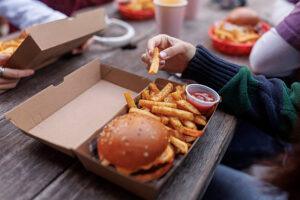
Zepbound foods to avoid are primarily high-fat, large-portion, sugary, and carbonated foods that worsen nausea, bloating, and fullness because Zepbound slows stomach emptying, and Trim Body M.D. evaluates food tolerance as part of treatment oversight. Avoiding these foods often improves comfort, reduces side effects, and supports consistent weight loss. Book a free consultation for dietary guidance while on Zepbound.
Key Takeaways
- High-fat foods delay digestion and worsen nausea
- Large meals increase pressure in a slower-emptying stomach
- Sugary foods may trigger nausea and energy swings
- Carbonated drinks increase bloating and discomfort
- Food tolerance improves with portion control and guidance
Foods To Avoid With Zepbound For Easier Digestion
Certain foods tend to trigger more symptoms during Zepbound treatment. They either take longer to digest or increase the amount of food in the stomach.
| Food Type | Why It Causes Problems | Common Symptoms |
|---|---|---|
| Fried foods | Fat delays gastric emptying | Nausea, heaviness |
| Large portions | Overfills the stomach | Bloating, pressure |
| Sugary foods | Rapid glucose shifts | Nausea, fatigue |
| Carbonated drinks | Adds gas volume | Bloating |
| Highly processed foods | Fat, sugar, additives combined | Stomach upset |
- Fried and greasy foods are the most common trigger. Creamy sauces, fast food, and fatty meats often feel heavy and worsen nausea even in small amounts.
- Sugary foods can also feel uncomfortable. Desserts and sweetened drinks may intensify nausea or lead to energy fluctuations that feel unsettling during digestion.
- Highly processed foods tend to combine fat, sugar, and additives. These foods strain digestion without supporting satiety or nutrition.
- Carbonated beverages add gas to the stomach, increasing pressure in an already slower digestive system.
Many of these symptoms overlap with medication-related nausea. Reviewing nausea helps clarify why certain foods feel worse.
Let our team know how we can help with your goals!
Why Some Foods Feel Tougher to Handle on Zepbound
Zepbound slows how fast food leaves your stomach and boosts signals of fullness in your brain. This shift helps cut down how many calories you eat, but it also changes how your digestive system deals with volume, fat, and sugar.
Slowing digestion means food hangs out in the stomach longer. Eating fatty foods or large amounts can add pressure to the stomach, leading to nausea or bloating. This tends to happen more at the start of treatment or when increasing your dose, as your body adjusts to the medication.
These reactions do not come from food allergies or toxicity. They happen because the food choice does not align with the adjusted digestion speed. Understanding which foods to stay away from allows eating habits to match how Zepbound functions.
Clear steps in a Zepbound meal plan provide ways to adjust food choices. These adjustments often show results and ease symptoms in just a few days.
Can You Drink Diet Coke on Zepbound?
Diet sodas don’t have sugar, but the bubbles can still be an issue for some people. Fizzy drinks put more gas into the stomach, which can make bloating and fullness feel worse when digestion is slower than normal.
Some people might also feel sick from artificial sweeteners. Sensitivity differs between individuals, and how well someone tolerates them can change as treatment continues.
Some people can drink small amounts of diet soda without any trouble, but others might feel uneasy even after just a few sips. When symptoms show up, drinking still water, herbal tea, or flavored non-carbonated drinks can often help you feel better.
Medical News Today highlights that limiting fizzy drinks can help cut down on stomach issues during treatment using carbonated drinks.
To discuss our services, contact us today!
What Should You Eat While on Zepbound?
Digestible foods are more comfortable to eat while on Zepbound. Lean protein helps maintain muscle strength and keeps you full without straining your digestion. Foods like eggs, chicken, fish, tofu, and yogurt are often easy to handle.
- Cooked veggies tend to sit more easily than raw ones at the start of treatment. Steaming or roasting them lessens fiber bulk and cuts down on gas.
- Using small amounts of healthy fats can help with feeling satisfied without slowing digestion too much. Things like olive oil, avocado, and nuts are better options than fried or heavy oils.
- Eating smaller meals spaced out during the day can lower stomach pressure. Taking time to eat makes it easier to notice when you’re full and avoids discomfort.
Advice from Healthline highlights the importance of gentle, balanced eating to adjust your food intake instead of focusing on strict restrictions.
Need help deciding? Fill out a contact form,and we’ll ensure you’re informed!
How Food Portions Influence Tolerance
Portion size can have a bigger impact than the type of food you eat. Even foods that are easy to digest might cause bloating or nausea when eaten in large amounts.
Zepbound boosts signals that make you feel full. Eating beyond that full feeling makes the stomach stretch and causes discomfort. Using smaller plates and planning portions ahead of time can stop this from happening.
Taking your time while eating also helps. It keeps you from swallowing too much air and gives your body a chance to feel full before you get uncomfortable. Many people feel better within just one week of controlling their portions.
How Trim Body M.D. Supports You With Food Choices
With experience helping over 30,000+ patients, their team works to figure out problem foods and help you create eating habits that bring comfort and results.
- Check symptoms after meals.
- Help patients with portion sizes and meal schedules.
- Teach nutrition tailored to digestion changes.
- Make adjustments when raising doses.
- Offer constant support during treatment.
Patients using tirzepatide injections gain clear guidance that eases side effects and helps them stay on track.
A Simple Look at Zepbound Food Choices
Skipping certain foods while on Zepbound increases comfort and keeps things steady. Picking foods that are easy to digest can ease nausea and bloating. This helps patients stick to their plan and work toward weight loss. Get advice from a medical expert today.
Disclaimer: This article is for informational and educational purposes. Treatment decisions are made during an individual medical evaluation with a licensed provider. We provide compounded tirzepatide and are not affiliated with or endorsed by the manufacturers of Zepbound® or Mounjaro®.
FAQs about Foods to Avoid on Zepbound
What Happens When You Eat too Much on Zepbound?
Eating too much on Zepbound can lead to nausea, bloating, or stomach discomfort because food stays in the stomach longer.
Why Do Fatty Foods Feel Worse on Zepbound?
Fat slows digestion even further when gastric emptying is already delayed. This increases stomach pressure and often leads to nausea or heaviness shortly after eating.
Are Sugary Foods A Problem on Zepbound?
Yes, sugary foods can cause nausea and energy swings. Rapid glucose changes may feel uncomfortable when appetite and digestion are altered during treatment.
Can I Drink Soda or Carbonated Drinks on Zepbound?
Carbonation adds gas and increases bloating. Even diet sodas can worsen fullness, making still water or non-carbonated drinks a better choice.
Do I Need To Avoid These Foods Forever?
No, food tolerance often improves as your body adapts. Many patients gradually reintroduce foods in smaller portions with clinician guidance.
Call and talk to a specialist today! (702) 489-3300
Let our team know how we can help with your goals!

Get In Touch With Us
Schedule Your Free Consultation — Take Your First Step Today
 Henderson
Let our team of Medical Professionals help you achieve your body goals. Contact us Today!