
'%3e%3cpath%20d='M12.0979%2019.9987C10.6974%2019.9987%209.29703%2019.4657%208.2309%2018.3995L1.60176%2011.7704C0.568828%2010.7375%200%209.36414%200%207.9034C0%206.44262%200.568828%205.06934%201.6018%204.03641C2.51562%203.12254%204.00258%203.12262%204.91633%204.03637L7.12605%206.2461C8.03988%207.15992%208.03988%208.6468%207.12605%209.56067C6.97848%209.70821%206.89723%209.90442%206.89723%2010.1131C6.89723%2010.3218%206.97848%2010.5179%207.12602%2010.6655L9.33574%2012.8752C9.48328%2013.0228%209.67949%2013.1041%209.88816%2013.1041C10.0969%2013.1041%2010.293%2013.0228%2010.4406%2012.8753C11.3545%2011.9614%2012.8414%2011.9614%2013.7552%2012.8753L15.9649%2015.085C16.8787%2015.9988%2016.8787%2017.4857%2015.9649%2018.3995C14.8987%2019.4657%2013.4983%2019.9987%2012.0979%2019.9987ZM3.25906%204.91281C3.05898%204.91281%202.85895%204.98895%202.7066%205.14129C1.96883%205.87906%201.5625%206.86%201.5625%207.9034C1.5625%208.9468%201.96883%209.92774%202.7066%2010.6655L9.33574%2017.2947C10.8587%2018.8177%2013.337%2018.8177%2014.86%2017.2947C15.1646%2016.99%2015.1646%2016.4944%2014.86%2016.1898L12.6503%2013.9801C12.5028%2013.8325%2012.3066%2013.7513%2012.0979%2013.7513C11.8892%2013.7513%2011.693%2013.8325%2011.5455%2013.98C10.6316%2014.8939%209.14473%2014.8939%208.23086%2013.98L6.02117%2011.7703C5.57852%2011.3277%205.33473%2010.7391%205.33473%2010.113C5.33473%209.48703%205.57852%208.89844%206.02117%208.45578C6.16875%208.30824%206.25%208.11203%206.25%207.90336C6.25%207.69469%206.16875%207.49852%206.02117%207.35094L3.81148%205.14121C3.65918%204.98899%203.4591%204.91281%203.25906%204.91281Z'%20fill='black'/%3e%3cpath%20d='M9.5448%209.3168C9.25285%209.1959%209.0625%208.91102%209.0625%208.59504V0.782539C9.0625%200.351055%209.41227%200.00128937%209.84375%200.00128937H19.2188C19.6502%200.00128937%2020%200.351055%2020%200.782539V7.03254C20%207.46402%2019.6502%207.81379%2019.2188%207.81379H11.7298L10.3962%209.14746C10.1728%209.3709%209.83676%209.43773%209.5448%209.3168ZM10.625%201.56379V6.70895L10.8538%206.48012C11.0003%206.33359%2011.199%206.25129%2011.4062%206.25129H18.4375V1.56379H10.625Z'%20fill='black'/%3e%3cpath%20d='M12.9688%204.68879C13.4002%204.68879%2013.75%204.33901%2013.75%203.90754C13.75%203.47607%2013.4002%203.12629%2012.9688%203.12629C12.5373%203.12629%2012.1875%203.47607%2012.1875%203.90754C12.1875%204.33901%2012.5373%204.68879%2012.9688%204.68879Z'%20fill='black'/%3e%3cpath%20d='M16.0938%204.68879C16.5252%204.68879%2016.875%204.33901%2016.875%203.90754C16.875%203.47607%2016.5252%203.12629%2016.0938%203.12629C15.6623%203.12629%2015.3125%203.47607%2015.3125%203.90754C15.3125%204.33901%2015.6623%204.68879%2016.0938%204.68879Z'%20fill='black'/%3e%3c/g%3e%3cdefs%3e%3cclipPath%20id='clip0_6353_9'%3e%3crect%20width='20'%20height='20'%20fill='white'/%3e%3c/clipPath%3e%3c/defs%3e%3c/svg%3e)
'%3e%3cpath%20d='M10%2020C13.8389%2020%2017.0312%2018.3836%2017.0312%2016.0938C17.0312%2015.4405%2016.7592%2014.8022%2016.2444%2014.2478C15.9508%2013.9316%2015.4565%2013.9132%2015.1403%2014.2068C14.8241%2014.5004%2014.8058%2014.9947%2015.0994%2015.3109C15.3444%2015.5749%2015.4687%2015.8383%2015.4687%2016.0938C15.4687%2017.2001%2013.13%2018.4375%209.99996%2018.4375C6.86996%2018.4375%204.53121%2017.2001%204.53121%2016.0938C4.53121%2015.8382%204.65547%2015.5749%204.90055%2015.3109C5.19414%2014.9947%205.17582%2014.5004%204.85965%2014.2068C4.54348%2013.9133%204.04914%2013.9316%203.75555%2014.2477C3.24082%2014.8021%202.96875%2015.4405%202.96875%2016.0938C2.96875%2018.3803%206.15578%2020%2010%2020Z'%20fill='black'/%3e%3cpath%20d='M8.13172%2015.9465C8.57285%2016.5282%209.27023%2016.875%2010%2016.875C10.7298%2016.875%2011.4271%2016.5282%2011.8683%2015.9466L15.6293%2011.2402C16.5465%2010.0163%2017.0312%208.5609%2017.0312%207.03125C17.0312%203.15422%2013.877%200%2010%200C6.12297%200%202.96875%203.15422%202.96875%207.03125C2.96875%208.56094%203.45352%2010.0164%204.37063%2011.2402L8.13172%2015.9465ZM10%201.5625C13.0155%201.5625%2015.4688%204.01578%2015.4688%207.03125C15.4688%208.21648%2015.0944%209.34434%2014.386%2010.2938C14.386%2010.2938%2010.6309%2014.9924%2010.626%2014.9989C10.4766%2015.1982%2010.2484%2015.3125%2010%2015.3125C9.75156%2015.3125%209.5234%2015.1982%209.37402%2014.9989C9.36914%2014.9923%209.36418%2014.9859%209.3591%2014.9796L5.61395%2010.2937C4.90559%209.34434%204.53125%208.21652%204.53125%207.03125C4.53125%204.01578%206.98453%201.5625%2010%201.5625Z'%20fill='black'/%3e%3cpath%20d='M10%2010.9375C12.1539%2010.9375%2013.9062%209.18516%2013.9062%207.03125C13.9062%204.87734%2012.1539%203.125%2010%203.125C7.84609%203.125%206.09375%204.87734%206.09375%207.03125C6.09375%209.18516%207.84609%2010.9375%2010%2010.9375ZM10%204.6875C11.2923%204.6875%2012.3438%205.73891%2012.3438%207.03125C12.3438%208.32359%2011.2923%209.375%2010%209.375C8.70766%209.375%207.65625%208.32359%207.65625%207.03125C7.65625%205.73891%208.70766%204.6875%2010%204.6875Z'%20fill='black'/%3e%3c/g%3e%3cdefs%3e%3cclipPath%20id='clip0_6353_60'%3e%3crect%20width='20'%20height='20'%20fill='white'/%3e%3c/clipPath%3e%3c/defs%3e%3c/svg%3e)

'%3e%3ccircle%20cx='321'%20cy='321'%20r='276'%20transform='matrix(-1%200%200%201%20481%200)'%20stroke='%23E5DFD3'%20stroke-width='90'/%3e%3c/g%3e%3cdefs%3e%3cclipPath%20id='clip0_6046_3421'%3e%3crect%20width='481'%20height='413'%20fill='white'%20transform='matrix(-1%200%200%201%20481%200)'/%3e%3c/clipPath%3e%3c/defs%3e%3c/svg%3e)
Does Tirzepatide Cause Body Aches?
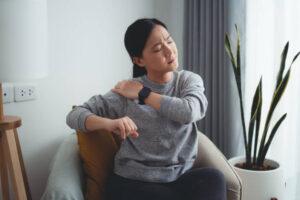
Does tirzepatide cause body aches? This question often comes up when patients experience soreness, stiffness, or a general sense of discomfort during the initial weeks of taking it.
These feelings can worry individuals those already dealing with joint or muscle pain. TrimBody M.D. provides insights on this issue based on medical expertise and existing research.
Even though body aches are not a well-known side effect of tirzepatide, some people do mention having temporary discomfort. Knowing the reasons behind this can help you tell if these feelings are part of normal adjustments or if they need a doctor’s attention.
Key takeaways:
- Body aches aren’t the main side effect.
- You might feel short-term soreness as your body adjusts to metabolic changes.
- Shifts in inflammation levels can affect how your muscles and joints feel.
- Staying hydrated and eating well can help with how strong these symptoms feel.
- If the pain is severe or doesn’t go away, you should see a doctor.
Why You Might Feel Body Aches with Metabolic Changes
Body aches can show how your body adjusts its use of energy, fluids, and inflammation signals. Tirzepatide affects hunger, how the body uses insulin, and fat breakdown, which can change these processes pretty fast.
If calorie intake decreases, the body might adjust its electrolyte balance and how it stores muscle glycogen. This shift can create feelings like post-workout soreness even without doing extra exercise. Over time, lower inflammation often brings relief, but those early changes can feel a bit rough.
Losing weight can also affect how joints and muscles handle weight. As your body changes, muscles need to adapt to new ways of moving, which might cause some temporary stiffness or mild discomfort.
Let our team know how we can help with your goals!
Does Tirzepatide Cause Body Aches?
From the perspective of pharmacology, tirzepatide does not focus on muscles or joints. It works on GLP-1 and GIP receptors to manage metabolic functions in the body. Anybody’s aches are indirect and not a direct effect of the drug.
Data from clinical trials indicates that reports of musculoskeletal pain are rare and often occur alongside general issues like tiredness or slight dehydration. These problems are short-lived and tend to get better as the body gets used to the medication.
An article about metabolic treatments in ScienceDirect points out that widespread changes in metabolism can affect muscle comfort during weight loss periods.
How Reducing Inflammation Changes Body Sensations
Chronic pain and stiffness often come from inflammation. Tirzepatide might reduce it by helping the body use insulin better and cutting down on visceral fat. As inflammation shifts, some people feel relief, but others might experience short-term changes.
When inflammation decreases, healing tissues can feel different. This recovery phase may bring temporary soreness before noticeable improvement begins. Over time, lower inflammation supports joint mobility and helps reduce long-term discomfort.
Research on how tirzepatide reduces inflammation explains how this process supports inflammatory balance during treatment.
To discuss our services, contact us today!
Does Tirzepatide Cause Severe Body Aches?
Severe or long-lasting body aches happen and should not be overlooked. Mild soreness might show up in treatment, but serious pain, swelling, or muscle weakness isn’t common.
Body aches that get worse over time, disrupt daily tasks, or come with fever or extreme tiredness need a medical checkup. Such symptoms could indicate issues like dehydration, a nutrient shortfall, or another unrelated health problem.
Studies exploring musculoskeletal issues during metabolic treatments reveal that ongoing pain is uncommon and connected to factors other than the treatment itself. A clinical review on PubMed explains how changes in metabolism can influence musculoskeletal comfort while avoiding any structural harm.
Need help deciding? Fill out a contact form,and we’ll ensure you’re informed!
Muscle Loss And Physical Discomfort
Some people worry that muscle soreness signals the loss of muscle. Tirzepatide may cause weight loss, which might include both fat and muscle. This happens more if protein levels are too low or if strength exercises are not done.
Weak muscles around joints can lead to pain or feeling unstable. This makes it important to get enough protein and do light strength exercises during treatment. Keeping muscles strong shields the joints and lowers the chance of pain.
Water, Electrolytes, And Body Aches
Having less of an appetite can reduce how much water and electrolytes you take in. Even slight dehydration may bring on muscle cramps, stiffness, and overall soreness.
Patients need to stay hydrated in the early weeks of treatment. Keeping sodium, potassium, and magnesium in balance helps muscles work. Drinking water throughout the day can ease these issues.
Small changes like these solve mild body aches without needing to change the medication.
When Body Aches Get Better
Most people find that their body aches improve over time as their body gets used to the metabolic changes. This takes a few weeks after calorie levels become steady and hydration gets better.
As swelling goes down and weight loss happens, many people feel their joints are more comfortable than before starting. Less stress on joints that carry weight can make the early discomfort worth it.
Patients who attend medical weight-loss clinics like ours gain support to navigate this phase. Those enrolled in supervised tirzepatide programs, such as the one in La Mirada, get help tracking symptoms while maintaining proper nutrition.
How We Focus on Comfort and Recovery During Treatment
At TrimBody M.D., patient comfort plays a big role in achieving successful treatment. Our staff tracks symptoms, hydration levels, and nutrition to ensure therapy continues in a safe and comfortable way.
We guide patients in telling apart normal body adjustments from symptoms that might need medical attention. We tweak care plans to promote both physical health and metabolic improvement.
Ways our clinic helps patients:
- Keeping track of muscle and joint discomfort
- Offering advice about staying hydrated and balancing electrolytes
- Creating plans for protein intake and nutrition
- Checking patterns of fatigue or muscle soreness
- Providing professional support through the entire treatment process
This method makes it easier for patients to stick with their care plan while avoiding unnecessary issues.
Understanding Body Aches and Tirzepatide
So, does tirzepatide cause body aches? Mild discomfort in the body might happen during metabolic changes, but it is not a direct or frequent side effect. If the pain is severe or lasts a long time, a doctor should evaluate it.
When staying hydrated, eating well, and following medical advice, most patients notice that initial discomfort lessens over time, and their joints feel better as treatment goes on.
If body aches occur during tirzepatide treatment and you need tailored advice, our experts can assist you in finding the cause and deciding what to do next.
Disclaimer: This article is for informational and educational purposes. Treatment decisions are made during an individual medical evaluation with a licensed provider. We provide compounded tirzepatide and are not affiliated with or endorsed by the manufacturers of Zepbound® or Mounjaro®.
FAQs about Tirzepatide and Body Aches
How Long Do Tirzepatide Body Aches Usually Last?
Most body aches appear during the first few weeks and fade as the body adjusts. If discomfort continues beyond a month, a medical review helps rule out hydration, nutrition, or dosing issues.
Are Body Aches A Sign Tirzepatide Is Not Right For Me?
Not usually. Mild aches often reflect metabolic adjustment, not intolerance. Worsening pain, swelling, or weakness should prompt evaluation to check for unrelated conditions or medication interactions.
Can Exercise Make Tirzepatide Body Aches Worse?
High-intensity exercise early in treatment can increase soreness. Light movement and gradual strength training often reduce stiffness and support muscle recovery during weight loss.
Do Body Aches Mean I Am Losing Too Much Muscle?
Body aches alone do not confirm muscle loss. Adequate protein intake and resistance exercise help preserve muscle and reduce joint or muscle discomfort during treatment.
When Should I Contact A Provider About Body Aches?
Seek medical advice if aches are severe, persistent, or paired with fever or weakness. Early assessment helps prevent dehydration, nutrient deficiencies, or overlooked health issues.
Call and talk to a specialist today! (702) 489-3300
Let our team know how we can help with your goals!

Get In Touch With Us
Schedule Your Free Consultation — Take Your First Step Today
 Henderson
Let our team of Medical Professionals help you achieve your body goals. Contact us Today!