
'%3e%3cpath%20d='M12.0979%2019.9987C10.6974%2019.9987%209.29703%2019.4657%208.2309%2018.3995L1.60176%2011.7704C0.568828%2010.7375%200%209.36414%200%207.9034C0%206.44262%200.568828%205.06934%201.6018%204.03641C2.51562%203.12254%204.00258%203.12262%204.91633%204.03637L7.12605%206.2461C8.03988%207.15992%208.03988%208.6468%207.12605%209.56067C6.97848%209.70821%206.89723%209.90442%206.89723%2010.1131C6.89723%2010.3218%206.97848%2010.5179%207.12602%2010.6655L9.33574%2012.8752C9.48328%2013.0228%209.67949%2013.1041%209.88816%2013.1041C10.0969%2013.1041%2010.293%2013.0228%2010.4406%2012.8753C11.3545%2011.9614%2012.8414%2011.9614%2013.7552%2012.8753L15.9649%2015.085C16.8787%2015.9988%2016.8787%2017.4857%2015.9649%2018.3995C14.8987%2019.4657%2013.4983%2019.9987%2012.0979%2019.9987ZM3.25906%204.91281C3.05898%204.91281%202.85895%204.98895%202.7066%205.14129C1.96883%205.87906%201.5625%206.86%201.5625%207.9034C1.5625%208.9468%201.96883%209.92774%202.7066%2010.6655L9.33574%2017.2947C10.8587%2018.8177%2013.337%2018.8177%2014.86%2017.2947C15.1646%2016.99%2015.1646%2016.4944%2014.86%2016.1898L12.6503%2013.9801C12.5028%2013.8325%2012.3066%2013.7513%2012.0979%2013.7513C11.8892%2013.7513%2011.693%2013.8325%2011.5455%2013.98C10.6316%2014.8939%209.14473%2014.8939%208.23086%2013.98L6.02117%2011.7703C5.57852%2011.3277%205.33473%2010.7391%205.33473%2010.113C5.33473%209.48703%205.57852%208.89844%206.02117%208.45578C6.16875%208.30824%206.25%208.11203%206.25%207.90336C6.25%207.69469%206.16875%207.49852%206.02117%207.35094L3.81148%205.14121C3.65918%204.98899%203.4591%204.91281%203.25906%204.91281Z'%20fill='black'/%3e%3cpath%20d='M9.5448%209.3168C9.25285%209.1959%209.0625%208.91102%209.0625%208.59504V0.782539C9.0625%200.351055%209.41227%200.00128937%209.84375%200.00128937H19.2188C19.6502%200.00128937%2020%200.351055%2020%200.782539V7.03254C20%207.46402%2019.6502%207.81379%2019.2188%207.81379H11.7298L10.3962%209.14746C10.1728%209.3709%209.83676%209.43773%209.5448%209.3168ZM10.625%201.56379V6.70895L10.8538%206.48012C11.0003%206.33359%2011.199%206.25129%2011.4062%206.25129H18.4375V1.56379H10.625Z'%20fill='black'/%3e%3cpath%20d='M12.9688%204.68879C13.4002%204.68879%2013.75%204.33901%2013.75%203.90754C13.75%203.47607%2013.4002%203.12629%2012.9688%203.12629C12.5373%203.12629%2012.1875%203.47607%2012.1875%203.90754C12.1875%204.33901%2012.5373%204.68879%2012.9688%204.68879Z'%20fill='black'/%3e%3cpath%20d='M16.0938%204.68879C16.5252%204.68879%2016.875%204.33901%2016.875%203.90754C16.875%203.47607%2016.5252%203.12629%2016.0938%203.12629C15.6623%203.12629%2015.3125%203.47607%2015.3125%203.90754C15.3125%204.33901%2015.6623%204.68879%2016.0938%204.68879Z'%20fill='black'/%3e%3c/g%3e%3cdefs%3e%3cclipPath%20id='clip0_6353_9'%3e%3crect%20width='20'%20height='20'%20fill='white'/%3e%3c/clipPath%3e%3c/defs%3e%3c/svg%3e)
'%3e%3cpath%20d='M10%2020C13.8389%2020%2017.0312%2018.3836%2017.0312%2016.0938C17.0312%2015.4405%2016.7592%2014.8022%2016.2444%2014.2478C15.9508%2013.9316%2015.4565%2013.9132%2015.1403%2014.2068C14.8241%2014.5004%2014.8058%2014.9947%2015.0994%2015.3109C15.3444%2015.5749%2015.4687%2015.8383%2015.4687%2016.0938C15.4687%2017.2001%2013.13%2018.4375%209.99996%2018.4375C6.86996%2018.4375%204.53121%2017.2001%204.53121%2016.0938C4.53121%2015.8382%204.65547%2015.5749%204.90055%2015.3109C5.19414%2014.9947%205.17582%2014.5004%204.85965%2014.2068C4.54348%2013.9133%204.04914%2013.9316%203.75555%2014.2477C3.24082%2014.8021%202.96875%2015.4405%202.96875%2016.0938C2.96875%2018.3803%206.15578%2020%2010%2020Z'%20fill='black'/%3e%3cpath%20d='M8.13172%2015.9465C8.57285%2016.5282%209.27023%2016.875%2010%2016.875C10.7298%2016.875%2011.4271%2016.5282%2011.8683%2015.9466L15.6293%2011.2402C16.5465%2010.0163%2017.0312%208.5609%2017.0312%207.03125C17.0312%203.15422%2013.877%200%2010%200C6.12297%200%202.96875%203.15422%202.96875%207.03125C2.96875%208.56094%203.45352%2010.0164%204.37063%2011.2402L8.13172%2015.9465ZM10%201.5625C13.0155%201.5625%2015.4688%204.01578%2015.4688%207.03125C15.4688%208.21648%2015.0944%209.34434%2014.386%2010.2938C14.386%2010.2938%2010.6309%2014.9924%2010.626%2014.9989C10.4766%2015.1982%2010.2484%2015.3125%2010%2015.3125C9.75156%2015.3125%209.5234%2015.1982%209.37402%2014.9989C9.36914%2014.9923%209.36418%2014.9859%209.3591%2014.9796L5.61395%2010.2937C4.90559%209.34434%204.53125%208.21652%204.53125%207.03125C4.53125%204.01578%206.98453%201.5625%2010%201.5625Z'%20fill='black'/%3e%3cpath%20d='M10%2010.9375C12.1539%2010.9375%2013.9062%209.18516%2013.9062%207.03125C13.9062%204.87734%2012.1539%203.125%2010%203.125C7.84609%203.125%206.09375%204.87734%206.09375%207.03125C6.09375%209.18516%207.84609%2010.9375%2010%2010.9375ZM10%204.6875C11.2923%204.6875%2012.3438%205.73891%2012.3438%207.03125C12.3438%208.32359%2011.2923%209.375%2010%209.375C8.70766%209.375%207.65625%208.32359%207.65625%207.03125C7.65625%205.73891%208.70766%204.6875%2010%204.6875Z'%20fill='black'/%3e%3c/g%3e%3cdefs%3e%3cclipPath%20id='clip0_6353_60'%3e%3crect%20width='20'%20height='20'%20fill='white'/%3e%3c/clipPath%3e%3c/defs%3e%3c/svg%3e)

'%3e%3ccircle%20cx='321'%20cy='321'%20r='276'%20transform='matrix(-1%200%200%201%20481%200)'%20stroke='%23E5DFD3'%20stroke-width='90'/%3e%3c/g%3e%3cdefs%3e%3cclipPath%20id='clip0_6046_3421'%3e%3crect%20width='481'%20height='413'%20fill='white'%20transform='matrix(-1%200%200%201%20481%200)'/%3e%3c/clipPath%3e%3c/defs%3e%3c/svg%3e)
Can Tirzepatide Cause Joint Pain?
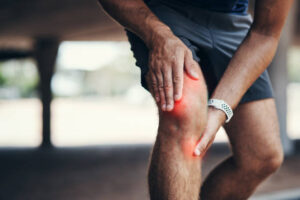
Joint discomfort can be unsettling, especially when it appears after starting a new medication. Many patients ask can tirzepatide cause joint pain, wondering if aches in the knees, hips, or shoulders are connected to treatment or something else entirely.
Understanding how tirzepatide affects the body helps separate expected adjustment symptoms from unrelated joint conditions. TrimBody M.D. addresses these concerns daily with medically guided care.
Key Takeaways:
- Joint pain is not a commonly listed side effect of tirzepatide
- Temporary aches may occur during metabolic or weight changes
- Reduced inflammation often improves joint comfort over time
- Hydration, nutrition, and movement play a major role
- Medical review helps rule out unrelated joint conditions
Understanding Why Joint Pain Can Occur During Tirzepatide Treatment
Tirzepatide works by influencing metabolic hormones that regulate blood sugar, appetite, and energy use. As weight decreases and inflammation patterns shift, the body adapts to new mechanical and biochemical conditions. This transition can temporarily stress joints, especially in people with prior joint wear or reduced muscle support.
Rapid changes in body mass can alter joint loading. Knees, hips, and ankles adjust to new movement patterns, which may create soreness similar to starting a new exercise routine. This type of discomfort usually improves as muscles strengthen and movement becomes more efficient.
Hydration also matters. Tirzepatide commonly reduces appetite and thirst cues. Inadequate fluid intake can increase muscle stiffness and joint discomfort. Maintaining hydration often reduces these symptoms without changing medication.
Some patients report joint aches alongside other adjustment effects such as mild fatigue or muscle soreness. These patterns tend to stabilize within weeks. Persistent or worsening joint pain, however, deserves medical review to rule out arthritis, injury, or inflammatory conditions unrelated to treatment.
Clinical observations show that many patients ultimately experience less joint pain as weight decreases and inflammation improves. This aligns with research linking fat loss to reduced mechanical stress and lower inflammatory markers affecting joints.
Let our team know how we can help with your goals!
How Tirzepatide’s Anti-Inflammatory Effects Influence Joint Health
Tirzepatide does not target joints directly, but it influences inflammation throughout the body. Chronic low-grade inflammation is a known contributor to joint pain, stiffness, and degenerative changes. By improving insulin sensitivity and reducing visceral fat, tirzepatide helps lower inflammatory signaling.
Research on GLP-1–based therapies shows reductions in systemic inflammatory markers. According to studies on metabolic inflammation, improved glycemic control can reduce inflammatory stress on connective tissues and joints. This mechanism explains why many patients report improved joint comfort over time rather than worsening pain.
Weight reduction also changes biomechanics. Less pressure on joints decreases cartilage stress and improves mobility. Patients treated with tirzepatide often notice easier movement as weight stabilizes, even if mild soreness appears early in treatment.
Muscle preservation is another factor. Adequate protein intake and gentle strength activity support joints by stabilizing movement. When muscle mass is maintained, joints experience less strain during daily activity. This is why guidance around nutrition and movement is essential during treatment.
If joint pain persists, clinicians may evaluate dosing pace, hydration status, activity level, and existing musculoskeletal conditions. These adjustments often resolve discomfort without stopping therapy.
Can Tirzepatide Cause Severe Joint Pain?
Severe or progressive joint pain is not a recognized adverse effect of tirzepatide. When intense pain occurs, it is usually linked to preexisting joint disease, autoimmune conditions, or unrelated injuries that become more noticeable during lifestyle changes.
A recent observational analysis examining musculoskeletal pain patterns in people using tirzepatide found no increased risk of chronic joint disorders compared to other metabolic therapies. In many cases, pain medication use decreased as metabolic health improved.
Red flags that require evaluation include joint swelling, redness, warmth, or pain that limits movement. These symptoms suggest inflammatory arthritis or injury rather than a medication response.
Temporary aches without swelling or loss of function typically respond to hydration, light activity, and time. Medical supervision helps distinguish normal adjustment from unrelated pathology.
- How Our Clinical Team Helps You Stay Comfortable And Mobile
At TrimBody M.D., patient comfort and safety remain central throughout tirzepatide treatment. Our clinical approach focuses on identifying the source of joint symptoms and supporting long-term mobility rather than attributing every ache to medication alone.
Through ongoing monitoring, we help patients stay active, comfortable, and confident in their progress. Patients benefit from:
- Individualized dosing pace to support gradual adaptation
- Nutrition guidance that supports joint and muscle health
- Monitoring for inflammation or musculoskeletal conditions
- Activity recommendations that protect joints during weight loss
- Adjustments that maintain results without unnecessary discomfort
Patients receiving tirzepatide care through our Aliso Viejo clinic follow a medically supervised approach designed to support both metabolic health and joint comfort.
Clinical guidance also helps patients understand how reduced inflammation can support joint function over time, along with how preserving lean tissue contributes to stability and movement. For those with concerns about strength, our overview of muscle preservation during treatment offers additional clarity.
To discuss our services, contact us today!
Moving Forward With Confidence
For most patients, the answer to can tirzepatide cause joint pain is reassuring. Joint aches are uncommon, usually temporary, and often improve as inflammation decreases and weight stabilizes. When discomfort appears, it is frequently related to hydration, movement changes, or underlying joint conditions rather than the medication itself. With proper medical oversight, tirzepatide supports long-term metabolic health while helping many patients move with greater comfort over time.
If joint discomfort is affecting your progress or peace of mind, professional guidance makes a difference. Speak with a clinician who understands how metabolic treatment and musculoskeletal health work together. Get personalized support here.
Disclaimer: This article is for informational and educational purposes. Treatment decisions are made during an individual medical evaluation with a licensed provider. We provide compounded tirzepatide and are not affiliated with or endorsed by the manufacturers of Zepbound® or Mounjaro®.
Need help deciding? Fill out a contact form,and we’ll ensure you’re informed!
FAQs about Tirzepatide and Joint Pain
Can Tirzepatide Cause Joint Pain Right Away?
Some people notice mild joint stiffness early as the body adjusts to metabolic changes. This usually settles as hydration, movement, and muscle support stabilize.
Is Joint Pain A Sign Tirzepatide Isn’t Right For Me?
Not usually. Occasionally, aches often relate to weight shift or activity changes rather than intolerance to the medication.
Can Weight Loss From Tirzepatide Improve Joint Pain?
Yes. Reduced body weight often lowers pressure on joints, which may ease knee, hip, and back discomfort over time.
Should I Exercise If I Have Joint Pain On Tirzepatide?
Gentle movement often helps. Low-impact activity supports joint lubrication and muscle strength without increasing strain.
When Should Joint Pain Be Checked By A Doctor?
Pain with swelling, redness, or limited movement needs evaluation. These signs suggest a condition unrelated to tirzepatide that requires care.
Call and talk to a specialist today! (702) 489-3300
Let our team know how we can help with your goals!

Get In Touch With Us
Schedule Your Free Consultation — Take Your First Step Today
 Henderson
Let our team of Medical Professionals help you achieve your body goals. Contact us Today!