
'%3e%3cpath%20d='M12.0979%2019.9987C10.6974%2019.9987%209.29703%2019.4657%208.2309%2018.3995L1.60176%2011.7704C0.568828%2010.7375%200%209.36414%200%207.9034C0%206.44262%200.568828%205.06934%201.6018%204.03641C2.51562%203.12254%204.00258%203.12262%204.91633%204.03637L7.12605%206.2461C8.03988%207.15992%208.03988%208.6468%207.12605%209.56067C6.97848%209.70821%206.89723%209.90442%206.89723%2010.1131C6.89723%2010.3218%206.97848%2010.5179%207.12602%2010.6655L9.33574%2012.8752C9.48328%2013.0228%209.67949%2013.1041%209.88816%2013.1041C10.0969%2013.1041%2010.293%2013.0228%2010.4406%2012.8753C11.3545%2011.9614%2012.8414%2011.9614%2013.7552%2012.8753L15.9649%2015.085C16.8787%2015.9988%2016.8787%2017.4857%2015.9649%2018.3995C14.8987%2019.4657%2013.4983%2019.9987%2012.0979%2019.9987ZM3.25906%204.91281C3.05898%204.91281%202.85895%204.98895%202.7066%205.14129C1.96883%205.87906%201.5625%206.86%201.5625%207.9034C1.5625%208.9468%201.96883%209.92774%202.7066%2010.6655L9.33574%2017.2947C10.8587%2018.8177%2013.337%2018.8177%2014.86%2017.2947C15.1646%2016.99%2015.1646%2016.4944%2014.86%2016.1898L12.6503%2013.9801C12.5028%2013.8325%2012.3066%2013.7513%2012.0979%2013.7513C11.8892%2013.7513%2011.693%2013.8325%2011.5455%2013.98C10.6316%2014.8939%209.14473%2014.8939%208.23086%2013.98L6.02117%2011.7703C5.57852%2011.3277%205.33473%2010.7391%205.33473%2010.113C5.33473%209.48703%205.57852%208.89844%206.02117%208.45578C6.16875%208.30824%206.25%208.11203%206.25%207.90336C6.25%207.69469%206.16875%207.49852%206.02117%207.35094L3.81148%205.14121C3.65918%204.98899%203.4591%204.91281%203.25906%204.91281Z'%20fill='black'/%3e%3cpath%20d='M9.5448%209.3168C9.25285%209.1959%209.0625%208.91102%209.0625%208.59504V0.782539C9.0625%200.351055%209.41227%200.00128937%209.84375%200.00128937H19.2188C19.6502%200.00128937%2020%200.351055%2020%200.782539V7.03254C20%207.46402%2019.6502%207.81379%2019.2188%207.81379H11.7298L10.3962%209.14746C10.1728%209.3709%209.83676%209.43773%209.5448%209.3168ZM10.625%201.56379V6.70895L10.8538%206.48012C11.0003%206.33359%2011.199%206.25129%2011.4062%206.25129H18.4375V1.56379H10.625Z'%20fill='black'/%3e%3cpath%20d='M12.9688%204.68879C13.4002%204.68879%2013.75%204.33901%2013.75%203.90754C13.75%203.47607%2013.4002%203.12629%2012.9688%203.12629C12.5373%203.12629%2012.1875%203.47607%2012.1875%203.90754C12.1875%204.33901%2012.5373%204.68879%2012.9688%204.68879Z'%20fill='black'/%3e%3cpath%20d='M16.0938%204.68879C16.5252%204.68879%2016.875%204.33901%2016.875%203.90754C16.875%203.47607%2016.5252%203.12629%2016.0938%203.12629C15.6623%203.12629%2015.3125%203.47607%2015.3125%203.90754C15.3125%204.33901%2015.6623%204.68879%2016.0938%204.68879Z'%20fill='black'/%3e%3c/g%3e%3cdefs%3e%3cclipPath%20id='clip0_6353_9'%3e%3crect%20width='20'%20height='20'%20fill='white'/%3e%3c/clipPath%3e%3c/defs%3e%3c/svg%3e)
'%3e%3cpath%20d='M10%2020C13.8389%2020%2017.0312%2018.3836%2017.0312%2016.0938C17.0312%2015.4405%2016.7592%2014.8022%2016.2444%2014.2478C15.9508%2013.9316%2015.4565%2013.9132%2015.1403%2014.2068C14.8241%2014.5004%2014.8058%2014.9947%2015.0994%2015.3109C15.3444%2015.5749%2015.4687%2015.8383%2015.4687%2016.0938C15.4687%2017.2001%2013.13%2018.4375%209.99996%2018.4375C6.86996%2018.4375%204.53121%2017.2001%204.53121%2016.0938C4.53121%2015.8382%204.65547%2015.5749%204.90055%2015.3109C5.19414%2014.9947%205.17582%2014.5004%204.85965%2014.2068C4.54348%2013.9133%204.04914%2013.9316%203.75555%2014.2477C3.24082%2014.8021%202.96875%2015.4405%202.96875%2016.0938C2.96875%2018.3803%206.15578%2020%2010%2020Z'%20fill='black'/%3e%3cpath%20d='M8.13172%2015.9465C8.57285%2016.5282%209.27023%2016.875%2010%2016.875C10.7298%2016.875%2011.4271%2016.5282%2011.8683%2015.9466L15.6293%2011.2402C16.5465%2010.0163%2017.0312%208.5609%2017.0312%207.03125C17.0312%203.15422%2013.877%200%2010%200C6.12297%200%202.96875%203.15422%202.96875%207.03125C2.96875%208.56094%203.45352%2010.0164%204.37063%2011.2402L8.13172%2015.9465ZM10%201.5625C13.0155%201.5625%2015.4688%204.01578%2015.4688%207.03125C15.4688%208.21648%2015.0944%209.34434%2014.386%2010.2938C14.386%2010.2938%2010.6309%2014.9924%2010.626%2014.9989C10.4766%2015.1982%2010.2484%2015.3125%2010%2015.3125C9.75156%2015.3125%209.5234%2015.1982%209.37402%2014.9989C9.36914%2014.9923%209.36418%2014.9859%209.3591%2014.9796L5.61395%2010.2937C4.90559%209.34434%204.53125%208.21652%204.53125%207.03125C4.53125%204.01578%206.98453%201.5625%2010%201.5625Z'%20fill='black'/%3e%3cpath%20d='M10%2010.9375C12.1539%2010.9375%2013.9062%209.18516%2013.9062%207.03125C13.9062%204.87734%2012.1539%203.125%2010%203.125C7.84609%203.125%206.09375%204.87734%206.09375%207.03125C6.09375%209.18516%207.84609%2010.9375%2010%2010.9375ZM10%204.6875C11.2923%204.6875%2012.3438%205.73891%2012.3438%207.03125C12.3438%208.32359%2011.2923%209.375%2010%209.375C8.70766%209.375%207.65625%208.32359%207.65625%207.03125C7.65625%205.73891%208.70766%204.6875%2010%204.6875Z'%20fill='black'/%3e%3c/g%3e%3cdefs%3e%3cclipPath%20id='clip0_6353_60'%3e%3crect%20width='20'%20height='20'%20fill='white'/%3e%3c/clipPath%3e%3c/defs%3e%3c/svg%3e)

'%3e%3ccircle%20cx='321'%20cy='321'%20r='276'%20transform='matrix(-1%200%200%201%20481%200)'%20stroke='%23E5DFD3'%20stroke-width='90'/%3e%3c/g%3e%3cdefs%3e%3cclipPath%20id='clip0_6046_3421'%3e%3crect%20width='481'%20height='413'%20fill='white'%20transform='matrix(-1%200%200%201%20481%200)'/%3e%3c/clipPath%3e%3c/defs%3e%3c/svg%3e)
Does Zepbound Cause Dry Mouth?
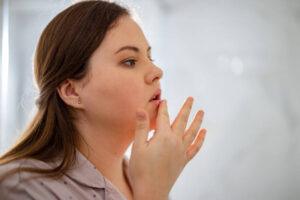
Zepbound dry mouth is a recognized side effect associated with changes in fluid intake, appetite regulation, and digestive signaling during GLP-1–based weight management therapy. It is typically mild, reversible, and most noticeable during early treatment or dose adjustments. At Trim Body M.D., clinicians monitor this symptom as part of safe, medically supervised care to support hydration, comfort, and long-term treatment success. Schedule a visit to receive the right medical guidance and support.
Key Takeaways:
- Dry mouth can show up as doses increase
- Less thirst can mean drinking less water
- Planning proper hydration can ease the symptoms
- Ongoing dryness should be checked by a doctor
- Being under medical care lowers the chance of issues
Can Zepbound Give You Dry Mouth?
Yes, Zepbound might cause dry mouth. Clinical safety data and post-marketing reports mention this as a possible effect. The official prescribing information includes dry mouth as one of the side effects seen during treatment. People often notice it more at the start of taking the medication or after raising the dose.
Clinical studies reveal that oral dryness often happens with stomach-related issues. People taking Zepbound diarrhea medication mention dry mouth during the first few weeks. Losing fluids from digestion paired with drinking less water can worsen these problems if people don’t stay hydrated.
Some individuals feel mild dryness in the mornings, which fades. Others deal with ongoing dryness that makes swallowing, speaking, or tasting harder. How severe symptoms are depends on sensitivity, hydration routines, and medication dosing changes.
Dry mouth alone doesn’t mean harm or show that treatment has failed. It suggests a need to check things out and make supportive changes rather than stopping medication altogether in most situations.
Let our team know how we can help with your goals!
Why Zepbound Dry Mouth Occurs in the Body
Zepbound Dry Mouth is not caused by damage to the salivary glands. It happens because the medication changes how the body controls hunger, digestion, and fluid use. Many people naturally eat and drink less while on treatment, sometimes without realizing how much their water intake has dropped.
Zepbound also slows how quickly food leaves the stomach. When this happens, people feel full for longer and may not feel thirsty as often. Over time, drinking less can reduce saliva, leading to a dry or sticky feeling in the mouth or throat.
The nervous system is part of this process, too. GLP-1 medications affect signals that help control digestion and saliva production. Because of this, some people feel dry mouth even when their hydration levels look normal on lab tests.
Dry mouth can feel worse at night. Mouth breathing during sleep, especially if mild nausea or reflux is present, can cause moisture to evaporate faster. People may wake up with a dry tongue, sore throat, or thick saliva that improves after drinking fluids.
Certain medications used with Zepbound might add to the issue. According to a clinical case report showing hyposalivation associated with semaglutide treatment, drugs including antidepressants and antihypertensives have been previously identified as common causes of reduced saliva production in patients, resulting in a dry mouth sensation and reduced salivary flow.
How Dry Mouth Affects Everyday Health
Saliva helps keep your mouth and digestion healthy. It neutralizes acids, shields tooth enamel, and makes swallowing easier. When saliva production stays low for too long, it can affect everyday health in several ways:
- Increased risk of tooth irritation, cavities, and inflamed gums due to reduced protection of tooth enamel
- Weakened sense of taste, making food seem drier or less flavorful and leading to reduced eating and drinking
- Ongoing dryness that allows Zepbound Dry Mouth to continue if not properly managed
- Nighttime dryness that causes frequent waking or throat soreness and disrupts sleep quality
- Poor sleep that affects energy levels and how the body regulates food intake during weight management
- Persistent symptoms that may signal low fluid intake, rapid dose increases, or medication interactions needing review
To discuss our services, contact us today!
Simple Steps Doctors Take to Handle Zepbound Dry Mouth
The following steps outline how doctors identify, manage, and reduce dry mouth symptoms during Zepbound treatment through structured monitoring and practical adjustments:
1. Hydration Planning
Telling patients to drink more water often does not resolve dry mouth. A structured hydration plan provides clearer guidance and better long-term adherence.
2. Scheduled Fluid Intake
Patients are encouraged to drink fluids at set times throughout the day rather than relying on thirst, which can be altered by GLP-1 activity.
3. Electrolyte Balance
Water alone may not relieve dryness for some patients. Balanced fluids may be recommended based on symptoms and individual health history.
4. Oral Care Support
Oral care habits are reviewed to support saliva production. Sugar-free gum or lozenges may help, while alcohol-based mouthwashes are discouraged.
5. Medication Timing And Dose Review
Taking medication earlier in the day allows better tracking of hydration and symptoms. Dose pacing may be adjusted if dryness continues.
6. Lifestyle Habit Review
Drinking alcohol increases urination and can worsen dehydration. Doctors provide guidance on alcohol use during treatment to limit combined effects.
Need help deciding? Fill out a contact form,and we’ll ensure you’re informed!
How Our Clinic Helps Patients with Zepbound Dry Mouth
At TrimBody M.D., the team uses tailored and guided care to help manage issues like Zepbound dry mouth . They have already worked with more than 30,000 patients focusing on staying ahead of problems with prevention quick detection, and realistic solutions.
Patients get:
- Specific hydration plans based on their needs
- Custom dose adjustments and tracking
- Review of how medications might interact
- Check-ups for mouth and digestive concerns
- Continued medical advice and support
A supervised weight loss clinic provides patients the chance to make changes instead of waiting for problems to worsen, ensuring both comfort and lasting results.
An Effective Way to Address Zepbound Dry Mouth
Zepbound dry mouth happens due to shifts in hydration, appetite signaling, and digestion, but it is something you can manage. When patients act by staying aware, following planned hydration techniques, and getting regular medical care, many notice improvements while continuing their treatment.
Book an appointment with Trim Body M.D. to get expert care and advice made just for you.
Disclaimer: This article is for informational and educational purposes. Treatment decisions are made during an individual medical evaluation with a licensed provider. We provide compounded tirzepatide and are not affiliated with or endorsed by the manufacturers of Zepbound® or Mounjaro®.
FAQs about Zepbound and Dry Mouth
How Long Does Zepbound Dry Mouth Usually Last?
Most patients notice improvement within a few weeks as the body adapts. Persistent dryness beyond dose stabilization should be reviewed by a clinician to rule out hydration gaps or medication interactions.
Is Zepbound Dry Mouth A Sign Of Dehydration?
Not always. Dry mouth can occur even when hydration levels are normal, but ongoing symptoms should prompt intentional fluid tracking and clinical guidance.
Can Zepbound Dry Mouth Affect Dental Health?
Yes, prolonged dryness can increase cavity and gum irritation risk. Routine oral care and saliva stimulation help protect teeth during treatment.
Does Zepbound Dry Mouth Mean My Dose Is Too High?
It can, but not automatically. Dose timing, escalation speed, and hydration habits often influence symptoms more than dose alone.
When Should I Contact A Provider About Zepbound Dry Mouth?
Contact a provider if dryness interferes with eating, sleeping, or swallowing. Early review allows simple adjustments before symptoms worsen.
Call and talk to a specialist today! (702) 489-3300
Let our team know how we can help with your goals!

Get In Touch With Us
Schedule Your Free Consultation — Take Your First Step Today
 Henderson
Let our team of Medical Professionals help you achieve your body goals. Contact us Today!