
'%3e%3cpath%20d='M12.0979%2019.9987C10.6974%2019.9987%209.29703%2019.4657%208.2309%2018.3995L1.60176%2011.7704C0.568828%2010.7375%200%209.36414%200%207.9034C0%206.44262%200.568828%205.06934%201.6018%204.03641C2.51562%203.12254%204.00258%203.12262%204.91633%204.03637L7.12605%206.2461C8.03988%207.15992%208.03988%208.6468%207.12605%209.56067C6.97848%209.70821%206.89723%209.90442%206.89723%2010.1131C6.89723%2010.3218%206.97848%2010.5179%207.12602%2010.6655L9.33574%2012.8752C9.48328%2013.0228%209.67949%2013.1041%209.88816%2013.1041C10.0969%2013.1041%2010.293%2013.0228%2010.4406%2012.8753C11.3545%2011.9614%2012.8414%2011.9614%2013.7552%2012.8753L15.9649%2015.085C16.8787%2015.9988%2016.8787%2017.4857%2015.9649%2018.3995C14.8987%2019.4657%2013.4983%2019.9987%2012.0979%2019.9987ZM3.25906%204.91281C3.05898%204.91281%202.85895%204.98895%202.7066%205.14129C1.96883%205.87906%201.5625%206.86%201.5625%207.9034C1.5625%208.9468%201.96883%209.92774%202.7066%2010.6655L9.33574%2017.2947C10.8587%2018.8177%2013.337%2018.8177%2014.86%2017.2947C15.1646%2016.99%2015.1646%2016.4944%2014.86%2016.1898L12.6503%2013.9801C12.5028%2013.8325%2012.3066%2013.7513%2012.0979%2013.7513C11.8892%2013.7513%2011.693%2013.8325%2011.5455%2013.98C10.6316%2014.8939%209.14473%2014.8939%208.23086%2013.98L6.02117%2011.7703C5.57852%2011.3277%205.33473%2010.7391%205.33473%2010.113C5.33473%209.48703%205.57852%208.89844%206.02117%208.45578C6.16875%208.30824%206.25%208.11203%206.25%207.90336C6.25%207.69469%206.16875%207.49852%206.02117%207.35094L3.81148%205.14121C3.65918%204.98899%203.4591%204.91281%203.25906%204.91281Z'%20fill='black'/%3e%3cpath%20d='M9.5448%209.3168C9.25285%209.1959%209.0625%208.91102%209.0625%208.59504V0.782539C9.0625%200.351055%209.41227%200.00128937%209.84375%200.00128937H19.2188C19.6502%200.00128937%2020%200.351055%2020%200.782539V7.03254C20%207.46402%2019.6502%207.81379%2019.2188%207.81379H11.7298L10.3962%209.14746C10.1728%209.3709%209.83676%209.43773%209.5448%209.3168ZM10.625%201.56379V6.70895L10.8538%206.48012C11.0003%206.33359%2011.199%206.25129%2011.4062%206.25129H18.4375V1.56379H10.625Z'%20fill='black'/%3e%3cpath%20d='M12.9688%204.68879C13.4002%204.68879%2013.75%204.33901%2013.75%203.90754C13.75%203.47607%2013.4002%203.12629%2012.9688%203.12629C12.5373%203.12629%2012.1875%203.47607%2012.1875%203.90754C12.1875%204.33901%2012.5373%204.68879%2012.9688%204.68879Z'%20fill='black'/%3e%3cpath%20d='M16.0938%204.68879C16.5252%204.68879%2016.875%204.33901%2016.875%203.90754C16.875%203.47607%2016.5252%203.12629%2016.0938%203.12629C15.6623%203.12629%2015.3125%203.47607%2015.3125%203.90754C15.3125%204.33901%2015.6623%204.68879%2016.0938%204.68879Z'%20fill='black'/%3e%3c/g%3e%3cdefs%3e%3cclipPath%20id='clip0_6353_9'%3e%3crect%20width='20'%20height='20'%20fill='white'/%3e%3c/clipPath%3e%3c/defs%3e%3c/svg%3e)
'%3e%3cpath%20d='M10%2020C13.8389%2020%2017.0312%2018.3836%2017.0312%2016.0938C17.0312%2015.4405%2016.7592%2014.8022%2016.2444%2014.2478C15.9508%2013.9316%2015.4565%2013.9132%2015.1403%2014.2068C14.8241%2014.5004%2014.8058%2014.9947%2015.0994%2015.3109C15.3444%2015.5749%2015.4687%2015.8383%2015.4687%2016.0938C15.4687%2017.2001%2013.13%2018.4375%209.99996%2018.4375C6.86996%2018.4375%204.53121%2017.2001%204.53121%2016.0938C4.53121%2015.8382%204.65547%2015.5749%204.90055%2015.3109C5.19414%2014.9947%205.17582%2014.5004%204.85965%2014.2068C4.54348%2013.9133%204.04914%2013.9316%203.75555%2014.2477C3.24082%2014.8021%202.96875%2015.4405%202.96875%2016.0938C2.96875%2018.3803%206.15578%2020%2010%2020Z'%20fill='black'/%3e%3cpath%20d='M8.13172%2015.9465C8.57285%2016.5282%209.27023%2016.875%2010%2016.875C10.7298%2016.875%2011.4271%2016.5282%2011.8683%2015.9466L15.6293%2011.2402C16.5465%2010.0163%2017.0312%208.5609%2017.0312%207.03125C17.0312%203.15422%2013.877%200%2010%200C6.12297%200%202.96875%203.15422%202.96875%207.03125C2.96875%208.56094%203.45352%2010.0164%204.37063%2011.2402L8.13172%2015.9465ZM10%201.5625C13.0155%201.5625%2015.4688%204.01578%2015.4688%207.03125C15.4688%208.21648%2015.0944%209.34434%2014.386%2010.2938C14.386%2010.2938%2010.6309%2014.9924%2010.626%2014.9989C10.4766%2015.1982%2010.2484%2015.3125%2010%2015.3125C9.75156%2015.3125%209.5234%2015.1982%209.37402%2014.9989C9.36914%2014.9923%209.36418%2014.9859%209.3591%2014.9796L5.61395%2010.2937C4.90559%209.34434%204.53125%208.21652%204.53125%207.03125C4.53125%204.01578%206.98453%201.5625%2010%201.5625Z'%20fill='black'/%3e%3cpath%20d='M10%2010.9375C12.1539%2010.9375%2013.9062%209.18516%2013.9062%207.03125C13.9062%204.87734%2012.1539%203.125%2010%203.125C7.84609%203.125%206.09375%204.87734%206.09375%207.03125C6.09375%209.18516%207.84609%2010.9375%2010%2010.9375ZM10%204.6875C11.2923%204.6875%2012.3438%205.73891%2012.3438%207.03125C12.3438%208.32359%2011.2923%209.375%2010%209.375C8.70766%209.375%207.65625%208.32359%207.65625%207.03125C7.65625%205.73891%208.70766%204.6875%2010%204.6875Z'%20fill='black'/%3e%3c/g%3e%3cdefs%3e%3cclipPath%20id='clip0_6353_60'%3e%3crect%20width='20'%20height='20'%20fill='white'/%3e%3c/clipPath%3e%3c/defs%3e%3c/svg%3e)

'%3e%3ccircle%20cx='321'%20cy='321'%20r='276'%20transform='matrix(-1%200%200%201%20481%200)'%20stroke='%23E5DFD3'%20stroke-width='90'/%3e%3c/g%3e%3cdefs%3e%3cclipPath%20id='clip0_6046_3421'%3e%3crect%20width='481'%20height='413'%20fill='white'%20transform='matrix(-1%200%200%201%20481%200)'/%3e%3c/clipPath%3e%3c/defs%3e%3c/svg%3e)
How Many Chemical Peels Do I Need For Hyperpigmentation?
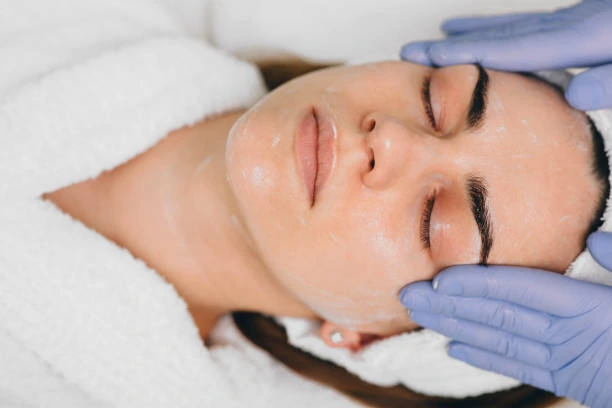
Chemical peels work well to treat hyperpigmentation. They help lighten dark spots, fix sun damage, and even out skin tone. You might ask yourself how many chemical peels do i need for hyperpigmentation. At TrimBody M.D., we create personalized peel plans to help you get smoother and brighter skin. Schedule a free consultation with us today.
Key Takeaways:
- Chemical peels remove skin layers to promote new cell growth and can reduce hyperpigmentation.
- The outcome depends on how severe the pigmentation is and the type of peel used.
- Most people need several treatments to see the best improvements for stubborn pigmentation.
- Light peels might need 4 to 6 treatments, but stronger peels often need fewer sessions.
- Following a proper aftercare routine and avoiding sun exposure are key to maintaining results over time.
Will A Chemical Peel Get Rid Of Hyperpigmentation?
Yes, chemical peels can help to treat hyperpigmentation. They exfoliate the skin’s surface to remove dark spots and make way for fresh, even-toned skin to grow. There are different kinds of peels, like glycolic, salicylic, and TCA peels, designed to target different depths in the skin. These peels can lessen pigmentation concerns, but their results depend on things like how severe the hyperpigmentation is, the type of peel used, and how the skin reacts to the treatment.
Research indicates that glycolic acid peels, particularly at concentrations between 30% and 70%, are effective in treating superficial hyperpigmentation and melasma, especially when combined with topical treatments like hydroquinone or adapalene.
To treat mild or moderate hyperpigmentation, using superficial peels can help a lot without needing much recovery time. Deeper peels, like ones involving trichloroacetic acid (TCA), might be necessary to target tough pigmentation or reach deeper skin layers.
The total sessions needed can depend on your skin’s state, but most individuals notice visible changes within a few treatments. Since peels also resurface the skin, many patients see softer fine lines, too, making it worth asking how chemical peels help with wrinkles.
How Many Sessions Of Chemical Peel For Hyperpigmentation?
The number of chemical peels needed to treat hyperpigmentation varies based on the peel’s type and depth, along with how severe the pigmentation is. Most people need 4 to 6 treatments to address mild or moderate pigmentation. To tackle deeper issues like melasma or age spots, you might need a more aggressive series of peels.
Superficial peels take fewer sessions because they work on the top layer of skin. They work well to treat mild hyperpigmentation or to maintain previous results. Medium and deep peels go further into the skin, which might show visible results in fewer visits but often needs longer downtime.
Your skincare expert will check how severe your hyperpigmentation is and design a custom plan to get the best outcome. During your consultation, it’s also helpful to discuss how long each peel session takes so you know what to expect for treatment time.
How Many Chemical Peels For Optimal Results?
To get the best results with hyperpigmentation, experts suggest completing several chemical peels. Most people benefit from around 4 to 6 sessions, spaced 4 to 6 weeks each. This timing gives the skin enough time to heal and renew after every session while enhancing its tone and texture. As the treatments progress, you will notice less pigmentation, and your skin may look smoother and brighter.
Some people might notice changes after just 2 or 3 sessions if their hyperpigmentation is not too severe. Treatments with deeper peels might need fewer appointments, though they come with longer recovery times. A skincare expert will track your progress and tweak your treatment plan to get you the best outcome. Consistency is key, and your provider will explain how often chemical peels are recommended to keep results improving.
How We Can Help You Achieve Clear and Even Skin
TrimBody M.D. has supported more than 30,000+ patients in achieving smoother, more balanced skin using our customized chemical peel options. Our skilled team creates treatments based on your skin’s needs to lighten dark areas and bring back a youthful look. How we can help you:
- Specialized chemical peel treatments tailored to suit your skin and address pigmentation issues.
- Options include gentle, moderate, and intensive peels to match your needs.
- Clear instructions on how to care for your skin after the treatment to maintain long-lasting results.
- Skilled in managing melasma dark spots from the sun, aging spots, and other pigmentation challenges.
- Ongoing assistance is designed to support you in keeping your skin healthy and vibrant.
If you want to tackle uneven pigmentation and enhance the look of your skin, we are ready to assist. Schedule a consultation now to take the first step toward smoother, balanced skin.
Clear and Balanced Skin with the Help of Chemical Peels
Chemical peels work well to treat hyperpigmentation and create a balanced skin tone. You might need several sessions to see the best changes, but with expert care, regular treatments, and following aftercare guidelines, your skin can look much better. If you want smoother and clearer skin, TrimBody M.D. offers chemical peels. Book a consultation to get started.
Frequently Asked Questions
What Is The Deepest Peel For Hyperpigmentation?
A phenol peel is the strongest option to address deep pigmentation issues, though it takes more time to heal from it.
How Do You Maximize Chemical Peel Results?
Stick to aftercare guidelines. Protect your skin from sunlight and keep it hydrated. This helps your skin heal better and makes the results last longer.
What Is the Healing Time After Chemical Peels?
Light peels heal in about 5 to 7 days. Deeper ones might need 7 to 14 days to heal, depending on your skin type.
Are Chemical Peels Okay To Use On Sensitive Skin?
Light peels, such as glycolic acid, work well for sensitive skin when done by a professional to reduce irritation risks.
Is It Possible To Combine Chemical Peels With Other Procedures?
You can combine them with things like microneedling, but allowing enough time between treatments is important to get the best results.
Let our team know how we can help with your goals!

Get In Touch With Us
Schedule Your Free Consultation — Take Your First Step Today
 Henderson
Let our team of Medical Professionals help you achieve your body goals. Contact us Today!