
'%3e%3cpath%20d='M12.0979%2019.9987C10.6974%2019.9987%209.29703%2019.4657%208.2309%2018.3995L1.60176%2011.7704C0.568828%2010.7375%200%209.36414%200%207.9034C0%206.44262%200.568828%205.06934%201.6018%204.03641C2.51562%203.12254%204.00258%203.12262%204.91633%204.03637L7.12605%206.2461C8.03988%207.15992%208.03988%208.6468%207.12605%209.56067C6.97848%209.70821%206.89723%209.90442%206.89723%2010.1131C6.89723%2010.3218%206.97848%2010.5179%207.12602%2010.6655L9.33574%2012.8752C9.48328%2013.0228%209.67949%2013.1041%209.88816%2013.1041C10.0969%2013.1041%2010.293%2013.0228%2010.4406%2012.8753C11.3545%2011.9614%2012.8414%2011.9614%2013.7552%2012.8753L15.9649%2015.085C16.8787%2015.9988%2016.8787%2017.4857%2015.9649%2018.3995C14.8987%2019.4657%2013.4983%2019.9987%2012.0979%2019.9987ZM3.25906%204.91281C3.05898%204.91281%202.85895%204.98895%202.7066%205.14129C1.96883%205.87906%201.5625%206.86%201.5625%207.9034C1.5625%208.9468%201.96883%209.92774%202.7066%2010.6655L9.33574%2017.2947C10.8587%2018.8177%2013.337%2018.8177%2014.86%2017.2947C15.1646%2016.99%2015.1646%2016.4944%2014.86%2016.1898L12.6503%2013.9801C12.5028%2013.8325%2012.3066%2013.7513%2012.0979%2013.7513C11.8892%2013.7513%2011.693%2013.8325%2011.5455%2013.98C10.6316%2014.8939%209.14473%2014.8939%208.23086%2013.98L6.02117%2011.7703C5.57852%2011.3277%205.33473%2010.7391%205.33473%2010.113C5.33473%209.48703%205.57852%208.89844%206.02117%208.45578C6.16875%208.30824%206.25%208.11203%206.25%207.90336C6.25%207.69469%206.16875%207.49852%206.02117%207.35094L3.81148%205.14121C3.65918%204.98899%203.4591%204.91281%203.25906%204.91281Z'%20fill='black'/%3e%3cpath%20d='M9.5448%209.3168C9.25285%209.1959%209.0625%208.91102%209.0625%208.59504V0.782539C9.0625%200.351055%209.41227%200.00128937%209.84375%200.00128937H19.2188C19.6502%200.00128937%2020%200.351055%2020%200.782539V7.03254C20%207.46402%2019.6502%207.81379%2019.2188%207.81379H11.7298L10.3962%209.14746C10.1728%209.3709%209.83676%209.43773%209.5448%209.3168ZM10.625%201.56379V6.70895L10.8538%206.48012C11.0003%206.33359%2011.199%206.25129%2011.4062%206.25129H18.4375V1.56379H10.625Z'%20fill='black'/%3e%3cpath%20d='M12.9688%204.68879C13.4002%204.68879%2013.75%204.33901%2013.75%203.90754C13.75%203.47607%2013.4002%203.12629%2012.9688%203.12629C12.5373%203.12629%2012.1875%203.47607%2012.1875%203.90754C12.1875%204.33901%2012.5373%204.68879%2012.9688%204.68879Z'%20fill='black'/%3e%3cpath%20d='M16.0938%204.68879C16.5252%204.68879%2016.875%204.33901%2016.875%203.90754C16.875%203.47607%2016.5252%203.12629%2016.0938%203.12629C15.6623%203.12629%2015.3125%203.47607%2015.3125%203.90754C15.3125%204.33901%2015.6623%204.68879%2016.0938%204.68879Z'%20fill='black'/%3e%3c/g%3e%3cdefs%3e%3cclipPath%20id='clip0_6353_9'%3e%3crect%20width='20'%20height='20'%20fill='white'/%3e%3c/clipPath%3e%3c/defs%3e%3c/svg%3e)
'%3e%3cpath%20d='M10%2020C13.8389%2020%2017.0312%2018.3836%2017.0312%2016.0938C17.0312%2015.4405%2016.7592%2014.8022%2016.2444%2014.2478C15.9508%2013.9316%2015.4565%2013.9132%2015.1403%2014.2068C14.8241%2014.5004%2014.8058%2014.9947%2015.0994%2015.3109C15.3444%2015.5749%2015.4687%2015.8383%2015.4687%2016.0938C15.4687%2017.2001%2013.13%2018.4375%209.99996%2018.4375C6.86996%2018.4375%204.53121%2017.2001%204.53121%2016.0938C4.53121%2015.8382%204.65547%2015.5749%204.90055%2015.3109C5.19414%2014.9947%205.17582%2014.5004%204.85965%2014.2068C4.54348%2013.9133%204.04914%2013.9316%203.75555%2014.2477C3.24082%2014.8021%202.96875%2015.4405%202.96875%2016.0938C2.96875%2018.3803%206.15578%2020%2010%2020Z'%20fill='black'/%3e%3cpath%20d='M8.13172%2015.9465C8.57285%2016.5282%209.27023%2016.875%2010%2016.875C10.7298%2016.875%2011.4271%2016.5282%2011.8683%2015.9466L15.6293%2011.2402C16.5465%2010.0163%2017.0312%208.5609%2017.0312%207.03125C17.0312%203.15422%2013.877%200%2010%200C6.12297%200%202.96875%203.15422%202.96875%207.03125C2.96875%208.56094%203.45352%2010.0164%204.37063%2011.2402L8.13172%2015.9465ZM10%201.5625C13.0155%201.5625%2015.4688%204.01578%2015.4688%207.03125C15.4688%208.21648%2015.0944%209.34434%2014.386%2010.2938C14.386%2010.2938%2010.6309%2014.9924%2010.626%2014.9989C10.4766%2015.1982%2010.2484%2015.3125%2010%2015.3125C9.75156%2015.3125%209.5234%2015.1982%209.37402%2014.9989C9.36914%2014.9923%209.36418%2014.9859%209.3591%2014.9796L5.61395%2010.2937C4.90559%209.34434%204.53125%208.21652%204.53125%207.03125C4.53125%204.01578%206.98453%201.5625%2010%201.5625Z'%20fill='black'/%3e%3cpath%20d='M10%2010.9375C12.1539%2010.9375%2013.9062%209.18516%2013.9062%207.03125C13.9062%204.87734%2012.1539%203.125%2010%203.125C7.84609%203.125%206.09375%204.87734%206.09375%207.03125C6.09375%209.18516%207.84609%2010.9375%2010%2010.9375ZM10%204.6875C11.2923%204.6875%2012.3438%205.73891%2012.3438%207.03125C12.3438%208.32359%2011.2923%209.375%2010%209.375C8.70766%209.375%207.65625%208.32359%207.65625%207.03125C7.65625%205.73891%208.70766%204.6875%2010%204.6875Z'%20fill='black'/%3e%3c/g%3e%3cdefs%3e%3cclipPath%20id='clip0_6353_60'%3e%3crect%20width='20'%20height='20'%20fill='white'/%3e%3c/clipPath%3e%3c/defs%3e%3c/svg%3e)

'%3e%3ccircle%20cx='321'%20cy='321'%20r='276'%20transform='matrix(-1%200%200%201%20481%200)'%20stroke='%23E5DFD3'%20stroke-width='90'/%3e%3c/g%3e%3cdefs%3e%3cclipPath%20id='clip0_6046_3421'%3e%3crect%20width='481'%20height='413'%20fill='white'%20transform='matrix(-1%200%200%201%20481%200)'/%3e%3c/clipPath%3e%3c/defs%3e%3c/svg%3e)
How Often Should You Get A Chemical Peel?
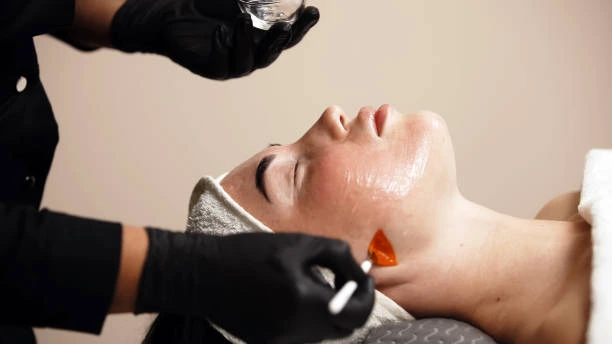
Chemical peels rank as one of the most studied and performed ways to improve skin in aesthetic medicine. At TrimBody M.D many patients want to know how often should you get a chemical peel to make their skin smoother and brighter without risking irritation. The right frequency depends on the type of peel, specific skin issues, and personal healing time. Schedule a free consultation with us today.
Key Takeaways
- You can get light peels every 2 to 5 weeks.
- Medium peels might be done every 2 to 6 months.
- Deep peels provide results with just one treatment and last a long time.
- How often you need a peel is based on your skin type, age, and goals.
Understanding the Chemical Peel
Chemical peels use specific solutions to exfoliate the skin and stimulate new cell growth and collagen production. According to a comprehensive dermatology review, these peels vary from superficial to deep, each offering different benefits and associated healing times. They can reduce fine lines, even out tone, and fade acne scars. The Cleveland Clinic also advises that overusing peels may harm the skin’s protective barrier and emphasizes sticking to a carefully planned treatment schedule.
Medical professionals classify chemical peels into three types:
- Superficial or light peels – These involve alpha hydroxy acids (AHAs) like glycolic or lactic acid. They target the outer skin layer and need little to no downtime.
- Medium peels work on deeper layers by using stronger acids like trichloroacetic acid (TCA). They help reduce pigmentation, wrinkles, and scars.
- Deep peels use high-potency TCA or phenol to reach the lower dermis. They give noticeable improvements, but healing may take several weeks.
How Long Should You Wait Between Chemical Peels?
The gap between treatments depends on how long it takes your skin to recover and renew itself. Dermatology practices and clinical advice suggest the following timelines.
Light chemical peels
These gentle treatments are sometimes called “lunchtime peels” because there’s little recovery time. It’s safe to repeat them every 2 to 5 weeks. Many people go through about 4 to 6 sessions and then do follow-ups every couple of months to maintain the effects.
Medium chemical peels
These go deeper into the skin and take more time for healing. Experts suggest waiting at least 2 to 6 months before doing another session. Doing them too often could lead to issues like extra redness or dark spots on the skin.
Deep chemical peels
These intense treatments are done once in a lifetime or maybe once every ten years, similar to the level of improvement offered by advanced options like erbium laser resurfacing.
How Often Is It Recommended to Get a Chemical Peel?
Doctors often suggest these guidelines:
- To treat acne: Getting light peels every 3 to 4 weeks helps clear pores, lower oil buildup, and prevent breakouts.
- To reduce aging signs: Monthly light peels paired with medium peels twice yearly can smooth fine lines and boost collagen production.
- To deal with pigmentation issues: A customized plan using light or medium peels done every 4 to 8 weeks can help reduce melasma, dark spots, or sun damage, often paired with solutions like a VI Peel for hyperpigmentation.
- To treat sensitive skin: Fewer sessions are better. Spacing them 6 to 12 weeks apart depends on what your skin can handle.
Signs You Might Need a Chemical Peel More or Less Often
Patients don’t all react the same way. Things like these decide how often treatments are needed:
- Skin type: Oily skin handles peels better than thin or dry skin.
- Age: Younger skin heals quickly. Mature skin often needs more time to recover after treatments.
- Lifestyle: Habits like smoking, time under the sun, and how you care for your skin can either increase or decrease the needed intervals.
- Treatment goals: Treating acne might call for more frequent peels. Brightening, on the other hand, may need occasional sessions.
If your skin feels inflamed, tight, or flakes too much, it might mean you should wait longer before your next peel.
Getting Ready for a Chemical Peel
Getting your skin ready brings better results and fewer reactions. Experts suggest these steps:
- Avoid retinoids and exfoliating products at least a week ahead of your treatment.
- Use sunscreen to keep your skin’s barrier intact.
- Drink plenty of water to help your skin heal more.
- Talk to your doctor about any medications or medical conditions.
Note: Patients who get ready the right way can recover more and achieve better results over time.
How to Maintain Results Between Peels
Chemical peels don’t last forever, so taking care of your skin is important to make the results last. Some key steps include:
- Wear broad-spectrum sunscreen with SPF 30 or higher every day.
- Wash your face with mild cleansers and use moisturizers without fragrances.
- Avoid tanning beds and staying in the sun too long.
- Apply antioxidants like vitamin C to help with skin recovery.
Can You Do Chemical Peels Too Often?
Yes, there is. Doing chemical peels too often can weaken your skin’s protective layer, making it more sensitive and prone to irritation. A clinical review on chemical peel safety notes that frequent or aggressive treatments can leave skin red, cause breakouts, trigger stinging from regular skincare, and slow down natural healing.
What TrimBody M.D. Does to Help You Maximize Chemical Peel Benefits
At TrimBody M.D., patients get expert care to make the most out of chemical peels. The clinic focuses on improving skin appearance while ensuring treatments prioritize safety and health. With medical supervision and cutting-edge procedures, they help patients achieve smoother, glowing, and more youthful skin.
Benefits of choosing our clinic:
- Medical staff apply light, medium, and deep peels
- Treatment plans are tailored to balance visible improvements with recovery time
- Patients can explore added options like microneedling or injectables to boost results
- Expert advice on medical-grade skincare helps maintain progress between visits
- Specialists offer trusted solutions for acne, wrinkles, dark spots, and skin renewal
Final Thoughts on Chemical Peel Frequency
Chemical peels are some of the best methods to refresh your skin. If you’re asking, how often should you get a chemical peel, the timing differs: light peels happen every few weeks, medium ones take place every few months, and deep peels might be needed every few years. The right schedule depends on your skin’s health, how fast it heals, and your future skin goals. Schedule a free consultation with us today.
Frequently Asked Questions
Do Chemical Peels Treat Acne?
Yes. Light chemical peels cut down oil and clear out clogged pores. With consistent sessions, you can see fewer breakouts and clearer skin.
Are Chemical Peels Effective for Dark Spots?
Medium peels work well to lighten pigmentation. They even out skin tone and bring back a brighter look.
Are Chemical Peels Safe To Use On Sensitive Skin?
Sensitive skin can handle mild peels if used. A professional adjusts the peel’s strength and timing to avoid irritation and keep the skin barrier safe.
How Long Before I See Results From A Chemical Peel?
Many people notice their skin feels smoother within a week. Improvements keep showing as fresh cells come through and collagen increases.
Can Chemical Peels Be Done Alongside Other Treatments?
Yes, many combine peels with treatments like microneedling or injectables. Doing this can improve the outcome without adding extra recovery time.
Let our team know how we can help with your goals!

Get In Touch With Us
Schedule Your Free Consultation — Take Your First Step Today
 Henderson
Let our team of Medical Professionals help you achieve your body goals. Contact us Today!