
'%3e%3cpath%20d='M12.0979%2019.9987C10.6974%2019.9987%209.29703%2019.4657%208.2309%2018.3995L1.60176%2011.7704C0.568828%2010.7375%200%209.36414%200%207.9034C0%206.44262%200.568828%205.06934%201.6018%204.03641C2.51562%203.12254%204.00258%203.12262%204.91633%204.03637L7.12605%206.2461C8.03988%207.15992%208.03988%208.6468%207.12605%209.56067C6.97848%209.70821%206.89723%209.90442%206.89723%2010.1131C6.89723%2010.3218%206.97848%2010.5179%207.12602%2010.6655L9.33574%2012.8752C9.48328%2013.0228%209.67949%2013.1041%209.88816%2013.1041C10.0969%2013.1041%2010.293%2013.0228%2010.4406%2012.8753C11.3545%2011.9614%2012.8414%2011.9614%2013.7552%2012.8753L15.9649%2015.085C16.8787%2015.9988%2016.8787%2017.4857%2015.9649%2018.3995C14.8987%2019.4657%2013.4983%2019.9987%2012.0979%2019.9987ZM3.25906%204.91281C3.05898%204.91281%202.85895%204.98895%202.7066%205.14129C1.96883%205.87906%201.5625%206.86%201.5625%207.9034C1.5625%208.9468%201.96883%209.92774%202.7066%2010.6655L9.33574%2017.2947C10.8587%2018.8177%2013.337%2018.8177%2014.86%2017.2947C15.1646%2016.99%2015.1646%2016.4944%2014.86%2016.1898L12.6503%2013.9801C12.5028%2013.8325%2012.3066%2013.7513%2012.0979%2013.7513C11.8892%2013.7513%2011.693%2013.8325%2011.5455%2013.98C10.6316%2014.8939%209.14473%2014.8939%208.23086%2013.98L6.02117%2011.7703C5.57852%2011.3277%205.33473%2010.7391%205.33473%2010.113C5.33473%209.48703%205.57852%208.89844%206.02117%208.45578C6.16875%208.30824%206.25%208.11203%206.25%207.90336C6.25%207.69469%206.16875%207.49852%206.02117%207.35094L3.81148%205.14121C3.65918%204.98899%203.4591%204.91281%203.25906%204.91281Z'%20fill='black'/%3e%3cpath%20d='M9.5448%209.3168C9.25285%209.1959%209.0625%208.91102%209.0625%208.59504V0.782539C9.0625%200.351055%209.41227%200.00128937%209.84375%200.00128937H19.2188C19.6502%200.00128937%2020%200.351055%2020%200.782539V7.03254C20%207.46402%2019.6502%207.81379%2019.2188%207.81379H11.7298L10.3962%209.14746C10.1728%209.3709%209.83676%209.43773%209.5448%209.3168ZM10.625%201.56379V6.70895L10.8538%206.48012C11.0003%206.33359%2011.199%206.25129%2011.4062%206.25129H18.4375V1.56379H10.625Z'%20fill='black'/%3e%3cpath%20d='M12.9688%204.68879C13.4002%204.68879%2013.75%204.33901%2013.75%203.90754C13.75%203.47607%2013.4002%203.12629%2012.9688%203.12629C12.5373%203.12629%2012.1875%203.47607%2012.1875%203.90754C12.1875%204.33901%2012.5373%204.68879%2012.9688%204.68879Z'%20fill='black'/%3e%3cpath%20d='M16.0938%204.68879C16.5252%204.68879%2016.875%204.33901%2016.875%203.90754C16.875%203.47607%2016.5252%203.12629%2016.0938%203.12629C15.6623%203.12629%2015.3125%203.47607%2015.3125%203.90754C15.3125%204.33901%2015.6623%204.68879%2016.0938%204.68879Z'%20fill='black'/%3e%3c/g%3e%3cdefs%3e%3cclipPath%20id='clip0_6353_9'%3e%3crect%20width='20'%20height='20'%20fill='white'/%3e%3c/clipPath%3e%3c/defs%3e%3c/svg%3e)
'%3e%3cpath%20d='M10%2020C13.8389%2020%2017.0312%2018.3836%2017.0312%2016.0938C17.0312%2015.4405%2016.7592%2014.8022%2016.2444%2014.2478C15.9508%2013.9316%2015.4565%2013.9132%2015.1403%2014.2068C14.8241%2014.5004%2014.8058%2014.9947%2015.0994%2015.3109C15.3444%2015.5749%2015.4687%2015.8383%2015.4687%2016.0938C15.4687%2017.2001%2013.13%2018.4375%209.99996%2018.4375C6.86996%2018.4375%204.53121%2017.2001%204.53121%2016.0938C4.53121%2015.8382%204.65547%2015.5749%204.90055%2015.3109C5.19414%2014.9947%205.17582%2014.5004%204.85965%2014.2068C4.54348%2013.9133%204.04914%2013.9316%203.75555%2014.2477C3.24082%2014.8021%202.96875%2015.4405%202.96875%2016.0938C2.96875%2018.3803%206.15578%2020%2010%2020Z'%20fill='black'/%3e%3cpath%20d='M8.13172%2015.9465C8.57285%2016.5282%209.27023%2016.875%2010%2016.875C10.7298%2016.875%2011.4271%2016.5282%2011.8683%2015.9466L15.6293%2011.2402C16.5465%2010.0163%2017.0312%208.5609%2017.0312%207.03125C17.0312%203.15422%2013.877%200%2010%200C6.12297%200%202.96875%203.15422%202.96875%207.03125C2.96875%208.56094%203.45352%2010.0164%204.37063%2011.2402L8.13172%2015.9465ZM10%201.5625C13.0155%201.5625%2015.4688%204.01578%2015.4688%207.03125C15.4688%208.21648%2015.0944%209.34434%2014.386%2010.2938C14.386%2010.2938%2010.6309%2014.9924%2010.626%2014.9989C10.4766%2015.1982%2010.2484%2015.3125%2010%2015.3125C9.75156%2015.3125%209.5234%2015.1982%209.37402%2014.9989C9.36914%2014.9923%209.36418%2014.9859%209.3591%2014.9796L5.61395%2010.2937C4.90559%209.34434%204.53125%208.21652%204.53125%207.03125C4.53125%204.01578%206.98453%201.5625%2010%201.5625Z'%20fill='black'/%3e%3cpath%20d='M10%2010.9375C12.1539%2010.9375%2013.9062%209.18516%2013.9062%207.03125C13.9062%204.87734%2012.1539%203.125%2010%203.125C7.84609%203.125%206.09375%204.87734%206.09375%207.03125C6.09375%209.18516%207.84609%2010.9375%2010%2010.9375ZM10%204.6875C11.2923%204.6875%2012.3438%205.73891%2012.3438%207.03125C12.3438%208.32359%2011.2923%209.375%2010%209.375C8.70766%209.375%207.65625%208.32359%207.65625%207.03125C7.65625%205.73891%208.70766%204.6875%2010%204.6875Z'%20fill='black'/%3e%3c/g%3e%3cdefs%3e%3cclipPath%20id='clip0_6353_60'%3e%3crect%20width='20'%20height='20'%20fill='white'/%3e%3c/clipPath%3e%3c/defs%3e%3c/svg%3e)

'%3e%3ccircle%20cx='321'%20cy='321'%20r='276'%20transform='matrix(-1%200%200%201%20481%200)'%20stroke='%23E5DFD3'%20stroke-width='90'/%3e%3c/g%3e%3cdefs%3e%3cclipPath%20id='clip0_6046_3421'%3e%3crect%20width='481'%20height='413'%20fill='white'%20transform='matrix(-1%200%200%201%20481%200)'/%3e%3c/clipPath%3e%3c/defs%3e%3c/svg%3e)
How Long Does It Take For Ozempic To Work?
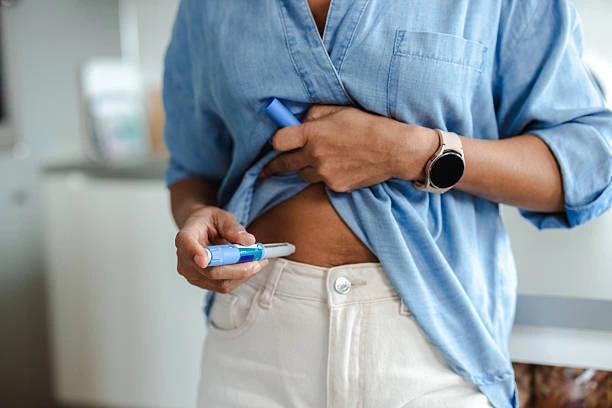
Ozempic (semaglutide) is known as an effective GLP-1 receptor agonist. It is often prescribed to treat type 2 diabetes and support weight loss. Many people ask, how long does it take for ozempic to work?
Studies of patient stories and real-world insights show that some changes might occur in just a few weeks, but it could take months to see all the benefits. TrimBody M.D. has helped many patients along the way, focusing on care based on solid evidence.
Key Takeaways:
- You might notice better blood sugar levels within 1 to 2 weeks.
- Weight loss starts within 4 to 8 weeks and progresses over time.
- It can take 3 to 6 months of steady use to see the full change in A1C levels.
- Adjusting doses plays a role in effectiveness; higher maintenance doses tend to work better.
- Healthy lifestyle habits like eating well and staying active improve the outcomes overall.
How Long Does It Take For Ozempic To Start Working?
After an injection, Ozempic starts interacting with GLP-1 receptors in just a few hours. Most people notice their blood sugar levels beginning to improve within one to two weeks. Changes in fasting blood sugar tend to happen before any visible weight loss.
This early progress ties to appetite control. Many users feel that Ozempic helps them eat less almost right away. To learn more, check out how Ozempic reduces appetite and why it plays a big role in those first results.
What Are the First Signs Ozempic Is Working?
Patients often look for early signs to know if the treatment is effective. Some of the initial things they may notice include:
Feeling Less Hungry
People often feel full faster and consume smaller meals. This effect usually appears within the first weeks of treatment. Over time, reduced hunger can support gradual and consistent weight loss.
More Balanced Blood Sugar
Fasting glucose numbers may improve in about one to two weeks. Patients often see fewer spikes after meals. These steady improvements can contribute to better long-term A1C control.
Fewer Food Cravings
A reduction in the urge to eat high-calorie snacks may be noticeable. Many patients find it easier to avoid sugary or processed foods. This shift makes maintaining healthier eating habits more manageable.
Slight Weight Change
By week 4, there might be a slow and steady drop in weight. Even small changes can signal that the medication is working. Continued use often leads to more measurable progress.
Digestive Shifts
Some people might feel nausea or small gastrointestinal changes while their body gets used to it. These effects are usually temporary. Adjusting meal size and timing can help ease discomfort.
Based on clinical observations, these early indicators can signal that GLP-1 therapy like Ozempic is beginning to work. If the expected weight loss does not happen despite these signs, reviewing possible obstacles could be useful. Our guide on not losing weight on semaglutide explains why this might occur and offers tips for patients to adjust.
What Affects the Speed of Results
The speed at which results appear can vary from one person to another. Many factors can have an influence on how Ozempic delivers visible effects.
- Dosage progression – Doctors start patients on 0.25 mg each week before increasing to higher doses to maintain results. Reaching full effects might need doses of 1 mg or 2 mg.
- Adherence – Skipping injections can slow progress and make the treatment less effective.
- Diet quality – Eating balanced meals with fiber, lean proteins, and less sugar helps you get better outcomes.
- Physical activity – Simple daily movement helps improve weight loss and manage glucose levels faster.
- Medical conditions – Health issues like PCOS, insulin resistance, or thyroid problems can affect how changes happen.
Some individuals also ask about what makes GLP-1 medications distinct from specific brands. If you’re curious, our guide breaks down GLP-1 vs. Ozempic in simple terms. The time Ozempic stays in your system also affects how steady its effects feel between doses, as explained in our guide on how long it remains in the body.
Helping Patients on Their Ozempic Journey
At TrimBody M.D., we have worked with more than 30,000+ people to support healthier living through advanced weight-loss programs. If you’ve asked questions like how long does it take for Ozempic to work, our clinic offers supervision, information, and advice to help you see better results. Here’s how we assist:
- Teach patients how Ozempic works and how long it might take to show effects.
- Adjust doses personally to make sure they work well without causing discomfort.
- Offer guidance on eating habits that align with sustainably using Ozempic.
- Help plan physical activities and give advice to support healthier behaviors.
- Keep track of progress over time, like checking blood sugar levels and overall health.
Important Takeaways to Keep in Mind
Knowing how long does it take for ozempic to work helps people feel more assured while going through treatment. Blood sugar levels often improve in 1 to 2 weeks, but weight loss tends to show after 1 to 2 months. Long-term results depend on sticking to the right dose, staying consistent, and following healthy lifestyle habits. With the right support, Ozempic becomes an effective choice for managing diabetes and controlling weight.
Thinking it’s time to begin? Reach out to TrimBody M.D. to start creating your custom plan.
Frequently Asked Questions
How Soon Does Ozempic Suppress Appetite?
Most patients notice less hunger in the first week of treatment. As the dose increases, feelings of appetite suppression grow, which makes it easier to eat smaller portions and have fewer cravings.
Can Ozempic Lower Blood Sugar Quickly?
Blood sugar levels start improving within one or two weeks. However, it takes months of regular weekly use to see its impact on A1C.
Why Don’t Some People Shed Pounds On Ozempic?
Weight loss depends on things like diet, physical activity, and the dosage taken. Some individuals may also face medical issues that slow down progress, so they need guidance from their doctor.
Is Ozempic Like Other GLP-1 Medicines?
Ozempic belongs to the GLP-1 medication class, but these medicines are not all the same. Each type varies in how it’s dosed, how long it works, and how people respond to it.
How Long Do You Need To Take Ozempic?
Most doctors suggest taking it long-term to manage diabetes or control weight. The length of use depends on your goals, how well you tolerate it, and how you’re doing based on medical advice.
Let our team know how we can help with your goals!

Get In Touch With Us
Schedule Your Free Consultation — Take Your First Step Today
 Henderson
Let our team of Medical Professionals help you achieve your body goals. Contact us Today!