
'%3e%3cpath%20d='M12.0979%2019.9987C10.6974%2019.9987%209.29703%2019.4657%208.2309%2018.3995L1.60176%2011.7704C0.568828%2010.7375%200%209.36414%200%207.9034C0%206.44262%200.568828%205.06934%201.6018%204.03641C2.51562%203.12254%204.00258%203.12262%204.91633%204.03637L7.12605%206.2461C8.03988%207.15992%208.03988%208.6468%207.12605%209.56067C6.97848%209.70821%206.89723%209.90442%206.89723%2010.1131C6.89723%2010.3218%206.97848%2010.5179%207.12602%2010.6655L9.33574%2012.8752C9.48328%2013.0228%209.67949%2013.1041%209.88816%2013.1041C10.0969%2013.1041%2010.293%2013.0228%2010.4406%2012.8753C11.3545%2011.9614%2012.8414%2011.9614%2013.7552%2012.8753L15.9649%2015.085C16.8787%2015.9988%2016.8787%2017.4857%2015.9649%2018.3995C14.8987%2019.4657%2013.4983%2019.9987%2012.0979%2019.9987ZM3.25906%204.91281C3.05898%204.91281%202.85895%204.98895%202.7066%205.14129C1.96883%205.87906%201.5625%206.86%201.5625%207.9034C1.5625%208.9468%201.96883%209.92774%202.7066%2010.6655L9.33574%2017.2947C10.8587%2018.8177%2013.337%2018.8177%2014.86%2017.2947C15.1646%2016.99%2015.1646%2016.4944%2014.86%2016.1898L12.6503%2013.9801C12.5028%2013.8325%2012.3066%2013.7513%2012.0979%2013.7513C11.8892%2013.7513%2011.693%2013.8325%2011.5455%2013.98C10.6316%2014.8939%209.14473%2014.8939%208.23086%2013.98L6.02117%2011.7703C5.57852%2011.3277%205.33473%2010.7391%205.33473%2010.113C5.33473%209.48703%205.57852%208.89844%206.02117%208.45578C6.16875%208.30824%206.25%208.11203%206.25%207.90336C6.25%207.69469%206.16875%207.49852%206.02117%207.35094L3.81148%205.14121C3.65918%204.98899%203.4591%204.91281%203.25906%204.91281Z'%20fill='black'/%3e%3cpath%20d='M9.5448%209.3168C9.25285%209.1959%209.0625%208.91102%209.0625%208.59504V0.782539C9.0625%200.351055%209.41227%200.00128937%209.84375%200.00128937H19.2188C19.6502%200.00128937%2020%200.351055%2020%200.782539V7.03254C20%207.46402%2019.6502%207.81379%2019.2188%207.81379H11.7298L10.3962%209.14746C10.1728%209.3709%209.83676%209.43773%209.5448%209.3168ZM10.625%201.56379V6.70895L10.8538%206.48012C11.0003%206.33359%2011.199%206.25129%2011.4062%206.25129H18.4375V1.56379H10.625Z'%20fill='black'/%3e%3cpath%20d='M12.9688%204.68879C13.4002%204.68879%2013.75%204.33901%2013.75%203.90754C13.75%203.47607%2013.4002%203.12629%2012.9688%203.12629C12.5373%203.12629%2012.1875%203.47607%2012.1875%203.90754C12.1875%204.33901%2012.5373%204.68879%2012.9688%204.68879Z'%20fill='black'/%3e%3cpath%20d='M16.0938%204.68879C16.5252%204.68879%2016.875%204.33901%2016.875%203.90754C16.875%203.47607%2016.5252%203.12629%2016.0938%203.12629C15.6623%203.12629%2015.3125%203.47607%2015.3125%203.90754C15.3125%204.33901%2015.6623%204.68879%2016.0938%204.68879Z'%20fill='black'/%3e%3c/g%3e%3cdefs%3e%3cclipPath%20id='clip0_6353_9'%3e%3crect%20width='20'%20height='20'%20fill='white'/%3e%3c/clipPath%3e%3c/defs%3e%3c/svg%3e)
'%3e%3cpath%20d='M10%2020C13.8389%2020%2017.0312%2018.3836%2017.0312%2016.0938C17.0312%2015.4405%2016.7592%2014.8022%2016.2444%2014.2478C15.9508%2013.9316%2015.4565%2013.9132%2015.1403%2014.2068C14.8241%2014.5004%2014.8058%2014.9947%2015.0994%2015.3109C15.3444%2015.5749%2015.4687%2015.8383%2015.4687%2016.0938C15.4687%2017.2001%2013.13%2018.4375%209.99996%2018.4375C6.86996%2018.4375%204.53121%2017.2001%204.53121%2016.0938C4.53121%2015.8382%204.65547%2015.5749%204.90055%2015.3109C5.19414%2014.9947%205.17582%2014.5004%204.85965%2014.2068C4.54348%2013.9133%204.04914%2013.9316%203.75555%2014.2477C3.24082%2014.8021%202.96875%2015.4405%202.96875%2016.0938C2.96875%2018.3803%206.15578%2020%2010%2020Z'%20fill='black'/%3e%3cpath%20d='M8.13172%2015.9465C8.57285%2016.5282%209.27023%2016.875%2010%2016.875C10.7298%2016.875%2011.4271%2016.5282%2011.8683%2015.9466L15.6293%2011.2402C16.5465%2010.0163%2017.0312%208.5609%2017.0312%207.03125C17.0312%203.15422%2013.877%200%2010%200C6.12297%200%202.96875%203.15422%202.96875%207.03125C2.96875%208.56094%203.45352%2010.0164%204.37063%2011.2402L8.13172%2015.9465ZM10%201.5625C13.0155%201.5625%2015.4688%204.01578%2015.4688%207.03125C15.4688%208.21648%2015.0944%209.34434%2014.386%2010.2938C14.386%2010.2938%2010.6309%2014.9924%2010.626%2014.9989C10.4766%2015.1982%2010.2484%2015.3125%2010%2015.3125C9.75156%2015.3125%209.5234%2015.1982%209.37402%2014.9989C9.36914%2014.9923%209.36418%2014.9859%209.3591%2014.9796L5.61395%2010.2937C4.90559%209.34434%204.53125%208.21652%204.53125%207.03125C4.53125%204.01578%206.98453%201.5625%2010%201.5625Z'%20fill='black'/%3e%3cpath%20d='M10%2010.9375C12.1539%2010.9375%2013.9062%209.18516%2013.9062%207.03125C13.9062%204.87734%2012.1539%203.125%2010%203.125C7.84609%203.125%206.09375%204.87734%206.09375%207.03125C6.09375%209.18516%207.84609%2010.9375%2010%2010.9375ZM10%204.6875C11.2923%204.6875%2012.3438%205.73891%2012.3438%207.03125C12.3438%208.32359%2011.2923%209.375%2010%209.375C8.70766%209.375%207.65625%208.32359%207.65625%207.03125C7.65625%205.73891%208.70766%204.6875%2010%204.6875Z'%20fill='black'/%3e%3c/g%3e%3cdefs%3e%3cclipPath%20id='clip0_6353_60'%3e%3crect%20width='20'%20height='20'%20fill='white'/%3e%3c/clipPath%3e%3c/defs%3e%3c/svg%3e)

'%3e%3ccircle%20cx='321'%20cy='321'%20r='276'%20transform='matrix(-1%200%200%201%20481%200)'%20stroke='%23E5DFD3'%20stroke-width='90'/%3e%3c/g%3e%3cdefs%3e%3cclipPath%20id='clip0_6046_3421'%3e%3crect%20width='481'%20height='413'%20fill='white'%20transform='matrix(-1%200%200%201%20481%200)'/%3e%3c/clipPath%3e%3c/defs%3e%3c/svg%3e)
What Are the Differences Between Exosomes and PRP?
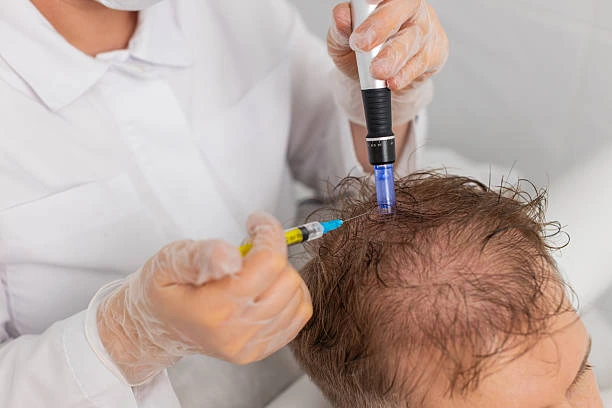
Regenerative aesthetics is growing in popularity, and more people are turning to effective non-surgical options to improve their looks, boost skin health, and encourage natural hair growth. Among the top choices in this area are exosomes and PRP (platelet-rich plasma). Both treatments use the body’s own healing power, but they work and address different goals.
At TrimBody M.D., we focus on offering science-supported treatments that deliver visible results without surgery or extended recovery. Understanding the core differences between exosomes vs PRP can help you make the most informed and effective choice.
How PRP and Exosomes Work
PRP and exosomes both aim to regenerate, but they come from different sources and use different methods. They also vary in strength and application.
What Is PRP?
Doctors make platelet-rich plasma (PRP) by taking a small sample of your blood and spinning it in a machine to separate the platelets. They concentrate these platelets and inject them into specific areas like the skin or scalp.
Platelets contain proteins that help tissue heal, encourage new cells to grow, and improve collagen levels. Since PRP comes from your own blood, it lowers the chances of side effects or negative reactions. Common uses of PRP include:
- Boosting hair growth
- Refreshing the face (reducing fine lines, improving dullness, and balancing skin tone)
- Helping recovery after other treatments
- Supporting joints and tendons
PRP results depend on your age, how healthy you are, and the quality of your blood. Younger people respond better because they have more platelets and growth factors in their blood.
What Are Exosomes?
Exosomes don’t come from your blood, they are small vesicles released by stem cells that carry proteins and RNA to facilitate cell communication and repair. According to peer-reviewed research on exosome biology, these signaling particles support tissue healing and regeneration.
Exosomes, unlike PRP, come from stem cells grown in labs. Most often, they are taken from donated umbilical cords or placental tissues. They go through purification and sterilization to make sure they are safe to use in medical and cosmetic treatments.
Exosomes can either be injected or applied to the skin, depending on the treatment. They deliver a concentrated dose of repair signals to the tissues, which often makes them work better than PRP in certain cases. Doctors use them to:
- Restore thinning hair and address hair loss
- Repair wrinkles and rejuvenate the skin
- Boost the effects of lasers or microneedling treatments
- Soothe skin inflammation
Because exosomes are prepared in controlled settings, their results show more consistency among patients when compared to PRP.
Exosomes vs PRP: What You Should Know
Both treatments help with regeneration, but how they work in the body and the outcomes they achieve differ a lot. Here’s a breakdown to understand the distinction better.
How Well and How They Work
PRP uses the healing powers already in your body. If your immune system is strong and your platelets are healthy, the therapy could provide benefits. However, it often takes multiple treatments spread over several weeks to see all the effects.
Exosomes come in a concentrated form and don’t rely on your body’s systems. They deliver stronger regenerative signals compared to PRP. Because of this, some people notice results quicker and with fewer treatments. This can be helpful for severe skin issues or noticeable hair loss.
Purpose and Outcomes
PRP is an effective first-line option for mild or moderate concerns. Individuals aiming to improve skin texture or slow early hair thinning may see positive changes with PRP treatment. Based on a comprehensive clinical evaluation, PRP promotes dermal rejuvenation and scalp microenvironment support for early-stage thinning.
Exosomes are a stronger option often suggested when PRP isn’t enough. They can address more noticeable wrinkles, sagging skin, or uneven hair growth. Combining them with treatments like microneedling or energy-based procedures can enhance results.
Safety and Side Effects
PRP comes from your own blood making it very safe. The chance of a reaction is low, and recovery time is brief. Some redness or swelling might show up where it’s injected.
Exosomes come from donor tissue, but experts process them to get rid of DNA, cell debris, or anything that might trigger a reaction. They do not contain cells and are accepted well by most patients. Since they are new, researchers are still studying them to gain wider regulatory approval.
Both options are seen as low-risk when done under professional medical care.
Number of Treatments
Patients need 3 to 6 PRP sessions spaced out over weeks to notice the full results. To maintain the benefits touch-up treatments might be suggested every few months, depending on the treatment area.
Exosome therapy shows noticeable results in fewer sessions. Sometimes just one session can make a difference, but doctors may recommend a series to achieve lasting effects.
Things to Think About When Deciding
Several personal and medical factors play a role in finding the best treatment:
- Age and health status: PRP might suit younger healthier individuals. Exosomes could be better for older adults or those with slower recovery.
- What you want to achieve: To improve skin or tackle severe hair loss, exosomes might deliver better results.
- Time and money needed: PRP costs less upfront but might need more sessions. Exosomes tend to be pricier, though they may provide quicker outcomes and reduce the overall time spent.
- Results from past treatments: If PRP didn’t work well for you before, trying exosomes might be a better option to explore next.
Deciding between exosomes and PRP can feel tricky sometimes. Both options offer benefits and may even pair well together in certain treatments to boost effects. To figure out what suits your skin, hair, or recovery goals, consult a specialist.
TrimBody M.D. takes a personalized approach by assessing your skin condition, unique goals, and overall biology to create the most effective treatment plan. Our goal is to help you feel confident, natural, and rejuvenated without guesswork or unnecessary procedures.
Restore Your Skin or Hair Using Regenerative Solutions
Deciding on exosomes vs PRP comes down to what suits your needs best, but both options use your body’s natural abilities to heal skin and hair. PRP works well for lighter rejuvenation, while exosomes provide stronger effects and tend to act quicker.
To learn which option matches your goals, schedule a free consultation at TrimBodyMD.com and get one of our experts to create a customized non-surgical plan that works and achieves real improvements.
Frequently Asked Questions
How Many Sessions Of Microneedling With Exosomes Do I Need?
Most patients see visible improvement after one session, but 2 to 3 treatments spaced 4 to 6 weeks apart deliver optimal results. Maintenance every few months helps keep skin smooth, firm, and radiant over time.
Can Exosomes Help With Acne Scars?
Yes, exosomes are highly effective for acne scar repair. When paired with microneedling or laser treatments, they enhance skin remodeling, reduce inflammation, and speed tissue healing for smoother, clearer skin over time.
Is Exosome More Expensive Than Prp?
Yes, exosome therapy usually costs more than PRP due to its lab-engineered concentration of stem cell-derived factors. However, patients often need fewer treatments with exosomes, which can make it more cost-effective long term.
Is Prp Or Exosomes Better With Microneedling?
Exosomes tend to deliver stronger results with microneedling, especially for deep wrinkles or pigmentation. PRP still offers benefits but may be better suited for mild concerns or younger skin with fewer signs of aging.
Do Exosomes Get Rid Of Wrinkles?
Exosomes help soften wrinkles by promoting collagen and elastin regeneration at the cellular level. While they don’t erase deep lines overnight, they noticeably improve skin texture, firmness, and elasticity with consistent treatments.
Let our team know how we can help with your goals!

Get In Touch With Us
Schedule Your Free Consultation — Take Your First Step Today
 Henderson
Let our team of Medical Professionals help you achieve your body goals. Contact us Today!