
'%3e%3cpath%20d='M12.0979%2019.9987C10.6974%2019.9987%209.29703%2019.4657%208.2309%2018.3995L1.60176%2011.7704C0.568828%2010.7375%200%209.36414%200%207.9034C0%206.44262%200.568828%205.06934%201.6018%204.03641C2.51562%203.12254%204.00258%203.12262%204.91633%204.03637L7.12605%206.2461C8.03988%207.15992%208.03988%208.6468%207.12605%209.56067C6.97848%209.70821%206.89723%209.90442%206.89723%2010.1131C6.89723%2010.3218%206.97848%2010.5179%207.12602%2010.6655L9.33574%2012.8752C9.48328%2013.0228%209.67949%2013.1041%209.88816%2013.1041C10.0969%2013.1041%2010.293%2013.0228%2010.4406%2012.8753C11.3545%2011.9614%2012.8414%2011.9614%2013.7552%2012.8753L15.9649%2015.085C16.8787%2015.9988%2016.8787%2017.4857%2015.9649%2018.3995C14.8987%2019.4657%2013.4983%2019.9987%2012.0979%2019.9987ZM3.25906%204.91281C3.05898%204.91281%202.85895%204.98895%202.7066%205.14129C1.96883%205.87906%201.5625%206.86%201.5625%207.9034C1.5625%208.9468%201.96883%209.92774%202.7066%2010.6655L9.33574%2017.2947C10.8587%2018.8177%2013.337%2018.8177%2014.86%2017.2947C15.1646%2016.99%2015.1646%2016.4944%2014.86%2016.1898L12.6503%2013.9801C12.5028%2013.8325%2012.3066%2013.7513%2012.0979%2013.7513C11.8892%2013.7513%2011.693%2013.8325%2011.5455%2013.98C10.6316%2014.8939%209.14473%2014.8939%208.23086%2013.98L6.02117%2011.7703C5.57852%2011.3277%205.33473%2010.7391%205.33473%2010.113C5.33473%209.48703%205.57852%208.89844%206.02117%208.45578C6.16875%208.30824%206.25%208.11203%206.25%207.90336C6.25%207.69469%206.16875%207.49852%206.02117%207.35094L3.81148%205.14121C3.65918%204.98899%203.4591%204.91281%203.25906%204.91281Z'%20fill='black'/%3e%3cpath%20d='M9.5448%209.3168C9.25285%209.1959%209.0625%208.91102%209.0625%208.59504V0.782539C9.0625%200.351055%209.41227%200.00128937%209.84375%200.00128937H19.2188C19.6502%200.00128937%2020%200.351055%2020%200.782539V7.03254C20%207.46402%2019.6502%207.81379%2019.2188%207.81379H11.7298L10.3962%209.14746C10.1728%209.3709%209.83676%209.43773%209.5448%209.3168ZM10.625%201.56379V6.70895L10.8538%206.48012C11.0003%206.33359%2011.199%206.25129%2011.4062%206.25129H18.4375V1.56379H10.625Z'%20fill='black'/%3e%3cpath%20d='M12.9688%204.68879C13.4002%204.68879%2013.75%204.33901%2013.75%203.90754C13.75%203.47607%2013.4002%203.12629%2012.9688%203.12629C12.5373%203.12629%2012.1875%203.47607%2012.1875%203.90754C12.1875%204.33901%2012.5373%204.68879%2012.9688%204.68879Z'%20fill='black'/%3e%3cpath%20d='M16.0938%204.68879C16.5252%204.68879%2016.875%204.33901%2016.875%203.90754C16.875%203.47607%2016.5252%203.12629%2016.0938%203.12629C15.6623%203.12629%2015.3125%203.47607%2015.3125%203.90754C15.3125%204.33901%2015.6623%204.68879%2016.0938%204.68879Z'%20fill='black'/%3e%3c/g%3e%3cdefs%3e%3cclipPath%20id='clip0_6353_9'%3e%3crect%20width='20'%20height='20'%20fill='white'/%3e%3c/clipPath%3e%3c/defs%3e%3c/svg%3e)
'%3e%3cpath%20d='M10%2020C13.8389%2020%2017.0312%2018.3836%2017.0312%2016.0938C17.0312%2015.4405%2016.7592%2014.8022%2016.2444%2014.2478C15.9508%2013.9316%2015.4565%2013.9132%2015.1403%2014.2068C14.8241%2014.5004%2014.8058%2014.9947%2015.0994%2015.3109C15.3444%2015.5749%2015.4687%2015.8383%2015.4687%2016.0938C15.4687%2017.2001%2013.13%2018.4375%209.99996%2018.4375C6.86996%2018.4375%204.53121%2017.2001%204.53121%2016.0938C4.53121%2015.8382%204.65547%2015.5749%204.90055%2015.3109C5.19414%2014.9947%205.17582%2014.5004%204.85965%2014.2068C4.54348%2013.9133%204.04914%2013.9316%203.75555%2014.2477C3.24082%2014.8021%202.96875%2015.4405%202.96875%2016.0938C2.96875%2018.3803%206.15578%2020%2010%2020Z'%20fill='black'/%3e%3cpath%20d='M8.13172%2015.9465C8.57285%2016.5282%209.27023%2016.875%2010%2016.875C10.7298%2016.875%2011.4271%2016.5282%2011.8683%2015.9466L15.6293%2011.2402C16.5465%2010.0163%2017.0312%208.5609%2017.0312%207.03125C17.0312%203.15422%2013.877%200%2010%200C6.12297%200%202.96875%203.15422%202.96875%207.03125C2.96875%208.56094%203.45352%2010.0164%204.37063%2011.2402L8.13172%2015.9465ZM10%201.5625C13.0155%201.5625%2015.4688%204.01578%2015.4688%207.03125C15.4688%208.21648%2015.0944%209.34434%2014.386%2010.2938C14.386%2010.2938%2010.6309%2014.9924%2010.626%2014.9989C10.4766%2015.1982%2010.2484%2015.3125%2010%2015.3125C9.75156%2015.3125%209.5234%2015.1982%209.37402%2014.9989C9.36914%2014.9923%209.36418%2014.9859%209.3591%2014.9796L5.61395%2010.2937C4.90559%209.34434%204.53125%208.21652%204.53125%207.03125C4.53125%204.01578%206.98453%201.5625%2010%201.5625Z'%20fill='black'/%3e%3cpath%20d='M10%2010.9375C12.1539%2010.9375%2013.9062%209.18516%2013.9062%207.03125C13.9062%204.87734%2012.1539%203.125%2010%203.125C7.84609%203.125%206.09375%204.87734%206.09375%207.03125C6.09375%209.18516%207.84609%2010.9375%2010%2010.9375ZM10%204.6875C11.2923%204.6875%2012.3438%205.73891%2012.3438%207.03125C12.3438%208.32359%2011.2923%209.375%2010%209.375C8.70766%209.375%207.65625%208.32359%207.65625%207.03125C7.65625%205.73891%208.70766%204.6875%2010%204.6875Z'%20fill='black'/%3e%3c/g%3e%3cdefs%3e%3cclipPath%20id='clip0_6353_60'%3e%3crect%20width='20'%20height='20'%20fill='white'/%3e%3c/clipPath%3e%3c/defs%3e%3c/svg%3e)

'%3e%3ccircle%20cx='321'%20cy='321'%20r='276'%20transform='matrix(-1%200%200%201%20481%200)'%20stroke='%23E5DFD3'%20stroke-width='90'/%3e%3c/g%3e%3cdefs%3e%3cclipPath%20id='clip0_6046_3421'%3e%3crect%20width='481'%20height='413'%20fill='white'%20transform='matrix(-1%200%200%201%20481%200)'/%3e%3c/clipPath%3e%3c/defs%3e%3c/svg%3e)
Does Ozempic Need To Be Refrigerated?
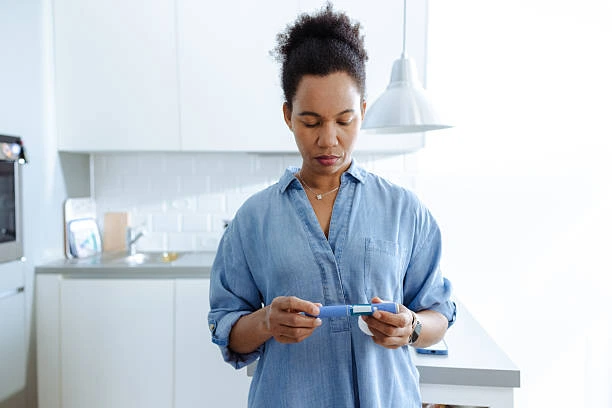
Ozempic is a prescribed GLP-1 drug used to treat type 2 diabetes and help with weight loss. A question patients ask is: Does Ozempic need to be refrigerated? Storing it right is crucial. Temperature changes can affect its strength, safety, and how well it works over time. At TrimBody M.D., we focus on providing advice supported by evidence to guide patients. Schedule a free consultation today!
Key Takeaways:
- You should refrigerate Ozempic before using it for the first time.
- Once opened, it can stay at room temperature for a limited period.
- Heat or freezing can ruin the medication.
- Understanding how long Ozempic stays good without refrigeration helps avoid wasting it.
- Keeping medication stored helps with consistent treatment and better outcomes over time.
Does Ozempic Need To Be Refrigerated At All Times?
Yes, Ozempic must stay in the fridge before its first use. You should store pens between 36°F and 46°F (2°C to 8°C) to make sure the medicine stays effective until you start using it. After the first injection, the storage rules change a bit. You can keep an open pen in the fridge or leave it at room temperature, but it has to stay under 86°F or 30°C.
According to official guidelines, maintaining these temperature limits is essential to preserve the medication’s effectiveness. Exposing the pen to heat above 86°F (30°C), such as leaving it in a hot car, may reduce its potency and should be avoided.
Note: To keep Ozempic safe over time, do not store it in places where temperatures change a lot, like cars or bathrooms. Freezing it is harmful because it ruins the active ingredient.
How Long Can Ozempic Be Out Of The Fridge?
Studies say you can keep it at room temperature for up to 56 days after opening. To patients who are on the move, this storage guideline gives more ease. You can carry pens in a small cooler during flights or long journeys. Sticking to the guidelines matters, though. Temperature changes or mishandling can mess up treatment results and lead to wasted doses.
Marking the start date on each pen is also key to staying on track. Some people like to jot down the start date on the pen box right after opening it.
Why Proper Storage is Important
Ozempic needs to be refrigerated because semaglutide is sensitive. Proteins and peptides break down when exposed to high heat. This can make the medicine less effective in lowering blood sugar and helping with weight loss.
When Ozempic becomes less effective, people may see slower results or deal with side effects without getting the intended benefits. For instance, someone might face stomach problems without noticing better appetite control. To learn more about digestive side effects, check out our guide on Ozempic digestive side effects.
Storing Ozempic also prevents problems with following dosage schedules. If poor storage damages the pen, people might have to replace it sooner. This can cause setbacks in treatment or extra expenses.
Lifestyle Tips To Keep In Mind With Ozempic
Using Ozempic involves more than just keeping it cool. Patients need to think about how it fits into their everyday routines. Check out these practical suggestions:
- Planning trips: Carry a portable cooler during long travels to keep the medication at the correct temperature.
- Everyday habits: Always store the pens in the same spot so that you don’t forget a dose.
- Proper disposal: Separate expired pens from the ones in use to avoid making mistakes.
- Support network: Make sure family or caregivers understand the storage guidelines to help prevent errors.
- Tracking progress: When results stop improving, think about making changes to your habits. Our guide on what happens when stopping Ozempic discusses what might happen when treatment plans shift.
Some people also feel concerned about appearance changes tied to losing weight. Though not connected to refrigeration, the topic of fixing Ozempic face naturally focuses on how critical it is to provide complete care and advice throughout treatment.
How We Focus on Patient Care with Ozempic
At TrimBody M.D., we have helped over 30,000+ people with their health and weight goals. Here’s how we help people stay on the right path:
- We teach how to store and handle Ozempic and when it’s okay to use.
- We create treatment plans tailored to fit personal lifestyles and medical needs.
- We offer advice on reducing side effects and making the treatment more effective.
- We check patient progress often through lab tests and regular medical updates.
- We provide ongoing support to build long-term habits for better health and weight control.
We aim to clear up confusion, offer clarity, and ensure patients feel confident knowing their Ozempic journey is backed by medical support.
Essential Info About Storage And Success
So, does ozempic need to be refrigerated? Yes, it does. Before using it for the first time, you have to keep it in the fridge. Following these storage tips avoids waste, keeps it safe, and ensures consistent treatment outcomes. To get personalized advice, TrimBody M.D. offers expert support and patient-focused solutions.
Want to take charge of your health? Contact TrimBody M.D. now to see how expert guidance can help you get the most out of Ozempic.
Frequently Asked Questions
Does Ozempic Need To Be Refrigerated After Opening?
No, refrigeration is not always required after opening. You can store an opened pen at room temperature for up to 56 days as long as it stays under 86°F.
What Happens If Ozempic Freezes?
If Ozempic freezes, you cannot use it anymore. Freezing harms the active ingredient, which makes it less effective and unsafe to use.
Can I Travel With Ozempic Without A Cooler?
You can carry Ozempic on short trips if it stays under 86°F. To protect its effectiveness during long journeys, it is better to use a portable cooler.
How Do I Know If My Ozempic Went Bad?
If you notice changes in its color or clarity, or see odd particles, you should not use it. Make sure to replace pens that do not look the same as your earlier doses.
Why Is Ozempic Sensitive To Temperature?
Semaglutide, which is in Ozempic, is a peptide that becomes unstable when exposed to heat or freezing. Storing it helps keep its strength so it can work as it should.
Let our team know how we can help with your goals!

Get In Touch With Us
Schedule Your Free Consultation — Take Your First Step Today
 Henderson
Let our team of Medical Professionals help you achieve your body goals. Contact us Today!