
'%3e%3cpath%20d='M12.0979%2019.9987C10.6974%2019.9987%209.29703%2019.4657%208.2309%2018.3995L1.60176%2011.7704C0.568828%2010.7375%200%209.36414%200%207.9034C0%206.44262%200.568828%205.06934%201.6018%204.03641C2.51562%203.12254%204.00258%203.12262%204.91633%204.03637L7.12605%206.2461C8.03988%207.15992%208.03988%208.6468%207.12605%209.56067C6.97848%209.70821%206.89723%209.90442%206.89723%2010.1131C6.89723%2010.3218%206.97848%2010.5179%207.12602%2010.6655L9.33574%2012.8752C9.48328%2013.0228%209.67949%2013.1041%209.88816%2013.1041C10.0969%2013.1041%2010.293%2013.0228%2010.4406%2012.8753C11.3545%2011.9614%2012.8414%2011.9614%2013.7552%2012.8753L15.9649%2015.085C16.8787%2015.9988%2016.8787%2017.4857%2015.9649%2018.3995C14.8987%2019.4657%2013.4983%2019.9987%2012.0979%2019.9987ZM3.25906%204.91281C3.05898%204.91281%202.85895%204.98895%202.7066%205.14129C1.96883%205.87906%201.5625%206.86%201.5625%207.9034C1.5625%208.9468%201.96883%209.92774%202.7066%2010.6655L9.33574%2017.2947C10.8587%2018.8177%2013.337%2018.8177%2014.86%2017.2947C15.1646%2016.99%2015.1646%2016.4944%2014.86%2016.1898L12.6503%2013.9801C12.5028%2013.8325%2012.3066%2013.7513%2012.0979%2013.7513C11.8892%2013.7513%2011.693%2013.8325%2011.5455%2013.98C10.6316%2014.8939%209.14473%2014.8939%208.23086%2013.98L6.02117%2011.7703C5.57852%2011.3277%205.33473%2010.7391%205.33473%2010.113C5.33473%209.48703%205.57852%208.89844%206.02117%208.45578C6.16875%208.30824%206.25%208.11203%206.25%207.90336C6.25%207.69469%206.16875%207.49852%206.02117%207.35094L3.81148%205.14121C3.65918%204.98899%203.4591%204.91281%203.25906%204.91281Z'%20fill='black'/%3e%3cpath%20d='M9.5448%209.3168C9.25285%209.1959%209.0625%208.91102%209.0625%208.59504V0.782539C9.0625%200.351055%209.41227%200.00128937%209.84375%200.00128937H19.2188C19.6502%200.00128937%2020%200.351055%2020%200.782539V7.03254C20%207.46402%2019.6502%207.81379%2019.2188%207.81379H11.7298L10.3962%209.14746C10.1728%209.3709%209.83676%209.43773%209.5448%209.3168ZM10.625%201.56379V6.70895L10.8538%206.48012C11.0003%206.33359%2011.199%206.25129%2011.4062%206.25129H18.4375V1.56379H10.625Z'%20fill='black'/%3e%3cpath%20d='M12.9688%204.68879C13.4002%204.68879%2013.75%204.33901%2013.75%203.90754C13.75%203.47607%2013.4002%203.12629%2012.9688%203.12629C12.5373%203.12629%2012.1875%203.47607%2012.1875%203.90754C12.1875%204.33901%2012.5373%204.68879%2012.9688%204.68879Z'%20fill='black'/%3e%3cpath%20d='M16.0938%204.68879C16.5252%204.68879%2016.875%204.33901%2016.875%203.90754C16.875%203.47607%2016.5252%203.12629%2016.0938%203.12629C15.6623%203.12629%2015.3125%203.47607%2015.3125%203.90754C15.3125%204.33901%2015.6623%204.68879%2016.0938%204.68879Z'%20fill='black'/%3e%3c/g%3e%3cdefs%3e%3cclipPath%20id='clip0_6353_9'%3e%3crect%20width='20'%20height='20'%20fill='white'/%3e%3c/clipPath%3e%3c/defs%3e%3c/svg%3e)
'%3e%3cpath%20d='M10%2020C13.8389%2020%2017.0312%2018.3836%2017.0312%2016.0938C17.0312%2015.4405%2016.7592%2014.8022%2016.2444%2014.2478C15.9508%2013.9316%2015.4565%2013.9132%2015.1403%2014.2068C14.8241%2014.5004%2014.8058%2014.9947%2015.0994%2015.3109C15.3444%2015.5749%2015.4687%2015.8383%2015.4687%2016.0938C15.4687%2017.2001%2013.13%2018.4375%209.99996%2018.4375C6.86996%2018.4375%204.53121%2017.2001%204.53121%2016.0938C4.53121%2015.8382%204.65547%2015.5749%204.90055%2015.3109C5.19414%2014.9947%205.17582%2014.5004%204.85965%2014.2068C4.54348%2013.9133%204.04914%2013.9316%203.75555%2014.2477C3.24082%2014.8021%202.96875%2015.4405%202.96875%2016.0938C2.96875%2018.3803%206.15578%2020%2010%2020Z'%20fill='black'/%3e%3cpath%20d='M8.13172%2015.9465C8.57285%2016.5282%209.27023%2016.875%2010%2016.875C10.7298%2016.875%2011.4271%2016.5282%2011.8683%2015.9466L15.6293%2011.2402C16.5465%2010.0163%2017.0312%208.5609%2017.0312%207.03125C17.0312%203.15422%2013.877%200%2010%200C6.12297%200%202.96875%203.15422%202.96875%207.03125C2.96875%208.56094%203.45352%2010.0164%204.37063%2011.2402L8.13172%2015.9465ZM10%201.5625C13.0155%201.5625%2015.4688%204.01578%2015.4688%207.03125C15.4688%208.21648%2015.0944%209.34434%2014.386%2010.2938C14.386%2010.2938%2010.6309%2014.9924%2010.626%2014.9989C10.4766%2015.1982%2010.2484%2015.3125%2010%2015.3125C9.75156%2015.3125%209.5234%2015.1982%209.37402%2014.9989C9.36914%2014.9923%209.36418%2014.9859%209.3591%2014.9796L5.61395%2010.2937C4.90559%209.34434%204.53125%208.21652%204.53125%207.03125C4.53125%204.01578%206.98453%201.5625%2010%201.5625Z'%20fill='black'/%3e%3cpath%20d='M10%2010.9375C12.1539%2010.9375%2013.9062%209.18516%2013.9062%207.03125C13.9062%204.87734%2012.1539%203.125%2010%203.125C7.84609%203.125%206.09375%204.87734%206.09375%207.03125C6.09375%209.18516%207.84609%2010.9375%2010%2010.9375ZM10%204.6875C11.2923%204.6875%2012.3438%205.73891%2012.3438%207.03125C12.3438%208.32359%2011.2923%209.375%2010%209.375C8.70766%209.375%207.65625%208.32359%207.65625%207.03125C7.65625%205.73891%208.70766%204.6875%2010%204.6875Z'%20fill='black'/%3e%3c/g%3e%3cdefs%3e%3cclipPath%20id='clip0_6353_60'%3e%3crect%20width='20'%20height='20'%20fill='white'/%3e%3c/clipPath%3e%3c/defs%3e%3c/svg%3e)

'%3e%3ccircle%20cx='321'%20cy='321'%20r='276'%20transform='matrix(-1%200%200%201%20481%200)'%20stroke='%23E5DFD3'%20stroke-width='90'/%3e%3c/g%3e%3cdefs%3e%3cclipPath%20id='clip0_6046_3421'%3e%3crect%20width='481'%20height='413'%20fill='white'%20transform='matrix(-1%200%200%201%20481%200)'/%3e%3c/clipPath%3e%3c/defs%3e%3c/svg%3e)
How to Fix Ozempic Face Naturally Without Fillers
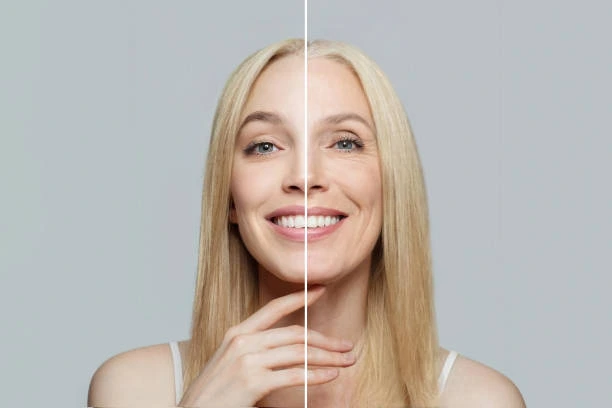
Using Ozempic and similar GLP-1 medications has become more common for weight loss. However, this rise in use brings up some cosmetic concerns. A well-known side effect called “Ozempic face” describes a thinner-looking face, loose skin, and a loss of facial fullness that often comes with losing weight.
Though many rely on dermal fillers to solve this problem fast, more individuals now look for natural methods to improve skin health and maintain lasting results. At TrimBody M.D., we focus on safe weight loss programs guided by medical experts, making sure to also address skin and whole-body rejuvenation.
If you’re wondering how to fix Ozempic face naturally, this guide will walk you through non-invasive solutions that support collagen rebuilding, restore lost facial volume, and nourish your skin from within—without the need for fillers or surgery.
What Causes Ozempic Face? Let’s Break It Down
To understand natural fixes, you first need to know why Ozempic face happens. Ozempic helps reduce appetite and makes the stomach empty slower, causing noticeable weight loss. But this weight loss often includes fat from the face in the mid-face area and around the temples. As the fat decreases, the skin might become loose, giving a hollow or older appearance.
Aside from losing fat, the production of collagen and elastin can also change. When people lose weight too, their skin struggles to adjust or repair itself. This happens even more if they do not stay hydrated or eat well. Because of this, the face can lose its youthful look and tightness. The upside is that proper care can help the skin and tissues heal over time.
Ways To Bring Back Skin Elasticity and Fullness
Fixing something like an “Ozempic face” can be approached by promoting collagen regeneration, restoring volume to facial fat layers, and nourishing the skin at both surface and deeper levels. According to a clinical review on skin remodeling, treatments such as biostimulator injections, dermal fillers, and collagen-boosting skincare support this kind of comprehensive facial recovery. Here’s how to start that recovery.
Focus on Nutrition for Skin Health
Your skin often shows how healthy you are on the inside. To restore bounce and firmness, you need specific nutrients:
- Foods with collagen: Bone broth, wild salmon skin, egg whites, and gelatin give your body amino acids to rebuild skin structure.
- Vitamin C sources: Citrus fruits, strawberries, and red bell peppers provide what your body needs to produce collagen.
- Omega-3 fats: Flaxseeds, walnuts, and fatty fish help your skin stay moist and flexible.
- Zinc and copper: These minerals help repair tissues and strengthen collagen. You can find them in oysters, sunflower seeds, and organ meats.
Eating a diet low in sugar and processed oils while focusing on anti-inflammatory foods helps slow down glycation. Glycation stiffens collagen and contributes to sagging skin over time.
Boost Facial Volume Using Natural Techniques for Fat and Muscle
People often think it’s impossible to restore facial fat, but that’s not true. Though hormones and genetics play the biggest role in fat distribution, you can find ways to encourage the face to rebuild volume:
- Maintaining a healthy weight: After reaching a weight loss plateau, eating a steady diet filled with nutrients and healthy fats helps the body bring back lost volume even in areas like the face.
- Face exercises and resistance workouts: Working facial muscles through exercises can tighten contours and boost blood flow. Try movements that work the cheeks, jawline, or forehead.
- Facial massage or Gua Sha techniques: These hands-on methods promote better blood circulation and help drain lymph firming up loose skin.
- Using cold water therapy: Switching between warm and cold water when washing your face supports blood flow and aids tissue repair.
Most people see changes after sticking to facial exercises and massages for 6 to 8 weeks. These methods may take time, but they help with restoring the face in a lasting and natural way.
Encourage Collagen and Elastin Growth in a Natural Way
Collagen functions as a structural support system for your skin, maintaining firmness and resilience. As you age or lose significant weight, your body’s production decreases. Cleveland Clinic’s expert guidance on collagen says that supporting collagen levels is essential for preserving youthful skin.
Below are some of the best methods to help your body increase collagen production.
Using Topical Solutions
- Retinol (vitamin A): Retinol found in natural sources like rosehip oil or bakuchiol, boosts skin cell renewal and supports collagen growth.
- Vitamin C serums: Applying vitamin C on the skin can promote collagen production in the deeper skin layers.
- Hyaluronic acid: While it does not boost collagen, it helps the skin stay hydrated and full, which makes it look smoother.
Stick with products made from simple high-quality ingredients. Use them to get lasting results.
Everyday Tips and Healing Strategies
- Red light therapy (photobiomodulation): Research shows that red light tools encourage fibroblast cells to make extra collagen. Use a good-quality LED mask or handheld device several times weekly.
- Sleep well and stay hydrated: The body fixes tissues while you sleep. Get 7 to 9 hours of rest each night and drink lots of water during the day.
- Skip over-exfoliation: Rough scrubs or strong peels might harm your skin barrier. This can cause sensitivity and lead to even more volume loss.
Explore Natural Ways to Boost Collagen
On top of eating the right foods and using skincare, think about taking natural supplements to help collagen grow.
- Hydrolyzed collagen peptides: Use grass-fed or marine collagen to absorb it more.
- Silica and biotin: Support stronger connective tissues and might make skin thicker.
- Adaptogens like ashwagandha: Lower cortisol levels caused by stress, which breaks down collagen .
Taking these along with healthy nutrient-rich meals can bring back skin’s fullness and glow in a few months.
Reclaiming Facial Harmony Without Sacrifice
Ozempic (semaglutide) has helped many people manage metabolic issues and lose weight, but it’s also worth talking about how it can affect someone’s looks. The facial changes known as “Ozempic face” don’t have to be permanent, and learning how to fix Ozempic face naturally can be a more sustainable, skin-friendly path forward.
You can take a natural route to improve this by focusing on things like boosting collagen, eating healthy food, staying hydrated, doing facial exercises, and using gentle skincare products. Sticking to this approach can lead to lasting results and bring back your face’s natural shape. This method respects the body’s own power to repair and rebuild in its own time.
To keep a youthful and healthy look after losing weight, you can try some safer and more lasting natural approaches. By addressing the main reasons behind facial volume loss, you are not just fixing what you see, you are helping your body find its balance again.
Bring Back Your Natural Look by Supporting Your Skin Smarter
An ozempic face doesn’t have to be a lasting side effect of your weight loss journey. With the right blend of targeted nutrition, collagen stimulation, and consistent skincare, it’s entirely possible to restore facial volume and tone naturally. No needles, no fillers, just science-backed strategies that work with your body, not against it.
If you’re searching for real answers on how to fix Ozempic face naturally, TrimBody M.D. offers advanced, non-invasive skin and wellness solutions tailored to your needs. Your face tells your story, let’s make sure it reflects the health and vitality you’ve worked hard to achieve.
Book a free consultation with us today and take the next step toward a refreshed, natural look you’ll feel confident in.
Frequently Asked Questions
Is The Ozempic Face Reversible?
Yes, the Ozempic face can be improved naturally. Skin elasticity and volume often return with proper nutrition, collagen support, facial exercises, and time. Non-invasive treatments can speed up results without relying on fillers.
Will My Face Get Better If I Stop Ozempic?
Stopping Ozempic may slow further fat loss, but facial fullness doesn’t bounce back immediately. Supporting skin health with collagen, hydration, and targeted skincare helps restore volume gradually.
Can Taking Collagen Help With Ozempic Face?
Yes, collagen supplements support skin structure and elasticity. Look for hydrolyzed peptides combined with vitamin C to help rebuild volume and smooth skin texture from within.
Will My Ozempic Face Go Away If I Gain Weight?
Regaining some weight might improve facial volume, but results vary. Targeted fat gain is unpredictable. Supporting collagen production and skin health gives better, more lasting results.
How To Avoid Ozempic Face With Exercise?
Incorporate strength training and facial exercises to maintain muscle tone and support skin firmness. Combine with hydration, nutrient-rich foods, and adequate sleep for best results.
Let our team know how we can help with your goals!

Get In Touch With Us
Schedule Your Free Consultation — Take Your First Step Today
 Henderson
Let our team of Medical Professionals help you achieve your body goals. Contact us Today!