
'%3e%3cpath%20d='M12.0979%2019.9987C10.6974%2019.9987%209.29703%2019.4657%208.2309%2018.3995L1.60176%2011.7704C0.568828%2010.7375%200%209.36414%200%207.9034C0%206.44262%200.568828%205.06934%201.6018%204.03641C2.51562%203.12254%204.00258%203.12262%204.91633%204.03637L7.12605%206.2461C8.03988%207.15992%208.03988%208.6468%207.12605%209.56067C6.97848%209.70821%206.89723%209.90442%206.89723%2010.1131C6.89723%2010.3218%206.97848%2010.5179%207.12602%2010.6655L9.33574%2012.8752C9.48328%2013.0228%209.67949%2013.1041%209.88816%2013.1041C10.0969%2013.1041%2010.293%2013.0228%2010.4406%2012.8753C11.3545%2011.9614%2012.8414%2011.9614%2013.7552%2012.8753L15.9649%2015.085C16.8787%2015.9988%2016.8787%2017.4857%2015.9649%2018.3995C14.8987%2019.4657%2013.4983%2019.9987%2012.0979%2019.9987ZM3.25906%204.91281C3.05898%204.91281%202.85895%204.98895%202.7066%205.14129C1.96883%205.87906%201.5625%206.86%201.5625%207.9034C1.5625%208.9468%201.96883%209.92774%202.7066%2010.6655L9.33574%2017.2947C10.8587%2018.8177%2013.337%2018.8177%2014.86%2017.2947C15.1646%2016.99%2015.1646%2016.4944%2014.86%2016.1898L12.6503%2013.9801C12.5028%2013.8325%2012.3066%2013.7513%2012.0979%2013.7513C11.8892%2013.7513%2011.693%2013.8325%2011.5455%2013.98C10.6316%2014.8939%209.14473%2014.8939%208.23086%2013.98L6.02117%2011.7703C5.57852%2011.3277%205.33473%2010.7391%205.33473%2010.113C5.33473%209.48703%205.57852%208.89844%206.02117%208.45578C6.16875%208.30824%206.25%208.11203%206.25%207.90336C6.25%207.69469%206.16875%207.49852%206.02117%207.35094L3.81148%205.14121C3.65918%204.98899%203.4591%204.91281%203.25906%204.91281Z'%20fill='black'/%3e%3cpath%20d='M9.5448%209.3168C9.25285%209.1959%209.0625%208.91102%209.0625%208.59504V0.782539C9.0625%200.351055%209.41227%200.00128937%209.84375%200.00128937H19.2188C19.6502%200.00128937%2020%200.351055%2020%200.782539V7.03254C20%207.46402%2019.6502%207.81379%2019.2188%207.81379H11.7298L10.3962%209.14746C10.1728%209.3709%209.83676%209.43773%209.5448%209.3168ZM10.625%201.56379V6.70895L10.8538%206.48012C11.0003%206.33359%2011.199%206.25129%2011.4062%206.25129H18.4375V1.56379H10.625Z'%20fill='black'/%3e%3cpath%20d='M12.9688%204.68879C13.4002%204.68879%2013.75%204.33901%2013.75%203.90754C13.75%203.47607%2013.4002%203.12629%2012.9688%203.12629C12.5373%203.12629%2012.1875%203.47607%2012.1875%203.90754C12.1875%204.33901%2012.5373%204.68879%2012.9688%204.68879Z'%20fill='black'/%3e%3cpath%20d='M16.0938%204.68879C16.5252%204.68879%2016.875%204.33901%2016.875%203.90754C16.875%203.47607%2016.5252%203.12629%2016.0938%203.12629C15.6623%203.12629%2015.3125%203.47607%2015.3125%203.90754C15.3125%204.33901%2015.6623%204.68879%2016.0938%204.68879Z'%20fill='black'/%3e%3c/g%3e%3cdefs%3e%3cclipPath%20id='clip0_6353_9'%3e%3crect%20width='20'%20height='20'%20fill='white'/%3e%3c/clipPath%3e%3c/defs%3e%3c/svg%3e)
'%3e%3cpath%20d='M10%2020C13.8389%2020%2017.0312%2018.3836%2017.0312%2016.0938C17.0312%2015.4405%2016.7592%2014.8022%2016.2444%2014.2478C15.9508%2013.9316%2015.4565%2013.9132%2015.1403%2014.2068C14.8241%2014.5004%2014.8058%2014.9947%2015.0994%2015.3109C15.3444%2015.5749%2015.4687%2015.8383%2015.4687%2016.0938C15.4687%2017.2001%2013.13%2018.4375%209.99996%2018.4375C6.86996%2018.4375%204.53121%2017.2001%204.53121%2016.0938C4.53121%2015.8382%204.65547%2015.5749%204.90055%2015.3109C5.19414%2014.9947%205.17582%2014.5004%204.85965%2014.2068C4.54348%2013.9133%204.04914%2013.9316%203.75555%2014.2477C3.24082%2014.8021%202.96875%2015.4405%202.96875%2016.0938C2.96875%2018.3803%206.15578%2020%2010%2020Z'%20fill='black'/%3e%3cpath%20d='M8.13172%2015.9465C8.57285%2016.5282%209.27023%2016.875%2010%2016.875C10.7298%2016.875%2011.4271%2016.5282%2011.8683%2015.9466L15.6293%2011.2402C16.5465%2010.0163%2017.0312%208.5609%2017.0312%207.03125C17.0312%203.15422%2013.877%200%2010%200C6.12297%200%202.96875%203.15422%202.96875%207.03125C2.96875%208.56094%203.45352%2010.0164%204.37063%2011.2402L8.13172%2015.9465ZM10%201.5625C13.0155%201.5625%2015.4688%204.01578%2015.4688%207.03125C15.4688%208.21648%2015.0944%209.34434%2014.386%2010.2938C14.386%2010.2938%2010.6309%2014.9924%2010.626%2014.9989C10.4766%2015.1982%2010.2484%2015.3125%2010%2015.3125C9.75156%2015.3125%209.5234%2015.1982%209.37402%2014.9989C9.36914%2014.9923%209.36418%2014.9859%209.3591%2014.9796L5.61395%2010.2937C4.90559%209.34434%204.53125%208.21652%204.53125%207.03125C4.53125%204.01578%206.98453%201.5625%2010%201.5625Z'%20fill='black'/%3e%3cpath%20d='M10%2010.9375C12.1539%2010.9375%2013.9062%209.18516%2013.9062%207.03125C13.9062%204.87734%2012.1539%203.125%2010%203.125C7.84609%203.125%206.09375%204.87734%206.09375%207.03125C6.09375%209.18516%207.84609%2010.9375%2010%2010.9375ZM10%204.6875C11.2923%204.6875%2012.3438%205.73891%2012.3438%207.03125C12.3438%208.32359%2011.2923%209.375%2010%209.375C8.70766%209.375%207.65625%208.32359%207.65625%207.03125C7.65625%205.73891%208.70766%204.6875%2010%204.6875Z'%20fill='black'/%3e%3c/g%3e%3cdefs%3e%3cclipPath%20id='clip0_6353_60'%3e%3crect%20width='20'%20height='20'%20fill='white'/%3e%3c/clipPath%3e%3c/defs%3e%3c/svg%3e)

'%3e%3ccircle%20cx='321'%20cy='321'%20r='276'%20transform='matrix(-1%200%200%201%20481%200)'%20stroke='%23E5DFD3'%20stroke-width='90'/%3e%3c/g%3e%3cdefs%3e%3cclipPath%20id='clip0_6046_3421'%3e%3crect%20width='481'%20height='413'%20fill='white'%20transform='matrix(-1%200%200%201%20481%200)'/%3e%3c/clipPath%3e%3c/defs%3e%3c/svg%3e)
Does GLP 1 Increase Metabolism
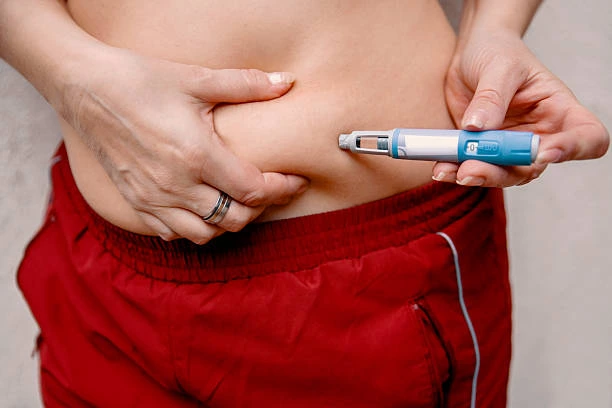
Does glp 1 increase metabolism? This is a good question because weight loss drugs like semaglutide and tirzepatide work in more ways than just cutting hunger. At TrimBody M.D, we explain the science behind how GLP-1 receptor agonists have an influence on metabolism and weight with clear, evidence-backed advice.
Key Takeaways
- GLP-1 affects appetite and how the body burns calories.
- It might have an indirect role in the resting metabolic rate.
- Studies hint at changes in fat burning and insulin response.
- Eating habits and physical activity still matter a lot.
- Research is still happening, but what we know so far looks promising.
Does GLP 1 Speed Up Metabolism?
Most people imagine metabolism as one fixed rate that decides how many calories are burned. In truth, metabolism is made up of basal metabolic rate, which is the energy the body uses to keep essential functions running, thermogenesis, which is the heat made by digesting food, and physical activity levels.
GLP-1 receptor agonists act by imitating the natural hormone GLP-1, which rises after meals. They delay how fast the stomach empties, make you feel full, and help insulin production. Research has also revealed their role in changing how the body uses energy. A new clinical trial also showed GLP-1 therapies raise visceral fat metabolic activity, linking this energy-burn effect to greater weight loss.
While GLP-1 drugs are already known to reduce appetite and slow digestion, the study introduces RES-010, which goes further: it reprograms fat metabolism so the body relies more on stored fat for energy, increases mitochondrial activity, and helps convert white fat to brown fat.
This does not function like stimulants that boost basal metabolic rate. GLP-1 works by fine-tuning how the body uses energy. For instance, it lowers glucose surges after meals, stopping fat from being stored and helping to balance energy levels. While this might seem like a “metabolism boost,” it is an adjustment in how the body processes energy.
GLP-1 and How It Relates to Resting Energy Expenditure
Most calories burned during the day come from resting energy expenditure. Researchers have studied if GLP-1 medications change REE. The results are varied but show some interesting patterns.
- A study in PubMed Central found that people given liraglutide had small increases in their REE when compared to those who got a placebo.
- Researchers believe that weight loss from appetite suppression might hide or balance out these increases because losing fat lowers REE.
- Experiments on animals give better proof of thermogenic activity in brown fat, but more studies are needed to confirm if this happens the same way in humans.
GLP-1 works better than caffeine or thyroid hormones. It does not boost resting metabolism but shows a gentler effect through hormone signals and how the body handles nutrients rather than raw calorie burning.
How GLP-1 Boosts Metabolic Flexibility
GLP-1 therapy offers a lesser-known benefit by improving metabolic flexibility. This refers to how the body changes between using carbs and fat for energy. Many people with obesity or type 2 diabetes struggle with this, which can leave them tired and store more fat.
GLP-1 receptor agonists help by keeping insulin steady and cutting down glucose ups and downs. People using it often notice they stay full longer and avoid sudden energy drops, which ties to better fuel usage.
MRI and PET scans suggest that GLP-1 drugs might increase activity in parts of the brain that handle energy balance. This means they affect metabolism through the central nervous system, not just through other areas of the body. Approaches like microdosing GLP-1 are also being studied to see if smaller doses can improve metabolic balance with fewer side effects.
Results Depend on Lifestyle Choices
GLP-1s assist in managing energy balance, but they are not a solution by themselves. Lifestyle choices play a major role in how these medications interact with the body’s metabolism.
- Eating habits: Eating more protein helps maintain muscle, which burns energy even when the body is at rest.
- Strength training: Keeping up with resistance exercises stops muscle loss during weight loss and protects the body’s resting energy burn.
- Sleep and stress levels: Not getting enough rest throws off hormone levels and might lower how well GLP-1 works.
- Staying consistent long-term: Medications work best when paired with lifestyle changes you can stick to over time.
Programs that mix GLP-1 meds with planned diets and exercise routines deliver better results than just taking the medication alone. Strength training plays a major role, and patients often ask can you gain muscle on GLP-1 while working to preserve metabolism.
What This Means for Patients
To understand GLP-1, patients need to know how it affects metabolism. Expecting it to burn tons of calories might leave you disappointed. But seeing it as a way to fix hormone issues and make processes in your body run more efficiently can make its benefits stand out.
Doctors often explain that weight loss involves more than just one factor. Lower hunger levels, better insulin response, smarter use of nutrients, and small boosts in energy spending all play a role in achieving steady, lasting results.
This approach lines up with findings from long-term research. People taking GLP-1 receptor agonists not only lose weight but also see better blood pressure, lower cholesterol, and reduced heart-related risks.
How We Help Our Patients Get the Most from GLP-1 Therapy
TrimBody M.D. works to help patients using GLP-1 treatments by offering skilled medical support and practical solutions to maintain metabolism and build lasting progress.
Some key advantages include:
- Professional advice on GLP-1 usage: Specialists ensure safe dosing and track progress closely.
- Metabolic evaluations: Doctors check how each person’s metabolism responds during treatment.
- Diet planning: Nutrition tips help keep muscles strong and metabolism steady.
- Fitness inclusion: Ideas for exercise to boost energy balance and help the body burn fat more.
- Continuous guidance: Long-term coaching to maintain both weight loss and a healthy metabolism.
Taking the Next Step with Clarity
So, does glp 1 increase metabolism? The clearest answer is that it improves how your body manages energy without increasing the number of calories you burn. It promotes fat burning, keeps blood sugar steady, and helps with metabolic adaptability, creating conditions that support lasting weight loss.
Paired with good daily habits, GLP-1 treatments stand out as one of the best current methods to aid weight and overall metabolic health. For expert guidance on safe, effective GLP-1 treatment, connect with TrimBody M.D. today and move closer to your long-term health goals
Frequently Asked Questions
Does GLP-1 Burn Visceral Fat?
Yes, GLP-1 medications work to lower visceral fat, which is the unhealthy fat surrounding your organs. Research shows noticeable reductions in belly fat, which reduces the risks tied to diabetes, heart problems, and other metabolic disorders.
Is There A Downside To GLP-1?
Some people may feel sick, deal with an upset stomach, or have reactions when the injection is given when they begin using GLP-1. These side effects get better with time.
How Does GLP-1 Start to Work?
Most people feel less hungry during the first few weeks of treatment. Significant weight loss and better metabolism show up after 8 to 12 weeks when paired with steady lifestyle changes.
Does GLP-1 Affect Muscle Mass?
GLP-1 might lead to some loss of lean muscle if someone doesn’t focus on their diet or stay active. Eating enough protein and doing strength exercises helps maintain muscle while focusing on losing fat.
Can GLP-1 Improve Insulin Sensitivity?
Yes, GLP-1 helps the body respond better to insulin and keeps blood sugar levels steady. This works well not just to lose weight but also to manage type 2 diabetes and lower future health risks.
Let our team know how we can help with your goals!

Get In Touch With Us
Schedule Your Free Consultation — Take Your First Step Today
 Henderson
Let our team of Medical Professionals help you achieve your body goals. Contact us Today!