
'%3e%3cpath%20d='M12.0979%2019.9987C10.6974%2019.9987%209.29703%2019.4657%208.2309%2018.3995L1.60176%2011.7704C0.568828%2010.7375%200%209.36414%200%207.9034C0%206.44262%200.568828%205.06934%201.6018%204.03641C2.51562%203.12254%204.00258%203.12262%204.91633%204.03637L7.12605%206.2461C8.03988%207.15992%208.03988%208.6468%207.12605%209.56067C6.97848%209.70821%206.89723%209.90442%206.89723%2010.1131C6.89723%2010.3218%206.97848%2010.5179%207.12602%2010.6655L9.33574%2012.8752C9.48328%2013.0228%209.67949%2013.1041%209.88816%2013.1041C10.0969%2013.1041%2010.293%2013.0228%2010.4406%2012.8753C11.3545%2011.9614%2012.8414%2011.9614%2013.7552%2012.8753L15.9649%2015.085C16.8787%2015.9988%2016.8787%2017.4857%2015.9649%2018.3995C14.8987%2019.4657%2013.4983%2019.9987%2012.0979%2019.9987ZM3.25906%204.91281C3.05898%204.91281%202.85895%204.98895%202.7066%205.14129C1.96883%205.87906%201.5625%206.86%201.5625%207.9034C1.5625%208.9468%201.96883%209.92774%202.7066%2010.6655L9.33574%2017.2947C10.8587%2018.8177%2013.337%2018.8177%2014.86%2017.2947C15.1646%2016.99%2015.1646%2016.4944%2014.86%2016.1898L12.6503%2013.9801C12.5028%2013.8325%2012.3066%2013.7513%2012.0979%2013.7513C11.8892%2013.7513%2011.693%2013.8325%2011.5455%2013.98C10.6316%2014.8939%209.14473%2014.8939%208.23086%2013.98L6.02117%2011.7703C5.57852%2011.3277%205.33473%2010.7391%205.33473%2010.113C5.33473%209.48703%205.57852%208.89844%206.02117%208.45578C6.16875%208.30824%206.25%208.11203%206.25%207.90336C6.25%207.69469%206.16875%207.49852%206.02117%207.35094L3.81148%205.14121C3.65918%204.98899%203.4591%204.91281%203.25906%204.91281Z'%20fill='black'/%3e%3cpath%20d='M9.5448%209.3168C9.25285%209.1959%209.0625%208.91102%209.0625%208.59504V0.782539C9.0625%200.351055%209.41227%200.00128937%209.84375%200.00128937H19.2188C19.6502%200.00128937%2020%200.351055%2020%200.782539V7.03254C20%207.46402%2019.6502%207.81379%2019.2188%207.81379H11.7298L10.3962%209.14746C10.1728%209.3709%209.83676%209.43773%209.5448%209.3168ZM10.625%201.56379V6.70895L10.8538%206.48012C11.0003%206.33359%2011.199%206.25129%2011.4062%206.25129H18.4375V1.56379H10.625Z'%20fill='black'/%3e%3cpath%20d='M12.9688%204.68879C13.4002%204.68879%2013.75%204.33901%2013.75%203.90754C13.75%203.47607%2013.4002%203.12629%2012.9688%203.12629C12.5373%203.12629%2012.1875%203.47607%2012.1875%203.90754C12.1875%204.33901%2012.5373%204.68879%2012.9688%204.68879Z'%20fill='black'/%3e%3cpath%20d='M16.0938%204.68879C16.5252%204.68879%2016.875%204.33901%2016.875%203.90754C16.875%203.47607%2016.5252%203.12629%2016.0938%203.12629C15.6623%203.12629%2015.3125%203.47607%2015.3125%203.90754C15.3125%204.33901%2015.6623%204.68879%2016.0938%204.68879Z'%20fill='black'/%3e%3c/g%3e%3cdefs%3e%3cclipPath%20id='clip0_6353_9'%3e%3crect%20width='20'%20height='20'%20fill='white'/%3e%3c/clipPath%3e%3c/defs%3e%3c/svg%3e)
'%3e%3cpath%20d='M10%2020C13.8389%2020%2017.0312%2018.3836%2017.0312%2016.0938C17.0312%2015.4405%2016.7592%2014.8022%2016.2444%2014.2478C15.9508%2013.9316%2015.4565%2013.9132%2015.1403%2014.2068C14.8241%2014.5004%2014.8058%2014.9947%2015.0994%2015.3109C15.3444%2015.5749%2015.4687%2015.8383%2015.4687%2016.0938C15.4687%2017.2001%2013.13%2018.4375%209.99996%2018.4375C6.86996%2018.4375%204.53121%2017.2001%204.53121%2016.0938C4.53121%2015.8382%204.65547%2015.5749%204.90055%2015.3109C5.19414%2014.9947%205.17582%2014.5004%204.85965%2014.2068C4.54348%2013.9133%204.04914%2013.9316%203.75555%2014.2477C3.24082%2014.8021%202.96875%2015.4405%202.96875%2016.0938C2.96875%2018.3803%206.15578%2020%2010%2020Z'%20fill='black'/%3e%3cpath%20d='M8.13172%2015.9465C8.57285%2016.5282%209.27023%2016.875%2010%2016.875C10.7298%2016.875%2011.4271%2016.5282%2011.8683%2015.9466L15.6293%2011.2402C16.5465%2010.0163%2017.0312%208.5609%2017.0312%207.03125C17.0312%203.15422%2013.877%200%2010%200C6.12297%200%202.96875%203.15422%202.96875%207.03125C2.96875%208.56094%203.45352%2010.0164%204.37063%2011.2402L8.13172%2015.9465ZM10%201.5625C13.0155%201.5625%2015.4688%204.01578%2015.4688%207.03125C15.4688%208.21648%2015.0944%209.34434%2014.386%2010.2938C14.386%2010.2938%2010.6309%2014.9924%2010.626%2014.9989C10.4766%2015.1982%2010.2484%2015.3125%2010%2015.3125C9.75156%2015.3125%209.5234%2015.1982%209.37402%2014.9989C9.36914%2014.9923%209.36418%2014.9859%209.3591%2014.9796L5.61395%2010.2937C4.90559%209.34434%204.53125%208.21652%204.53125%207.03125C4.53125%204.01578%206.98453%201.5625%2010%201.5625Z'%20fill='black'/%3e%3cpath%20d='M10%2010.9375C12.1539%2010.9375%2013.9062%209.18516%2013.9062%207.03125C13.9062%204.87734%2012.1539%203.125%2010%203.125C7.84609%203.125%206.09375%204.87734%206.09375%207.03125C6.09375%209.18516%207.84609%2010.9375%2010%2010.9375ZM10%204.6875C11.2923%204.6875%2012.3438%205.73891%2012.3438%207.03125C12.3438%208.32359%2011.2923%209.375%2010%209.375C8.70766%209.375%207.65625%208.32359%207.65625%207.03125C7.65625%205.73891%208.70766%204.6875%2010%204.6875Z'%20fill='black'/%3e%3c/g%3e%3cdefs%3e%3cclipPath%20id='clip0_6353_60'%3e%3crect%20width='20'%20height='20'%20fill='white'/%3e%3c/clipPath%3e%3c/defs%3e%3c/svg%3e)

'%3e%3ccircle%20cx='321'%20cy='321'%20r='276'%20transform='matrix(-1%200%200%201%20481%200)'%20stroke='%23E5DFD3'%20stroke-width='90'/%3e%3c/g%3e%3cdefs%3e%3cclipPath%20id='clip0_6046_3421'%3e%3crect%20width='481'%20height='413'%20fill='white'%20transform='matrix(-1%200%200%201%20481%200)'/%3e%3c/clipPath%3e%3c/defs%3e%3c/svg%3e)
What Is Microdosing GLP-1? Should You Try It?
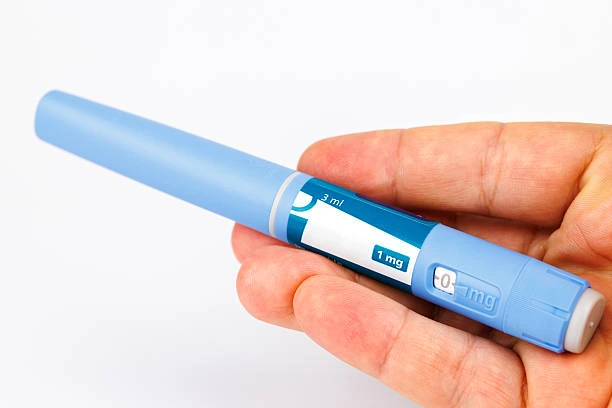
Medications like semaglutide and tirzepatide part of the GLP-1 group, have become popular because they assist with weight loss, control hunger, and regulate blood sugar levels. Some people though, might not need or want the full prescribed amount. In these cases, microdosing provides a lighter approach to achieve comparable benefits. This method reduces side effects and allows for more gradual progress.
TrimBody M.D. provides microdosing GLP-1 under a monitored medical program to begin treatment, manage side effects, and achieve steady long-term improvements. The plan involves giving the medication in tiny measured amounts, offering a softer method for those seeking lasting results.
How Does Microdosing GLP-1 Work?
The hormone GLP-1, which stands for glucagon-like peptide-1 exists in the body. It plays a role in controlling blood sugar managing insulin, and regulating appetite. Medications called GLP-1 receptor agonists act as a copy of this hormone.
A clinical overview explains that GLP‑1 receptor agonists imitate the natural hormone GLP‑1, helping maintain metabolic health. They boost how the body responds to insulin, slow down how the stomach empties create a sense of being full, and help keep blood sugar stable. This makes them useful to manage type 2 diabetes and obesity.
Medications such as semaglutide (sold as Wegovy® or Ozempic®) and tirzepatide (known as Mounjaro® or Zepbound®) are taken in higher doses to treat type 2 diabetes and obesity. However, starting at a full dose too often causes side effects like bloating, nausea, or constipation.
This is where microdosing provides a different way to approach the problem.
Key Benefits of Microdosing GLP-1:
- Gentle on the stomach: Starting with smaller doses reduces the chances of side effects for people new to GLP-1 drugs.
- Easier for the body to adjust: It gives the body time to get used to the medication making it easier to continue in the long run.
- Helps with appetite control: Lower doses can assist in curbing cravings and support more careful eating habits.
- Allows for gradual improvement: Doses can be increased based on how a person’s body reacts.
This method avoids focusing on fast solutions. It works well for those wanting to follow a clear plan to change eating habits, address emotional eating, or begin living healthier.
Let our team know how we can help with your goals!
Who Might Microdosing GLP-1 Benefit?
Taking small doses of GLP-1 may not fit everyone’s needs. However, it provides an option for individuals trying to improve their metabolic health without needing big treatments. These are a few situations where it might be helpful:
1. Individuals Struggling With Minor Weight Gain or Lack of Progress
Low-dose GLP-1 can help when you eat healthy and stay active but still can’t lose that stubborn weight or constant cravings. It can give extra support to people who don’t meet the requirements for full-dose weight-loss meds.
2. Those Having Trouble With Side Effects From Higher Doses
Some folks stop taking GLP-1 drugs because the side effects make it tough. Using smaller doses lowers these problems and makes the medication easier on the body. It allows a smoother and more bearable experience.
3. Building Better Habits and Controlling Cravings
Sometimes, people turn to microdosing to build better habits, manage their weight during tough times, or break patterns like overeating.
4. Those Who Want Long-Term Health and Metabolic Balance
Small improvements in how the body handles insulin and controls appetite can lead to positive outcomes over time. A consistent and controlled approach through microdosing can help unlock these advantages.
It is important to recognize that microdosing is considered a medical treatment. You should try it with proper guidance, including regular testing and follow-ups, to confirm it works for your body.
The Importance of Medical Supervision for Microdosing
GLP-1 medications work even in tiny doses. Expert advice becomes essential, not optional when dealing with them. TrimBody M.D. uses a structured and science-backed method to manage microdosing. They prioritize your entire well-being rather than focusing on shedding pounds.
Kicking off your treatment with a qualified provider guarantees your plan will cover the following:
- Run basic lab tests to examine blood sugar, insulin levels, and other metabolic indicators.
- Begin with a health check that includes tracking body composition.
- Design personalized dosage plans based on your body’s needs and what works best for you.
- Schedule regular follow-ups to track progress, address side effects, and check results.
- Offer additional support by sharing tips on diet, drinking water, and building healthy habits.
Some individuals try to buy GLP-1 drugs on their own often through online pharmacies or unregulated sellers. Doing this can result in incorrect dosing counterfeit drugs, or unmanaged side effects. This kind of shortcut puts both safety and long-term health goals at risk.
With guidance from doctors, you receive support during every step. Adjustments match how your body reacts, and progress is tracked through accurate tools. This creates a smoother way to work on your health.
To discuss our services, contact us today!
What to Expect When Starting Microdosing
The microdosing journey begins with a full consultation to assess your health and personal objectives. Afterward, a doctor picks a starting dose, which stays much lower than the typical amount used to handle diabetes or weight issues.
Many notice reduced cravings and easier portion control after a week or two. Because doses are so small, changes occur but . Appetite shifts feel more organic and less forced. Making food choices feels easier and less overwhelming.
Doctors combine GLP-1 therapy with tailored eating plans to improve metabolic health and avoid missing key nutrients. A recent review mentions the importance of focusing on things like getting enough protein, staying hydrated, and taking vitamin D. These steps help GLP-1 therapy work better and reduce problems like tiredness.
The timing varies for each person. Some start with microdosing to change their habits, while others stick with small doses long-term as part of a bigger health plan. What matters is making decisions together instead of having them decided for you.
Need help deciding? Fill out a contact form,and we’ll ensure you’re informed!
Start Small To Feel Your Best
Using small doses of GLP-1 offers a thoughtful way to start managing appetite and weight without the stronger effects of full-dose medicine. When done under proper guidance, this method can help with steady progress reduced cravings, and building a healthier connection with food.
To explore a customized and lasting approach, you can reach out to the team at TrimBody M.D. See if microdosing aligns with your personal health objectives.
Book your appointment now and take the first step to achieve a fitter healthier lifestyle.
Frequently Asked Questions
Is It Safe To Microdose Semaglutide?
Yes, microdosing semaglutide is generally safe when managed by a licensed medical provider. Starting with low doses helps minimize side effects and supports gradual results. Medical supervision ensures proper dosing, lab monitoring, and adjustments based on your body’s unique response.
Can You Microdose Mounjaro Daily?
Mounjaro (tirzepatide) is typically dosed weekly, not daily. However, any custom protocol, including microdosing, must be created by a provider. Daily use is not standard and may increase risk. Always follow a medical plan tailored to your needs and goals.
Who Should Consider Microdosing GLP-1?
Microdosing is ideal for individuals with mild weight concerns, appetite challenges, or previous side effects from higher doses. It works best when guided by a provider who can personalize the plan based on your metabolic profile and lifestyle habits.
How Soon Can You See Results From Microdosing?
Many patients notice reduced cravings and better portion control within 1 to 2 weeks. Results vary by individual, but steady improvements in appetite and energy are common with proper guidance, consistent dosing, and supportive lifestyle changes over time.
Do You Need A Prescription For GLP-1 Microdosing?
Yes, GLP-1 medications like semaglutide and tirzepatide require a prescription. Microdosing should be done under professional care to ensure safety, accurate dosing, and effective results. Avoid online or unregulated sources that may sell unsafe or counterfeit products.
Call and talk to a specialist today! (702) 489-3300
Let our team know how we can help with your goals!

Get In Touch With Us
Schedule Your Free Consultation — Take Your First Step Today
 Henderson
Let our team of Medical Professionals help you achieve your body goals. Contact us Today!