
'%3e%3cpath%20d='M12.0979%2019.9987C10.6974%2019.9987%209.29703%2019.4657%208.2309%2018.3995L1.60176%2011.7704C0.568828%2010.7375%200%209.36414%200%207.9034C0%206.44262%200.568828%205.06934%201.6018%204.03641C2.51562%203.12254%204.00258%203.12262%204.91633%204.03637L7.12605%206.2461C8.03988%207.15992%208.03988%208.6468%207.12605%209.56067C6.97848%209.70821%206.89723%209.90442%206.89723%2010.1131C6.89723%2010.3218%206.97848%2010.5179%207.12602%2010.6655L9.33574%2012.8752C9.48328%2013.0228%209.67949%2013.1041%209.88816%2013.1041C10.0969%2013.1041%2010.293%2013.0228%2010.4406%2012.8753C11.3545%2011.9614%2012.8414%2011.9614%2013.7552%2012.8753L15.9649%2015.085C16.8787%2015.9988%2016.8787%2017.4857%2015.9649%2018.3995C14.8987%2019.4657%2013.4983%2019.9987%2012.0979%2019.9987ZM3.25906%204.91281C3.05898%204.91281%202.85895%204.98895%202.7066%205.14129C1.96883%205.87906%201.5625%206.86%201.5625%207.9034C1.5625%208.9468%201.96883%209.92774%202.7066%2010.6655L9.33574%2017.2947C10.8587%2018.8177%2013.337%2018.8177%2014.86%2017.2947C15.1646%2016.99%2015.1646%2016.4944%2014.86%2016.1898L12.6503%2013.9801C12.5028%2013.8325%2012.3066%2013.7513%2012.0979%2013.7513C11.8892%2013.7513%2011.693%2013.8325%2011.5455%2013.98C10.6316%2014.8939%209.14473%2014.8939%208.23086%2013.98L6.02117%2011.7703C5.57852%2011.3277%205.33473%2010.7391%205.33473%2010.113C5.33473%209.48703%205.57852%208.89844%206.02117%208.45578C6.16875%208.30824%206.25%208.11203%206.25%207.90336C6.25%207.69469%206.16875%207.49852%206.02117%207.35094L3.81148%205.14121C3.65918%204.98899%203.4591%204.91281%203.25906%204.91281Z'%20fill='black'/%3e%3cpath%20d='M9.5448%209.3168C9.25285%209.1959%209.0625%208.91102%209.0625%208.59504V0.782539C9.0625%200.351055%209.41227%200.00128937%209.84375%200.00128937H19.2188C19.6502%200.00128937%2020%200.351055%2020%200.782539V7.03254C20%207.46402%2019.6502%207.81379%2019.2188%207.81379H11.7298L10.3962%209.14746C10.1728%209.3709%209.83676%209.43773%209.5448%209.3168ZM10.625%201.56379V6.70895L10.8538%206.48012C11.0003%206.33359%2011.199%206.25129%2011.4062%206.25129H18.4375V1.56379H10.625Z'%20fill='black'/%3e%3cpath%20d='M12.9688%204.68879C13.4002%204.68879%2013.75%204.33901%2013.75%203.90754C13.75%203.47607%2013.4002%203.12629%2012.9688%203.12629C12.5373%203.12629%2012.1875%203.47607%2012.1875%203.90754C12.1875%204.33901%2012.5373%204.68879%2012.9688%204.68879Z'%20fill='black'/%3e%3cpath%20d='M16.0938%204.68879C16.5252%204.68879%2016.875%204.33901%2016.875%203.90754C16.875%203.47607%2016.5252%203.12629%2016.0938%203.12629C15.6623%203.12629%2015.3125%203.47607%2015.3125%203.90754C15.3125%204.33901%2015.6623%204.68879%2016.0938%204.68879Z'%20fill='black'/%3e%3c/g%3e%3cdefs%3e%3cclipPath%20id='clip0_6353_9'%3e%3crect%20width='20'%20height='20'%20fill='white'/%3e%3c/clipPath%3e%3c/defs%3e%3c/svg%3e)
'%3e%3cpath%20d='M10%2020C13.8389%2020%2017.0312%2018.3836%2017.0312%2016.0938C17.0312%2015.4405%2016.7592%2014.8022%2016.2444%2014.2478C15.9508%2013.9316%2015.4565%2013.9132%2015.1403%2014.2068C14.8241%2014.5004%2014.8058%2014.9947%2015.0994%2015.3109C15.3444%2015.5749%2015.4687%2015.8383%2015.4687%2016.0938C15.4687%2017.2001%2013.13%2018.4375%209.99996%2018.4375C6.86996%2018.4375%204.53121%2017.2001%204.53121%2016.0938C4.53121%2015.8382%204.65547%2015.5749%204.90055%2015.3109C5.19414%2014.9947%205.17582%2014.5004%204.85965%2014.2068C4.54348%2013.9133%204.04914%2013.9316%203.75555%2014.2477C3.24082%2014.8021%202.96875%2015.4405%202.96875%2016.0938C2.96875%2018.3803%206.15578%2020%2010%2020Z'%20fill='black'/%3e%3cpath%20d='M8.13172%2015.9465C8.57285%2016.5282%209.27023%2016.875%2010%2016.875C10.7298%2016.875%2011.4271%2016.5282%2011.8683%2015.9466L15.6293%2011.2402C16.5465%2010.0163%2017.0312%208.5609%2017.0312%207.03125C17.0312%203.15422%2013.877%200%2010%200C6.12297%200%202.96875%203.15422%202.96875%207.03125C2.96875%208.56094%203.45352%2010.0164%204.37063%2011.2402L8.13172%2015.9465ZM10%201.5625C13.0155%201.5625%2015.4688%204.01578%2015.4688%207.03125C15.4688%208.21648%2015.0944%209.34434%2014.386%2010.2938C14.386%2010.2938%2010.6309%2014.9924%2010.626%2014.9989C10.4766%2015.1982%2010.2484%2015.3125%2010%2015.3125C9.75156%2015.3125%209.5234%2015.1982%209.37402%2014.9989C9.36914%2014.9923%209.36418%2014.9859%209.3591%2014.9796L5.61395%2010.2937C4.90559%209.34434%204.53125%208.21652%204.53125%207.03125C4.53125%204.01578%206.98453%201.5625%2010%201.5625Z'%20fill='black'/%3e%3cpath%20d='M10%2010.9375C12.1539%2010.9375%2013.9062%209.18516%2013.9062%207.03125C13.9062%204.87734%2012.1539%203.125%2010%203.125C7.84609%203.125%206.09375%204.87734%206.09375%207.03125C6.09375%209.18516%207.84609%2010.9375%2010%2010.9375ZM10%204.6875C11.2923%204.6875%2012.3438%205.73891%2012.3438%207.03125C12.3438%208.32359%2011.2923%209.375%2010%209.375C8.70766%209.375%207.65625%208.32359%207.65625%207.03125C7.65625%205.73891%208.70766%204.6875%2010%204.6875Z'%20fill='black'/%3e%3c/g%3e%3cdefs%3e%3cclipPath%20id='clip0_6353_60'%3e%3crect%20width='20'%20height='20'%20fill='white'/%3e%3c/clipPath%3e%3c/defs%3e%3c/svg%3e)

'%3e%3ccircle%20cx='321'%20cy='321'%20r='276'%20transform='matrix(-1%200%200%201%20481%200)'%20stroke='%23E5DFD3'%20stroke-width='90'/%3e%3c/g%3e%3cdefs%3e%3cclipPath%20id='clip0_6046_3421'%3e%3crect%20width='481'%20height='413'%20fill='white'%20transform='matrix(-1%200%200%201%20481%200)'/%3e%3c/clipPath%3e%3c/defs%3e%3c/svg%3e)
Do Chemical Peels Hurt?
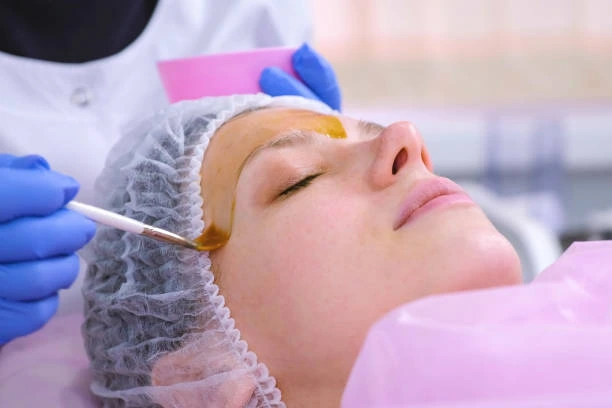
If you’re considering giving your skin a fresh look but feel unsure because you’re asking yourself, do chemical peels hurt, you’re not the only one. At TrimBody M.D., we focus on non-invasive options that help people get smoother and clearer skin while making sure they know what to expect right from the beginning.
Key Takeaways:
- Mild Discomfort Happens: Most describe it as a tingling or stinging feeling.
- Depth Affects Pain Level: Gentle peels feel similar to a light sunburn, but deeper peels need special prep beforehand.
- Recovery Time Depends: Light peels need almost no downtime, while deeper peels may involve peeling for up to a week.
- Treats Acne Scars: Chemical peels can lessen how acne scars look on the skin.
- Medical-Grade Peels at TrimBody M.D.: Experts use safe and trusted formulas to renew skin .
How Does a Chemical Peel Work?
A chemical peel works by exfoliating the skin under controlled conditions. It involves applying a chemical solution with acids such as glycolic, salicylic, or TCA. This process removes old skin cells and encourages fresh cell growth. Different types of peels focus on specific layers of the skin. A review states that chemical peels are categorized by depth: superficial (epidermis), medium (papillary dermis), and deep (reticular dermis).
During treatment, the solution goes on your face, neck, or hands. You might notice a warm or stinging feeling for a few minutes. This shows the peel is doing its job and is nothing to worry about.
Types Of Chemical Peels And How They Feel
- Light Peels: These clear away the top skin layer and are often easy to handle. Most people feel a light tingling.
- Medium Peels: These work deeper into the dermis. You could feel stronger heat or discomfort while it’s applied.
- Deep Peels: Doctors perform these advanced treatments with local anesthetics or numbing creams. They take more time to heal.
Why People Often Ask About “Pain”
Many people avoid trying chemical peels because they think the procedure causes a lot of pain. This belief often comes from social media, outdated websites, or using at-home kits that aren’t customized for everyone.
When done by a professional, a chemical peel allows for controlled exfoliation and not the extreme pain people assume. Studies show that chemical peels are generally well-tolerated, with only mild discomfort that subsides quickly when performed by trained professionals.
Main Things That Affect How Comfortable It Feels:
- Skin Type: If you have sensitive skin, you might notice more heat at first, but with the right preparation, your skin can handle it well.
- The Kind of Solution: Different formulas have different strengths. Professionals use high-quality solutions and follow clear steps when applying them.
- Preparation and Aftercare: If you skip prepping your skin or caring for it afterward, it can make your skin more likely to feel dry, red, or sensitive.
- Depth Of Peel: Deeper peels can cause stronger sensations, but they work well on tough problems like acne scars, wrinkles, or uneven or hyperpigmentation.
If acne scars stick around for too long, chemical peels like TCA and Jessner’s peels offer a way to make scars less visible over time. The short-lived tingling is a small trade-off to improve skin texture and tone in the long run.
How Chemical Peels Work On Acne Scars And Uneven Texture
Acne scars form when the skin’s deeper layers get damaged. Chemical peels remove the outer damaged skin and encourage the skin to rebuild collagen and elastin. This rebuilding process makes shallow scars less noticeable, reduces dark marks, and evens out skin tone.
How They Work:
- Exfoliation: Peels strip away old layers of skin and clear out clogged pores to stop future breakouts.
- Cell Renewal: Boosts the skin’s natural ability to heal, which makes scars appear less deep over time.
- Pigmentation Correction: Fades dark spots left behind after acne.
What To Expect: How It Feels And What Happens
Instead of wondering, “Do chemical peels hurt,” it’s better to focus on how it feels during and after the process.
While Getting The Peel:
- You will feel a warm or tingling sensation that goes away.
- A mild burning feeling might occur, but it’s easy to handle.
- Some people describe it as feeling similar to a light sunburn while it’s applied.
Right After The Peel:
- Skin might feel a bit tight and appear a little red.
- Peeling or light flaking often begins between days 2 and 4, depending on how strong the peel is.
- Using SPF and staying hydrated is key to helping your skin heal.
Steps To Take To Have A Comfortable Chemical Peel
What To Do Before Your Appointment:
- Pause Retinoids: Stop using retinol or exfoliating products two days before your peel.
- Keep Your Skin Hydrated: Moisturized skin deals better with chemical exfoliants.
- Talk About Your Medications: Certain acne meds or antibiotics might make your skin extra sensitive.
- Avoid Waxing Or Hair Removal: Stop these at least a week before your session.
What To Do After:
- Stick to mild skincare products without harsh acids or scrubs.
- Stay out of direct sunlight and wear sunscreen with SPF 30 or higher.
- Don’t pick at peeling skin, this can leave scars behind.
- Plan some downtime after a medium or deep peel to prepare for upcoming social plans.
Why Expertise And Oversight Are Crucial
Picking a reliable provider like TrimBody M.D. ensures that your peel stays safe, effective, and easy to handle. DIY or store-bought peels might seem like a quick fix, but they miss proper pH balance, even depth, and safety measures. Using them can cause serious harm.
We focus on your skin’s health and comfort in a medical setting. A professional always guides the process, tailoring each peel to match your specific skin type, tone, and personal goals.
Take the Next Step To Achieve Healthier Skin
Do chemical peels hurt? Most of the time, they don’t. You might notice a little tingling or warmth for a short time, but it’s easy to handle. TrimBody M.D. focuses on keeping your sessions comfortable while aiming for great results. If you struggle with acne scars, dullness, or uneven texture, chemical peels can improve your skin.
There’s no need to worry about too much discomfort. Smoother and clearer skin could be yours after just one consultation. Book your appointment with us today and start your journey to radiant, refreshed skin.
Frequently Asked Questions
Can A Chemical Peel Help With Seborrheic Dermatitis?
In most cases, chemical peels are not recommended for active seborrheic dermatitis. The condition can worsen with exfoliants, so it’s best to consult a skincare professional before considering any peel.
What Is The Best Age To Get A Peel?
Most people start light peels in their mid to late 20s for prevention. Deeper peels are more common in the 30s and 40s to correct signs of aging or skin damage.
Do You Look Younger After A Chemical Peel?
Yes, peels improve skin texture, smooth fine lines, and boost radiance. While results vary, most clients notice a more youthful and refreshed appearance after consistent treatments.
How Long Do Chemical Peel Results Last?
Results can last several weeks to months depending on peel depth and skincare routine. Regular treatments every 4–6 weeks help maintain long-term benefits and clearer skin.
Can You Wear Makeup After A Chemical Peel?
Avoid makeup for 24–48 hours post-treatment to let your skin breathe and heal. Once flaking subsides, light makeup is typically safe with proper skincare support.
Let our team know how we can help with your goals!

Get In Touch With Us
Schedule Your Free Consultation — Take Your First Step Today
 Henderson
Let our team of Medical Professionals help you achieve your body goals. Contact us Today!