
'%3e%3cpath%20d='M12.0979%2019.9987C10.6974%2019.9987%209.29703%2019.4657%208.2309%2018.3995L1.60176%2011.7704C0.568828%2010.7375%200%209.36414%200%207.9034C0%206.44262%200.568828%205.06934%201.6018%204.03641C2.51562%203.12254%204.00258%203.12262%204.91633%204.03637L7.12605%206.2461C8.03988%207.15992%208.03988%208.6468%207.12605%209.56067C6.97848%209.70821%206.89723%209.90442%206.89723%2010.1131C6.89723%2010.3218%206.97848%2010.5179%207.12602%2010.6655L9.33574%2012.8752C9.48328%2013.0228%209.67949%2013.1041%209.88816%2013.1041C10.0969%2013.1041%2010.293%2013.0228%2010.4406%2012.8753C11.3545%2011.9614%2012.8414%2011.9614%2013.7552%2012.8753L15.9649%2015.085C16.8787%2015.9988%2016.8787%2017.4857%2015.9649%2018.3995C14.8987%2019.4657%2013.4983%2019.9987%2012.0979%2019.9987ZM3.25906%204.91281C3.05898%204.91281%202.85895%204.98895%202.7066%205.14129C1.96883%205.87906%201.5625%206.86%201.5625%207.9034C1.5625%208.9468%201.96883%209.92774%202.7066%2010.6655L9.33574%2017.2947C10.8587%2018.8177%2013.337%2018.8177%2014.86%2017.2947C15.1646%2016.99%2015.1646%2016.4944%2014.86%2016.1898L12.6503%2013.9801C12.5028%2013.8325%2012.3066%2013.7513%2012.0979%2013.7513C11.8892%2013.7513%2011.693%2013.8325%2011.5455%2013.98C10.6316%2014.8939%209.14473%2014.8939%208.23086%2013.98L6.02117%2011.7703C5.57852%2011.3277%205.33473%2010.7391%205.33473%2010.113C5.33473%209.48703%205.57852%208.89844%206.02117%208.45578C6.16875%208.30824%206.25%208.11203%206.25%207.90336C6.25%207.69469%206.16875%207.49852%206.02117%207.35094L3.81148%205.14121C3.65918%204.98899%203.4591%204.91281%203.25906%204.91281Z'%20fill='black'/%3e%3cpath%20d='M9.5448%209.3168C9.25285%209.1959%209.0625%208.91102%209.0625%208.59504V0.782539C9.0625%200.351055%209.41227%200.00128937%209.84375%200.00128937H19.2188C19.6502%200.00128937%2020%200.351055%2020%200.782539V7.03254C20%207.46402%2019.6502%207.81379%2019.2188%207.81379H11.7298L10.3962%209.14746C10.1728%209.3709%209.83676%209.43773%209.5448%209.3168ZM10.625%201.56379V6.70895L10.8538%206.48012C11.0003%206.33359%2011.199%206.25129%2011.4062%206.25129H18.4375V1.56379H10.625Z'%20fill='black'/%3e%3cpath%20d='M12.9688%204.68879C13.4002%204.68879%2013.75%204.33901%2013.75%203.90754C13.75%203.47607%2013.4002%203.12629%2012.9688%203.12629C12.5373%203.12629%2012.1875%203.47607%2012.1875%203.90754C12.1875%204.33901%2012.5373%204.68879%2012.9688%204.68879Z'%20fill='black'/%3e%3cpath%20d='M16.0938%204.68879C16.5252%204.68879%2016.875%204.33901%2016.875%203.90754C16.875%203.47607%2016.5252%203.12629%2016.0938%203.12629C15.6623%203.12629%2015.3125%203.47607%2015.3125%203.90754C15.3125%204.33901%2015.6623%204.68879%2016.0938%204.68879Z'%20fill='black'/%3e%3c/g%3e%3cdefs%3e%3cclipPath%20id='clip0_6353_9'%3e%3crect%20width='20'%20height='20'%20fill='white'/%3e%3c/clipPath%3e%3c/defs%3e%3c/svg%3e)
'%3e%3cpath%20d='M10%2020C13.8389%2020%2017.0312%2018.3836%2017.0312%2016.0938C17.0312%2015.4405%2016.7592%2014.8022%2016.2444%2014.2478C15.9508%2013.9316%2015.4565%2013.9132%2015.1403%2014.2068C14.8241%2014.5004%2014.8058%2014.9947%2015.0994%2015.3109C15.3444%2015.5749%2015.4687%2015.8383%2015.4687%2016.0938C15.4687%2017.2001%2013.13%2018.4375%209.99996%2018.4375C6.86996%2018.4375%204.53121%2017.2001%204.53121%2016.0938C4.53121%2015.8382%204.65547%2015.5749%204.90055%2015.3109C5.19414%2014.9947%205.17582%2014.5004%204.85965%2014.2068C4.54348%2013.9133%204.04914%2013.9316%203.75555%2014.2477C3.24082%2014.8021%202.96875%2015.4405%202.96875%2016.0938C2.96875%2018.3803%206.15578%2020%2010%2020Z'%20fill='black'/%3e%3cpath%20d='M8.13172%2015.9465C8.57285%2016.5282%209.27023%2016.875%2010%2016.875C10.7298%2016.875%2011.4271%2016.5282%2011.8683%2015.9466L15.6293%2011.2402C16.5465%2010.0163%2017.0312%208.5609%2017.0312%207.03125C17.0312%203.15422%2013.877%200%2010%200C6.12297%200%202.96875%203.15422%202.96875%207.03125C2.96875%208.56094%203.45352%2010.0164%204.37063%2011.2402L8.13172%2015.9465ZM10%201.5625C13.0155%201.5625%2015.4688%204.01578%2015.4688%207.03125C15.4688%208.21648%2015.0944%209.34434%2014.386%2010.2938C14.386%2010.2938%2010.6309%2014.9924%2010.626%2014.9989C10.4766%2015.1982%2010.2484%2015.3125%2010%2015.3125C9.75156%2015.3125%209.5234%2015.1982%209.37402%2014.9989C9.36914%2014.9923%209.36418%2014.9859%209.3591%2014.9796L5.61395%2010.2937C4.90559%209.34434%204.53125%208.21652%204.53125%207.03125C4.53125%204.01578%206.98453%201.5625%2010%201.5625Z'%20fill='black'/%3e%3cpath%20d='M10%2010.9375C12.1539%2010.9375%2013.9062%209.18516%2013.9062%207.03125C13.9062%204.87734%2012.1539%203.125%2010%203.125C7.84609%203.125%206.09375%204.87734%206.09375%207.03125C6.09375%209.18516%207.84609%2010.9375%2010%2010.9375ZM10%204.6875C11.2923%204.6875%2012.3438%205.73891%2012.3438%207.03125C12.3438%208.32359%2011.2923%209.375%2010%209.375C8.70766%209.375%207.65625%208.32359%207.65625%207.03125C7.65625%205.73891%208.70766%204.6875%2010%204.6875Z'%20fill='black'/%3e%3c/g%3e%3cdefs%3e%3cclipPath%20id='clip0_6353_60'%3e%3crect%20width='20'%20height='20'%20fill='white'/%3e%3c/clipPath%3e%3c/defs%3e%3c/svg%3e)

'%3e%3ccircle%20cx='321'%20cy='321'%20r='276'%20transform='matrix(-1%200%200%201%20481%200)'%20stroke='%23E5DFD3'%20stroke-width='90'/%3e%3c/g%3e%3cdefs%3e%3cclipPath%20id='clip0_6046_3421'%3e%3crect%20width='481'%20height='413'%20fill='white'%20transform='matrix(-1%200%200%201%20481%200)'/%3e%3c/clipPath%3e%3c/defs%3e%3c/svg%3e)
Can You Wear Makeup After A Chemical Peel?
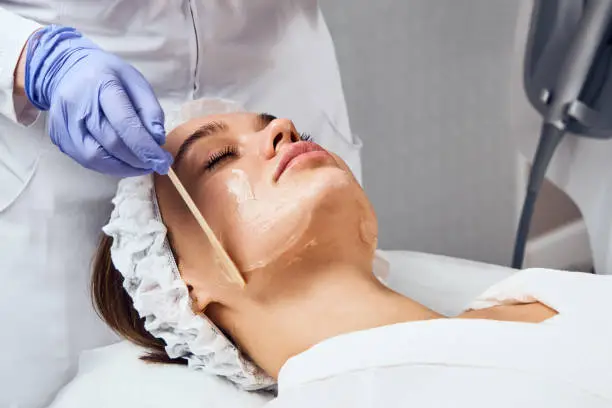
Chemical peels work great to smooth your skin, clear blemishes, and refresh skin cells. But a common question is: can you wear makeup after a chemical peel? At TrimBody M.D., we guide clients on how timing and good care help maintain both your skin and your results.
Key Takeaways:
- Do not use makeup right after getting a chemical peel.
- The skin needs healing time in the first 24 to 72 hours.
- Using makeup too soon might irritate the skin or lead to infections.
- Once healed, you can start with light makeup that allows your skin to breathe.
- Stick to the instructions given by a licensed expert after your treatment.
What Happens to Skin After a Chemical Peel?
To figure out when makeup is okay to use, you need to first understand how a chemical peel affects the skin. Peels involve applying a solution containing acids like glycolic, salicylic, or TCA, which helps lift away the top skin layers. This process encourages fresh cell growth, evens out texture, reduces pigmentation, and enhances skin tone.
Research shows that proper skin healing after a chemical peel is crucial before applying makeup, as premature makeup use can irritate freshly exfoliated skin. Once the procedure is done, your skin begins to recover. The depth of the peel might determine if you face:
- Tightness or redness
- Sensitivity or slight swelling
- Peeling skin or small flakes
- Warm or irritated skin
These signs are common and expected during the skin’s healing process. But they also mean your skin is more sensitive. At this point, the skin barrier becomes weaker, and pores can stay open. This makes it easier for the skin to get irritated or infected if makeup is applied too soon.
Now, chemical peels vary in duration and recovery time depending on the strength of the treatment. If you’re curious about the timing of the process, you can find more details on how long a chemical peel takes in this guide.
Is It Safe to Wear Makeup After a Chemical Peel?
The simple answer is no. Most skincare experts, including those at TrimBody M.D., suggest waiting at least 48 to 72 hours before wearing makeup. In some cases, you may need to wait longer, depending on how strong the peel was. Why it’s important to wait:
- Let Your Skin Heal: After a peel, the outer layer of your skin is either gone or coming off. If you use foundation or concealer, it can trap bacteria and oil. This might clog your pores.
- Irritation and Breakouts Can Happen: A lot of makeup products have things like artificial dyes, preservatives, or perfumes. These can bother your skin as it heals, leading to redness, little bumps, or even a rash.
- Chance of Infection: Though uncommon, putting on makeup too soon might bring bacteria to your skin. This could cause problems after a deeper peel.
- Interfering With Results: A chemical peel keeps working under your skin long after your session ends. Using makeup too soon after the treatment can mess up the exfoliation process and lessen the effects.
If you need to wear makeup for work or an event, talk to your provider ahead of time. There are mineral-based products made to be light and non-pore-clogging, though even these should be used during the first few days after the peel.
When to Use Makeup Again
Once your skin gets through the initial recovery stage, you can go back to your regular makeup habits. Below is a basic timeline to guide you:
First 48 Hours: No Makeup Allowed
Let your skin take a break. Focus on keeping it hydrated, protecting it with SPF, and helping restore its natural barrier. This is the stage when skin tends to be more sensitive and irritated.
Day 3–5: Use Minimal Makeup (If Okayed)
By now, most redness fades, and peeling starts. Many people can switch to light makeup like mineral foundation, BB cream, or a tinted sunscreen. Pick products without alcohol, fragrance, or parabens to avoid irritation.
Week 1+: Go Back to Regular Makeup ()
When peeling ends and your skin feels stronger and smoother, you can return to your usual makeup routine. Avoid using strong cleansers or exfoliants for at least another two weeks to be safe.
Always stick to clean brushes and avoid touching your face with your fingers when applying makeup while your skin is healing. Germs from hands or tools can cause infections on vulnerable skin.
The frequency of chemical peels plays a key role in maintaining long-term results. If you’re wondering how often you should schedule a peel, this article can help: How often should you get a chemical peel?
How to Get Glowing Skin After a Peel
Hoping your skin stays radiant after your chemical peel and heals? Follow these tried-and-true tips from the experts at TrimBody M.D. for great results:
Use Products Your Specialist Suggests
Use a simple skincare routine. Choose mild cleansers, moisturizing serums like hyaluronic acid, and creams that repair your skin’s barrier. Hold off on using active treatments like retinoids or exfoliating acids until your skin recovers.
Use Sunscreen SPF 30 or Above Daily
Peels leave your skin more sensitive to sunlight. Apply a mineral-based sunscreen that protects against a broad range of UV rays every single day, even if you are indoors or the sky looks cloudy.
Skip Heat and Anything That Makes You Sweat
Sweat can bother your skin and bring bacteria into pores that are healing. Hold off on hot yoga, saunas, or any intense cardio workouts during the first few days 3 to 5.
Keep Yourself Hydrated
Drink a lot of water. Focus on foods that help with inflammation, like berries, leafy veggies, or omega-3 sources. Stay away from alcohol and sugar, as these can make swelling worse.
Don’t Rush the Process
Let your skin shed on its own. Avoid picking or peeling it by hand, as it might lead to scars or lingering redness.
Chemical peels can also improve acne scars over time. To learn more about how they help with scar reduction, check out this detailed guide on acne scars.
What Comes Next for Your Skin
To heal well after a chemical peel, your skin needs time and care. Holding off on makeup is an important step in this process. At TrimBody M.D. licensed professionals offer guidance every step of the way, providing expert tips and advice that’s rooted in medical knowledge.
If you’re not sure when to restart your usual routine, we can help. Trust your skin to heal, follow the process, and enjoy long-term results. Schedule a free consultation with us today.
Frequently Asked Questions
Can I Use A Makeup Remover After A Chemical Peel?
Avoid traditional removers for the first few days. They can strip healing skin and increase irritation. Stick with water and gentle, professional-recommended cleansers instead.
What Happens If I Apply Makeup Too Early?
You risk clogging pores, triggering breakouts, or causing surface inflammation. Healing skin absorbs product differently, so early application may undo your peel’s benefits.
Is It Normal To Feel Burning When Applying Makeup Post-Peel?
No, stinging or burning means your skin isn’t ready. Remove it immediately and let your provider know; it could be a sign of barrier damage.
Can Tinted Sunscreen Replace Makeup After A Peel?
Yes, mineral-based tinted SPF is a great alternative. It provides light coverage while protecting your skin without clogging pores or causing irritation.
Should I Avoid Powder-Based Makeup Products?
Yes, at least in the first few days. Powders can settle into dry patches and accentuate peeling skin, creamy, hydrating formulas are better during recovery.
Let our team know how we can help with your goals!

Get In Touch With Us
Schedule Your Free Consultation — Take Your First Step Today
 Henderson
Let our team of Medical Professionals help you achieve your body goals. Contact us Today!