
'%3e%3cpath%20d='M12.0979%2019.9987C10.6974%2019.9987%209.29703%2019.4657%208.2309%2018.3995L1.60176%2011.7704C0.568828%2010.7375%200%209.36414%200%207.9034C0%206.44262%200.568828%205.06934%201.6018%204.03641C2.51562%203.12254%204.00258%203.12262%204.91633%204.03637L7.12605%206.2461C8.03988%207.15992%208.03988%208.6468%207.12605%209.56067C6.97848%209.70821%206.89723%209.90442%206.89723%2010.1131C6.89723%2010.3218%206.97848%2010.5179%207.12602%2010.6655L9.33574%2012.8752C9.48328%2013.0228%209.67949%2013.1041%209.88816%2013.1041C10.0969%2013.1041%2010.293%2013.0228%2010.4406%2012.8753C11.3545%2011.9614%2012.8414%2011.9614%2013.7552%2012.8753L15.9649%2015.085C16.8787%2015.9988%2016.8787%2017.4857%2015.9649%2018.3995C14.8987%2019.4657%2013.4983%2019.9987%2012.0979%2019.9987ZM3.25906%204.91281C3.05898%204.91281%202.85895%204.98895%202.7066%205.14129C1.96883%205.87906%201.5625%206.86%201.5625%207.9034C1.5625%208.9468%201.96883%209.92774%202.7066%2010.6655L9.33574%2017.2947C10.8587%2018.8177%2013.337%2018.8177%2014.86%2017.2947C15.1646%2016.99%2015.1646%2016.4944%2014.86%2016.1898L12.6503%2013.9801C12.5028%2013.8325%2012.3066%2013.7513%2012.0979%2013.7513C11.8892%2013.7513%2011.693%2013.8325%2011.5455%2013.98C10.6316%2014.8939%209.14473%2014.8939%208.23086%2013.98L6.02117%2011.7703C5.57852%2011.3277%205.33473%2010.7391%205.33473%2010.113C5.33473%209.48703%205.57852%208.89844%206.02117%208.45578C6.16875%208.30824%206.25%208.11203%206.25%207.90336C6.25%207.69469%206.16875%207.49852%206.02117%207.35094L3.81148%205.14121C3.65918%204.98899%203.4591%204.91281%203.25906%204.91281Z'%20fill='black'/%3e%3cpath%20d='M9.5448%209.3168C9.25285%209.1959%209.0625%208.91102%209.0625%208.59504V0.782539C9.0625%200.351055%209.41227%200.00128937%209.84375%200.00128937H19.2188C19.6502%200.00128937%2020%200.351055%2020%200.782539V7.03254C20%207.46402%2019.6502%207.81379%2019.2188%207.81379H11.7298L10.3962%209.14746C10.1728%209.3709%209.83676%209.43773%209.5448%209.3168ZM10.625%201.56379V6.70895L10.8538%206.48012C11.0003%206.33359%2011.199%206.25129%2011.4062%206.25129H18.4375V1.56379H10.625Z'%20fill='black'/%3e%3cpath%20d='M12.9688%204.68879C13.4002%204.68879%2013.75%204.33901%2013.75%203.90754C13.75%203.47607%2013.4002%203.12629%2012.9688%203.12629C12.5373%203.12629%2012.1875%203.47607%2012.1875%203.90754C12.1875%204.33901%2012.5373%204.68879%2012.9688%204.68879Z'%20fill='black'/%3e%3cpath%20d='M16.0938%204.68879C16.5252%204.68879%2016.875%204.33901%2016.875%203.90754C16.875%203.47607%2016.5252%203.12629%2016.0938%203.12629C15.6623%203.12629%2015.3125%203.47607%2015.3125%203.90754C15.3125%204.33901%2015.6623%204.68879%2016.0938%204.68879Z'%20fill='black'/%3e%3c/g%3e%3cdefs%3e%3cclipPath%20id='clip0_6353_9'%3e%3crect%20width='20'%20height='20'%20fill='white'/%3e%3c/clipPath%3e%3c/defs%3e%3c/svg%3e)
'%3e%3cpath%20d='M10%2020C13.8389%2020%2017.0312%2018.3836%2017.0312%2016.0938C17.0312%2015.4405%2016.7592%2014.8022%2016.2444%2014.2478C15.9508%2013.9316%2015.4565%2013.9132%2015.1403%2014.2068C14.8241%2014.5004%2014.8058%2014.9947%2015.0994%2015.3109C15.3444%2015.5749%2015.4687%2015.8383%2015.4687%2016.0938C15.4687%2017.2001%2013.13%2018.4375%209.99996%2018.4375C6.86996%2018.4375%204.53121%2017.2001%204.53121%2016.0938C4.53121%2015.8382%204.65547%2015.5749%204.90055%2015.3109C5.19414%2014.9947%205.17582%2014.5004%204.85965%2014.2068C4.54348%2013.9133%204.04914%2013.9316%203.75555%2014.2477C3.24082%2014.8021%202.96875%2015.4405%202.96875%2016.0938C2.96875%2018.3803%206.15578%2020%2010%2020Z'%20fill='black'/%3e%3cpath%20d='M8.13172%2015.9465C8.57285%2016.5282%209.27023%2016.875%2010%2016.875C10.7298%2016.875%2011.4271%2016.5282%2011.8683%2015.9466L15.6293%2011.2402C16.5465%2010.0163%2017.0312%208.5609%2017.0312%207.03125C17.0312%203.15422%2013.877%200%2010%200C6.12297%200%202.96875%203.15422%202.96875%207.03125C2.96875%208.56094%203.45352%2010.0164%204.37063%2011.2402L8.13172%2015.9465ZM10%201.5625C13.0155%201.5625%2015.4688%204.01578%2015.4688%207.03125C15.4688%208.21648%2015.0944%209.34434%2014.386%2010.2938C14.386%2010.2938%2010.6309%2014.9924%2010.626%2014.9989C10.4766%2015.1982%2010.2484%2015.3125%2010%2015.3125C9.75156%2015.3125%209.5234%2015.1982%209.37402%2014.9989C9.36914%2014.9923%209.36418%2014.9859%209.3591%2014.9796L5.61395%2010.2937C4.90559%209.34434%204.53125%208.21652%204.53125%207.03125C4.53125%204.01578%206.98453%201.5625%2010%201.5625Z'%20fill='black'/%3e%3cpath%20d='M10%2010.9375C12.1539%2010.9375%2013.9062%209.18516%2013.9062%207.03125C13.9062%204.87734%2012.1539%203.125%2010%203.125C7.84609%203.125%206.09375%204.87734%206.09375%207.03125C6.09375%209.18516%207.84609%2010.9375%2010%2010.9375ZM10%204.6875C11.2923%204.6875%2012.3438%205.73891%2012.3438%207.03125C12.3438%208.32359%2011.2923%209.375%2010%209.375C8.70766%209.375%207.65625%208.32359%207.65625%207.03125C7.65625%205.73891%208.70766%204.6875%2010%204.6875Z'%20fill='black'/%3e%3c/g%3e%3cdefs%3e%3cclipPath%20id='clip0_6353_60'%3e%3crect%20width='20'%20height='20'%20fill='white'/%3e%3c/clipPath%3e%3c/defs%3e%3c/svg%3e)

'%3e%3ccircle%20cx='321'%20cy='321'%20r='276'%20transform='matrix(-1%200%200%201%20481%200)'%20stroke='%23E5DFD3'%20stroke-width='90'/%3e%3c/g%3e%3cdefs%3e%3cclipPath%20id='clip0_6046_3421'%3e%3crect%20width='481'%20height='413'%20fill='white'%20transform='matrix(-1%200%200%201%20481%200)'/%3e%3c/clipPath%3e%3c/defs%3e%3c/svg%3e)
Can Tirzepatide Cause Pancreatitis?
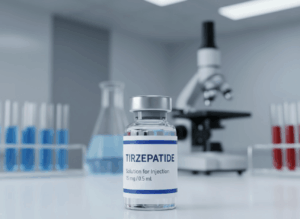
Can Tirzepatide Cause Pancreatitis? This concern is understandable. Since tirzepatide has an impact on the pancreas, it is important to know the difference between real risks and general warning symptoms.
At TrimBody M.D, doctors provide care that prioritizes safety, close monitoring, and helping patients make informed choices. If you notice new symptoms or worry about risk factors, talk to a healthcare provider as soon as possible. Speak with our medical team today.
Key Takeaways
- Pancreatitis is rare but a serious medical issue.
- Most people do not experience pancreatic inflammation.
- Symptoms are not the same as usual digestive side effects.
- Risk increases for those with previous pancreas problems.
- Regular medical checkups help prevent complications.
What Is Pancreatitis And Why Do Patients Worry About It?
Pancreatitis happens when the pancreas gets inflamed, and it can be mild or very serious. The pancreas plays an important role in digestion and controlling blood sugar, so if it gets inflamed, it can mess with different systems in the body.
Medicines based on GLP-1 help the pancreas release insulin and slow down food digestion. Since these medicines involve the pancreas, patients often wonder if they might cause inflammation. While this does not mean that the medicine leads to pancreatitis, it helps explain why people are concerned about it.
Let our team know how we can help with your goals!
Can Tirzepatide Cause Pancreatitis According To Research?
Research so far has not found a strong connection between tirzepatide and pancreatitis in most people. Big studies report very rare cases similar to what happens with placebo drugs or other comparisons.
Research on PubMed indicates that reported cases are rare and typically involve patients who already have underlying risk factors, rather than solely medication usage.
This indicates tirzepatide is not a usual cause, but doctors still watch for signs because pancreatitis is a serious condition.
How This Compares to Common Tirzepatide Digestive Issues
A lot of people mistake pancreatitis for normal digestive problems caused by tirzepatide. Feeling nauseous, bloated, or having loose stools is quite typical when starting the treatment. These symptoms often get better after adjusting the dose.
The clinical study from TrimBody M.D. talks about nausea as a possible symptom of digestive reactions. It gives details on why this happens and how it can improve over time.
During dose increases, diarrhea might occur, but it does not mean there is pancreatic inflammation. You can find more details about this under digestive changes.
Pancreatitis tends to bring ongoing pain in the upper stomach area that might spread to the back. People with it may also experience vomiting and fever. These symptoms don’t feel the same as typical stomach issues caused by medication.
To discuss our services, contact us today!
Who Faces a Greater Risk of Pancreatitis While Taking Tirzepatide
Most people handle tirzepatide without problems. However, some may face higher risks if they have:
- A past experience with pancreatitis
- Issues like gallstones or biliary disease
- Consistent heavy alcohol consumption
- high triglycerides
- managed metabolic conditions
Doctors run medical tests to detect such factors before treatment starts. This is why relying on professional care is much safer than trying to manage it alone.
Need help deciding? Fill out a contact form,and we’ll ensure you’re informed!
Knowing When To Stop Tirzepatide And Get Help
Patients should seek medical attention right away if they experience:
- Intense or constant stomach pain
- Pain that feels worse following meals
- Nonstop vomiting
- A fever or a rapid heartbeat
These side effects are unusual and should not be overlooked. Acting early stops problems from getting worse.
What Do Clinical Guidelines Say About Monitoring?
Guidelines in endocrinology highlight the importance of teaching patients instead of always ordering tests for pancreatic enzymes. Doctors check for symptoms, patient history, and how treatments are working instead of relying on lab tests for patients with low risk.
An in-depth case review in the Journal of the Endocrine Society examines rare pancreatic issues. It stresses assessing risks based on the individual.
This shows that understanding and being aware lead to safer care, not unnecessary worry.
How to Get Tirzepatide With Proper Medical Guidance
Getting tirzepatide from a licensed clinic gives patients proper follow-up and careful dose adjustments. At programs like the Newport Beach clinic, people go through risk evaluation before starting treatment with tirzepatide injections.
Regular updates help doctors know if symptoms are just usual side effects or something to worry about.
How We Handle Safety and Monitor Risks
TrimBody M.D. makes safety the top priority with every prescription they provide. Before beginning therapy, their team goes over each patient’s medical history, checks digestive health, and looks at key metabolic indicators. They also monitor how patients respond as treatment progresses.
Patients experience these benefits:
- A doctor conducts a screening process before starting treatment.
- The doses increase based on a set protocol.
- Patients get educated to recognize symptoms.
- There is instant access to medical help when needed.
- Adjustments are made based on how each person handles the treatment.
What Patients Should Know About Tirzepatide and Pancreatitis Risk
For most individuals, the answer to can tirzepatide cause pancreatitis is reassuring.The risk is small, reports of such cases are rare, and serious issues don’t occur with proper monitoring. Staying informed and having expert medical guidance ensures better safety.
If you notice symptoms or have any concerns, reach out to our licensed clinician today to book a free consultation.
Disclaimer: This article is for informational and educational purposes. Treatment decisions are made during an individual medical evaluation with a licensed provider. We provide compounded tirzepatide and are not affiliated with or endorsed by the manufacturers of Zepbound® or Mounjaro®.
FAQs About Tirzepatide And Pancreatitis
How Would I Know If Pancreatitis Is Starting?
Pancreatitis usually causes persistent upper abdominal pain that may spread to the back, not mild nausea. Pain often worsens after eating and does not improve with rest or hydration.
Is Pancreatitis More Likely When Starting Or Increasing A Dose?
Risk is slightly higher during early dose changes because the body is adjusting. This is why gradual titration and medical supervision matter during the first weeks.
Can Mild Stomach Pain Mean Pancreatitis?
No. Mild cramps, bloating, or nausea are common digestive side effects and usually temporary. Pancreatitis pain is intense, constant, and typically paired with vomiting or fever.
Who Should Avoid Tirzepatide Due To Pancreatic Risk?
People with a prior history of pancreatitis, gallstones, or very high triglycerides need extra caution. A clinician should evaluate risks before starting treatment.
What Should I Do If I Am Worried About Pancreatitis?
Stop taking the medication and seek medical care if severe abdominal pain appears. Early evaluation prevents complications and rules out serious causes quickly.
Call and talk to a specialist today! (702) 489-3300
Let our team know how we can help with your goals!

Get In Touch With Us
Schedule Your Free Consultation — Take Your First Step Today
 Henderson
Let our team of Medical Professionals help you achieve your body goals. Contact us Today!