
'%3e%3cpath%20d='M12.0979%2019.9987C10.6974%2019.9987%209.29703%2019.4657%208.2309%2018.3995L1.60176%2011.7704C0.568828%2010.7375%200%209.36414%200%207.9034C0%206.44262%200.568828%205.06934%201.6018%204.03641C2.51562%203.12254%204.00258%203.12262%204.91633%204.03637L7.12605%206.2461C8.03988%207.15992%208.03988%208.6468%207.12605%209.56067C6.97848%209.70821%206.89723%209.90442%206.89723%2010.1131C6.89723%2010.3218%206.97848%2010.5179%207.12602%2010.6655L9.33574%2012.8752C9.48328%2013.0228%209.67949%2013.1041%209.88816%2013.1041C10.0969%2013.1041%2010.293%2013.0228%2010.4406%2012.8753C11.3545%2011.9614%2012.8414%2011.9614%2013.7552%2012.8753L15.9649%2015.085C16.8787%2015.9988%2016.8787%2017.4857%2015.9649%2018.3995C14.8987%2019.4657%2013.4983%2019.9987%2012.0979%2019.9987ZM3.25906%204.91281C3.05898%204.91281%202.85895%204.98895%202.7066%205.14129C1.96883%205.87906%201.5625%206.86%201.5625%207.9034C1.5625%208.9468%201.96883%209.92774%202.7066%2010.6655L9.33574%2017.2947C10.8587%2018.8177%2013.337%2018.8177%2014.86%2017.2947C15.1646%2016.99%2015.1646%2016.4944%2014.86%2016.1898L12.6503%2013.9801C12.5028%2013.8325%2012.3066%2013.7513%2012.0979%2013.7513C11.8892%2013.7513%2011.693%2013.8325%2011.5455%2013.98C10.6316%2014.8939%209.14473%2014.8939%208.23086%2013.98L6.02117%2011.7703C5.57852%2011.3277%205.33473%2010.7391%205.33473%2010.113C5.33473%209.48703%205.57852%208.89844%206.02117%208.45578C6.16875%208.30824%206.25%208.11203%206.25%207.90336C6.25%207.69469%206.16875%207.49852%206.02117%207.35094L3.81148%205.14121C3.65918%204.98899%203.4591%204.91281%203.25906%204.91281Z'%20fill='black'/%3e%3cpath%20d='M9.5448%209.3168C9.25285%209.1959%209.0625%208.91102%209.0625%208.59504V0.782539C9.0625%200.351055%209.41227%200.00128937%209.84375%200.00128937H19.2188C19.6502%200.00128937%2020%200.351055%2020%200.782539V7.03254C20%207.46402%2019.6502%207.81379%2019.2188%207.81379H11.7298L10.3962%209.14746C10.1728%209.3709%209.83676%209.43773%209.5448%209.3168ZM10.625%201.56379V6.70895L10.8538%206.48012C11.0003%206.33359%2011.199%206.25129%2011.4062%206.25129H18.4375V1.56379H10.625Z'%20fill='black'/%3e%3cpath%20d='M12.9688%204.68879C13.4002%204.68879%2013.75%204.33901%2013.75%203.90754C13.75%203.47607%2013.4002%203.12629%2012.9688%203.12629C12.5373%203.12629%2012.1875%203.47607%2012.1875%203.90754C12.1875%204.33901%2012.5373%204.68879%2012.9688%204.68879Z'%20fill='black'/%3e%3cpath%20d='M16.0938%204.68879C16.5252%204.68879%2016.875%204.33901%2016.875%203.90754C16.875%203.47607%2016.5252%203.12629%2016.0938%203.12629C15.6623%203.12629%2015.3125%203.47607%2015.3125%203.90754C15.3125%204.33901%2015.6623%204.68879%2016.0938%204.68879Z'%20fill='black'/%3e%3c/g%3e%3cdefs%3e%3cclipPath%20id='clip0_6353_9'%3e%3crect%20width='20'%20height='20'%20fill='white'/%3e%3c/clipPath%3e%3c/defs%3e%3c/svg%3e)
'%3e%3cpath%20d='M10%2020C13.8389%2020%2017.0312%2018.3836%2017.0312%2016.0938C17.0312%2015.4405%2016.7592%2014.8022%2016.2444%2014.2478C15.9508%2013.9316%2015.4565%2013.9132%2015.1403%2014.2068C14.8241%2014.5004%2014.8058%2014.9947%2015.0994%2015.3109C15.3444%2015.5749%2015.4687%2015.8383%2015.4687%2016.0938C15.4687%2017.2001%2013.13%2018.4375%209.99996%2018.4375C6.86996%2018.4375%204.53121%2017.2001%204.53121%2016.0938C4.53121%2015.8382%204.65547%2015.5749%204.90055%2015.3109C5.19414%2014.9947%205.17582%2014.5004%204.85965%2014.2068C4.54348%2013.9133%204.04914%2013.9316%203.75555%2014.2477C3.24082%2014.8021%202.96875%2015.4405%202.96875%2016.0938C2.96875%2018.3803%206.15578%2020%2010%2020Z'%20fill='black'/%3e%3cpath%20d='M8.13172%2015.9465C8.57285%2016.5282%209.27023%2016.875%2010%2016.875C10.7298%2016.875%2011.4271%2016.5282%2011.8683%2015.9466L15.6293%2011.2402C16.5465%2010.0163%2017.0312%208.5609%2017.0312%207.03125C17.0312%203.15422%2013.877%200%2010%200C6.12297%200%202.96875%203.15422%202.96875%207.03125C2.96875%208.56094%203.45352%2010.0164%204.37063%2011.2402L8.13172%2015.9465ZM10%201.5625C13.0155%201.5625%2015.4688%204.01578%2015.4688%207.03125C15.4688%208.21648%2015.0944%209.34434%2014.386%2010.2938C14.386%2010.2938%2010.6309%2014.9924%2010.626%2014.9989C10.4766%2015.1982%2010.2484%2015.3125%2010%2015.3125C9.75156%2015.3125%209.5234%2015.1982%209.37402%2014.9989C9.36914%2014.9923%209.36418%2014.9859%209.3591%2014.9796L5.61395%2010.2937C4.90559%209.34434%204.53125%208.21652%204.53125%207.03125C4.53125%204.01578%206.98453%201.5625%2010%201.5625Z'%20fill='black'/%3e%3cpath%20d='M10%2010.9375C12.1539%2010.9375%2013.9062%209.18516%2013.9062%207.03125C13.9062%204.87734%2012.1539%203.125%2010%203.125C7.84609%203.125%206.09375%204.87734%206.09375%207.03125C6.09375%209.18516%207.84609%2010.9375%2010%2010.9375ZM10%204.6875C11.2923%204.6875%2012.3438%205.73891%2012.3438%207.03125C12.3438%208.32359%2011.2923%209.375%2010%209.375C8.70766%209.375%207.65625%208.32359%207.65625%207.03125C7.65625%205.73891%208.70766%204.6875%2010%204.6875Z'%20fill='black'/%3e%3c/g%3e%3cdefs%3e%3cclipPath%20id='clip0_6353_60'%3e%3crect%20width='20'%20height='20'%20fill='white'/%3e%3c/clipPath%3e%3c/defs%3e%3c/svg%3e)

'%3e%3ccircle%20cx='321'%20cy='321'%20r='276'%20transform='matrix(-1%200%200%201%20481%200)'%20stroke='%23E5DFD3'%20stroke-width='90'/%3e%3c/g%3e%3cdefs%3e%3cclipPath%20id='clip0_6046_3421'%3e%3crect%20width='481'%20height='413'%20fill='white'%20transform='matrix(-1%200%200%201%20481%200)'/%3e%3c/clipPath%3e%3c/defs%3e%3c/svg%3e)
Can Testosterone Replacement Therapy Cause High Blood Pressure?
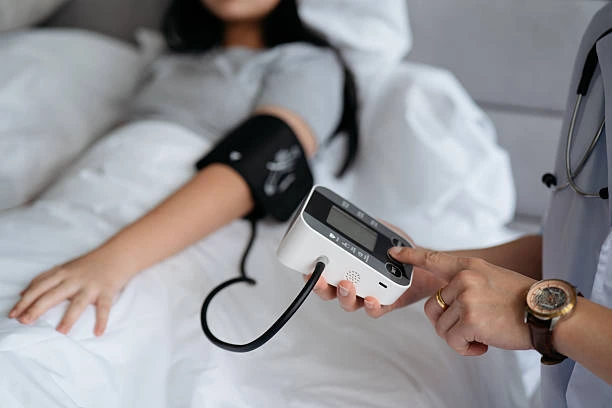
Can Testosterone replacement therapy cause high blood pressure? Testosterone replacement therapy may influence blood pressure in some individuals by affecting fluid balance, red blood cell production, and vascular tone, though it does not consistently cause hypertension in all patients.
Blood pressure changes depend on dose, duration, baseline cardiovascular health, and medical monitoring. At Trim Body M.D., blood pressure is evaluated alongside hormone levels to support safe, data-guided treatment decisions. Book a free consultation to review cardiovascular considerations.
Key Takeaways:
- Testosterone therapy does not automatically raise blood pressure
- Fluid retention and hematocrit changes may influence readings
- Baseline cardiovascular health affects individual response
- Monitoring allows early identification of risk
- Medical oversight supports safer long-term use
How Testosterone Affects Blood Pressure Control
The body controls blood pressure using the following:
- Vascular tone
- How it handles fluids
- Kidney activity
- Hormone signals
Testosterone interacts with several systems that influence blood pressure, which is why people often ask about its effects during therapy.
Kidney Function and Fluid Balance
One area involves kidney function, where testosterone can increase sodium retention. That shift may affect fluid balance and, in some cases, show up as changes in blood pressure readings.
Red Blood Cell Production and Hematocrit
Testosterone also increases red blood cell production by stimulating erythropoiesis. In some individuals, this raises hematocrit levels. Higher hematocrit means thicker blood, which can place added strain on circulation and potentially elevate blood pressure if levels are not monitored. These effects are dose-dependent and are more likely when testosterone rises above normal physiologic ranges.
Effects on Blood Vessel Function
The effects on blood vessels matter too. Testosterone has an influence on nitric oxide signaling, which helps blood vessels widen. Some research points out that testosterone might improve the function of the endothelium, though other studies report different outcomes depending on a person’s health and the dose used. These mixed results show why personal reactions are often more important than broad generalizations.
What Research Says About Overall Risk
Studies reviewed by the National Institutes of Health discuss how testosterone affects heart-related factors without always raising the risk of high blood pressure. The review suggests that changes in blood pressure depend more on a person’s health and the specific treatment setting than on testosterone use alone.
When Blood Pressure Might Change
Different patients react to testosterone therapy in unique ways. People with high blood pressure, kidney problems, or heart-related risks face more noticeable changes in their blood pressure.
Factors such as age, being overweight, having sleep apnea, or struggling with insulin resistance can play a role in the therapy’s effect.
The dosage and method of delivery are important. Using high doses or increasing testosterone levels may lead to more noticeable issues like fluid retention or changes in hematocrit. On the other hand, managed doses aim to keep hormone levels steady, lowering unnecessary strain on the heart.
Some common factors that contribute to these issues are:
- Already having high blood pressure
- increasing the dosage
- Not monitoring hematocrit levels as they rise
- Fluid retention caused by changes in sodium balance
Research from clinical trials and observational studies provides mixed evidence about how blood pressure changes in different groups of people. A major study shared in a top medical journal concluded there isn’t a consistent rise in hypertension risk for men using testosterone therapy as long as it is monitored.
Why Monitoring Matters for Blood Pressure During Testosterone Therapy
Keeping track of health is vital to lower heart-related risks during testosterone treatment. Regular blood pressure checks are essential, along with monitoring hematocrit, cholesterol levels, and other metabolic indicators. This helps doctors notice changes early and make treatment adjustments when necessary.
Structured programs emphasize slowly adjusting doses and assessing health instead of just managing symptoms. When blood pressure increases, doctors often look into causes like fluid buildup, sleep issues, or other medicines the patient might be taking before deciding on updates.
Some plans might also bring up additional treatments to help manage hormones and symptoms. Learning tools about combined injections gives patients a better idea of how treatments work together under regular supervision.
This hands-on strategy helps clear up doubts and promotes long-term heart health.
How Testosterone Therapy Fits Into Overall Cardiovascular Health
You should see testosterone therapy as part of managing heart health overall. Things like:
- What you eat
- How active you are
- How much sleep do you get
- How stressed you feel can change your blood pressure even without hormone treatments.
Some people using testosterone therapy might see benefits like better muscle-to-fat ratio or improved response to insulin, which can help their heart health.
But for others, there might be risks of making existing problems worse, so it is important to find the right balance for every person. This shows why doctors need to look at each case instead of assuming the same approach works for everyone.
How Our Clinic Helps Patients Use Testosterone Therapy
At Trim Body M.D., we make heart health an essential part of our hormone treatments. Our team, with experience helping over 30,000 patients, checks blood pressure, hematocrit levels, and metabolic wellness both before starting and during testosterone therapy. We update treatment plans to balance hormone levels while ensuring your heart stays healthy for the long term.
- Checking blood pressure at the start and during follow-ups
- Watching hematocrit levels and overall metabolic health
- Adjusting doses based on data
- Teaching about heart-related risks
- Planning ahead to keep safety a top priority
An Easy Explanation To Address Blood Pressure Concerns
In some people, testosterone therapy might have an impact on blood pressure because of changes in fluid levels and blood cells. However, it does not cause consistent hypertension when a doctor monitors it. The results often depend on your starting health, the dose used, and regular check-ups. Schedule a free consultation with us today.
FAQs about Testosterone Therapy and Blood Pressure
How To Lower Blood Pressure While On Testosterone
Maintain a low-sodium diet, exercise regularly, manage stress, and follow scheduled monitoring visits.
Can I Take Testosterone If I Have High Blood Pressure
Yes, many patients with controlled hypertension can safely receive testosterone therapy under medical supervision.
Does Testosterone Increase Fluid Retention
Testosterone can cause mild fluid retention in some individuals, particularly at higher doses. Monitoring sodium intake and maintaining appropriate dosing reduces the likelihood of noticeable swelling or pressure changes.
What Tests Should Be Done Before Starting TRT
Baseline evaluations often include blood pressure checks, hematocrit, lipid profile, and hormone panels. These tests help determine cardiovascular risk and guide safe treatment planning.
When Should Blood Pressure Be Rechecked During TRT
Blood pressure is commonly reassessed within the first few months after starting therapy and during routine follow-ups. Regular monitoring helps detect early changes and supports timely dose adjustments.
Let our team know how we can help with your goals!

Get In Touch With Us
Schedule Your Free Consultation — Take Your First Step Today
 Henderson
Let our team of Medical Professionals help you achieve your body goals. Contact us Today!