
'%3e%3cpath%20d='M12.0979%2019.9987C10.6974%2019.9987%209.29703%2019.4657%208.2309%2018.3995L1.60176%2011.7704C0.568828%2010.7375%200%209.36414%200%207.9034C0%206.44262%200.568828%205.06934%201.6018%204.03641C2.51562%203.12254%204.00258%203.12262%204.91633%204.03637L7.12605%206.2461C8.03988%207.15992%208.03988%208.6468%207.12605%209.56067C6.97848%209.70821%206.89723%209.90442%206.89723%2010.1131C6.89723%2010.3218%206.97848%2010.5179%207.12602%2010.6655L9.33574%2012.8752C9.48328%2013.0228%209.67949%2013.1041%209.88816%2013.1041C10.0969%2013.1041%2010.293%2013.0228%2010.4406%2012.8753C11.3545%2011.9614%2012.8414%2011.9614%2013.7552%2012.8753L15.9649%2015.085C16.8787%2015.9988%2016.8787%2017.4857%2015.9649%2018.3995C14.8987%2019.4657%2013.4983%2019.9987%2012.0979%2019.9987ZM3.25906%204.91281C3.05898%204.91281%202.85895%204.98895%202.7066%205.14129C1.96883%205.87906%201.5625%206.86%201.5625%207.9034C1.5625%208.9468%201.96883%209.92774%202.7066%2010.6655L9.33574%2017.2947C10.8587%2018.8177%2013.337%2018.8177%2014.86%2017.2947C15.1646%2016.99%2015.1646%2016.4944%2014.86%2016.1898L12.6503%2013.9801C12.5028%2013.8325%2012.3066%2013.7513%2012.0979%2013.7513C11.8892%2013.7513%2011.693%2013.8325%2011.5455%2013.98C10.6316%2014.8939%209.14473%2014.8939%208.23086%2013.98L6.02117%2011.7703C5.57852%2011.3277%205.33473%2010.7391%205.33473%2010.113C5.33473%209.48703%205.57852%208.89844%206.02117%208.45578C6.16875%208.30824%206.25%208.11203%206.25%207.90336C6.25%207.69469%206.16875%207.49852%206.02117%207.35094L3.81148%205.14121C3.65918%204.98899%203.4591%204.91281%203.25906%204.91281Z'%20fill='black'/%3e%3cpath%20d='M9.5448%209.3168C9.25285%209.1959%209.0625%208.91102%209.0625%208.59504V0.782539C9.0625%200.351055%209.41227%200.00128937%209.84375%200.00128937H19.2188C19.6502%200.00128937%2020%200.351055%2020%200.782539V7.03254C20%207.46402%2019.6502%207.81379%2019.2188%207.81379H11.7298L10.3962%209.14746C10.1728%209.3709%209.83676%209.43773%209.5448%209.3168ZM10.625%201.56379V6.70895L10.8538%206.48012C11.0003%206.33359%2011.199%206.25129%2011.4062%206.25129H18.4375V1.56379H10.625Z'%20fill='black'/%3e%3cpath%20d='M12.9688%204.68879C13.4002%204.68879%2013.75%204.33901%2013.75%203.90754C13.75%203.47607%2013.4002%203.12629%2012.9688%203.12629C12.5373%203.12629%2012.1875%203.47607%2012.1875%203.90754C12.1875%204.33901%2012.5373%204.68879%2012.9688%204.68879Z'%20fill='black'/%3e%3cpath%20d='M16.0938%204.68879C16.5252%204.68879%2016.875%204.33901%2016.875%203.90754C16.875%203.47607%2016.5252%203.12629%2016.0938%203.12629C15.6623%203.12629%2015.3125%203.47607%2015.3125%203.90754C15.3125%204.33901%2015.6623%204.68879%2016.0938%204.68879Z'%20fill='black'/%3e%3c/g%3e%3cdefs%3e%3cclipPath%20id='clip0_6353_9'%3e%3crect%20width='20'%20height='20'%20fill='white'/%3e%3c/clipPath%3e%3c/defs%3e%3c/svg%3e)
'%3e%3cpath%20d='M10%2020C13.8389%2020%2017.0312%2018.3836%2017.0312%2016.0938C17.0312%2015.4405%2016.7592%2014.8022%2016.2444%2014.2478C15.9508%2013.9316%2015.4565%2013.9132%2015.1403%2014.2068C14.8241%2014.5004%2014.8058%2014.9947%2015.0994%2015.3109C15.3444%2015.5749%2015.4687%2015.8383%2015.4687%2016.0938C15.4687%2017.2001%2013.13%2018.4375%209.99996%2018.4375C6.86996%2018.4375%204.53121%2017.2001%204.53121%2016.0938C4.53121%2015.8382%204.65547%2015.5749%204.90055%2015.3109C5.19414%2014.9947%205.17582%2014.5004%204.85965%2014.2068C4.54348%2013.9133%204.04914%2013.9316%203.75555%2014.2477C3.24082%2014.8021%202.96875%2015.4405%202.96875%2016.0938C2.96875%2018.3803%206.15578%2020%2010%2020Z'%20fill='black'/%3e%3cpath%20d='M8.13172%2015.9465C8.57285%2016.5282%209.27023%2016.875%2010%2016.875C10.7298%2016.875%2011.4271%2016.5282%2011.8683%2015.9466L15.6293%2011.2402C16.5465%2010.0163%2017.0312%208.5609%2017.0312%207.03125C17.0312%203.15422%2013.877%200%2010%200C6.12297%200%202.96875%203.15422%202.96875%207.03125C2.96875%208.56094%203.45352%2010.0164%204.37063%2011.2402L8.13172%2015.9465ZM10%201.5625C13.0155%201.5625%2015.4688%204.01578%2015.4688%207.03125C15.4688%208.21648%2015.0944%209.34434%2014.386%2010.2938C14.386%2010.2938%2010.6309%2014.9924%2010.626%2014.9989C10.4766%2015.1982%2010.2484%2015.3125%2010%2015.3125C9.75156%2015.3125%209.5234%2015.1982%209.37402%2014.9989C9.36914%2014.9923%209.36418%2014.9859%209.3591%2014.9796L5.61395%2010.2937C4.90559%209.34434%204.53125%208.21652%204.53125%207.03125C4.53125%204.01578%206.98453%201.5625%2010%201.5625Z'%20fill='black'/%3e%3cpath%20d='M10%2010.9375C12.1539%2010.9375%2013.9062%209.18516%2013.9062%207.03125C13.9062%204.87734%2012.1539%203.125%2010%203.125C7.84609%203.125%206.09375%204.87734%206.09375%207.03125C6.09375%209.18516%207.84609%2010.9375%2010%2010.9375ZM10%204.6875C11.2923%204.6875%2012.3438%205.73891%2012.3438%207.03125C12.3438%208.32359%2011.2923%209.375%2010%209.375C8.70766%209.375%207.65625%208.32359%207.65625%207.03125C7.65625%205.73891%208.70766%204.6875%2010%204.6875Z'%20fill='black'/%3e%3c/g%3e%3cdefs%3e%3cclipPath%20id='clip0_6353_60'%3e%3crect%20width='20'%20height='20'%20fill='white'/%3e%3c/clipPath%3e%3c/defs%3e%3c/svg%3e)

'%3e%3ccircle%20cx='321'%20cy='321'%20r='276'%20transform='matrix(-1%200%200%201%20481%200)'%20stroke='%23E5DFD3'%20stroke-width='90'/%3e%3c/g%3e%3cdefs%3e%3cclipPath%20id='clip0_6046_3421'%3e%3crect%20width='481'%20height='413'%20fill='white'%20transform='matrix(-1%200%200%201%20481%200)'/%3e%3c/clipPath%3e%3c/defs%3e%3c/svg%3e)
Can I Take a Half Dose of Ozempic?
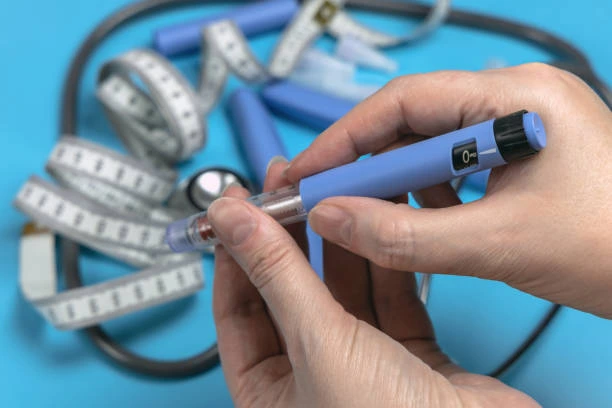
Have you ever thought, “Can I take a half dose of ozempic?” Lots of people think about lowering their dose to handle side effects better or make their prescription last longer. At TrimBody M.D, we focus on explaining what happens when you adjust your dose and how to do it the right way.
Key Takeaways:
- Cutting doses on your own without a doctor’s okay can make Ozempic work less.
- Healthcare providers should personalize doses to fit individual needs.
- A lower dose of Ozempic can still help with weight loss if it’s prescribed.
- Using the wrong amount during injections might mess with blood sugar stability.
- Following up helps to track progress and change your treatment plan.
Why Some Choose to Use a Smaller Dose of Ozempic
Ozempic is a medicine given through injection to treat Type 2 diabetes and help with weight loss. It copies a hormone called GLP-1 that controls blood sugar, hunger, and digestion. Since it is strong, certain people might want to use a smaller dose if they deal with issues like feeling sick, tired, or losing their appetite.
Dosages vary from person to person. Science Media Centre explains that semaglutide doses are designed with care to ensure they work without causing too many side effects. Taking a smaller or “half” dose might ease side effects for a short time, but it could harm long-term outcomes and blood sugar control.
Medical guidance is crucial when it comes to adjusting doses. Doctors increase the dosage step by step, often starting at 0.25 mg and going up to 1 mg so your body can adjust. Avoid changing doses on your own by splitting pills or skipping doses, as this can mess with your blood sugar and make the treatment less effective.
To learn more about the safety and consistency of treatments, you can check out our guide on how long Ozempic stays in your system. It explains how timing your doses can affect the results.
What Happens When You Take Half a Dose of Ozempic
Using a smaller dose than what your doctor prescribed can affect you in both the short and long run. At first, you might not feel much of a difference, but as time goes on, the effects may become more noticeable. Possible results of taking half doses on your own could include:
- Less control over appetite: A reduced dose might not help you feel as full.
- Unsteady blood sugar levels: Smaller amounts might not manage glucose.
- Slow progress: Losing weight might take longer or stop if the dose isn’t right.
- Hunger coming back: If the medication levels drop, you could start feeling hungry again sooner than expected.
- Uneven dosing issues: Adjusting pens by hand might cause errors in the amount measured.
As noted by SciTechDaily, studies confirm that even lower doses can help with weight loss. However, they work best when managed under medical supervision rather than self-administered. Adjusting doses should be done taking into account how your body reacts, your metabolism, and how much progress you are making.
If your weight loss slows down, check out our detailed FAQ on why semaglutide might not be working for you. It explains how certain lifestyle habits or changes in metabolism could affect your results.
Learning How to Adjust Ozempic Dosages
Doctors adjust Ozempic doses to help patients handle the medication better and get the best results. They raise the dosage step by step. This helps the body get used to how GLP-1 receptors work without causing too much discomfort. A doctor might suggest:
- Starting with a low dose: Using 0.25 mg for 4 weeks and then increasing to 0.5 mg.
- Watching for side effects: Changing the dose depending on how much nausea, bloating, or tiredness happens.
- Checking blood sugar levels: Making sure blood glucose stays steady in the first few weeks.
- Reviewing treatment goals: Looking at whether weight loss or blood sugar control is the main focus.
- Ensure proper injection method: Delivering the medicine the right way keeps it consistent.
Ozempic pens are made to give exact dose amounts and shouldn’t be used for partial doses. Splitting doses by hand can break the pen or change how the medicine works. Some patients who change doses also notice temporary side effects like headaches. Read does Ozempic cause headaches to learn why it causes headaches and how to manage them safely.
Why Do Patients Ask About Smaller Doses?
People ask about taking smaller amounts for various reasons. Some deal with side effects in the beginning, and others try to stretch their supply. It’s important to talk to a doctor before making any adjustments. Main reasons people consider include:
- Handling nausea: Many times, the body adapts after the initial weeks.
- Making medication last: Incorrect cutting of doses could lead to uneven effects.
- Dealing with feeling too full: The loss of appetite can be strong at first.
- Worries about weight stalling: Minor changes, under guidance, might assist during plateaus.
- Better tolerance: increasing doses allows the body to adjust.
Remember, reducing doses is a temporary strategy in a planned process. The aim is to figure out what works best for your body while balancing comfort and results.
When You Should Discuss Dosage With Your Doctor
If your Ozempic dose feels too strong, talk to your doctor before making any changes on your own. It is important to base adjustments on a medical evaluation that looks at your blood sugar levels, symptoms, and overall progress.
Your doctor might suggest staying on the same dose for a bit longer to give your body more time to adjust, or trying changes in your diet and hydration habits first.
To understand how long Ozempic stays active during dose changes, check out our info page on Ozempic duration in your system. It offers more details to help with safe dosing decisions.
How We Can Guide You To Safe and Successful Ozempic Results.
At TrimBody M.D., we prioritize precision medicine and personalized care to ensure you see safe and effective results. We’ve supported more than 30,000+ patients with our expert team, combining medical knowledge and ongoing follow-ups. Here’s how we support you:
- Our doctors manage your dosage and track your progress.
- We create custom plans for your nutrition and hydration.
- We offer tips to reduce nausea and ease digestion issues.
- We show you how to adapt your lifestyle for better glucose control and weight management.
- Learn about medication safety and building long-term metabolic health.
Why the Right Amount Is Important
To understand the question “can i take a half dose of ozempic”, you need to realize that dosage is not just about how much you take. It requires accuracy. The correct dose helps improve your metabolism, controls blood sugar levels, and maintains your results while minimizing unnecessary side effects.
If you experience discomfort or nausea, speak with your healthcare provider instead of adjusting the medication yourself. Small, physician-guided adjustments are the safest and most effective way to manage your progress.
Your journey to better health should be grounded in science, not trial and error. Schedule a consultation with our medical team today.
Frequently Asked Questions
Can I Take My Ozempic Dose in Two Separate Shots?
No, you need to take Ozempic once a week as instructed. Breaking up the dose might change how your body absorbs the medication and could make it less effective. This may lead to uneven blood sugar levels and less control over hunger.
Is It Okay to Adjust My Ozempic Dose Without Help?
No, you should talk to your doctor before changing your dose. Adjusting it on your own could mess up how the medication works, cause side effects, or hurt your ability to manage weight and blood sugar over time.
Can a Lower Dose of Ozempic Still Work for Losing Weight?
Maybe, but it depends on your body’s needs and your doctor’s advice. A medical professional can decide the right smallest dose to maintain safe and steady weight loss along with balanced metabolism.
What Happens If You Take a Lower Dose of Ozempic?
Taking a smaller dose once is not harmful, but your appetite might not be as controlled that week.
Will Taking Half a Dose Lessen Ozempic’s Side Effects?
Smaller doses could help with nausea or tiredness for a short time, but only if your doctor advises it.
Let our team know how we can help with your goals!

Get In Touch With Us
Schedule Your Free Consultation — Take Your First Step Today
 Henderson
Let our team of Medical Professionals help you achieve your body goals. Contact us Today!