
'%3e%3cpath%20d='M12.0979%2019.9987C10.6974%2019.9987%209.29703%2019.4657%208.2309%2018.3995L1.60176%2011.7704C0.568828%2010.7375%200%209.36414%200%207.9034C0%206.44262%200.568828%205.06934%201.6018%204.03641C2.51562%203.12254%204.00258%203.12262%204.91633%204.03637L7.12605%206.2461C8.03988%207.15992%208.03988%208.6468%207.12605%209.56067C6.97848%209.70821%206.89723%209.90442%206.89723%2010.1131C6.89723%2010.3218%206.97848%2010.5179%207.12602%2010.6655L9.33574%2012.8752C9.48328%2013.0228%209.67949%2013.1041%209.88816%2013.1041C10.0969%2013.1041%2010.293%2013.0228%2010.4406%2012.8753C11.3545%2011.9614%2012.8414%2011.9614%2013.7552%2012.8753L15.9649%2015.085C16.8787%2015.9988%2016.8787%2017.4857%2015.9649%2018.3995C14.8987%2019.4657%2013.4983%2019.9987%2012.0979%2019.9987ZM3.25906%204.91281C3.05898%204.91281%202.85895%204.98895%202.7066%205.14129C1.96883%205.87906%201.5625%206.86%201.5625%207.9034C1.5625%208.9468%201.96883%209.92774%202.7066%2010.6655L9.33574%2017.2947C10.8587%2018.8177%2013.337%2018.8177%2014.86%2017.2947C15.1646%2016.99%2015.1646%2016.4944%2014.86%2016.1898L12.6503%2013.9801C12.5028%2013.8325%2012.3066%2013.7513%2012.0979%2013.7513C11.8892%2013.7513%2011.693%2013.8325%2011.5455%2013.98C10.6316%2014.8939%209.14473%2014.8939%208.23086%2013.98L6.02117%2011.7703C5.57852%2011.3277%205.33473%2010.7391%205.33473%2010.113C5.33473%209.48703%205.57852%208.89844%206.02117%208.45578C6.16875%208.30824%206.25%208.11203%206.25%207.90336C6.25%207.69469%206.16875%207.49852%206.02117%207.35094L3.81148%205.14121C3.65918%204.98899%203.4591%204.91281%203.25906%204.91281Z'%20fill='black'/%3e%3cpath%20d='M9.5448%209.3168C9.25285%209.1959%209.0625%208.91102%209.0625%208.59504V0.782539C9.0625%200.351055%209.41227%200.00128937%209.84375%200.00128937H19.2188C19.6502%200.00128937%2020%200.351055%2020%200.782539V7.03254C20%207.46402%2019.6502%207.81379%2019.2188%207.81379H11.7298L10.3962%209.14746C10.1728%209.3709%209.83676%209.43773%209.5448%209.3168ZM10.625%201.56379V6.70895L10.8538%206.48012C11.0003%206.33359%2011.199%206.25129%2011.4062%206.25129H18.4375V1.56379H10.625Z'%20fill='black'/%3e%3cpath%20d='M12.9688%204.68879C13.4002%204.68879%2013.75%204.33901%2013.75%203.90754C13.75%203.47607%2013.4002%203.12629%2012.9688%203.12629C12.5373%203.12629%2012.1875%203.47607%2012.1875%203.90754C12.1875%204.33901%2012.5373%204.68879%2012.9688%204.68879Z'%20fill='black'/%3e%3cpath%20d='M16.0938%204.68879C16.5252%204.68879%2016.875%204.33901%2016.875%203.90754C16.875%203.47607%2016.5252%203.12629%2016.0938%203.12629C15.6623%203.12629%2015.3125%203.47607%2015.3125%203.90754C15.3125%204.33901%2015.6623%204.68879%2016.0938%204.68879Z'%20fill='black'/%3e%3c/g%3e%3cdefs%3e%3cclipPath%20id='clip0_6353_9'%3e%3crect%20width='20'%20height='20'%20fill='white'/%3e%3c/clipPath%3e%3c/defs%3e%3c/svg%3e)
'%3e%3cpath%20d='M10%2020C13.8389%2020%2017.0312%2018.3836%2017.0312%2016.0938C17.0312%2015.4405%2016.7592%2014.8022%2016.2444%2014.2478C15.9508%2013.9316%2015.4565%2013.9132%2015.1403%2014.2068C14.8241%2014.5004%2014.8058%2014.9947%2015.0994%2015.3109C15.3444%2015.5749%2015.4687%2015.8383%2015.4687%2016.0938C15.4687%2017.2001%2013.13%2018.4375%209.99996%2018.4375C6.86996%2018.4375%204.53121%2017.2001%204.53121%2016.0938C4.53121%2015.8382%204.65547%2015.5749%204.90055%2015.3109C5.19414%2014.9947%205.17582%2014.5004%204.85965%2014.2068C4.54348%2013.9133%204.04914%2013.9316%203.75555%2014.2477C3.24082%2014.8021%202.96875%2015.4405%202.96875%2016.0938C2.96875%2018.3803%206.15578%2020%2010%2020Z'%20fill='black'/%3e%3cpath%20d='M8.13172%2015.9465C8.57285%2016.5282%209.27023%2016.875%2010%2016.875C10.7298%2016.875%2011.4271%2016.5282%2011.8683%2015.9466L15.6293%2011.2402C16.5465%2010.0163%2017.0312%208.5609%2017.0312%207.03125C17.0312%203.15422%2013.877%200%2010%200C6.12297%200%202.96875%203.15422%202.96875%207.03125C2.96875%208.56094%203.45352%2010.0164%204.37063%2011.2402L8.13172%2015.9465ZM10%201.5625C13.0155%201.5625%2015.4688%204.01578%2015.4688%207.03125C15.4688%208.21648%2015.0944%209.34434%2014.386%2010.2938C14.386%2010.2938%2010.6309%2014.9924%2010.626%2014.9989C10.4766%2015.1982%2010.2484%2015.3125%2010%2015.3125C9.75156%2015.3125%209.5234%2015.1982%209.37402%2014.9989C9.36914%2014.9923%209.36418%2014.9859%209.3591%2014.9796L5.61395%2010.2937C4.90559%209.34434%204.53125%208.21652%204.53125%207.03125C4.53125%204.01578%206.98453%201.5625%2010%201.5625Z'%20fill='black'/%3e%3cpath%20d='M10%2010.9375C12.1539%2010.9375%2013.9062%209.18516%2013.9062%207.03125C13.9062%204.87734%2012.1539%203.125%2010%203.125C7.84609%203.125%206.09375%204.87734%206.09375%207.03125C6.09375%209.18516%207.84609%2010.9375%2010%2010.9375ZM10%204.6875C11.2923%204.6875%2012.3438%205.73891%2012.3438%207.03125C12.3438%208.32359%2011.2923%209.375%2010%209.375C8.70766%209.375%207.65625%208.32359%207.65625%207.03125C7.65625%205.73891%208.70766%204.6875%2010%204.6875Z'%20fill='black'/%3e%3c/g%3e%3cdefs%3e%3cclipPath%20id='clip0_6353_60'%3e%3crect%20width='20'%20height='20'%20fill='white'/%3e%3c/clipPath%3e%3c/defs%3e%3c/svg%3e)

'%3e%3ccircle%20cx='321'%20cy='321'%20r='276'%20transform='matrix(-1%200%200%201%20481%200)'%20stroke='%23E5DFD3'%20stroke-width='90'/%3e%3c/g%3e%3cdefs%3e%3cclipPath%20id='clip0_6046_3421'%3e%3crect%20width='481'%20height='413'%20fill='white'%20transform='matrix(-1%200%200%201%20481%200)'/%3e%3c/clipPath%3e%3c/defs%3e%3c/svg%3e)
Can HCG Be Injected Subcutaneously?
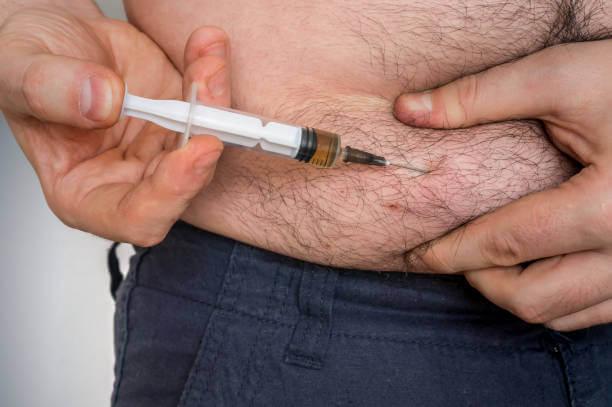
Can HCG be injected subcutaneously? Yes. hCG can be injected subcutaneously, and this method is widely used in medically supervised hormone, fertility, and weight-management protocols, including care at TrimBody M.D. Subcutaneous injection allows predictable absorption, easier self-administration, and lower injection-site discomfort compared to intramuscular routes. Schedule a free consultation to confirm injection methods.
Key Takeaways
- hCG is commonly and safely given subcutaneously under medical guidance
- Subcutaneous injections deliver consistent hormone absorption
- This method is easier for self-administration at home
- Injection site rotation reduces irritation and tissue sensitivity
- Proper technique and dosing matter more than injection depth
Should hCG be Injected Subq?
Doctors use subcutaneous injections to deliver hCG in medical treatments today. This method places the hormone into the fat layer under the skin, which lets it be absorbed into the blood. Fertility treatments, hormone therapy for men, and doctor-monitored weight loss programs often rely on this technique.
Clinically, subcutaneous injections offer a mix of effective results and ease for patients. They avoid the need to inject deep into the muscles while still reaching proper hormone levels. Research and established medical guidelines support this method as a dependable choice if the dose and injection technique are correct.
Another benefit is reliability. Subcutaneous injections show less fluctuation in how they absorb compared to intramuscular ones. This is true when people administer them at home. That reliability helps maintain steady hormone signals over time.
To receive hCG through programs like hcg injections, subcutaneous delivery is often the most recommended option unless doctors suggest a different approach.
How Subcutaneous hCG Injections Function Inside the Body
hCG belongs to the group of peptide hormones, so it does not need to be injected deep into muscle tissue to work. Once placed into the fat under the skin, it spreads into nearby blood vessels and enters the bloodstream. This slow process allows hormonal levels to remain stable rather than causing sharp increases.
The way hCG is absorbed by the body allows slower uptake without losing effectiveness. Many medical protocols choose subcutaneous injections because they help avoid sudden hormone spikes, which can happen with deeper shots.
Studies in reproductive medicine found that subcutaneous and intramuscular hCG work well for inducing ovulation and supporting hormones. Peer-reviewed research on subcutaneous doses confirms that when given , this method performs just as .
Patients often prefer this method since it leads to less soreness after injections. Using smaller needles and injecting less makes it easier for patients to stick to treatment during multi-week regimens.
Comparing Subcutaneous and Intramuscular hCG Injections
Choosing between subcutaneous and intramuscular injection depends on what the treatment aims to achieve, how comfortable the patient feels, and the provider’s choice. Both work well to deliver hCG, but they differ in how they are given and what the patient goes through.
Subcutaneous injections use smaller thinner needles and are given in fatty areas like the abdomen or thigh. In contrast intramuscular injections involve longer needles that go into muscle often in the gluteal or deltoid muscles.
Modern outpatient procedures prefer subcutaneous injections since they make self-administration easier and reduce problems at the injection site. This becomes significant when patients handle the injections on their own.
Studies cited in clinical research show that subcutaneous hCG provides the same hormonal results as intramuscular injections but causes less discomfort overall.
Doctors might still suggest intramuscular shots in certain cases, but subcutaneous injections work for most.
How to Give a Subcutaneous hCG Injection
Using the right technique is crucial to get the most benefit and avoid skin irritation. Subcutaneous injections of hCG are given in areas with enough fat, like the lower belly or outer thigh.
Important steps: Clean the injection area, pinch the skin to focus on the fat layer, slide the needle in at a low angle, and inject. Changing injection spots often can help avoid swelling or firm spots.
Patients using hCG in fertility treatments often follow different steps compared to those relying on it to manage hormones or metabolism. Instructions offered during hcg pregnancy use are not the same as those for weight loss plans, making personalized guidance essential for proper use.
Incorrect techniques rarely lead to severe harm. However, they might cause discomfort or reduce how well the body absorbs the treatment. This is why learning from a healthcare professional plays a key role in the process.
Is Subcutaneous hCG Safe With Medical Monitoring?
Qualified professionals consider subcutaneous hCG injections safe when they monitor and prescribe them. Most side effects occur due to factors such as dosage pre-existing health problems, or misuse rather than how deep the injection is given.
Common side effects are mild. People often experience temporary redness or soreness where the injection was given. These effects go away on their own without needing treatment. The dose and why it’s being given have a bigger effect on the body than how it’s injected.
Research on fertility and hormone therapy backs long-term subcutaneous use when done under medical supervision. Regular check-ups help doctors make dosing changes, monitor how treatment is working, and handle problems before they get serious.
Patients should always get a doctor’s approval before changing how they inject or how much they are taking. Hormone therapies work best when done to keep the body’s reactions steady.
How We Help Patients With Safe and Effective hCG Treatments
At Trim Body M.D. Medical protocols guide hCG use to ensure safety, achieve consistent results, and promote lasting outcomes. We have served 30,000+ patients, and our clinicians review your health history, personal goals, and how you respond to treatment before suggesting injection methods.
- Clinical goals shape personalized dosing plans
- Patients learn how to perform subcutaneous injections
- Clinicians monitor progress and adjust treatments as required
- Instructions ensure patients know the proper timing and rotation of injections
- Help is available for protocols related to fertility, hormones, or metabolism
This organized method allows patients to feel secure using hCG while minimizing any avoidable risks.
Understanding Subcutaneous hCG Injections
Doctors often use subcutaneous injections to give hCG in fertility treatments, hormone therapies, and weight control plans. If done with the right technique, it ensures proper absorption, is easier for patients to do themselves, and feels more comfortable overall. Book an appointment to explore hCG therapy options.
FAQs about Subcutaneous HCG Injections
Can HCG Be Injected Subcutaneously?
Yes. HCG can be injected subcutaneously and is commonly prescribed this way in fertility, hormone, and metabolic care.
Is Subcutaneous HCG As Effective As Intramuscular?
Yes. Studies show similar effectiveness when dosing is correct. Subcutaneous injections often cause less pain and are preferred for long-term or self-administered treatment.
Where Do You Inject HCG Subcutaneously?
Common sites include the lower abdomen or outer thigh. These areas provide consistent fat tissue for absorption and are easy to rotate to reduce irritation.
Does Subcutaneous HCG Hurt Less?
Usually, yes. Smaller needles and shallow depth reduce discomfort compared to intramuscular injections.
Can You Switch From IM To Subcutaneous HCG?
Only with medical guidance. Changing injection methods can affect absorption and dosing.
Let our team know how we can help with your goals!

Get In Touch With Us
Schedule Your Free Consultation — Take Your First Step Today
 Henderson
Let our team of Medical Professionals help you achieve your body goals. Contact us Today!