
'%3e%3cpath%20d='M12.0979%2019.9987C10.6974%2019.9987%209.29703%2019.4657%208.2309%2018.3995L1.60176%2011.7704C0.568828%2010.7375%200%209.36414%200%207.9034C0%206.44262%200.568828%205.06934%201.6018%204.03641C2.51562%203.12254%204.00258%203.12262%204.91633%204.03637L7.12605%206.2461C8.03988%207.15992%208.03988%208.6468%207.12605%209.56067C6.97848%209.70821%206.89723%209.90442%206.89723%2010.1131C6.89723%2010.3218%206.97848%2010.5179%207.12602%2010.6655L9.33574%2012.8752C9.48328%2013.0228%209.67949%2013.1041%209.88816%2013.1041C10.0969%2013.1041%2010.293%2013.0228%2010.4406%2012.8753C11.3545%2011.9614%2012.8414%2011.9614%2013.7552%2012.8753L15.9649%2015.085C16.8787%2015.9988%2016.8787%2017.4857%2015.9649%2018.3995C14.8987%2019.4657%2013.4983%2019.9987%2012.0979%2019.9987ZM3.25906%204.91281C3.05898%204.91281%202.85895%204.98895%202.7066%205.14129C1.96883%205.87906%201.5625%206.86%201.5625%207.9034C1.5625%208.9468%201.96883%209.92774%202.7066%2010.6655L9.33574%2017.2947C10.8587%2018.8177%2013.337%2018.8177%2014.86%2017.2947C15.1646%2016.99%2015.1646%2016.4944%2014.86%2016.1898L12.6503%2013.9801C12.5028%2013.8325%2012.3066%2013.7513%2012.0979%2013.7513C11.8892%2013.7513%2011.693%2013.8325%2011.5455%2013.98C10.6316%2014.8939%209.14473%2014.8939%208.23086%2013.98L6.02117%2011.7703C5.57852%2011.3277%205.33473%2010.7391%205.33473%2010.113C5.33473%209.48703%205.57852%208.89844%206.02117%208.45578C6.16875%208.30824%206.25%208.11203%206.25%207.90336C6.25%207.69469%206.16875%207.49852%206.02117%207.35094L3.81148%205.14121C3.65918%204.98899%203.4591%204.91281%203.25906%204.91281Z'%20fill='black'/%3e%3cpath%20d='M9.5448%209.3168C9.25285%209.1959%209.0625%208.91102%209.0625%208.59504V0.782539C9.0625%200.351055%209.41227%200.00128937%209.84375%200.00128937H19.2188C19.6502%200.00128937%2020%200.351055%2020%200.782539V7.03254C20%207.46402%2019.6502%207.81379%2019.2188%207.81379H11.7298L10.3962%209.14746C10.1728%209.3709%209.83676%209.43773%209.5448%209.3168ZM10.625%201.56379V6.70895L10.8538%206.48012C11.0003%206.33359%2011.199%206.25129%2011.4062%206.25129H18.4375V1.56379H10.625Z'%20fill='black'/%3e%3cpath%20d='M12.9688%204.68879C13.4002%204.68879%2013.75%204.33901%2013.75%203.90754C13.75%203.47607%2013.4002%203.12629%2012.9688%203.12629C12.5373%203.12629%2012.1875%203.47607%2012.1875%203.90754C12.1875%204.33901%2012.5373%204.68879%2012.9688%204.68879Z'%20fill='black'/%3e%3cpath%20d='M16.0938%204.68879C16.5252%204.68879%2016.875%204.33901%2016.875%203.90754C16.875%203.47607%2016.5252%203.12629%2016.0938%203.12629C15.6623%203.12629%2015.3125%203.47607%2015.3125%203.90754C15.3125%204.33901%2015.6623%204.68879%2016.0938%204.68879Z'%20fill='black'/%3e%3c/g%3e%3cdefs%3e%3cclipPath%20id='clip0_6353_9'%3e%3crect%20width='20'%20height='20'%20fill='white'/%3e%3c/clipPath%3e%3c/defs%3e%3c/svg%3e)
'%3e%3cpath%20d='M10%2020C13.8389%2020%2017.0312%2018.3836%2017.0312%2016.0938C17.0312%2015.4405%2016.7592%2014.8022%2016.2444%2014.2478C15.9508%2013.9316%2015.4565%2013.9132%2015.1403%2014.2068C14.8241%2014.5004%2014.8058%2014.9947%2015.0994%2015.3109C15.3444%2015.5749%2015.4687%2015.8383%2015.4687%2016.0938C15.4687%2017.2001%2013.13%2018.4375%209.99996%2018.4375C6.86996%2018.4375%204.53121%2017.2001%204.53121%2016.0938C4.53121%2015.8382%204.65547%2015.5749%204.90055%2015.3109C5.19414%2014.9947%205.17582%2014.5004%204.85965%2014.2068C4.54348%2013.9133%204.04914%2013.9316%203.75555%2014.2477C3.24082%2014.8021%202.96875%2015.4405%202.96875%2016.0938C2.96875%2018.3803%206.15578%2020%2010%2020Z'%20fill='black'/%3e%3cpath%20d='M8.13172%2015.9465C8.57285%2016.5282%209.27023%2016.875%2010%2016.875C10.7298%2016.875%2011.4271%2016.5282%2011.8683%2015.9466L15.6293%2011.2402C16.5465%2010.0163%2017.0312%208.5609%2017.0312%207.03125C17.0312%203.15422%2013.877%200%2010%200C6.12297%200%202.96875%203.15422%202.96875%207.03125C2.96875%208.56094%203.45352%2010.0164%204.37063%2011.2402L8.13172%2015.9465ZM10%201.5625C13.0155%201.5625%2015.4688%204.01578%2015.4688%207.03125C15.4688%208.21648%2015.0944%209.34434%2014.386%2010.2938C14.386%2010.2938%2010.6309%2014.9924%2010.626%2014.9989C10.4766%2015.1982%2010.2484%2015.3125%2010%2015.3125C9.75156%2015.3125%209.5234%2015.1982%209.37402%2014.9989C9.36914%2014.9923%209.36418%2014.9859%209.3591%2014.9796L5.61395%2010.2937C4.90559%209.34434%204.53125%208.21652%204.53125%207.03125C4.53125%204.01578%206.98453%201.5625%2010%201.5625Z'%20fill='black'/%3e%3cpath%20d='M10%2010.9375C12.1539%2010.9375%2013.9062%209.18516%2013.9062%207.03125C13.9062%204.87734%2012.1539%203.125%2010%203.125C7.84609%203.125%206.09375%204.87734%206.09375%207.03125C6.09375%209.18516%207.84609%2010.9375%2010%2010.9375ZM10%204.6875C11.2923%204.6875%2012.3438%205.73891%2012.3438%207.03125C12.3438%208.32359%2011.2923%209.375%2010%209.375C8.70766%209.375%207.65625%208.32359%207.65625%207.03125C7.65625%205.73891%208.70766%204.6875%2010%204.6875Z'%20fill='black'/%3e%3c/g%3e%3cdefs%3e%3cclipPath%20id='clip0_6353_60'%3e%3crect%20width='20'%20height='20'%20fill='white'/%3e%3c/clipPath%3e%3c/defs%3e%3c/svg%3e)

'%3e%3ccircle%20cx='321'%20cy='321'%20r='276'%20transform='matrix(-1%200%200%201%20481%200)'%20stroke='%23E5DFD3'%20stroke-width='90'/%3e%3c/g%3e%3cdefs%3e%3cclipPath%20id='clip0_6046_3421'%3e%3crect%20width='481'%20height='413'%20fill='white'%20transform='matrix(-1%200%200%201%20481%200)'/%3e%3c/clipPath%3e%3c/defs%3e%3c/svg%3e)
What Are Injectables? Everything You Need to Know
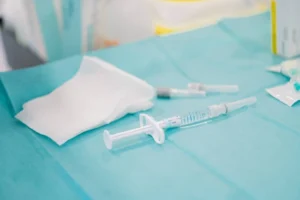
Injectables offer a quick way to improve your looks without needing surgery. These low-risk treatments work well to smooth out wrinkles, add volume to your face, and improve facial shape. But what are injectables?
Injectables are substances that feel like gel or liquid and are applied beneath the skin with tiny needles. People use them to fight aging signs, enhance their natural features, or fix certain facial issues. All without going under the knife.
What Are Injectables and How Do They Work?
Injectables work as a way to refresh the face without surgery. They either help by easing tight muscles that create wrinkles or by bringing back fullness that fades with age. People like them because they work well and don’t need recovery time. This clinical review shares details about how facial injectables improve looks.
Injectables fall into two main types:
- Neurotoxins like Botox, Dysport, and Xeomin stop nerve signals from reaching specific muscles. This action reduces muscle movements responsible for creating wrinkles, such as frown lines or crow’s feet.
- Dermal fillers add volume to the skin to smooth lines, plump up areas, and define facial contours. These are made with hyaluronic acid, a substance found in the skin that helps it stay hydrated.
Neurotoxins relax muscles, while fillers restore lost volume. Both work in different ways but aim to make the face look fresher and reduce the visible signs of aging.
Let our team know how we can help with your goals!
How Injectables Work on Skin and Muscles
Neurotoxins affect the neuromuscular junction by blocking acetylcholine, the chemical messenger that controls muscle movement. This process makes the muscles targeted relax, which helps smooth out the skin above them. Most people notice changes within 3 to 7 days, and the full effects appear after about two weeks.
Dermal fillers work differently. Instead of changing muscle movement, they add volume beneath the skin to smooth out wrinkles and folds. They can also lift sagging areas and bring back a youthful look.
What Are the Common Uses of Injectables?
You can use injectables in many ways. They work well on various parts of the face and are often customized to target specific areas. Here are some of the most typical zones they are used for.
- Upper face: Doctors use neurotoxins to smooth out dynamic wrinkles like forehead lines, crow’s feet, and the “11s” seen between eyebrows.
- Mid-face: Dermal fillers can help add lift and fullness to the cheeks and reduce the look of hollow under-eyes or dark circles.
- Lower face: Fillers often add volume to lips, reduce smile lines around the mouth, and give the jawline a more defined look. Sometimes, Kybella is injected under the chin to help reduce a double chin.
Besides enhancing appearance, injectables also help with heavy sweating, headaches, and jaw pain. As skills and technology progress, their uses keep expanding.
To discuss our services, contact us today!
Cosmetic Injectable Options
Today, cosmetic injectables include everything from popular neurotoxins to newer collagen boosters. Knowing how they work and how long they last can guide you in choosing the right fit for your beauty goals.
Botulinum Toxins (Botox, Dysport Xeomin)
These neurotoxins work by making facial muscles less active. Wrinkles that come from repeated facial movements smooth out for a while. Many people use them to treat frown lines, crow’s feet, or forehead wrinkles. Changes show up in 3 to 5 days, with full results noticeable in about two weeks. The effects often remain visible for 3 to 4 months. Medical uses include treating migraines, jaw pain from TMJ, and underarm sweating.
Hyaluronic Acid Fillers (Juvederm, Restylane)
Hyaluronic acid fillers bring back lost volume and add moisture to the skin. People often use them for lips, cheeks, hollow areas under the eyes, and smile lines. They show quick results and require minimal recovery time. The effects can last anywhere from 6 to 18 months, depending on the type of filler and where it is used. Doctors can reverse these fillers, and many prefer them for their natural and smooth results.
Calcium Hydroxylapatite (Radiesse)
Radiesse adds volume right away and helps the body build collagen as time passes. Its thicker texture works well on deeper wrinkles, sculpting the jawline, and refreshing the hands. The effects stay noticeable for 12 to 18 months. People like it because it fixes concerns while also improving things gradually, making it a favorite option to enhance facial structure.
Poly-L-lactic Acid (Sculptra)
Sculptra works by helping your body create more collagen, which restores fullness to the face. Unlike typical fillers, changes happen over months and look more natural and understated. People often choose Sculptra to refresh the entire face. It takes a few appointments, but the effects can remain for over two years. Many prefer it because it offers lasting anti-aging results with little upkeep.
Autologous Fat Transfer
Doctors take fat from your own body, clean it, and inject it back to add volume to your face. This method uses your own tissue, making it compatible with your body, and the effects can last for years. The results depend on how much of the fat survives, but when it works well, the outcome looks soft and natural. While it involves a more complex procedure, fat transfers attract those who want a longer-lasting and more natural option.
Kybella (Deoxycholic Acid)
Kybella is an injection used under the chin to target and eliminate a double chin. It works by breaking down fat cells, with results taking a few weeks to show. Most people require between two and six treatments, about one month apart. Once the fat cells are destroyed, they do not grow back. Kybella offers a non-surgical option instead of liposuction.
Need help deciding? Fill out a contact form,and we’ll ensure you’re informed!
What Happens Before, During, and After Treatment
The process begins with a consultation. The provider studies your facial structure, discusses your medical history, and suggests options based on your goals. Honesty matters, so share any medications, allergies, or past cosmetic treatments.
On the day of treatment, they clean the area and might numb it. Most injections do not take long and usually do not hurt much, but you might feel a little uncomfortable. Some professionals use cannulas, which are blunt-tipped tools instead of regular needles to minimize the chance of bruising.
After the procedure ends, you’ll notice swelling, redness, or some bruises. These effects often go away in a few days. Experts recommend avoiding alcohol, hard workouts, or going in the sun too much for one to two days afterward.
Results differ depending on the product. Neurotoxins need a few days to show their full results, but fillers add volume right away. Collagen stimulators such as Sculptra might take a few weeks before you can see noticeable changes.
Benefits and Things to Think About
Injectables bring many advantages to the table. They don’t involve surgeries, can be tailored to individuals, and work. Most procedures finish in less than 30 minutes and don’t need a recovery period. People use them both to make small adjustments or to refresh their entire look.
But risks shouldn’t be ignored. Swelling, bruising, and tenderness are common issues. more serious problems can arise, like infections, uneven results, or blood vessel complications if they’re mishandled. This makes it important to pick a skilled and qualified provider.
How Long Do Results Stick Around?
How long injectables last depends on many things, like the type of product where it’s applied, how your body processes it, and habits like smoking, time spent in the sun, or engaging in intense workouts.
- Botox and other neurotoxins work for about 3 to 4 months before wearing off.
- Hyaluronic acid fillers can last anywhere between 6 and 18 months, depending on where they’re placed and the type used.
- Radiesse and Sculptra help boost collagen production can last up to 2 years or longer.
- Fat transfer results can stay around forever, though the fat may settle or shift as time passes.
- Once Kybella destroys fat cells, the effects stick around.
Why People Trust Trim Body M.D. For Reliable Injectables
When considering injectables, both the product and provider play a big role in the results you’ll see. At Trim Body M.D., we use a mix of medical knowledge and a personalized touch to help you achieve a refreshed look without going overboard. With locations in Las Vegas, Costa Mesa, Henderson, and other areas, we focus on delivering safe and natural-looking outcomes that add to your unique beauty.
Here’s why so many clients turn to Trim Body M.D. to get injectable treatments:
- Experts certified in advanced facial aesthetics
- Personalized care plans with high-quality products
- Supportive, pressure-free consultations focused on your needs
- Safe modern facilities offering FDA-approved treatments
Want to Refresh and Restore Your Look?
Injectables provide a simple option to improve how you look without surgery. They can smooth out wrinkles or add subtle natural volume based on your preferences. These treatments are adaptable to match your specific goals.
The best outcomes come from good planning and clear expectations, so choosing an experienced specialist is critical. Talk to a licensed provider who can explain the process, discuss potential risks and benefits, and help create a safe and effective treatment plan just for you.
If you are considering injectables, ask questions, look into different options, and find a provider who focuses on your comfort and outcomes. Taking the right steps can help you achieve the appearance you’re looking for. To get expert advice and tailored care, reach out to Trim Body M.D..
Frequently Asked Questions
What Are NAD Injections?
NAD injections deliver nicotinamide adenine dinucleotide, a coenzyme that boosts cellular energy, improves brain function, and supports anti-aging. They’re often used for wellness, detox, and mental clarity, not cosmetic enhancement like Botox or fillers.
What Are Examples of Injectables?
Common injectables include Botox, Dysport, Xeomin (neurotoxins), and dermal fillers like Juvederm and Restylane. Each targets specific concerns, wrinkles, volume loss, fine lines, offering quick, non-surgical cosmetic results with little to no downtime.
What Do Injectables Do?
Injectables smooth wrinkles, restore facial volume, and enhance features. Neurotoxins relax muscles to soften lines, while fillers plump skin and reshape contours—creating a refreshed, youthful appearance in minutes.
Are Injectables the Same as Botox?
Not exactly. Botox is one type of injectable, a neurotoxin. Other injectables include dermal fillers, NAD, and more. Botox relaxes wrinkles; fillers add volume. All are injectables, but not all injectables are Botox.
Do Injectables Hurt?
Discomfort is minimal. Most injectables use fine needles and may include numbing agents. You might feel a small pinch or pressure, but the entire process is quick and well-tolerated by most patients.
Call and talk to a specialist today! (702) 489-3300
Let our team know how we can help with your goals!

Get In Touch With Us
Schedule Your Free Consultation — Take Your First Step Today
 Henderson
Let our team of Medical Professionals help you achieve your body goals. Contact us Today!