
'%3e%3cpath%20d='M12.0979%2019.9987C10.6974%2019.9987%209.29703%2019.4657%208.2309%2018.3995L1.60176%2011.7704C0.568828%2010.7375%200%209.36414%200%207.9034C0%206.44262%200.568828%205.06934%201.6018%204.03641C2.51562%203.12254%204.00258%203.12262%204.91633%204.03637L7.12605%206.2461C8.03988%207.15992%208.03988%208.6468%207.12605%209.56067C6.97848%209.70821%206.89723%209.90442%206.89723%2010.1131C6.89723%2010.3218%206.97848%2010.5179%207.12602%2010.6655L9.33574%2012.8752C9.48328%2013.0228%209.67949%2013.1041%209.88816%2013.1041C10.0969%2013.1041%2010.293%2013.0228%2010.4406%2012.8753C11.3545%2011.9614%2012.8414%2011.9614%2013.7552%2012.8753L15.9649%2015.085C16.8787%2015.9988%2016.8787%2017.4857%2015.9649%2018.3995C14.8987%2019.4657%2013.4983%2019.9987%2012.0979%2019.9987ZM3.25906%204.91281C3.05898%204.91281%202.85895%204.98895%202.7066%205.14129C1.96883%205.87906%201.5625%206.86%201.5625%207.9034C1.5625%208.9468%201.96883%209.92774%202.7066%2010.6655L9.33574%2017.2947C10.8587%2018.8177%2013.337%2018.8177%2014.86%2017.2947C15.1646%2016.99%2015.1646%2016.4944%2014.86%2016.1898L12.6503%2013.9801C12.5028%2013.8325%2012.3066%2013.7513%2012.0979%2013.7513C11.8892%2013.7513%2011.693%2013.8325%2011.5455%2013.98C10.6316%2014.8939%209.14473%2014.8939%208.23086%2013.98L6.02117%2011.7703C5.57852%2011.3277%205.33473%2010.7391%205.33473%2010.113C5.33473%209.48703%205.57852%208.89844%206.02117%208.45578C6.16875%208.30824%206.25%208.11203%206.25%207.90336C6.25%207.69469%206.16875%207.49852%206.02117%207.35094L3.81148%205.14121C3.65918%204.98899%203.4591%204.91281%203.25906%204.91281Z'%20fill='black'/%3e%3cpath%20d='M9.5448%209.3168C9.25285%209.1959%209.0625%208.91102%209.0625%208.59504V0.782539C9.0625%200.351055%209.41227%200.00128937%209.84375%200.00128937H19.2188C19.6502%200.00128937%2020%200.351055%2020%200.782539V7.03254C20%207.46402%2019.6502%207.81379%2019.2188%207.81379H11.7298L10.3962%209.14746C10.1728%209.3709%209.83676%209.43773%209.5448%209.3168ZM10.625%201.56379V6.70895L10.8538%206.48012C11.0003%206.33359%2011.199%206.25129%2011.4062%206.25129H18.4375V1.56379H10.625Z'%20fill='black'/%3e%3cpath%20d='M12.9688%204.68879C13.4002%204.68879%2013.75%204.33901%2013.75%203.90754C13.75%203.47607%2013.4002%203.12629%2012.9688%203.12629C12.5373%203.12629%2012.1875%203.47607%2012.1875%203.90754C12.1875%204.33901%2012.5373%204.68879%2012.9688%204.68879Z'%20fill='black'/%3e%3cpath%20d='M16.0938%204.68879C16.5252%204.68879%2016.875%204.33901%2016.875%203.90754C16.875%203.47607%2016.5252%203.12629%2016.0938%203.12629C15.6623%203.12629%2015.3125%203.47607%2015.3125%203.90754C15.3125%204.33901%2015.6623%204.68879%2016.0938%204.68879Z'%20fill='black'/%3e%3c/g%3e%3cdefs%3e%3cclipPath%20id='clip0_6353_9'%3e%3crect%20width='20'%20height='20'%20fill='white'/%3e%3c/clipPath%3e%3c/defs%3e%3c/svg%3e)
'%3e%3cpath%20d='M10%2020C13.8389%2020%2017.0312%2018.3836%2017.0312%2016.0938C17.0312%2015.4405%2016.7592%2014.8022%2016.2444%2014.2478C15.9508%2013.9316%2015.4565%2013.9132%2015.1403%2014.2068C14.8241%2014.5004%2014.8058%2014.9947%2015.0994%2015.3109C15.3444%2015.5749%2015.4687%2015.8383%2015.4687%2016.0938C15.4687%2017.2001%2013.13%2018.4375%209.99996%2018.4375C6.86996%2018.4375%204.53121%2017.2001%204.53121%2016.0938C4.53121%2015.8382%204.65547%2015.5749%204.90055%2015.3109C5.19414%2014.9947%205.17582%2014.5004%204.85965%2014.2068C4.54348%2013.9133%204.04914%2013.9316%203.75555%2014.2477C3.24082%2014.8021%202.96875%2015.4405%202.96875%2016.0938C2.96875%2018.3803%206.15578%2020%2010%2020Z'%20fill='black'/%3e%3cpath%20d='M8.13172%2015.9465C8.57285%2016.5282%209.27023%2016.875%2010%2016.875C10.7298%2016.875%2011.4271%2016.5282%2011.8683%2015.9466L15.6293%2011.2402C16.5465%2010.0163%2017.0312%208.5609%2017.0312%207.03125C17.0312%203.15422%2013.877%200%2010%200C6.12297%200%202.96875%203.15422%202.96875%207.03125C2.96875%208.56094%203.45352%2010.0164%204.37063%2011.2402L8.13172%2015.9465ZM10%201.5625C13.0155%201.5625%2015.4688%204.01578%2015.4688%207.03125C15.4688%208.21648%2015.0944%209.34434%2014.386%2010.2938C14.386%2010.2938%2010.6309%2014.9924%2010.626%2014.9989C10.4766%2015.1982%2010.2484%2015.3125%2010%2015.3125C9.75156%2015.3125%209.5234%2015.1982%209.37402%2014.9989C9.36914%2014.9923%209.36418%2014.9859%209.3591%2014.9796L5.61395%2010.2937C4.90559%209.34434%204.53125%208.21652%204.53125%207.03125C4.53125%204.01578%206.98453%201.5625%2010%201.5625Z'%20fill='black'/%3e%3cpath%20d='M10%2010.9375C12.1539%2010.9375%2013.9062%209.18516%2013.9062%207.03125C13.9062%204.87734%2012.1539%203.125%2010%203.125C7.84609%203.125%206.09375%204.87734%206.09375%207.03125C6.09375%209.18516%207.84609%2010.9375%2010%2010.9375ZM10%204.6875C11.2923%204.6875%2012.3438%205.73891%2012.3438%207.03125C12.3438%208.32359%2011.2923%209.375%2010%209.375C8.70766%209.375%207.65625%208.32359%207.65625%207.03125C7.65625%205.73891%208.70766%204.6875%2010%204.6875Z'%20fill='black'/%3e%3c/g%3e%3cdefs%3e%3cclipPath%20id='clip0_6353_60'%3e%3crect%20width='20'%20height='20'%20fill='white'/%3e%3c/clipPath%3e%3c/defs%3e%3c/svg%3e)

'%3e%3ccircle%20cx='321'%20cy='321'%20r='276'%20transform='matrix(-1%200%200%201%20481%200)'%20stroke='%23E5DFD3'%20stroke-width='90'/%3e%3c/g%3e%3cdefs%3e%3cclipPath%20id='clip0_6046_3421'%3e%3crect%20width='481'%20height='413'%20fill='white'%20transform='matrix(-1%200%200%201%20481%200)'/%3e%3c/clipPath%3e%3c/defs%3e%3c/svg%3e)
How Long Does Botox Fatigue Last?
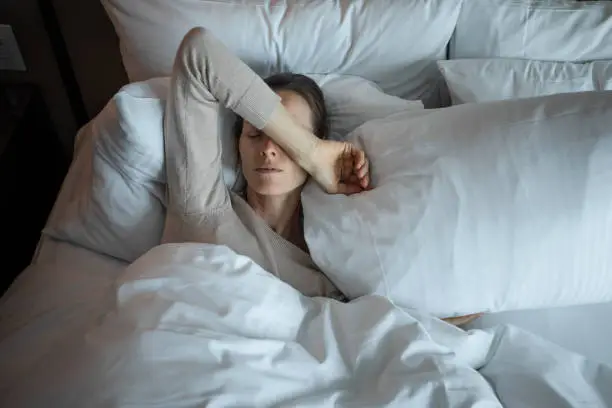
Botox often smooths out wrinkles, but some feel tired afterward and ask, “how long does Botox fatigue last?” Most people experience mild exhaustion, which goes away. TrimBody M.D. stands out as an expert reminder that good advice helps you understand normal responses and notice if something feels off.
Key Takeaways:
- Fatigue from Botox often clears up within one to three days.
- Drinking water and eating well can boost your energy.
- Tiredness is mild and seems connected to relaxed muscles.
- Resting helps speed up recovery.
- If tiredness continues, a doctor should check it out.
Why Does Botox Lead to Fatigue?
Tiredness after Botox treatments doesn’t happen often, but it is possible for a few reasons. Botox eases tightness in small facial muscles. As your body gets used to this change, it might alter how your face deals with tension. When those muscles loosen, your nervous system adjusts, and this adjustment can cause short-term fatigue.
Some people might also feel worn out because they were very tense before getting treated. When the muscles stop tensing up, you might feel a bit of a “letdown,” similar to how you feel when you unwind after a hectic day. This feeling doesn’t last long.
Studies about neuromodulators reveal that small changes in muscle activity have an effect on how local nerves respond. A report from PMC about neuromodulator functions explains that mild systemic side effects occur, but they might happen in people who are more sensitive.
If you want to know how long results last, check out this discussion on Botox longevity by TrimBody M.D.
How Long Does Botox Make You Feel Tired?
Most people go back to feeling normal within one to three days. Some experience just a few hours of tiredness, while others might feel low energy for two to three days. This is normal and not seen as a sign of an adverse reaction.
A small number of people might feel tired for about a week. This happens when they are dehydrated, under stress, or experiencing hormonal changes. Studies that look into botulinum toxin use show that systemic spread almost never happens if the dosage stays within the standard amount for cosmetic use.
Feeling tired is also more common after treating large areas or when someone gets injections for the first time. This is because the body is adjusting to something unfamiliar.
If your tiredness feels similar to how Ozempic sometimes causes fatigue, you can check out more details about Ozempic fatigue duration.
Simple Tips To Feel Better Faster
You can try a few helpful steps to recover quicker and reduce how long Botox fatigue sticks around:
1. Drink Enough Water
Staying hydrated supports your muscles and nervous system as your body adjusts after Botox. Sip slowly throughout the day and add electrolytes if you’ve been feeling heavy, sluggish, or light-headed.
2. Eat Nutritious Food
Fueling your body with balanced meals can help reduce Botox fatigue. Choose protein, healthy fats, and mineral-rich foods to stabilize your energy.
3. Take Time To Rest
Your body may need extra downtime during the first day or two after treatment. Light rest helps your nervous system reset and reduces overall tension. Allow yourself space to pause, breathe, and regain energy without pushing too hard.
4. A Little Movement Goes A Long Way
Gentle movement like walking, improves circulation and can lift your energy when Botox fatigue appears. You don’t need intense exercise, just enough motion to help oxygen flow and support your mood.
5. Don’t Overthink Symptoms
Fatigue can feel stronger when worry builds around it. Most Botox-related tiredness is short-lived and improves with simple care.
If you feel like you need extra help with energy, some patients find wellness treatments like IV therapy beneficial. You can explore these options at TrimBody locations.
Does Feeling Tired After Botox Mean Something’s Wrong?
A little fatigue is common. You should reach out to a medical professional if:
- Feeling tired that lasts longer than one week
- Getting headaches that don’t seem to get better
- Weakness showing up in places other than where you got the injection
- Feeling dizzy or sick to your stomach
These symptoms are not common, but you should talk to your doctor if they happen. Drinking fluids and resting can help fix the problem.
It’s also good to know how neuromodulators work differently. Some people like to compare Botox with Xeomin or Dysport to figure out which one helps them feel their best.
What Does Your Body Go Through During Botox Fatigue?
Your nervous system uses chemical signals to talk to your muscles. Botox stops some of these signals in specific spots, which makes the muscles loosen up. As this happens, your body adjusts to the change.
Feeling tired might happen because of:
- Your nervous system is adapting
- Less tension in your face
- Changes from stress or hormones
- How sensitive are you to neuromodulators
The tired feeling is kind of like when your body relaxes after holding onto stress for a long time. It does not last and will go away once your nervous system settles into its new rhythm.
A review in JAMA Dermatology revealed that systemic reactions are rare, showing that fatigue after treatment is harmless.
TrimBody M.D. – Expert Help with Botox Side Effects
TrimBody M.D. has helped over 30,000 patients with wellness and aesthetic treatments. We focus on ensuring safety and consistent results. Our team works with you to track symptoms, explain normal reactions, and support your recovery journey.
Here’s what we offer:
- Straightforward guidance about post-treatment expectations
- Tailored tips to help you manage fatigue
- Regular follow-ups when you need peace of mind
- Emphasis on natural and balanced outcomes
- Ongoing support throughout your aesthetic experience
We designed our clinic to prioritize learning, transparency, and results centered around you. We help you feel confident about Botox and give you guidance to handle temporary effects like tiredness.
What You Should Know Next
Wondering how long tiredness from Botox lasts? Most people experience it for just a day or two. It might catch you off guard, but it is not serious. Resting, drinking water, and making small lifestyle tweaks often help you bounce back. If the symptoms stick around or feel out of the ordinary, speaking to a clinician provides answers and reassurance.
Looking to get advice you can rely on? Schedule a free consultation with us today!
Frequently Asked Questions
Why Do I Feel Poorly After Botox?
Some people feel tired, off-balance, or mildly unwell for a short period as the body adjusts. These sensations usually pass quickly. If symptoms feel intense or last longer than expected, contact your provider so they can rule out other causes and guide next steps.
Can Botox Make You Feel Tired The Next Day?
Yes, mild next-day tiredness can occur as the body adjusts. Rest, hydration, and light activity usually help restore normal energy levels.
When Should I Worry About Fatigue After Botox?
If fatigue lasts beyond a few days or worsens, reach out to your injector for guidance. Persistent symptoms may signal that your body needs closer monitoring.
Does Botox Affect Energy Levels Long Term?
Long-term fatigue from Botox is rare. Most clients return to normal activity right away once the temporary adjustment period passes.
Can Dehydration Make Botox Fatigue Worse?
Yes, dehydration may intensify tiredness after injections. Drinking enough water before and after treatment can support a smoother recovery.
Let our team know how we can help with your goals!

Get In Touch With Us
Schedule Your Free Consultation — Take Your First Step Today
 Henderson
Let our team of Medical Professionals help you achieve your body goals. Contact us Today!