
'%3e%3cpath%20d='M12.0979%2019.9987C10.6974%2019.9987%209.29703%2019.4657%208.2309%2018.3995L1.60176%2011.7704C0.568828%2010.7375%200%209.36414%200%207.9034C0%206.44262%200.568828%205.06934%201.6018%204.03641C2.51562%203.12254%204.00258%203.12262%204.91633%204.03637L7.12605%206.2461C8.03988%207.15992%208.03988%208.6468%207.12605%209.56067C6.97848%209.70821%206.89723%209.90442%206.89723%2010.1131C6.89723%2010.3218%206.97848%2010.5179%207.12602%2010.6655L9.33574%2012.8752C9.48328%2013.0228%209.67949%2013.1041%209.88816%2013.1041C10.0969%2013.1041%2010.293%2013.0228%2010.4406%2012.8753C11.3545%2011.9614%2012.8414%2011.9614%2013.7552%2012.8753L15.9649%2015.085C16.8787%2015.9988%2016.8787%2017.4857%2015.9649%2018.3995C14.8987%2019.4657%2013.4983%2019.9987%2012.0979%2019.9987ZM3.25906%204.91281C3.05898%204.91281%202.85895%204.98895%202.7066%205.14129C1.96883%205.87906%201.5625%206.86%201.5625%207.9034C1.5625%208.9468%201.96883%209.92774%202.7066%2010.6655L9.33574%2017.2947C10.8587%2018.8177%2013.337%2018.8177%2014.86%2017.2947C15.1646%2016.99%2015.1646%2016.4944%2014.86%2016.1898L12.6503%2013.9801C12.5028%2013.8325%2012.3066%2013.7513%2012.0979%2013.7513C11.8892%2013.7513%2011.693%2013.8325%2011.5455%2013.98C10.6316%2014.8939%209.14473%2014.8939%208.23086%2013.98L6.02117%2011.7703C5.57852%2011.3277%205.33473%2010.7391%205.33473%2010.113C5.33473%209.48703%205.57852%208.89844%206.02117%208.45578C6.16875%208.30824%206.25%208.11203%206.25%207.90336C6.25%207.69469%206.16875%207.49852%206.02117%207.35094L3.81148%205.14121C3.65918%204.98899%203.4591%204.91281%203.25906%204.91281Z'%20fill='black'/%3e%3cpath%20d='M9.5448%209.3168C9.25285%209.1959%209.0625%208.91102%209.0625%208.59504V0.782539C9.0625%200.351055%209.41227%200.00128937%209.84375%200.00128937H19.2188C19.6502%200.00128937%2020%200.351055%2020%200.782539V7.03254C20%207.46402%2019.6502%207.81379%2019.2188%207.81379H11.7298L10.3962%209.14746C10.1728%209.3709%209.83676%209.43773%209.5448%209.3168ZM10.625%201.56379V6.70895L10.8538%206.48012C11.0003%206.33359%2011.199%206.25129%2011.4062%206.25129H18.4375V1.56379H10.625Z'%20fill='black'/%3e%3cpath%20d='M12.9688%204.68879C13.4002%204.68879%2013.75%204.33901%2013.75%203.90754C13.75%203.47607%2013.4002%203.12629%2012.9688%203.12629C12.5373%203.12629%2012.1875%203.47607%2012.1875%203.90754C12.1875%204.33901%2012.5373%204.68879%2012.9688%204.68879Z'%20fill='black'/%3e%3cpath%20d='M16.0938%204.68879C16.5252%204.68879%2016.875%204.33901%2016.875%203.90754C16.875%203.47607%2016.5252%203.12629%2016.0938%203.12629C15.6623%203.12629%2015.3125%203.47607%2015.3125%203.90754C15.3125%204.33901%2015.6623%204.68879%2016.0938%204.68879Z'%20fill='black'/%3e%3c/g%3e%3cdefs%3e%3cclipPath%20id='clip0_6353_9'%3e%3crect%20width='20'%20height='20'%20fill='white'/%3e%3c/clipPath%3e%3c/defs%3e%3c/svg%3e)
'%3e%3cpath%20d='M10%2020C13.8389%2020%2017.0312%2018.3836%2017.0312%2016.0938C17.0312%2015.4405%2016.7592%2014.8022%2016.2444%2014.2478C15.9508%2013.9316%2015.4565%2013.9132%2015.1403%2014.2068C14.8241%2014.5004%2014.8058%2014.9947%2015.0994%2015.3109C15.3444%2015.5749%2015.4687%2015.8383%2015.4687%2016.0938C15.4687%2017.2001%2013.13%2018.4375%209.99996%2018.4375C6.86996%2018.4375%204.53121%2017.2001%204.53121%2016.0938C4.53121%2015.8382%204.65547%2015.5749%204.90055%2015.3109C5.19414%2014.9947%205.17582%2014.5004%204.85965%2014.2068C4.54348%2013.9133%204.04914%2013.9316%203.75555%2014.2477C3.24082%2014.8021%202.96875%2015.4405%202.96875%2016.0938C2.96875%2018.3803%206.15578%2020%2010%2020Z'%20fill='black'/%3e%3cpath%20d='M8.13172%2015.9465C8.57285%2016.5282%209.27023%2016.875%2010%2016.875C10.7298%2016.875%2011.4271%2016.5282%2011.8683%2015.9466L15.6293%2011.2402C16.5465%2010.0163%2017.0312%208.5609%2017.0312%207.03125C17.0312%203.15422%2013.877%200%2010%200C6.12297%200%202.96875%203.15422%202.96875%207.03125C2.96875%208.56094%203.45352%2010.0164%204.37063%2011.2402L8.13172%2015.9465ZM10%201.5625C13.0155%201.5625%2015.4688%204.01578%2015.4688%207.03125C15.4688%208.21648%2015.0944%209.34434%2014.386%2010.2938C14.386%2010.2938%2010.6309%2014.9924%2010.626%2014.9989C10.4766%2015.1982%2010.2484%2015.3125%2010%2015.3125C9.75156%2015.3125%209.5234%2015.1982%209.37402%2014.9989C9.36914%2014.9923%209.36418%2014.9859%209.3591%2014.9796L5.61395%2010.2937C4.90559%209.34434%204.53125%208.21652%204.53125%207.03125C4.53125%204.01578%206.98453%201.5625%2010%201.5625Z'%20fill='black'/%3e%3cpath%20d='M10%2010.9375C12.1539%2010.9375%2013.9062%209.18516%2013.9062%207.03125C13.9062%204.87734%2012.1539%203.125%2010%203.125C7.84609%203.125%206.09375%204.87734%206.09375%207.03125C6.09375%209.18516%207.84609%2010.9375%2010%2010.9375ZM10%204.6875C11.2923%204.6875%2012.3438%205.73891%2012.3438%207.03125C12.3438%208.32359%2011.2923%209.375%2010%209.375C8.70766%209.375%207.65625%208.32359%207.65625%207.03125C7.65625%205.73891%208.70766%204.6875%2010%204.6875Z'%20fill='black'/%3e%3c/g%3e%3cdefs%3e%3cclipPath%20id='clip0_6353_60'%3e%3crect%20width='20'%20height='20'%20fill='white'/%3e%3c/clipPath%3e%3c/defs%3e%3c/svg%3e)

'%3e%3ccircle%20cx='321'%20cy='321'%20r='276'%20transform='matrix(-1%200%200%201%20481%200)'%20stroke='%23E5DFD3'%20stroke-width='90'/%3e%3c/g%3e%3cdefs%3e%3cclipPath%20id='clip0_6046_3421'%3e%3crect%20width='481'%20height='413'%20fill='white'%20transform='matrix(-1%200%200%201%20481%200)'/%3e%3c/clipPath%3e%3c/defs%3e%3c/svg%3e)
Food Poisoning On GLP-1: What You Need To Know
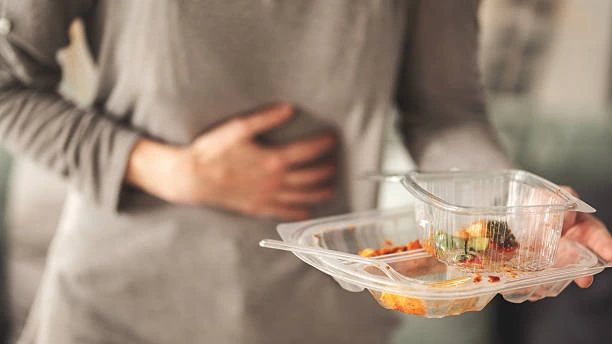
GLP-1 medications have helped countless people lose weight and improve blood sugar. But what happens if you get food poisoning on GLP-1?
Even a mild case of foodborne illness can feel much worse while on these medications. That’s because GLP-1s slow digestion, suppress appetite, and alter how your gut functions. These changes make it harder for your body to recover quickly from stomach bugs or contaminated food.
If you’re experiencing nausea, vomiting, diarrhea, or cramps while taking a GLP-1 medication, it’s important to know whether it’s just a side effect—or if you’re actually dealing with food poisoning. Here’s how to tell the difference and what to do next.
Why Food Poisoning Hits Harder On GLP-1 Medications
GLP-1 receptor agonists work by delaying gastric emptying, which helps you feel fuller longer—an effect supported by clinical findings on GLP-1’s role in appetite and digestion. This is great for weight loss, but it also means your stomach processes food more slowly. When contaminated food enters the system, it takes longer to move through your digestive tract, prolonging symptoms of food poisoning.
Common signs of food poisoning include:
- Sudden nausea or vomiting
- Diarrhea
- Stomach cramps
- Fever or chills
- Fatigue or body aches
These symptoms can overlap with normal GLP-1 side effects, especially in the first few weeks of treatment. But here’s the difference. Food poisoning usually comes on suddenly and includes symptoms like diarrhea and fever that are not typical of the medication alone.
Because your digestive system is already slowed down by the medication, your body may have a harder time clearing out the toxins. As a result, food poisoning may last longer, feel more intense, and increase the risk of dehydration and electrolyte loss.
In women especially, dehydration can quickly affect energy levels, blood pressure, and hormone balance. That’s why rapid action and medical guidance are key if symptoms last more than 24 hours.
What To Do If You Get Food Poisoning On GLP-1
If you suspect you have food poisoning while on a GLP-1, don’t panic. There are ways to manage your symptoms and protect your progress.
- Pause The Medication Temporarily: Most providers recommend skipping your next GLP-1 dose if you’re experiencing vomiting or severe diarrhea, as advised in treatment guidelines for managing side effects of GLP-1 medications. Your body needs to recover first.
- Focus On Hydration: Dehydration is a major concern with food poisoning. Sip water, clear broth, or electrolyte drinks like Pedialyte or LMNT throughout the day. Avoid caffeinated or sugary drinks. Need rapid hydration? IV therapy at Trim Body M.D. delivers fluids and electrolytes fast to help you recover safely.
- Eat Light And Gradually: Start with bland, easy-to-digest foods like toast, rice, bananas, and applesauce. Once your stomach settles, slowly reintroduce normal meals. Avoid greasy or high-fat foods that can irritate your gut.
- Monitor Your Symptoms: If vomiting continues for more than 24 hours, if there’s blood in your stool, or if you’re unable to keep fluids down, it’s time to call your doctor.
- Rest And Rebuild: Give your body time to bounce back. Fatigue after food poisoning is normal, especially with a GLP-1 in your system. Don’t rush into workouts or fasting right away.
Your provider may suggest adjusting your dosage, skipping a week, or restarting your GLP-1 medication once you’re fully recovered. Always follow professional guidance.
How Trim Body M.D. Helps You Recover Faster And Smarter
At Trim Body M.D., our experts understand how GLP-1 medications affect your digestive system and overall health. If you’re dealing with food poisoning on GLP-1, our team can guide you through it safely.
We provide custom recovery plans that include hydration support, lab testing, electrolyte management, and careful reintroduction of your medication. We also help you identify food triggers, manage gut health, and avoid setbacks, so you can stay on track with your weight loss journey even when things don’t go as planned.
Bounce Back Stronger With The Right Support
Food poisoning on GLP-1 medications can be more intense, but it doesn’t have to derail your progress. With proper hydration, smart food choices, and expert care, you can recover faster and return to your plan with confidence.
Don’t guess your way through it. Contact Trim Body M.D. and get the support your body needs to heal and thrive.
Frequently Asked Questions
Can Food Poisoning Be Worse While On GLP-1 Medication?
Yes. Since GLP-1s slow digestion, toxins from contaminated food may linger longer and cause more severe symptoms.
Should I Stop Taking GLP-1 If I Have Food Poisoning?
Temporarily pausing your dose is often recommended during vomiting or diarrhea, but always check with your provider first.
How Can I Tell If It’s Food Poisoning Or A Side Effect?
Food poisoning usually comes on suddenly, includes diarrhea or fever, and feels more intense than standard GLP-1 side effects.
What Should I Eat After Food Poisoning On GLP-1?
Start with bland, soft foods like toast or rice. Avoid fats and heavy meals until your stomach fully settles.
Let our team know how we can help with your goals!

Get In Touch With Us
Schedule Your Free Consultation — Take Your First Step Today
 Henderson
Let our team of Medical Professionals help you achieve your body goals. Contact us Today!