
'%3e%3cpath%20d='M12.0979%2019.9987C10.6974%2019.9987%209.29703%2019.4657%208.2309%2018.3995L1.60176%2011.7704C0.568828%2010.7375%200%209.36414%200%207.9034C0%206.44262%200.568828%205.06934%201.6018%204.03641C2.51562%203.12254%204.00258%203.12262%204.91633%204.03637L7.12605%206.2461C8.03988%207.15992%208.03988%208.6468%207.12605%209.56067C6.97848%209.70821%206.89723%209.90442%206.89723%2010.1131C6.89723%2010.3218%206.97848%2010.5179%207.12602%2010.6655L9.33574%2012.8752C9.48328%2013.0228%209.67949%2013.1041%209.88816%2013.1041C10.0969%2013.1041%2010.293%2013.0228%2010.4406%2012.8753C11.3545%2011.9614%2012.8414%2011.9614%2013.7552%2012.8753L15.9649%2015.085C16.8787%2015.9988%2016.8787%2017.4857%2015.9649%2018.3995C14.8987%2019.4657%2013.4983%2019.9987%2012.0979%2019.9987ZM3.25906%204.91281C3.05898%204.91281%202.85895%204.98895%202.7066%205.14129C1.96883%205.87906%201.5625%206.86%201.5625%207.9034C1.5625%208.9468%201.96883%209.92774%202.7066%2010.6655L9.33574%2017.2947C10.8587%2018.8177%2013.337%2018.8177%2014.86%2017.2947C15.1646%2016.99%2015.1646%2016.4944%2014.86%2016.1898L12.6503%2013.9801C12.5028%2013.8325%2012.3066%2013.7513%2012.0979%2013.7513C11.8892%2013.7513%2011.693%2013.8325%2011.5455%2013.98C10.6316%2014.8939%209.14473%2014.8939%208.23086%2013.98L6.02117%2011.7703C5.57852%2011.3277%205.33473%2010.7391%205.33473%2010.113C5.33473%209.48703%205.57852%208.89844%206.02117%208.45578C6.16875%208.30824%206.25%208.11203%206.25%207.90336C6.25%207.69469%206.16875%207.49852%206.02117%207.35094L3.81148%205.14121C3.65918%204.98899%203.4591%204.91281%203.25906%204.91281Z'%20fill='black'/%3e%3cpath%20d='M9.5448%209.3168C9.25285%209.1959%209.0625%208.91102%209.0625%208.59504V0.782539C9.0625%200.351055%209.41227%200.00128937%209.84375%200.00128937H19.2188C19.6502%200.00128937%2020%200.351055%2020%200.782539V7.03254C20%207.46402%2019.6502%207.81379%2019.2188%207.81379H11.7298L10.3962%209.14746C10.1728%209.3709%209.83676%209.43773%209.5448%209.3168ZM10.625%201.56379V6.70895L10.8538%206.48012C11.0003%206.33359%2011.199%206.25129%2011.4062%206.25129H18.4375V1.56379H10.625Z'%20fill='black'/%3e%3cpath%20d='M12.9688%204.68879C13.4002%204.68879%2013.75%204.33901%2013.75%203.90754C13.75%203.47607%2013.4002%203.12629%2012.9688%203.12629C12.5373%203.12629%2012.1875%203.47607%2012.1875%203.90754C12.1875%204.33901%2012.5373%204.68879%2012.9688%204.68879Z'%20fill='black'/%3e%3cpath%20d='M16.0938%204.68879C16.5252%204.68879%2016.875%204.33901%2016.875%203.90754C16.875%203.47607%2016.5252%203.12629%2016.0938%203.12629C15.6623%203.12629%2015.3125%203.47607%2015.3125%203.90754C15.3125%204.33901%2015.6623%204.68879%2016.0938%204.68879Z'%20fill='black'/%3e%3c/g%3e%3cdefs%3e%3cclipPath%20id='clip0_6353_9'%3e%3crect%20width='20'%20height='20'%20fill='white'/%3e%3c/clipPath%3e%3c/defs%3e%3c/svg%3e)
'%3e%3cpath%20d='M10%2020C13.8389%2020%2017.0312%2018.3836%2017.0312%2016.0938C17.0312%2015.4405%2016.7592%2014.8022%2016.2444%2014.2478C15.9508%2013.9316%2015.4565%2013.9132%2015.1403%2014.2068C14.8241%2014.5004%2014.8058%2014.9947%2015.0994%2015.3109C15.3444%2015.5749%2015.4687%2015.8383%2015.4687%2016.0938C15.4687%2017.2001%2013.13%2018.4375%209.99996%2018.4375C6.86996%2018.4375%204.53121%2017.2001%204.53121%2016.0938C4.53121%2015.8382%204.65547%2015.5749%204.90055%2015.3109C5.19414%2014.9947%205.17582%2014.5004%204.85965%2014.2068C4.54348%2013.9133%204.04914%2013.9316%203.75555%2014.2477C3.24082%2014.8021%202.96875%2015.4405%202.96875%2016.0938C2.96875%2018.3803%206.15578%2020%2010%2020Z'%20fill='black'/%3e%3cpath%20d='M8.13172%2015.9465C8.57285%2016.5282%209.27023%2016.875%2010%2016.875C10.7298%2016.875%2011.4271%2016.5282%2011.8683%2015.9466L15.6293%2011.2402C16.5465%2010.0163%2017.0312%208.5609%2017.0312%207.03125C17.0312%203.15422%2013.877%200%2010%200C6.12297%200%202.96875%203.15422%202.96875%207.03125C2.96875%208.56094%203.45352%2010.0164%204.37063%2011.2402L8.13172%2015.9465ZM10%201.5625C13.0155%201.5625%2015.4688%204.01578%2015.4688%207.03125C15.4688%208.21648%2015.0944%209.34434%2014.386%2010.2938C14.386%2010.2938%2010.6309%2014.9924%2010.626%2014.9989C10.4766%2015.1982%2010.2484%2015.3125%2010%2015.3125C9.75156%2015.3125%209.5234%2015.1982%209.37402%2014.9989C9.36914%2014.9923%209.36418%2014.9859%209.3591%2014.9796L5.61395%2010.2937C4.90559%209.34434%204.53125%208.21652%204.53125%207.03125C4.53125%204.01578%206.98453%201.5625%2010%201.5625Z'%20fill='black'/%3e%3cpath%20d='M10%2010.9375C12.1539%2010.9375%2013.9062%209.18516%2013.9062%207.03125C13.9062%204.87734%2012.1539%203.125%2010%203.125C7.84609%203.125%206.09375%204.87734%206.09375%207.03125C6.09375%209.18516%207.84609%2010.9375%2010%2010.9375ZM10%204.6875C11.2923%204.6875%2012.3438%205.73891%2012.3438%207.03125C12.3438%208.32359%2011.2923%209.375%2010%209.375C8.70766%209.375%207.65625%208.32359%207.65625%207.03125C7.65625%205.73891%208.70766%204.6875%2010%204.6875Z'%20fill='black'/%3e%3c/g%3e%3cdefs%3e%3cclipPath%20id='clip0_6353_60'%3e%3crect%20width='20'%20height='20'%20fill='white'/%3e%3c/clipPath%3e%3c/defs%3e%3c/svg%3e)

'%3e%3ccircle%20cx='321'%20cy='321'%20r='276'%20transform='matrix(-1%200%200%201%20481%200)'%20stroke='%23E5DFD3'%20stroke-width='90'/%3e%3c/g%3e%3cdefs%3e%3cclipPath%20id='clip0_6046_3421'%3e%3crect%20width='481'%20height='413'%20fill='white'%20transform='matrix(-1%200%200%201%20481%200)'/%3e%3c/clipPath%3e%3c/defs%3e%3c/svg%3e)
Does Semaglutide Cause Muscle Loss?
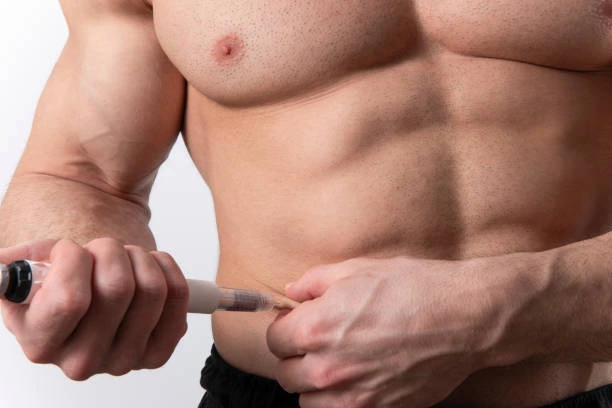
You’ve been shedding pounds using semaglutide, your hunger feels manageable, and you can see results. But now there’s another question coming up: does semaglutide cause muscle loss? If you’re noticing more than just fat disappearing, you’re not the only one. Many people using semaglutide to manage weight are beginning to raise similar concerns.
This medication has changed how we deal with obesity and metabolic health. But not all weight loss is the same. Losing muscle along with fat could slow metabolism, make you weaker, and even raise the chance of regaining the weight that’s been lost.
How Semaglutide Works for Weight Loss
Semaglutide is part of a group of drugs called GLP-1 receptor agonists. This medication was first created to treat type 2 diabetes. It imitates a hormone in the body that affects parts of the brain controlling appetite. To put it , it makes people feel less hungry, stay full longer, and eat fewer calories. This makes it very effective to help people lose weight.
In clinical trials, people taking semaglutide dropped as much as 15 percent or more of their body weight within months. Here’s the tricky part: losing weight might mean losing more than just fat. Research hints that up to 40 percent of the total weight shed could come from lean body mass, which includes muscle.
That’s where problems can start. Dropping weight but losing muscle too could harm your body’s structure and how it processes energy in the long run. Muscle helps keep you moving, supports strong bones, and keeps your metabolism steady. So the focus isn’t just on weight loss—it’s to shed fat while keeping or even gaining muscle.
Does Semaglutide Cause Muscle Loss? What Studies Reveal
Research into how semaglutide affects muscle and its preservation is still developing. Current evidence shows semaglutide itself doesn’t lead to muscle loss, but the weight reduction it triggers might involve losing lean body mass. This difference matters.
Scientists in a study shared in NCBI noted that people using semaglutide shed about 14.9% of their body weight over 68 weeks. Although most of the weight they lost was fat, some came from fat-free mass, which includes both muscles and water.
Here’s what’s going on:
- Caloric Deficit: Semaglutide curbs hunger, which lowers how much you eat. When your body doesn’t get enough fuel, it burns fat for energy, and sometimes muscle too.
- Less Protein Intake: Eating less can mean not getting enough protein, which your body needs to keep muscles strong.
- Skipping Resistance Training: Many people focus on shedding pounds but skip strength exercises. Without those, holding onto muscle becomes more difficult.
Is semaglutide to blame? not. The drug speeds up fat-burning, but muscle loss often happens because of poor nutrition and skipping workouts while using the medication.
Ways To Keep Your Muscles While Taking Semaglutide
Focus on building muscle, not just shedding pounds. Muscle loss while using semaglutide doesn’t have to happen. With smart habits, you can drop weight without compromising your muscle strength or health.
Get Enough Protein
Muscles require fuel, and protein is essential. To protect your muscles, aim to eat 1.0 to 1.2 grams of protein per pound of your body weight each day. Protein helps with rebuilding muscles, maintaining strength, and keeping your metabolism active. At TrimBody M.D., nutritionists provide personalized meal plans to help patients meet their protein goals.
Do Regular Strength Exercises
Cardio helps burn fat, but you need strength training to keep your muscles intact. Schedule at least two to three resistance workouts each week. Work your whole body with things like weights, resistance bands, or simple bodyweight moves like push-ups and squats.
Pay Attention to Body Composition Instead of Just Weight
A scale doesn’t give the full picture. Tools such a=s DEXA scans or body impedance monitors can separate fat, muscle, and water measurements. At TrimBody M.D., we offer free body fat and BMI check-ups to let patients understand more than just the number on the scale.
Team Up With A Medical Weight Loss Group
Not everyone loses weight the same way. A dedicated team tracks your progress, checks labs, and keeps an eye on muscle to help you stay consistent. That’s why our semaglutide programs managed by medical experts adapt to fit your body’s specific needs and overall health.
Why Your Health in the Long Run Depends on This
Shedding weight can boost your health, but it’s important not to lose muscle along the way. Muscle doesn’t just shape your body. It plays an important role in joint support, stabilizing blood sugar, keeping your metabolism steady, and helping you stay active and self-reliant as you grow older.
Losing muscle could result in:
- Lower metabolism levels, which can make it simpler to gain back weight later
- Feeling more tired and weaker overall
- Reduced ability to move well in older people
This matters even more once you hit 40 since muscle loss from aging (sarcopenia) is already a problem by then. Using semaglutide without a proper plan may speed up that loss.
To preserve strength while shedding fat, you’ll need the right approach with tools like protein, fitness guidance, and medical supervision.
A Smarter Insight From Weight Loss Specialists
Does semaglutide cause muscle loss? Not directly. But it can lead to muscle reduction if used without proper nutrition and consistent strength training. The issue isn’t unique to semaglutide. Rapid weight loss from any method can result in losing lean tissue if not managed the right way.
What’s the main message? Focus on making the right kind of progress, not just lowering the number on the scale. With the right balance, you can cut unwanted fat, keep your muscle, and build a solid foundation for results that last.
At TrimBody M.D., we focus on weight loss strategies grounded in science aiming to support your overall health rather than just slimming you down. If you’re thinking about semaglutide or are currently taking it, we can help you build a tailored plan to boost fat loss and maintain muscle. Transformation should empower you, keeping you strong and full of energy.
Ready to take the next step? Schedule a free consultation with our experts today and get a plan built around your goals.
Disclaimer: This article is for informational and educational purposes. Treatment decisions are made during an individual medical evaluation with a licensed provider. We provide compounded semaglutide and are not affiliated with or endorsed by the manufacturer of Wegovy®.
Frequently Asked Questions
How Can I Prevent Muscle Loss With Semaglutide?
Follow a diet rich in protein, combine it with regular strength training, and avoid letting your calorie intake drop too much. Your body loses muscle when it doesn’t get enough fuel or resistance. TrimBody M.D. helps patients protect lean muscle while focusing on fat reduction using semaglutide treatments.
Does Semaglutide Harm Your Muscles?
No, semaglutide does not harm muscles . The potential risk of muscle loss comes from eating fewer calories or not getting enough protein during weight loss. With the right guidance from professionals, including tailored nutrition plans and medical oversight, you can maintain healthy muscles while using it.
Can You Gain Muscle While Using Ozempic?
Yes, you can. By sticking with a workout plan aimed at strength and eating enough good-quality protein, your body can grow or keep muscle while you lose fat. Semaglutide does not stop muscle building if used the right way.
How Much Muscle Do You Lose On Semaglutide?
Research shows that losing 30% to 40% of weight as lean mass can happen if no steps are taken to prevent it. This does not have to occur. At TrimBody M.D. Most patients hold onto muscle with the right approach and focus on shedding fat instead.
Is Muscle Loss From Semaglutide Forever?
Not always. People can often regain lost muscle by sticking to regular resistance exercises and eating enough protein. The important part is to follow a doctor-approved plan designed to build lean muscle during the process.
Let our team know how we can help with your goals!

Get In Touch With Us
Schedule Your Free Consultation — Take Your First Step Today
 Henderson
Let our team of Medical Professionals help you achieve your body goals. Contact us Today!