
'%3e%3cpath%20d='M12.0979%2019.9987C10.6974%2019.9987%209.29703%2019.4657%208.2309%2018.3995L1.60176%2011.7704C0.568828%2010.7375%200%209.36414%200%207.9034C0%206.44262%200.568828%205.06934%201.6018%204.03641C2.51562%203.12254%204.00258%203.12262%204.91633%204.03637L7.12605%206.2461C8.03988%207.15992%208.03988%208.6468%207.12605%209.56067C6.97848%209.70821%206.89723%209.90442%206.89723%2010.1131C6.89723%2010.3218%206.97848%2010.5179%207.12602%2010.6655L9.33574%2012.8752C9.48328%2013.0228%209.67949%2013.1041%209.88816%2013.1041C10.0969%2013.1041%2010.293%2013.0228%2010.4406%2012.8753C11.3545%2011.9614%2012.8414%2011.9614%2013.7552%2012.8753L15.9649%2015.085C16.8787%2015.9988%2016.8787%2017.4857%2015.9649%2018.3995C14.8987%2019.4657%2013.4983%2019.9987%2012.0979%2019.9987ZM3.25906%204.91281C3.05898%204.91281%202.85895%204.98895%202.7066%205.14129C1.96883%205.87906%201.5625%206.86%201.5625%207.9034C1.5625%208.9468%201.96883%209.92774%202.7066%2010.6655L9.33574%2017.2947C10.8587%2018.8177%2013.337%2018.8177%2014.86%2017.2947C15.1646%2016.99%2015.1646%2016.4944%2014.86%2016.1898L12.6503%2013.9801C12.5028%2013.8325%2012.3066%2013.7513%2012.0979%2013.7513C11.8892%2013.7513%2011.693%2013.8325%2011.5455%2013.98C10.6316%2014.8939%209.14473%2014.8939%208.23086%2013.98L6.02117%2011.7703C5.57852%2011.3277%205.33473%2010.7391%205.33473%2010.113C5.33473%209.48703%205.57852%208.89844%206.02117%208.45578C6.16875%208.30824%206.25%208.11203%206.25%207.90336C6.25%207.69469%206.16875%207.49852%206.02117%207.35094L3.81148%205.14121C3.65918%204.98899%203.4591%204.91281%203.25906%204.91281Z'%20fill='black'/%3e%3cpath%20d='M9.5448%209.3168C9.25285%209.1959%209.0625%208.91102%209.0625%208.59504V0.782539C9.0625%200.351055%209.41227%200.00128937%209.84375%200.00128937H19.2188C19.6502%200.00128937%2020%200.351055%2020%200.782539V7.03254C20%207.46402%2019.6502%207.81379%2019.2188%207.81379H11.7298L10.3962%209.14746C10.1728%209.3709%209.83676%209.43773%209.5448%209.3168ZM10.625%201.56379V6.70895L10.8538%206.48012C11.0003%206.33359%2011.199%206.25129%2011.4062%206.25129H18.4375V1.56379H10.625Z'%20fill='black'/%3e%3cpath%20d='M12.9688%204.68879C13.4002%204.68879%2013.75%204.33901%2013.75%203.90754C13.75%203.47607%2013.4002%203.12629%2012.9688%203.12629C12.5373%203.12629%2012.1875%203.47607%2012.1875%203.90754C12.1875%204.33901%2012.5373%204.68879%2012.9688%204.68879Z'%20fill='black'/%3e%3cpath%20d='M16.0938%204.68879C16.5252%204.68879%2016.875%204.33901%2016.875%203.90754C16.875%203.47607%2016.5252%203.12629%2016.0938%203.12629C15.6623%203.12629%2015.3125%203.47607%2015.3125%203.90754C15.3125%204.33901%2015.6623%204.68879%2016.0938%204.68879Z'%20fill='black'/%3e%3c/g%3e%3cdefs%3e%3cclipPath%20id='clip0_6353_9'%3e%3crect%20width='20'%20height='20'%20fill='white'/%3e%3c/clipPath%3e%3c/defs%3e%3c/svg%3e)
'%3e%3cpath%20d='M10%2020C13.8389%2020%2017.0312%2018.3836%2017.0312%2016.0938C17.0312%2015.4405%2016.7592%2014.8022%2016.2444%2014.2478C15.9508%2013.9316%2015.4565%2013.9132%2015.1403%2014.2068C14.8241%2014.5004%2014.8058%2014.9947%2015.0994%2015.3109C15.3444%2015.5749%2015.4687%2015.8383%2015.4687%2016.0938C15.4687%2017.2001%2013.13%2018.4375%209.99996%2018.4375C6.86996%2018.4375%204.53121%2017.2001%204.53121%2016.0938C4.53121%2015.8382%204.65547%2015.5749%204.90055%2015.3109C5.19414%2014.9947%205.17582%2014.5004%204.85965%2014.2068C4.54348%2013.9133%204.04914%2013.9316%203.75555%2014.2477C3.24082%2014.8021%202.96875%2015.4405%202.96875%2016.0938C2.96875%2018.3803%206.15578%2020%2010%2020Z'%20fill='black'/%3e%3cpath%20d='M8.13172%2015.9465C8.57285%2016.5282%209.27023%2016.875%2010%2016.875C10.7298%2016.875%2011.4271%2016.5282%2011.8683%2015.9466L15.6293%2011.2402C16.5465%2010.0163%2017.0312%208.5609%2017.0312%207.03125C17.0312%203.15422%2013.877%200%2010%200C6.12297%200%202.96875%203.15422%202.96875%207.03125C2.96875%208.56094%203.45352%2010.0164%204.37063%2011.2402L8.13172%2015.9465ZM10%201.5625C13.0155%201.5625%2015.4688%204.01578%2015.4688%207.03125C15.4688%208.21648%2015.0944%209.34434%2014.386%2010.2938C14.386%2010.2938%2010.6309%2014.9924%2010.626%2014.9989C10.4766%2015.1982%2010.2484%2015.3125%2010%2015.3125C9.75156%2015.3125%209.5234%2015.1982%209.37402%2014.9989C9.36914%2014.9923%209.36418%2014.9859%209.3591%2014.9796L5.61395%2010.2937C4.90559%209.34434%204.53125%208.21652%204.53125%207.03125C4.53125%204.01578%206.98453%201.5625%2010%201.5625Z'%20fill='black'/%3e%3cpath%20d='M10%2010.9375C12.1539%2010.9375%2013.9062%209.18516%2013.9062%207.03125C13.9062%204.87734%2012.1539%203.125%2010%203.125C7.84609%203.125%206.09375%204.87734%206.09375%207.03125C6.09375%209.18516%207.84609%2010.9375%2010%2010.9375ZM10%204.6875C11.2923%204.6875%2012.3438%205.73891%2012.3438%207.03125C12.3438%208.32359%2011.2923%209.375%2010%209.375C8.70766%209.375%207.65625%208.32359%207.65625%207.03125C7.65625%205.73891%208.70766%204.6875%2010%204.6875Z'%20fill='black'/%3e%3c/g%3e%3cdefs%3e%3cclipPath%20id='clip0_6353_60'%3e%3crect%20width='20'%20height='20'%20fill='white'/%3e%3c/clipPath%3e%3c/defs%3e%3c/svg%3e)

'%3e%3ccircle%20cx='321'%20cy='321'%20r='276'%20transform='matrix(-1%200%200%201%20481%200)'%20stroke='%23E5DFD3'%20stroke-width='90'/%3e%3c/g%3e%3cdefs%3e%3cclipPath%20id='clip0_6046_3421'%3e%3crect%20width='481'%20height='413'%20fill='white'%20transform='matrix(-1%200%200%201%20481%200)'/%3e%3c/clipPath%3e%3c/defs%3e%3c/svg%3e)
Do You Lose More Weight on Higher Dose of Wegovy?
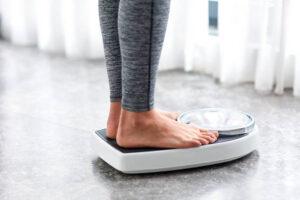
Do you lose more weight on higher dose of Wegovy? Clinical trial data show that higher investigational doses of semaglutide have produced greater average weight loss than the standard 2.4 mg weekly dose, but they are not yet FDA-approved.
At Trim Body M.D., treatment decisions are based on safety, medical eligibility, and long-term sustainability rather than dose alone. Talk with our clinic today to optimize your Wegovy dose safely.
Key Takeaways:
- Higher doses showed greater average weight reduction
- The standard approved dose is 2.4 mg weekly
- More dose does not mean unlimited results
- Side effects increase with higher exposure
- Medical supervision determines proper escalation
How Does Wegovy Affect Weight Loss Outcomes
Wegovy contains semaglutide, a GLP-1 receptor agonist that reduces appetite, slows digestion, and improves insulin function. The approved maintenance dose is 2.4 mg per week, and doctors raise the dose gradually to reduce stomach side effects.
In a major study published in the New England Journal of Medicine, people using the standard 2.4 mg dose lost about 15 percent of their body weight over 68 weeks. That level of weight loss is linked to improvements in blood pressure, cholesterol, and blood sugar.
Why Higher Doses Can Lead to More Weight Loss
Higher doses activate GLP-1 receptors more strongly, which can increase fullness and reduce calorie intake. However, stronger stimulation can also increase nausea, vomiting, diarrhea, and slower digestion. These stomach-related effects are the main reason dose increases must be monitored carefully.
Higher doses are still under study and are not part of the approved 2.4 mg weekly treatment. Patients should never change their dose without medical supervision.
Let our team know how we can help with your goals!
Why Some Patients Stop Seeing Results with the Standard Dose
Weight loss tends to slow down after the first few months. This happens because of a natural process in the body. When someone loses weight, their resting metabolism gets slower. The body adjusts by lowering the total energy it uses every day.
Many patients think the medication has stopped helping, but what’s happening is their metabolism is adapting. Some experts are exploring increasing the dose as one way to address this, though it is not the only option.
Other reasons for the slowdown may include:
- Eating more calories without realizing it
- Eating less protein, which may cause muscle loss
- Skipping or doing less resistance training
- Missing regular weekly doses
- Not sleeping well, which can mess with hunger hormones
Before raising medication levels, doctors often recheck a patient’s daily habits and routines. Looking at a Wegovy dosage chart can help determine if the patient has reached the proper maintenance dose.
A bigger dose doesn’t cancel out basic metabolic laws. If someone eats more than they burn, weight loss will still slow down, no matter how strong the GLP-1 therapy is.
Safety and How Well It’s Handled
Studies on higher doses showed that safety results matched the approved treatment plan. However, stronger doses led to side effects happening more often.
Typical side effects include:
- Feeling sick
- Loose stools
- Trouble with bowel movements
- Stomach discomfort
- Feeling tired for a short time
Experts are still studying how the body handles the drug long term. Obesity is treated over a long time, so keeping the treatment tolerable matters more than speeding up short-term results.
People often gain weight back after they stop using it. Research reveals that stopping semaglutide causes people to regain much of the weight they had lost over time. This highlights how crucial it is to stick to treatment long-term and make changes to daily habits along with using medication.
To discuss our services, contact us today!
Higher Doses or Long-Term Methods: What Leads to Lasting Weight Loss
Can a higher dose of Wegovy result in greater short-term weight loss? Investigations suggest the answer might be yes. The real issue, however, is figuring out what leads to lasting changes in metabolism over the years.
Losing fat requires you to eat fewer calories than you burn while keeping your muscles strong. Eating protein, like 15 to 22 grams found in 5.3 to 7 ounces of plain Greek yogurt, helps with this. It has casein, which digests and helps fix muscles and keeps you feeling full without adding too much sugar.
Doing regular strength exercises helps keep your metabolism steady. Getting good sleep keeps hormones like leptin and ghrelin in check, which are important for managing hunger.
Using medication can help control hunger better, but keeping up good habits is what makes results last.
To make more progress, people often find success using clear plans such as those in increased weight loss programs. These plans focus on keeping a balance of macronutrients, staying hydrated, eating more fiber, and getting stronger with regular strength training.
Larger doses could help manage plateaus in the future if given approval. But it is crucial to evaluate each person on an individual basis. Not all patients need higher doses to see significant results.
Key Points About Investigational Doses
The standard and approved weekly dose of 2.4 mg leads to an average weight loss of around 15 to 16 percent in a year.
The higher dose tested in STEP UP trials showed an average weight loss of 19 to 21 percent over a similar time period.
A bigger number of people lost 20 percent of their total body weight with the higher dose.
These findings show better results with higher doses, but decisions should always be made based on personal medical needs.
Need help deciding? Fill out a contact form,and we’ll ensure you’re informed!
How TrimBody M.D. Helps Patients Choose the Right Dose
Our goal is steady fat loss, muscle preservation, and long-term metabolic health. Here are the benefits our patients experience:
- A full review of metabolic health
- and adjusting medication under medical guidance
- Customized nutrition plans
- Solutions to overcome frustrating plateaus
- Regular checks to ensure safety
Smarter Dose Decisions for Lasting Weight Loss
Do You Lose More Weight on a Higher Dose of Wegovy? Higher investigational doses have shown greater average weight loss than the standard 2.4 mg weekly dose, but safety, approval status, and individual tolerance guide the decision. Long-term results rely on consistent treatment, structured nutrition, strength training, sleep, and medical supervision.
Weight loss medication works best when integrated into a structured clinical framework rather than adjusted independently.
If you are evaluating your progress or considering next steps, speak with a licensed provider who can review your medical history and treatment response. Start your medical evaluation today.
Disclaimer: This article is for informational and educational purposes. Treatment decisions are made during an individual medical evaluation with a licensed provider. We provide compounded semaglutide and are not affiliated with or endorsed by the manufacturer of Wegovy®.
FAQs about Higher Dose Wegovy Weight Loss
Can A Higher Wegovy Dose Restart Weight Loss?
Possibly, but slowed progress often reflects metabolic adaptation, not medication failure. A clinical review of calorie intake, protein levels, activity, sleep, and adherence should happen before considering dose adjustments.
How Fast Does Weight Loss Change After A Dose Increase?
Weight changes are gradual, not immediate. Appetite suppression may improve within weeks, but measurable body composition shifts typically require consistent adherence over several months.
Are Side Effects Stronger At Higher Doses?
Gastrointestinal symptoms such as nausea or diarrhea are more common with higher exposure. Gradual titration and physician supervision reduce the risk of intolerance.
Will A Higher Dose Preserve Muscle Mass?
Dose alone does not protect muscle tissue. Adequate protein intake and resistance training are essential to maintain lean mass during fat loss.
Is The Highest Dose Always The Most Effective Option?
Not necessarily. The most effective dose is the highest one a patient can tolerate safely while maintaining steady progress and long-term adherence.
Call and talk to a specialist today! (702) 489-3300
Let our team know how we can help with your goals!

Get In Touch With Us
Schedule Your Free Consultation — Take Your First Step Today
 Henderson
Let our team of Medical Professionals help you achieve your body goals. Contact us Today!