
'%3e%3cpath%20d='M12.0979%2019.9987C10.6974%2019.9987%209.29703%2019.4657%208.2309%2018.3995L1.60176%2011.7704C0.568828%2010.7375%200%209.36414%200%207.9034C0%206.44262%200.568828%205.06934%201.6018%204.03641C2.51562%203.12254%204.00258%203.12262%204.91633%204.03637L7.12605%206.2461C8.03988%207.15992%208.03988%208.6468%207.12605%209.56067C6.97848%209.70821%206.89723%209.90442%206.89723%2010.1131C6.89723%2010.3218%206.97848%2010.5179%207.12602%2010.6655L9.33574%2012.8752C9.48328%2013.0228%209.67949%2013.1041%209.88816%2013.1041C10.0969%2013.1041%2010.293%2013.0228%2010.4406%2012.8753C11.3545%2011.9614%2012.8414%2011.9614%2013.7552%2012.8753L15.9649%2015.085C16.8787%2015.9988%2016.8787%2017.4857%2015.9649%2018.3995C14.8987%2019.4657%2013.4983%2019.9987%2012.0979%2019.9987ZM3.25906%204.91281C3.05898%204.91281%202.85895%204.98895%202.7066%205.14129C1.96883%205.87906%201.5625%206.86%201.5625%207.9034C1.5625%208.9468%201.96883%209.92774%202.7066%2010.6655L9.33574%2017.2947C10.8587%2018.8177%2013.337%2018.8177%2014.86%2017.2947C15.1646%2016.99%2015.1646%2016.4944%2014.86%2016.1898L12.6503%2013.9801C12.5028%2013.8325%2012.3066%2013.7513%2012.0979%2013.7513C11.8892%2013.7513%2011.693%2013.8325%2011.5455%2013.98C10.6316%2014.8939%209.14473%2014.8939%208.23086%2013.98L6.02117%2011.7703C5.57852%2011.3277%205.33473%2010.7391%205.33473%2010.113C5.33473%209.48703%205.57852%208.89844%206.02117%208.45578C6.16875%208.30824%206.25%208.11203%206.25%207.90336C6.25%207.69469%206.16875%207.49852%206.02117%207.35094L3.81148%205.14121C3.65918%204.98899%203.4591%204.91281%203.25906%204.91281Z'%20fill='black'/%3e%3cpath%20d='M9.5448%209.3168C9.25285%209.1959%209.0625%208.91102%209.0625%208.59504V0.782539C9.0625%200.351055%209.41227%200.00128937%209.84375%200.00128937H19.2188C19.6502%200.00128937%2020%200.351055%2020%200.782539V7.03254C20%207.46402%2019.6502%207.81379%2019.2188%207.81379H11.7298L10.3962%209.14746C10.1728%209.3709%209.83676%209.43773%209.5448%209.3168ZM10.625%201.56379V6.70895L10.8538%206.48012C11.0003%206.33359%2011.199%206.25129%2011.4062%206.25129H18.4375V1.56379H10.625Z'%20fill='black'/%3e%3cpath%20d='M12.9688%204.68879C13.4002%204.68879%2013.75%204.33901%2013.75%203.90754C13.75%203.47607%2013.4002%203.12629%2012.9688%203.12629C12.5373%203.12629%2012.1875%203.47607%2012.1875%203.90754C12.1875%204.33901%2012.5373%204.68879%2012.9688%204.68879Z'%20fill='black'/%3e%3cpath%20d='M16.0938%204.68879C16.5252%204.68879%2016.875%204.33901%2016.875%203.90754C16.875%203.47607%2016.5252%203.12629%2016.0938%203.12629C15.6623%203.12629%2015.3125%203.47607%2015.3125%203.90754C15.3125%204.33901%2015.6623%204.68879%2016.0938%204.68879Z'%20fill='black'/%3e%3c/g%3e%3cdefs%3e%3cclipPath%20id='clip0_6353_9'%3e%3crect%20width='20'%20height='20'%20fill='white'/%3e%3c/clipPath%3e%3c/defs%3e%3c/svg%3e)
'%3e%3cpath%20d='M10%2020C13.8389%2020%2017.0312%2018.3836%2017.0312%2016.0938C17.0312%2015.4405%2016.7592%2014.8022%2016.2444%2014.2478C15.9508%2013.9316%2015.4565%2013.9132%2015.1403%2014.2068C14.8241%2014.5004%2014.8058%2014.9947%2015.0994%2015.3109C15.3444%2015.5749%2015.4687%2015.8383%2015.4687%2016.0938C15.4687%2017.2001%2013.13%2018.4375%209.99996%2018.4375C6.86996%2018.4375%204.53121%2017.2001%204.53121%2016.0938C4.53121%2015.8382%204.65547%2015.5749%204.90055%2015.3109C5.19414%2014.9947%205.17582%2014.5004%204.85965%2014.2068C4.54348%2013.9133%204.04914%2013.9316%203.75555%2014.2477C3.24082%2014.8021%202.96875%2015.4405%202.96875%2016.0938C2.96875%2018.3803%206.15578%2020%2010%2020Z'%20fill='black'/%3e%3cpath%20d='M8.13172%2015.9465C8.57285%2016.5282%209.27023%2016.875%2010%2016.875C10.7298%2016.875%2011.4271%2016.5282%2011.8683%2015.9466L15.6293%2011.2402C16.5465%2010.0163%2017.0312%208.5609%2017.0312%207.03125C17.0312%203.15422%2013.877%200%2010%200C6.12297%200%202.96875%203.15422%202.96875%207.03125C2.96875%208.56094%203.45352%2010.0164%204.37063%2011.2402L8.13172%2015.9465ZM10%201.5625C13.0155%201.5625%2015.4688%204.01578%2015.4688%207.03125C15.4688%208.21648%2015.0944%209.34434%2014.386%2010.2938C14.386%2010.2938%2010.6309%2014.9924%2010.626%2014.9989C10.4766%2015.1982%2010.2484%2015.3125%2010%2015.3125C9.75156%2015.3125%209.5234%2015.1982%209.37402%2014.9989C9.36914%2014.9923%209.36418%2014.9859%209.3591%2014.9796L5.61395%2010.2937C4.90559%209.34434%204.53125%208.21652%204.53125%207.03125C4.53125%204.01578%206.98453%201.5625%2010%201.5625Z'%20fill='black'/%3e%3cpath%20d='M10%2010.9375C12.1539%2010.9375%2013.9062%209.18516%2013.9062%207.03125C13.9062%204.87734%2012.1539%203.125%2010%203.125C7.84609%203.125%206.09375%204.87734%206.09375%207.03125C6.09375%209.18516%207.84609%2010.9375%2010%2010.9375ZM10%204.6875C11.2923%204.6875%2012.3438%205.73891%2012.3438%207.03125C12.3438%208.32359%2011.2923%209.375%2010%209.375C8.70766%209.375%207.65625%208.32359%207.65625%207.03125C7.65625%205.73891%208.70766%204.6875%2010%204.6875Z'%20fill='black'/%3e%3c/g%3e%3cdefs%3e%3cclipPath%20id='clip0_6353_60'%3e%3crect%20width='20'%20height='20'%20fill='white'/%3e%3c/clipPath%3e%3c/defs%3e%3c/svg%3e)

'%3e%3ccircle%20cx='321'%20cy='321'%20r='276'%20transform='matrix(-1%200%200%201%20481%200)'%20stroke='%23E5DFD3'%20stroke-width='90'/%3e%3c/g%3e%3cdefs%3e%3cclipPath%20id='clip0_6046_3421'%3e%3crect%20width='481'%20height='413'%20fill='white'%20transform='matrix(-1%200%200%201%20481%200)'/%3e%3c/clipPath%3e%3c/defs%3e%3c/svg%3e)
Can I Take HCG Injection After Ovulation?
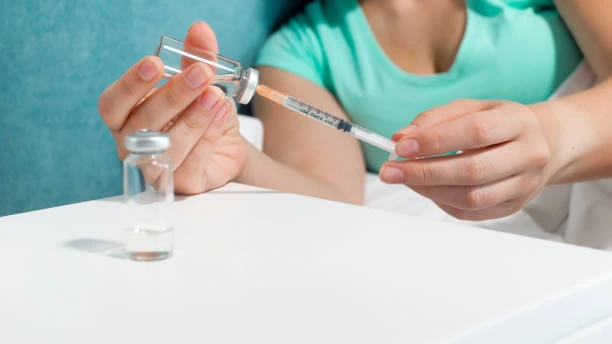
Can I take hCG injection after ovulation? In most cases, hCG injections are not intended to be taken after ovulation because their primary role is to trigger ovulation before the egg is released. Using hCG after ovulation does not restart ovulation and may only affect hormone testing or cycle interpretation, not fertility outcomes. At Trim Body M.D., hCG timing is guided by physiology, lab markers, and clinical goals. Book a free consultation to discuss timing and fertility support.
Key Takeaways:
- hCG is designed to trigger ovulation, not follow it
- Post-ovulation use does not release another egg
- hCG after ovulation may affect pregnancy tests
- Timing depends on fertility or medical purpose
- Medical guidance matters for safe hormone use
How hCG Functions in Ovulation
Human chorionic gonadotropin acts like luteinizing hormone. Doctors often use it in fertility treatments as a “trigger shot” to prompt the ovary to release a mature egg. This egg release takes place around 34 to 36 hours after the injection.
If ovulation has already occurred, hCG can no longer cause an egg to be released. The ovary will not release a second egg during the same cycle. For this reason, doctors almost always administer hCG before ovulation happens, not after.
Recognizing this timing helps avoid confusion when it comes to planning for fertility or checking hormone levels.
Is There Any Reason to Take hCG After Ovulation?
Doctors do not use hCG to induce ovulation after it has already taken place. They might still prescribe it in certain specific situations, but these are not related to helping eggs release.
Some scenarios where hCG might be used after ovulation include:
- To support the luteal phase under expert guidance
- In hormone treatments for assisted reproduction
- As part of medical therapies that are not aimed at fertility
In such cases, hCG serves a role in sending hormonal signals instead of triggering ovulation. Understanding this difference is very important. Using hCG without proper medical advice could lead to wrong test results or disrupt the cycle.
People researching pregnancy-related treatments often look into pregnancy guidance to learn how hCG works after conception, not ovulation.
Does hCG Help Implantation After Ovulation?
Current research shows no benefit in using hCG after ovulation to help with implantation in natural cycles. Factors like embryo health, how the uterus responds, and adequate progesterone support matter more than hCG injections after ovulation.
Some fertility treatments look into using small doses of hCG during the luteal phase. However, results vary and are often specific to the individual. Reproductive experts, who watch hormone levels, handle these methods.
For most people, using hCG after ovulation without a specific medical reason does not lead to better fertility results.
Risk of False-Positive Pregnancy Tests After hCG Use
A key thing to keep in mind is pregnancy testing. Pregnancy tests pick up on the same hormone found in hCG injections. Using hCG following ovulation might trigger a false-positive test result even if no implantation has taken place. This might result in:
- Confusion when reading test results
- Emotional upset
- Delays in seeking medical advice
It’s important for people who monitor their cycles to be aware of this risk. Hormonal timing should match up with testing schedules to prevent mistakes.
What Can Happen if You Take hCG Too Late?
Taking hCG after ovulation by mistake doesn’t cause harm from one dose. But it also won’t create the hormonal effect needed for ovulation to occur. Some possible effects might include:
- No changes in ovulation status
- Temporary increase in measured hCG levels
- Problems with tracking menstrual cycles
People unsure about when to take the injection should talk to a doctor instead of repeating the dose.
Patients who worry about changes in their cycle often check cycle timing to learn how hormones can influence their menstrual patterns.
What Research Shows About hCG and Ovulation Timing
Studies in Fertility and Sterility from reproductive endocrinology research show hCG works best when given before ovulation to align egg release with insemination. Research also proves giving it after ovulation does not restart ovulation.
Studies on ScienceDirect show that hCG works as a signal rather than repairing anything. After the ovary gets the ovulation signal, it doesn’t release eggs again.
This shows why all fertility treatments put so much focus on timing.
Why Do You Need Medical Supervision?
People should not use hormones like hCG randomly. How they work depends a lot on the timing, the dose, and the medical reason. Doctors can help by:
- Checking if ovulation has happened
- Avoiding unnecessary hormone use
- Reading lab results
- Making sure treatments match fertility plans
Patients who go to an hCG clinic get proper monitoring instead of guessing through the process.
How Trim Body M.D. Guides hCG Usage Timing
Trim Body M.D. focuses on matching hormone therapy with body functions, lab results, and what patients aim to achieve. Patients gain advantages like:
- Planning hormones based on cycles
- Easy-to-follow ovulation timing guidance
- Decisions backed by lab tests
- Fertility-friendly methods
- Continuous access to providers
A Simple Insight into Using hCG After Ovulation
Getting an hCG injection after ovulation won’t cause the egg to be released and isn’t part of standard fertility treatments. Doctors recommend it in specific medical situations under their care. Using it on your own without guidance could make it harder to track your cycle or interpret test results.
If you’re uncertain about when ovulation happens or how to use hCG, it’s better to get advice from a professional instead of trying to figure it out yourself. Book a free consultation today.
FAQs about hCG Injection After Ovulation
Can I Take hCG Injection After Ovulation?
Usually no. hCG is meant to trigger ovulation before egg release, not after it occurs. Post-ovulation use does not restart ovulation or improve fertility outcomes.
Does hCG After Ovulation Help With Implantation?
No strong evidence supports this in natural cycles. Implantation depends more on embryo quality and progesterone support than post-ovulatory hCG use.
Can hCG After Ovulation Cause A False Positive Pregnancy Test?
Yes. hCG injections contain the same hormone detected by pregnancy tests. Testing too soon after an injection can appear positive without an actual pregnancy.
Is It Harmful If hCG Is Taken Too Late?
A single late dose is usually not dangerous. However, it offers no ovulatory benefit and may confuse cycle tracking or hormone test interpretation.
When Is hCG Used After Ovulation Medically?
Only in specific, supervised protocols such as luteal support in assisted reproduction. These cases require specialist oversight and hormone monitoring.
Let our team know how we can help with your goals!

Get In Touch With Us
Schedule Your Free Consultation — Take Your First Step Today
 Henderson
Let our team of Medical Professionals help you achieve your body goals. Contact us Today!