
'%3e%3cpath%20d='M12.0979%2019.9987C10.6974%2019.9987%209.29703%2019.4657%208.2309%2018.3995L1.60176%2011.7704C0.568828%2010.7375%200%209.36414%200%207.9034C0%206.44262%200.568828%205.06934%201.6018%204.03641C2.51562%203.12254%204.00258%203.12262%204.91633%204.03637L7.12605%206.2461C8.03988%207.15992%208.03988%208.6468%207.12605%209.56067C6.97848%209.70821%206.89723%209.90442%206.89723%2010.1131C6.89723%2010.3218%206.97848%2010.5179%207.12602%2010.6655L9.33574%2012.8752C9.48328%2013.0228%209.67949%2013.1041%209.88816%2013.1041C10.0969%2013.1041%2010.293%2013.0228%2010.4406%2012.8753C11.3545%2011.9614%2012.8414%2011.9614%2013.7552%2012.8753L15.9649%2015.085C16.8787%2015.9988%2016.8787%2017.4857%2015.9649%2018.3995C14.8987%2019.4657%2013.4983%2019.9987%2012.0979%2019.9987ZM3.25906%204.91281C3.05898%204.91281%202.85895%204.98895%202.7066%205.14129C1.96883%205.87906%201.5625%206.86%201.5625%207.9034C1.5625%208.9468%201.96883%209.92774%202.7066%2010.6655L9.33574%2017.2947C10.8587%2018.8177%2013.337%2018.8177%2014.86%2017.2947C15.1646%2016.99%2015.1646%2016.4944%2014.86%2016.1898L12.6503%2013.9801C12.5028%2013.8325%2012.3066%2013.7513%2012.0979%2013.7513C11.8892%2013.7513%2011.693%2013.8325%2011.5455%2013.98C10.6316%2014.8939%209.14473%2014.8939%208.23086%2013.98L6.02117%2011.7703C5.57852%2011.3277%205.33473%2010.7391%205.33473%2010.113C5.33473%209.48703%205.57852%208.89844%206.02117%208.45578C6.16875%208.30824%206.25%208.11203%206.25%207.90336C6.25%207.69469%206.16875%207.49852%206.02117%207.35094L3.81148%205.14121C3.65918%204.98899%203.4591%204.91281%203.25906%204.91281Z'%20fill='black'/%3e%3cpath%20d='M9.5448%209.3168C9.25285%209.1959%209.0625%208.91102%209.0625%208.59504V0.782539C9.0625%200.351055%209.41227%200.00128937%209.84375%200.00128937H19.2188C19.6502%200.00128937%2020%200.351055%2020%200.782539V7.03254C20%207.46402%2019.6502%207.81379%2019.2188%207.81379H11.7298L10.3962%209.14746C10.1728%209.3709%209.83676%209.43773%209.5448%209.3168ZM10.625%201.56379V6.70895L10.8538%206.48012C11.0003%206.33359%2011.199%206.25129%2011.4062%206.25129H18.4375V1.56379H10.625Z'%20fill='black'/%3e%3cpath%20d='M12.9688%204.68879C13.4002%204.68879%2013.75%204.33901%2013.75%203.90754C13.75%203.47607%2013.4002%203.12629%2012.9688%203.12629C12.5373%203.12629%2012.1875%203.47607%2012.1875%203.90754C12.1875%204.33901%2012.5373%204.68879%2012.9688%204.68879Z'%20fill='black'/%3e%3cpath%20d='M16.0938%204.68879C16.5252%204.68879%2016.875%204.33901%2016.875%203.90754C16.875%203.47607%2016.5252%203.12629%2016.0938%203.12629C15.6623%203.12629%2015.3125%203.47607%2015.3125%203.90754C15.3125%204.33901%2015.6623%204.68879%2016.0938%204.68879Z'%20fill='black'/%3e%3c/g%3e%3cdefs%3e%3cclipPath%20id='clip0_6353_9'%3e%3crect%20width='20'%20height='20'%20fill='white'/%3e%3c/clipPath%3e%3c/defs%3e%3c/svg%3e)
'%3e%3cpath%20d='M10%2020C13.8389%2020%2017.0312%2018.3836%2017.0312%2016.0938C17.0312%2015.4405%2016.7592%2014.8022%2016.2444%2014.2478C15.9508%2013.9316%2015.4565%2013.9132%2015.1403%2014.2068C14.8241%2014.5004%2014.8058%2014.9947%2015.0994%2015.3109C15.3444%2015.5749%2015.4687%2015.8383%2015.4687%2016.0938C15.4687%2017.2001%2013.13%2018.4375%209.99996%2018.4375C6.86996%2018.4375%204.53121%2017.2001%204.53121%2016.0938C4.53121%2015.8382%204.65547%2015.5749%204.90055%2015.3109C5.19414%2014.9947%205.17582%2014.5004%204.85965%2014.2068C4.54348%2013.9133%204.04914%2013.9316%203.75555%2014.2477C3.24082%2014.8021%202.96875%2015.4405%202.96875%2016.0938C2.96875%2018.3803%206.15578%2020%2010%2020Z'%20fill='black'/%3e%3cpath%20d='M8.13172%2015.9465C8.57285%2016.5282%209.27023%2016.875%2010%2016.875C10.7298%2016.875%2011.4271%2016.5282%2011.8683%2015.9466L15.6293%2011.2402C16.5465%2010.0163%2017.0312%208.5609%2017.0312%207.03125C17.0312%203.15422%2013.877%200%2010%200C6.12297%200%202.96875%203.15422%202.96875%207.03125C2.96875%208.56094%203.45352%2010.0164%204.37063%2011.2402L8.13172%2015.9465ZM10%201.5625C13.0155%201.5625%2015.4688%204.01578%2015.4688%207.03125C15.4688%208.21648%2015.0944%209.34434%2014.386%2010.2938C14.386%2010.2938%2010.6309%2014.9924%2010.626%2014.9989C10.4766%2015.1982%2010.2484%2015.3125%2010%2015.3125C9.75156%2015.3125%209.5234%2015.1982%209.37402%2014.9989C9.36914%2014.9923%209.36418%2014.9859%209.3591%2014.9796L5.61395%2010.2937C4.90559%209.34434%204.53125%208.21652%204.53125%207.03125C4.53125%204.01578%206.98453%201.5625%2010%201.5625Z'%20fill='black'/%3e%3cpath%20d='M10%2010.9375C12.1539%2010.9375%2013.9062%209.18516%2013.9062%207.03125C13.9062%204.87734%2012.1539%203.125%2010%203.125C7.84609%203.125%206.09375%204.87734%206.09375%207.03125C6.09375%209.18516%207.84609%2010.9375%2010%2010.9375ZM10%204.6875C11.2923%204.6875%2012.3438%205.73891%2012.3438%207.03125C12.3438%208.32359%2011.2923%209.375%2010%209.375C8.70766%209.375%207.65625%208.32359%207.65625%207.03125C7.65625%205.73891%208.70766%204.6875%2010%204.6875Z'%20fill='black'/%3e%3c/g%3e%3cdefs%3e%3cclipPath%20id='clip0_6353_60'%3e%3crect%20width='20'%20height='20'%20fill='white'/%3e%3c/clipPath%3e%3c/defs%3e%3c/svg%3e)
'%3e%3ccircle%20cx='321'%20cy='321'%20r='276'%20transform='matrix(-1%200%200%201%20481%200)'%20stroke='%23E5DFD3'%20stroke-width='90'/%3e%3c/g%3e%3cdefs%3e%3cclipPath%20id='clip0_6046_3421'%3e%3crect%20width='481'%20height='413'%20fill='white'%20transform='matrix(-1%200%200%201%20481%200)'/%3e%3c/clipPath%3e%3c/defs%3e%3c/svg%3e)


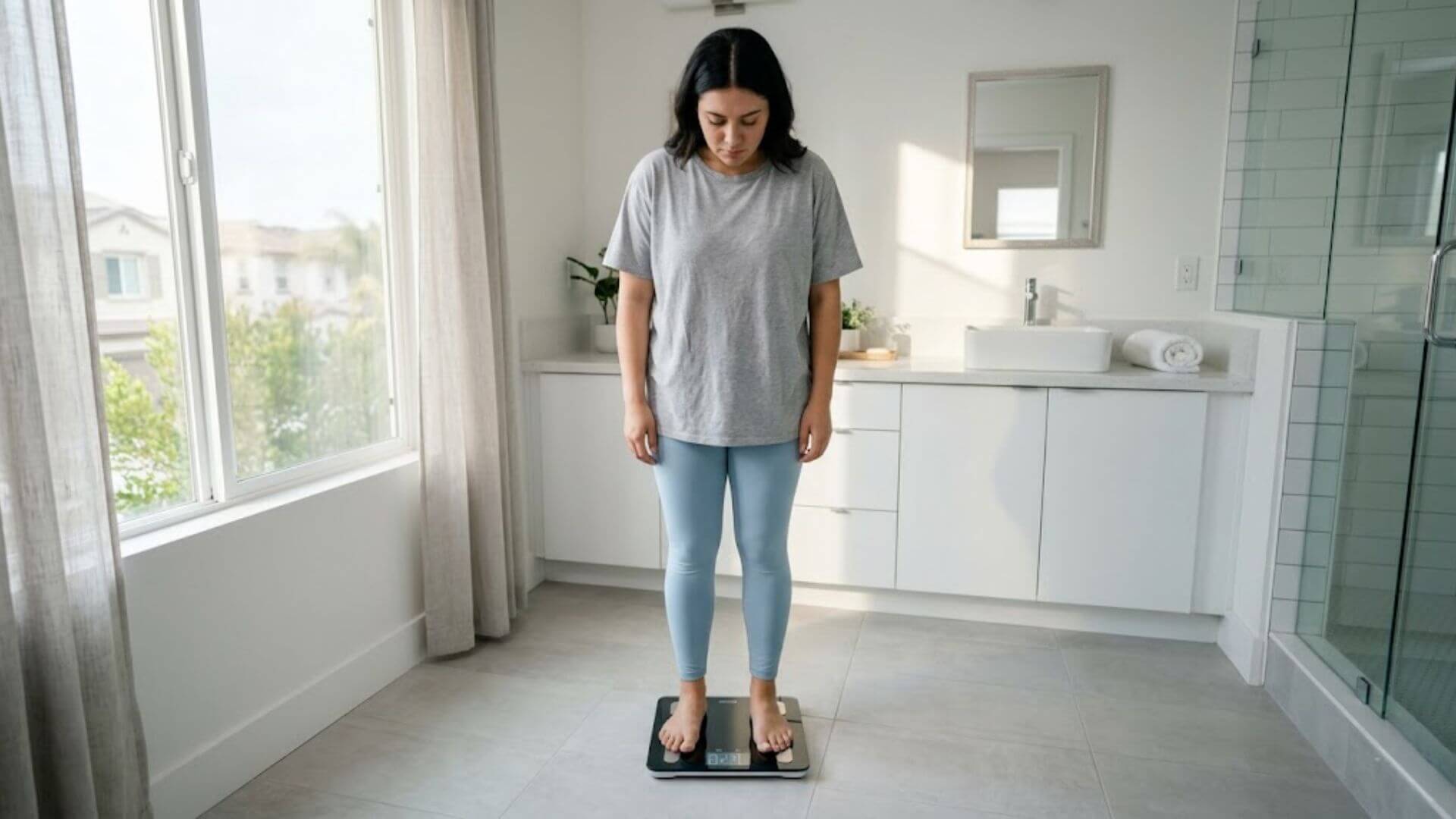
Knowing why weight loss slows down is critical when progress stalls despite consistent effort. The body adapts through metabolic changes, reduced calorie needs, and hormonal shifts, which can slow fat loss over time.
With guidance from TrimBody M.D., structured medical strategies help address these barriers and restore steady progress. Understand why weight loss slows down and what changes help restart consistent progress.
Key Takeaways:
- Metabolism adapts as body weight decreases
- Hormones increase hunger and reduce fullness
- Muscle loss lowers daily calorie burn
- Plateaus are common, not failure
- Structured adjustments restart progress
What’s Going On Inside Your Body When Weight Loss Stalls
The slowdown of weight loss doesn’t happen by chance. It comes from clear biological changes that influence the way your body handles energy, hormones, and metabolism.
Here are some common internal shifts:
- Metabolic Adaptation: As you lose weight, your body uses up less energy at rest, causing a drop in daily calorie burn.
- Muscle Loss: When you lose lean muscle, your metabolism slows because muscle burns more calories than fat.
- Hormonal Shifts: Leptin decreases, which makes you hungrier, while ghrelin increases, encouraging you to eat more.
- Energy Conservation: Your body cuts back on unnecessary energy use and movement to hang on to calories.
These adjustments show why the methods that worked well in the beginning might not help as much as time goes on. A study confirms that metabolic slowdown is a normal part of losing weight.
Let our team know how we can help with your goals!
Why Weight Loss Gets Stuck Even if You’re Following the Rules
Many stick to their plan but still reach a point where progress stops after some early wins. This doesn’t mean they’re not trying hard enough. It’s the body’s natural way of conserving its energy levels.
The main reason weight loss slows is due to something called metabolic adaptation or adaptive thermogenesis. A smaller body doesn’t need as many calories to keep going, which makes burning fat slower over time.
Studies show that close to 85% of people trying to lose weight hit this plateau in just a few months. The body does this to stay stable. This happens because calorie demands drop and the body becomes better at managing its energy.
Why Does Weight Loss Slow Down After Early Progress?
At the start, losing weight might feel fast and motivating, but much of that early change comes from water and stored energy, not just fat. As the body shifts into true fat loss, progress naturally slows, and several key factors begin to play a role:
- Initial Water Loss: Early drops on the scale come from water weight and stored glycogen, not purely fat
- Shift To Fat Burning: Fat loss takes longer, so visible progress naturally slows down
- Perceived Failure: Slower results can feel discouraging, even though the process is still working
- Behavioral Fatigue: Over time, it becomes harder to maintain strict eating and exercise routines
- Small Habit Changes: Slight increases in calories or reduced activity can shrink the deficit and stall progress
To discuss our services, contact us today!
Tips To Break A Weight Loss Plateau Safely
Breaking through a plateau needs specific changes rather than big sweeping adjustments. The main aim is to tweak calorie balance while keeping metabolism steady.
Change How You Manage Calories
Your calorie needs reduce as your weight goes down. To keep a steady calorie deficit, adjust your food intake.
Recalculating what’s needed can help without going overboard. Too many cuts can harm your metabolism. Making small tweaks works better than eating a lot less.
Focus More on Strength Training
Building strength keeps your muscles from shrinking, which is key to maintaining a stable metabolism. It’s one of the best tools to avoid a big drop in how many calories you burn over time.
Adding resistance exercises not only helps you lose fat but also improves body balance, even if the scale moves more.
Boost Protein in Your Diet
Eating enough protein is key to holding on to muscle. It also helps you feel full, so it’s easier to stick to your food goals. Eating more protein might boost how many calories your body burns during digestion.
Move More Each Day
Small movements during the day play a big part in how many calories you burn in total. Taking more steps or staying active can help you get back on track without needing hard workouts.
Seek Medical Help if Necessary
When breaking through a plateau feels too hard, medical weight loss can offer guided options and structured support.
Treatments like semaglutide injections and tirzepatide injections can help manage appetite and stick to eating plans.
Need help deciding? Fill out a contact form,and we’ll ensure you’re informed!
How Our Costa Mesa Clinic Helps You Break Plateaus
TrimBody M.D. focuses on pinpointing the exact reasons you’re not losing weight and fixing them using structured and supervised plans. After working with over 30,000+ patients, we use a mix of medical understanding and practical strategies to bring back steady fat loss.
Here’s how patients benefit:
- Programs designed by doctors focus on how your metabolism reacts.
- You get treatments aimed at managing hunger signals effectively.
- Progress is tracked, and tweaks are made to avoid hitting a plateau.
- You learn how to stick to healthy eating and exercise routines.
- Plans include long-term methods to keep the results after finishing the program.
This method takes out the guesswork and replaces it with progress you can measure and clear steps to follow.
Take Steps Toward a Smarter Fat Loss Plan
Learning why your weight loss starts to slow lets you make smart changes rather than trying harder without a clear plan. Aligning your metabolism, hormones, and habits can make progress steadier and easier to keep up.
Check out TrimBody M.D. to begin your free consultation.
FAQs about Why Weight Loss Slows Down In Costa Mesa
How Long Does A Weight Loss Plateau Usually Last?
A plateau can last several weeks or longer, depending on metabolism, habits, and consistency. It ends when calorie balance shifts again through changes in intake, activity, or structure.
Can Eating Too Little Stop Weight Loss Completely?
Yes, very low intake can slow metabolism and increase fatigue, reducing overall calorie burn. The body adapts by conserving energy, making fat loss less efficient over time.
Do Hormones Really Affect Weight Loss Progress?
Hormones like leptin and ghrelin regulate hunger and fullness, directly influencing eating behavior. Changes in these hormones can increase appetite and make consistency harder to maintain.
Should You Change Your Workout When Progress Stops?
Yes, repeating the same routine reduces effectiveness as the body adapts. Adding strength training or increasing intensity can help stimulate new progress and improve fat loss.
Is It Possible To Break A Plateau Without Cutting More Calories?
Yes, increasing daily movement or improving workout quality can create a new calorie deficit. Small adjustments often restart progress without the need for further restriction.
Call and talk to a specialist today! (702) 489-3300


 Henderson