
'%3e%3cpath%20d='M12.0979%2019.9987C10.6974%2019.9987%209.29703%2019.4657%208.2309%2018.3995L1.60176%2011.7704C0.568828%2010.7375%200%209.36414%200%207.9034C0%206.44262%200.568828%205.06934%201.6018%204.03641C2.51562%203.12254%204.00258%203.12262%204.91633%204.03637L7.12605%206.2461C8.03988%207.15992%208.03988%208.6468%207.12605%209.56067C6.97848%209.70821%206.89723%209.90442%206.89723%2010.1131C6.89723%2010.3218%206.97848%2010.5179%207.12602%2010.6655L9.33574%2012.8752C9.48328%2013.0228%209.67949%2013.1041%209.88816%2013.1041C10.0969%2013.1041%2010.293%2013.0228%2010.4406%2012.8753C11.3545%2011.9614%2012.8414%2011.9614%2013.7552%2012.8753L15.9649%2015.085C16.8787%2015.9988%2016.8787%2017.4857%2015.9649%2018.3995C14.8987%2019.4657%2013.4983%2019.9987%2012.0979%2019.9987ZM3.25906%204.91281C3.05898%204.91281%202.85895%204.98895%202.7066%205.14129C1.96883%205.87906%201.5625%206.86%201.5625%207.9034C1.5625%208.9468%201.96883%209.92774%202.7066%2010.6655L9.33574%2017.2947C10.8587%2018.8177%2013.337%2018.8177%2014.86%2017.2947C15.1646%2016.99%2015.1646%2016.4944%2014.86%2016.1898L12.6503%2013.9801C12.5028%2013.8325%2012.3066%2013.7513%2012.0979%2013.7513C11.8892%2013.7513%2011.693%2013.8325%2011.5455%2013.98C10.6316%2014.8939%209.14473%2014.8939%208.23086%2013.98L6.02117%2011.7703C5.57852%2011.3277%205.33473%2010.7391%205.33473%2010.113C5.33473%209.48703%205.57852%208.89844%206.02117%208.45578C6.16875%208.30824%206.25%208.11203%206.25%207.90336C6.25%207.69469%206.16875%207.49852%206.02117%207.35094L3.81148%205.14121C3.65918%204.98899%203.4591%204.91281%203.25906%204.91281Z'%20fill='black'/%3e%3cpath%20d='M9.5448%209.3168C9.25285%209.1959%209.0625%208.91102%209.0625%208.59504V0.782539C9.0625%200.351055%209.41227%200.00128937%209.84375%200.00128937H19.2188C19.6502%200.00128937%2020%200.351055%2020%200.782539V7.03254C20%207.46402%2019.6502%207.81379%2019.2188%207.81379H11.7298L10.3962%209.14746C10.1728%209.3709%209.83676%209.43773%209.5448%209.3168ZM10.625%201.56379V6.70895L10.8538%206.48012C11.0003%206.33359%2011.199%206.25129%2011.4062%206.25129H18.4375V1.56379H10.625Z'%20fill='black'/%3e%3cpath%20d='M12.9688%204.68879C13.4002%204.68879%2013.75%204.33901%2013.75%203.90754C13.75%203.47607%2013.4002%203.12629%2012.9688%203.12629C12.5373%203.12629%2012.1875%203.47607%2012.1875%203.90754C12.1875%204.33901%2012.5373%204.68879%2012.9688%204.68879Z'%20fill='black'/%3e%3cpath%20d='M16.0938%204.68879C16.5252%204.68879%2016.875%204.33901%2016.875%203.90754C16.875%203.47607%2016.5252%203.12629%2016.0938%203.12629C15.6623%203.12629%2015.3125%203.47607%2015.3125%203.90754C15.3125%204.33901%2015.6623%204.68879%2016.0938%204.68879Z'%20fill='black'/%3e%3c/g%3e%3cdefs%3e%3cclipPath%20id='clip0_6353_9'%3e%3crect%20width='20'%20height='20'%20fill='white'/%3e%3c/clipPath%3e%3c/defs%3e%3c/svg%3e)
'%3e%3cpath%20d='M10%2020C13.8389%2020%2017.0312%2018.3836%2017.0312%2016.0938C17.0312%2015.4405%2016.7592%2014.8022%2016.2444%2014.2478C15.9508%2013.9316%2015.4565%2013.9132%2015.1403%2014.2068C14.8241%2014.5004%2014.8058%2014.9947%2015.0994%2015.3109C15.3444%2015.5749%2015.4687%2015.8383%2015.4687%2016.0938C15.4687%2017.2001%2013.13%2018.4375%209.99996%2018.4375C6.86996%2018.4375%204.53121%2017.2001%204.53121%2016.0938C4.53121%2015.8382%204.65547%2015.5749%204.90055%2015.3109C5.19414%2014.9947%205.17582%2014.5004%204.85965%2014.2068C4.54348%2013.9133%204.04914%2013.9316%203.75555%2014.2477C3.24082%2014.8021%202.96875%2015.4405%202.96875%2016.0938C2.96875%2018.3803%206.15578%2020%2010%2020Z'%20fill='black'/%3e%3cpath%20d='M8.13172%2015.9465C8.57285%2016.5282%209.27023%2016.875%2010%2016.875C10.7298%2016.875%2011.4271%2016.5282%2011.8683%2015.9466L15.6293%2011.2402C16.5465%2010.0163%2017.0312%208.5609%2017.0312%207.03125C17.0312%203.15422%2013.877%200%2010%200C6.12297%200%202.96875%203.15422%202.96875%207.03125C2.96875%208.56094%203.45352%2010.0164%204.37063%2011.2402L8.13172%2015.9465ZM10%201.5625C13.0155%201.5625%2015.4688%204.01578%2015.4688%207.03125C15.4688%208.21648%2015.0944%209.34434%2014.386%2010.2938C14.386%2010.2938%2010.6309%2014.9924%2010.626%2014.9989C10.4766%2015.1982%2010.2484%2015.3125%2010%2015.3125C9.75156%2015.3125%209.5234%2015.1982%209.37402%2014.9989C9.36914%2014.9923%209.36418%2014.9859%209.3591%2014.9796L5.61395%2010.2937C4.90559%209.34434%204.53125%208.21652%204.53125%207.03125C4.53125%204.01578%206.98453%201.5625%2010%201.5625Z'%20fill='black'/%3e%3cpath%20d='M10%2010.9375C12.1539%2010.9375%2013.9062%209.18516%2013.9062%207.03125C13.9062%204.87734%2012.1539%203.125%2010%203.125C7.84609%203.125%206.09375%204.87734%206.09375%207.03125C6.09375%209.18516%207.84609%2010.9375%2010%2010.9375ZM10%204.6875C11.2923%204.6875%2012.3438%205.73891%2012.3438%207.03125C12.3438%208.32359%2011.2923%209.375%2010%209.375C8.70766%209.375%207.65625%208.32359%207.65625%207.03125C7.65625%205.73891%208.70766%204.6875%2010%204.6875Z'%20fill='black'/%3e%3c/g%3e%3cdefs%3e%3cclipPath%20id='clip0_6353_60'%3e%3crect%20width='20'%20height='20'%20fill='white'/%3e%3c/clipPath%3e%3c/defs%3e%3c/svg%3e)
'%3e%3ccircle%20cx='321'%20cy='321'%20r='276'%20transform='matrix(-1%200%200%201%20481%200)'%20stroke='%23E5DFD3'%20stroke-width='90'/%3e%3c/g%3e%3cdefs%3e%3cclipPath%20id='clip0_6046_3421'%3e%3crect%20width='481'%20height='413'%20fill='white'%20transform='matrix(-1%200%200%201%20481%200)'/%3e%3c/clipPath%3e%3c/defs%3e%3c/svg%3e)


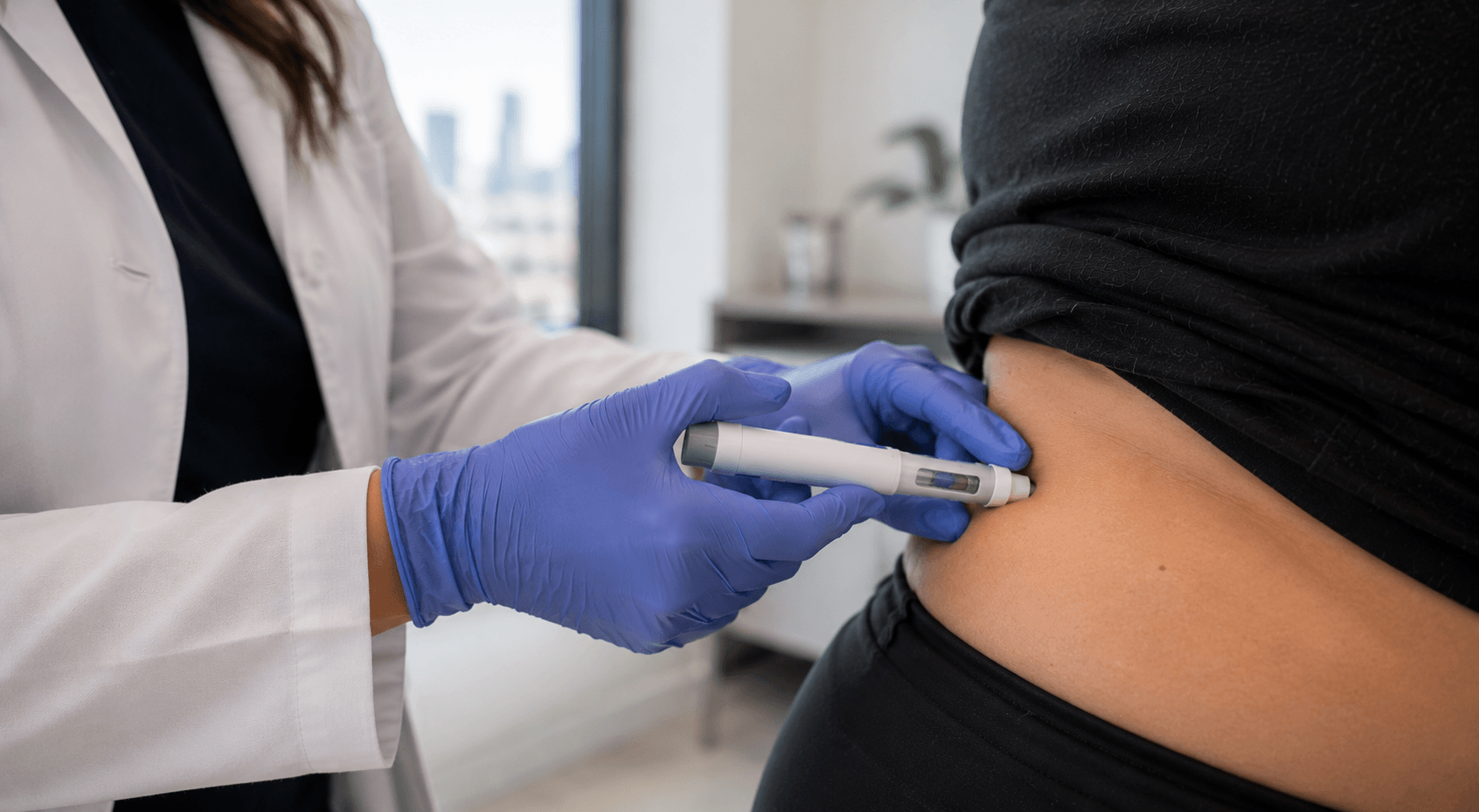
GLP-1 Weight Loss Los Angeles programs help regulate appetite, improve portion control, and support gradual fat loss through medically supervised treatment. Physicians at TrimBody M.D. monitor weekly progress, medication response, eating patterns, and metabolic changes to support safer and more consistent long-term results. Learn how GLP-1 treatment begins in La Mirada and what to expect during the first few weeks.
Key Takeaways:
- Appetite changes often begin within early treatment weeks
- Weight loss progresses differently for each patient
- Habit changes support long-term metabolic improvement
- Medication adjustments affect comfort and consistency
- Clinical monitoring improves treatment safety and results
What Patients Experience In Their First Month Of GLP-1 Treatment
GLP-1 treatment usually changes appetite and eating habits before major weight loss becomes visible. Patients often feel full faster, think less about food, and experience fewer cravings during the first several weeks.
According to a study, GLP-1 medications showed effectiveness across different ages, body weights, and patient groups.
Week 1: Appetite Changes Often Happen First
The first treatment week helps the body adjust to the medication. Patients often notice that smaller meals feel more filling, especially during dinner or late-night eating.
Temporary nausea, bloating, constipation, or fatigue may appear early but often improve with continued treatment.
Week 2: Eating Habits Begin To Change
By the second week, eating habits often begin changing without strict dieting pressure. Patients may stop finishing oversized meals and experience fewer emotional eating triggers. Grocery shopping, restaurant choices, and portion control may start feeling easier.
To better understand expected timelines, patients can review this guide on GLP-1 timing, which explains when physical changes commonly become more noticeable.
Week 3: Energy Feels Steadier, Routines Start Improving
Some patients notice steadier energy levels during the third treatment week. Blood sugar fluctuations may feel less intense throughout the day.
Better appetite control can also support hydration, balanced meals, improved sleep schedules, and healthier daily routines.
Week 4: Weight Changes Start To Show More Clearly
By the fourth week, physical changes may become easier to notice. Some patients see looser clothing around the waist or midsection before major scale changes appear.
Researchers reported GLP-1 medications supported noticeable weight reduction alongside improved metabolic health markers.
Let our team know how we can help with your goals!
Why Appetite Can Be More Important Than Quick Weight Loss
Managing appetite often matters more than fast weight loss during early GLP-1 treatment. These medications help patients feel fuller, reduce cravings, and make eating decisions feel less emotionally driven throughout the day.
Hunger Feels Less Intense
GLP-1 medications help regulate hunger and fullness signals connected to the brain. Patients often feel less driven by cravings, especially during late-night eating or emotional snacking situations.
Smaller Meals Feel More Filling
Patients commonly feel full sooner, even with smaller portions during meals. This can help reduce overeating habits without following strict or exhausting diet routines.
Food Thoughts Become Quieter
Food noise refers to constant thoughts about eating, cravings, or snacks throughout the day. Many patients notice fewer food-focused thoughts during treatment, making healthy eating habits feel easier to maintain.
How Medication Changes Affect Weekly Progress
GLP-1 treatment usually starts with lower doses that increase gradually over time. This helps the body adjust while reducing nausea, bloating, and digestive discomfort during early treatment.
As doses increase, appetite suppression and fullness effects may become stronger for some patients. Weight loss plateaus can still happen, so physicians often review sleep, nutrition, activity levels, and medication timing before adjusting treatment.
Patients comparing injectable options often review tirzepatide and semaglutide based on appetite control, side effects, and treatment goals.
To discuss our services, contact us today!
Lifestyle Habits to Boost GLP-1 Effectiveness
GLP-1 treatment works best when combined with supportive daily habits that improve metabolism, muscle maintenance, and eating consistency.
Patients who build sustainable routines during treatment often maintain steadier long-term progress through habits like:
- Higher protein intake helps preserve muscle during weight loss
- Drinking more water to support digestion and energy levels
- Strength training to improve metabolism and body composition
- Consistent meal timing to reduce nausea and overeating
- Better sleep habits to support appetite and recovery
Need help deciding? Fill out a contact form,and we’ll ensure you’re informed!
How Our Medical Team Helps with GLP-1 Weight Loss in Los Angeles
At TrimBody M.D., physicians monitor more than just scale changes during GLP-1 treatment. More than 30,000 patients have trusted the clinic for medically supervised weight loss focused on long-term progress, metabolic health, and realistic treatment goals.
Patients receive ongoing support through services like:
- Physician-guided dosage adjustments and progress monitoring
- Metabolic support throughout each treatment phase
- Appetite and side-effect management strategies
- Structured plans focused on sustainable fat loss
- Long-term care centered on overall health outcomes
Start Building Long-Term Weight Loss Progress
Patients starting GLP-1 Weight Loss Los Angeles programs often notice appetite changes before major physical results appear.
Treatment may support better portion control, steadier eating habits, improved energy levels, and sustainable fat reduction when combined with medical supervision and healthy daily routines.
To stay on track with expert help, our clinic offers GLP-1 programs guided by physicians that focus on safety, balance, and long-lasting metabolic health. Contact us to set up a consultation.
FAQs about GLP-1 Weight Loss In La Mirada
Can I Still Eat Normally While Taking GLP-1 Medication?
Yes, but most patients naturally eat smaller portions because fullness happens faster during meals. Strict dieting usually becomes less necessary when appetite signals feel more controlled throughout the day.
What Happens If My Weight Loss Slows Down After A Few Months?
Temporary plateaus are common because the body adapts during long-term weight reduction. Physicians may adjust dosage, nutrition habits, activity levels, or meal timing before changing the treatment plan.
Do People Lose Muscle While Using GLP-1 Medications?
Muscle loss can happen if protein intake and strength training remain too low during treatment. Most medical programs encourage resistance exercise and higher protein intake to support healthier body composition changes.
Will I Need To Stay On GLP-1 Medication Forever?
Not always, because treatment length depends on metabolic health, weight history, and long-term maintenance goals. Some patients transition into lower maintenance dosing while continuing structured lifestyle habits and physician monitoring.
Can GLP-1 Treatment Help Emotional Or Stress Eating?
Many patients report fewer cravings and reduced food thoughts during emotionally stressful situations. Medication may support behavior change, but long-term success still depends on consistent eating habits and lifestyle structure.
Call and talk to a specialist today! (702) 489-3300


 Henderson